

Hybrid Publishing: What Authors Should Understand Before Choosing a Publishing Model
Finishing a manuscript creates a new problem for many authors.
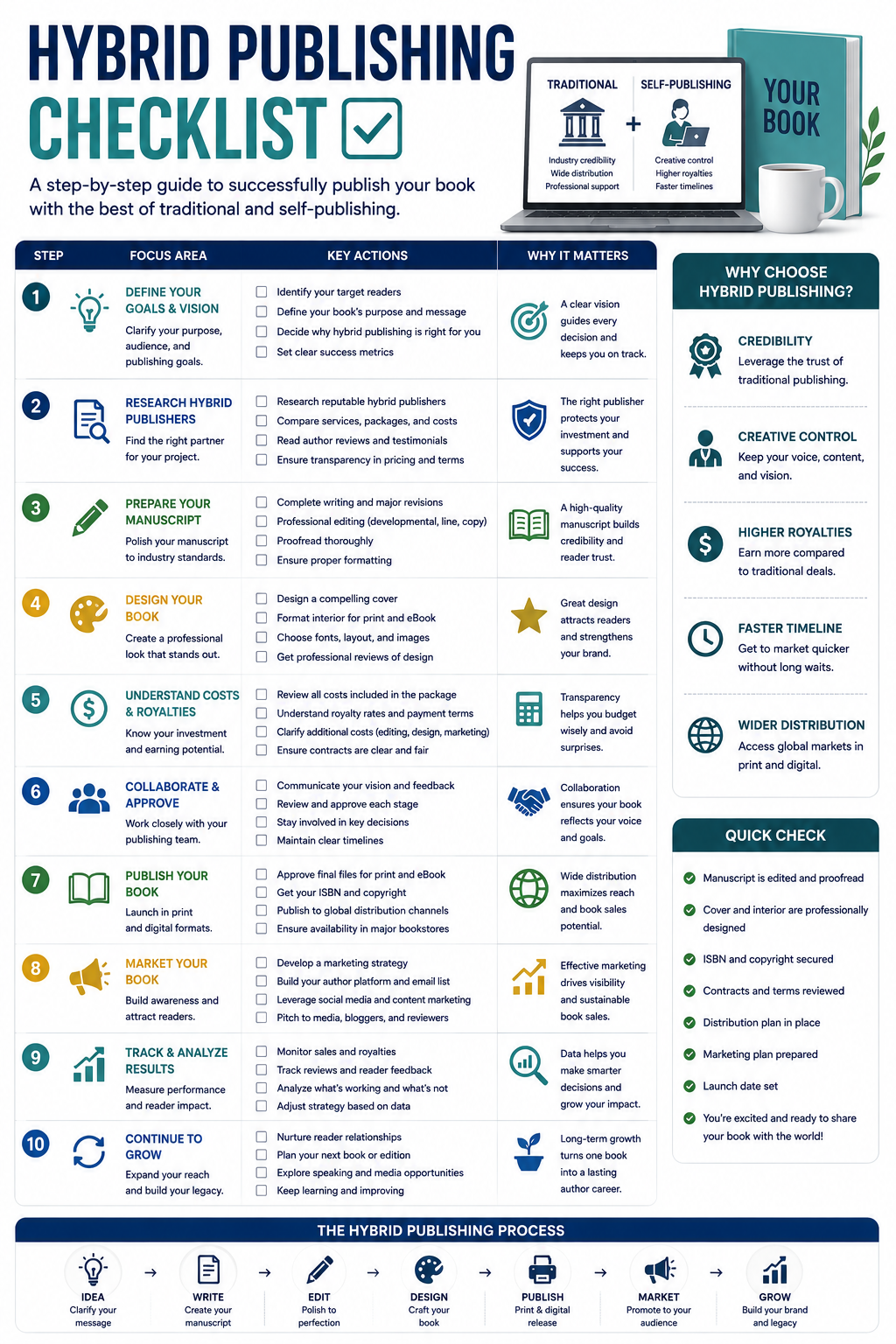
Now you have to decide how the book will actually reach the market. Hybrid publishing is an author-subsidized publishing model in which the author pays part of the publishing cost while the publisher takes on professional publishing responsibilities, often with the author receiving a higher share of sales than in traditional publishing.
One publisher may offer a traditional contract. Another company may describe itself as a hybrid publisher. A third may provide professional publishing services while allowing the author to remain responsible for the publishing decisions. Authors who have finished, or are close to finishing, a manuscript may also choose self publishing and manage much of the process themselves.
The differences matter because the publishing model can affect who pays for production, who controls important decisions, which rights and responsibilities stay with the author, how professional services are managed, and how the book is distributed and marketed.
Understanding hybrid publishing can help authors compare it with traditional and self publishing, evaluate how much control and support they want, and judge whether a company such as Masterly Publishing fits their goals instead of choosing a path based on a label alone.
Masterly Publishing provides comprehensive publishing support for authors, including writing and editing, cover design, formatting, printing and distribution, marketing and branding, and legal guidance. Its current website describes the company primarily as a full-service publishing partner supporting self-published authors and professionals from manuscript development through publication and marketing.
The Wrong Publishing Model Can Create Problems After the Manuscript Is Finished
Authors often focus so much attention on writing that publishing decisions receive less consideration.
Then important questions arrive all at once.
Who will edit the manuscript?
Who controls the cover?
Who obtains the ISBN?
How will the book be distributed?
Who pays for production?
What rights does the author grant?
Who manages marketing?
What happens after publication?
These questions are not minor administrative details. They help define the publishing relationship.
An author who expects the control of self publishing may become frustrated with a model where the publisher has greater authority. Another author may want significant professional support and discover that managing every vendor independently takes more time than expected.
Choosing the right path requires understanding what each model actually means.
What Hybrid Publishing Means
The Independent Book Publishers Association describes hybrid publishing as an author-subsidized model in which the publisher operates similarly to a traditional publishing company but the author contributes financially toward publication. In exchange, authors generally receive a higher-than-industry-standard share of sales proceeds.
Importantly, paying a company to publish a book does not automatically make that company a hybrid publisher.
IBPA maintains 11 criteria that it says professional hybrid publishers should meet. Those include vetting submissions, using clear contracts, publishing under the publisher's own imprint and ISBNs, meeting professional editorial and production standards, providing distribution, managing publishing rights, and meeting other publishing responsibilities.
That distinction is important for authors comparing companies.
The word "hybrid" should communicate a particular business model, not simply mean that an author pays for publishing assistance.
Hybrid Publishing and Traditional Publishing Are Different Financial Models with Different Financial Risk
With traditional publishing, the publisher generally finances the cost of producing the book, which is one reason houses are selective about what they acquire: they are taking on financial risk and betting that enough copies will sell to justify the investment.
The author typically submits or pitches the manuscript, and the publisher decides whether it wants to acquire and publish the work. If accepted, the author enters a publishing agreement that defines matters such as rights, royalties, responsibilities, and other terms, often including an advance against royalties and requiring the author to surrender certain rights by contract.
The publisher generally takes responsibility for professional production and commercial publication. Royalties in Traditional Publishing are also typically lower than in Hybrid Publishing or Self-Publishing.
That structure can involve less direct financial investment by the author, but it may also involve less author control over parts of the publishing process.
Hybrid publishing changes the financial relationship. It may also offer faster speed to market than Traditional Publishing, though the quality of Hybrid Publishers can vary significantly.
Under IBPA's definition, the author subsidizes at least part of the publishing process while the hybrid publisher continues to assume the responsibilities expected of a professional publisher.
Neither model should be selected simply because one sounds more prestigious.
The important issue is whether the structure matches the author's goals.
Hybrid Publishing and Self Publishing Are Also Different
Self publishing places the author in the role of publisher.
That can provide substantial control.
The author may decide which professionals to hire, how the book should look, where it will be distributed, how it will be marketed, and when it will be released.
But control also creates responsibility.
Editing, proofreading, design, formatting, ISBN decisions, printing, distribution, marketing, and other publishing tasks still need to be handled.
Some authors personally manage each part.
Others hire a professional publishing-services company to coordinate much of that work.
IBPA specifically distinguishes professional hybrid publishers from self-publishing service providers. Its publishing resources identify hybrid publishers, author publishers, and publishing service providers as separate publishing pathways.
That distinction can help authors ask better questions before signing an agreement.
Author Control Should Be Defined Before the Project Begins
Many authors say they want author control.
But control can mean different things.
One author may care most about keeping final approval over the cover. Another may want control over pricing. A business author may care deeply about using the book as part of a larger brand strategy. Someone else may be focused on intellectual property rights or the ability to use the content elsewhere.
The publishing agreement and business model determine where those decisions sit.
This is why authors should not assume that every paid publishing arrangement offers the same rights or authority.
IBPA's hybrid criteria specifically identify a clear, understandable, negotiable contract as an expectation for professional hybrid publishers.
Authors evaluating any publishing relationship should understand what they are agreeing to before publication begins.
Professional Publishing Support Can Matter in Every Model
A publishing model does not determine whether a book will automatically look professional.
Professional execution still matters.
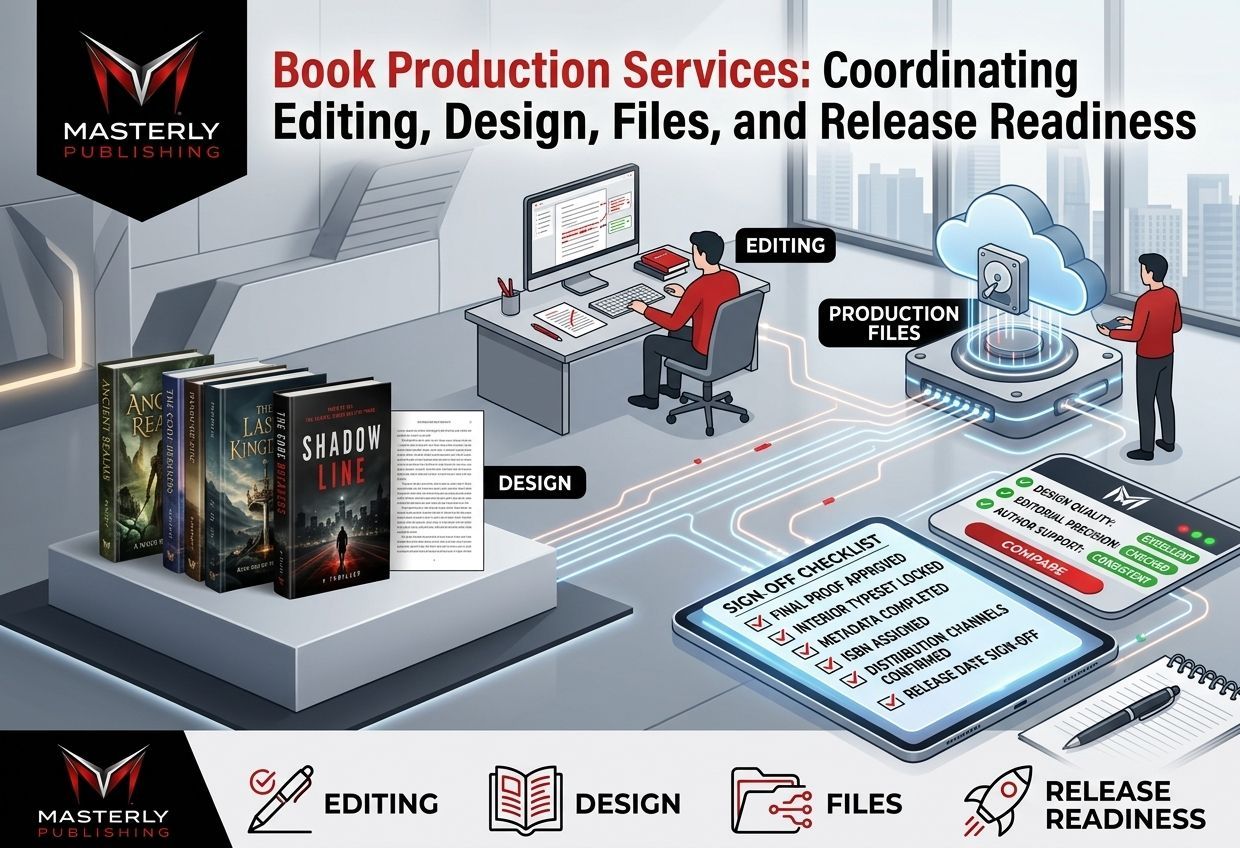
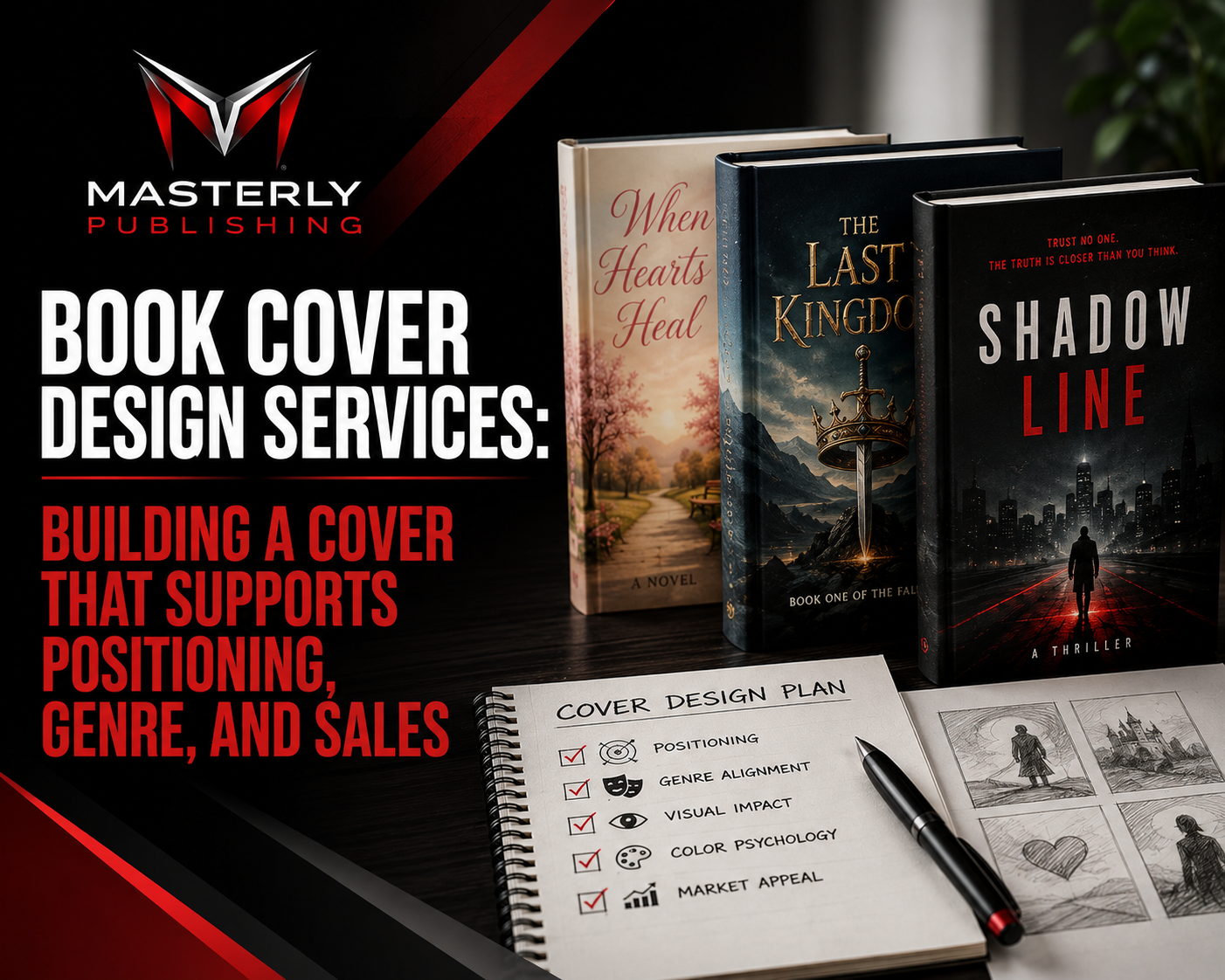
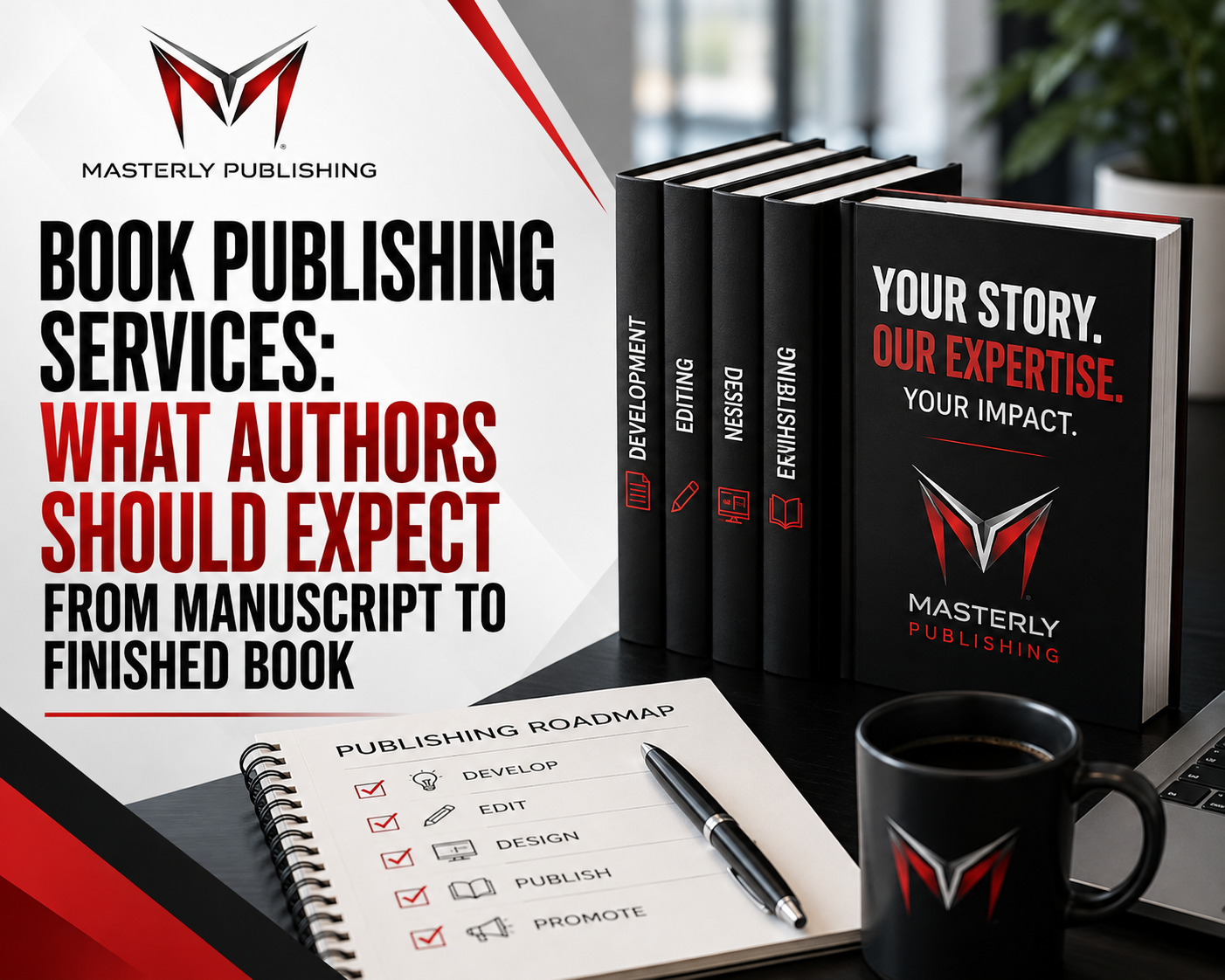
A book may require developmental editing, copyediting, proofreading, a professional cover designer, interior formatting, preparation for paperback and digital formats, printing, distribution planning, and marketing support.
IBPA's standards for hybrid publishers specifically require professional editorial, design, and production quality from qualified editors and other specialists.
Self-published authors also need to consider those same quality issues even though they remain responsible for arranging the services themselves.
This is where professional publishing support can become valuable.
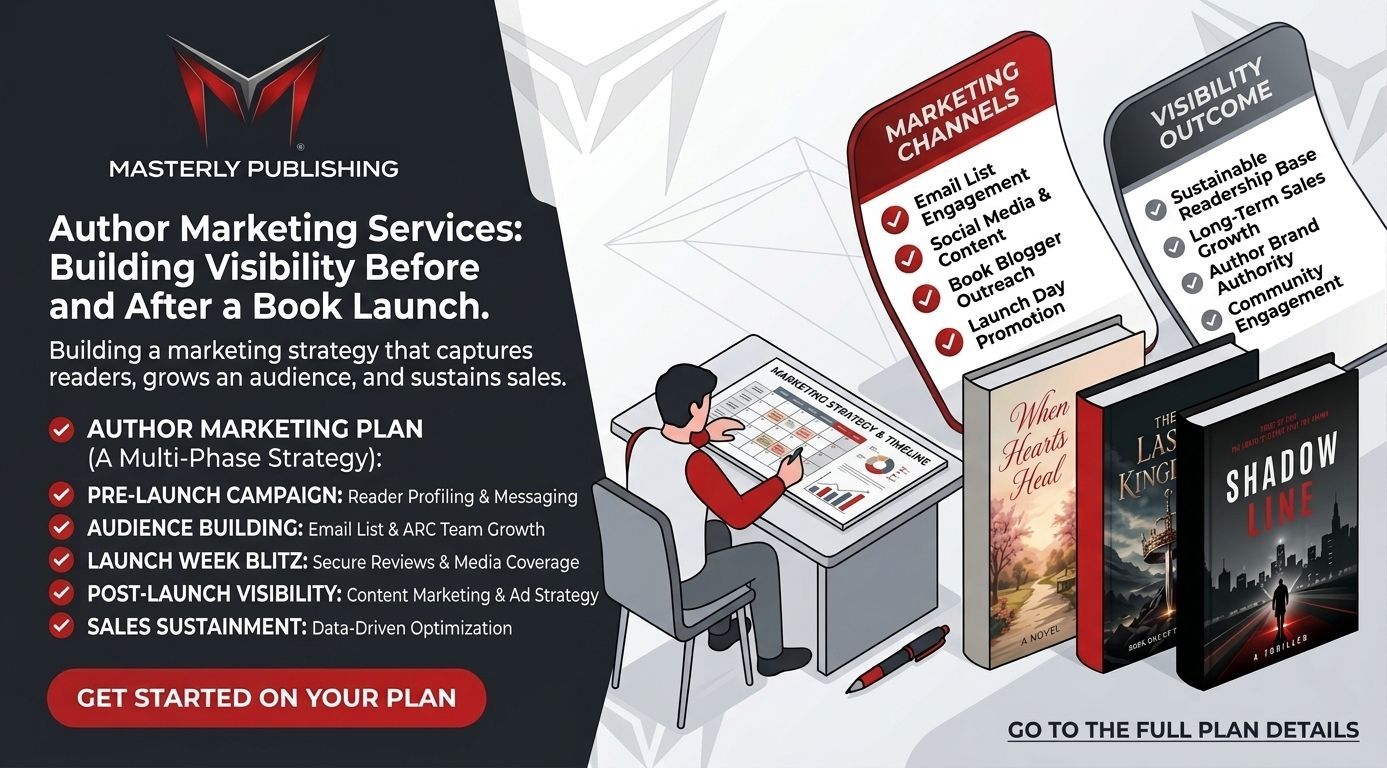
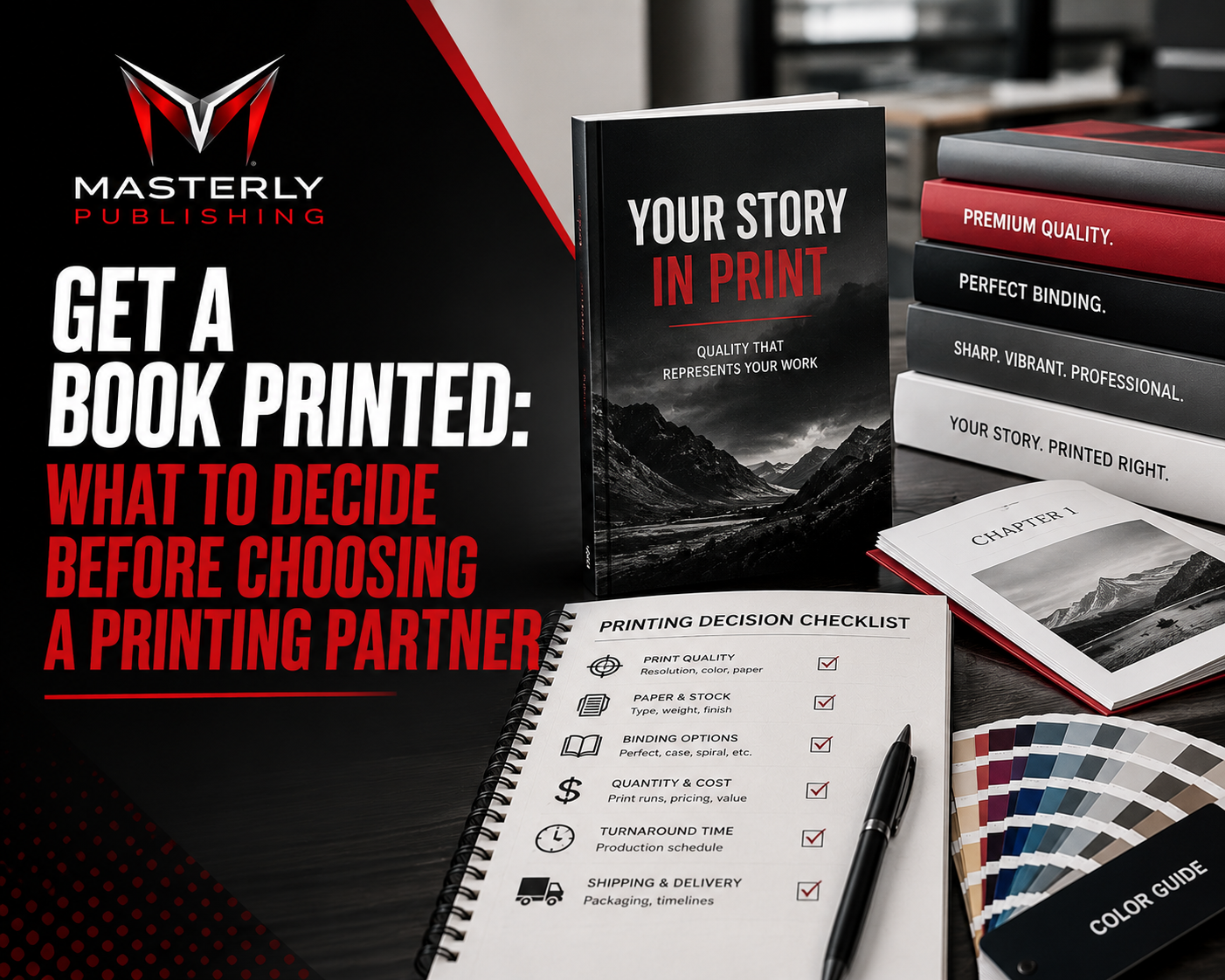
Masterly Publishing's current services include writing and editing, book cover design, formatting, custom printing, ebook publishing, distribution assistance, marketing and branding, and legal guidance, along with production tools used to prepare files correctly.
For authors who want significant support while pursuing an independent publishing path, coordinated professional services can reduce the need to manage every part of publication alone, including preparing ebooks for multiple release formats.
Distribution Should Be Discussed Before the Book Is Published
Finishing a book file is not the same as distributing a book.
Authors should understand where and how the finished title is expected to become available, where it will sell, and how a publisher or service provider plans to distribute it across channels.
IBPA considers distribution one of the responsibilities that distinguishes a professional hybrid publisher from a simple service provider. Its publishing map explains that hybrid publishers should have a method for making titles available through wholesale and retail channels.
Distribution arrangements differ across publishing models.
Masterly Publishing states that it assists authors with printing and distribution and supports publishing through channels and online platforms including Amazon KDP, Barnes & Noble Press, Apple Books, Google Play, and Ingram, which can help books reach readers in their own country and, depending on the setup, support broader global reach around the world.
The specific distribution options appropriate for a book should be confirmed as part of the individual publishing project so authors know which channels will give readers access to the book.
Publishing Support Should Extend Beyond File Uploads
Uploading a manuscript and cover to a publishing platform is only one step.
For many professional authors, entrepreneurs, experts, and organizations, the finished book is also connected to their reputation with readers and customers.
Weak editing can undermine authority.
A poorly designed cover can make a serious book look amateur.
Inconsistent formatting can distract readers.
Weak positioning can make it difficult for potential readers to understand why the book matters. Publishing support should also help authors promote the book through appropriate marketing and advertising, rather than simply post files online.
That is why authors seeking professional publishing support should look beyond upload assistance that only helps them post files.
Masterly Publishing currently describes itself as a full-service publishing partner. Its services extend across manuscript development, editing, design, printing, distribution, marketing, branding, and legal guidance, with the goal of creating a complete publication and launch plan.
A Hybrid Publisher Should Be Evaluated on More Than the Word "Hybrid"
The growth of hybrid publishing has also created confusion.
Some companies once commonly called a vanity press now use more attractive language, which is why authors should evaluate the model carefully.
A company can describe itself using attractive publishing language without necessarily operating according to recognized hybrid-publishing standards, and it is almost impossible to judge legitimacy from marketing labels alone.
IBPA advises that a company calling itself a hybrid publisher should meet all 11 of its criteria rather than only selected parts.
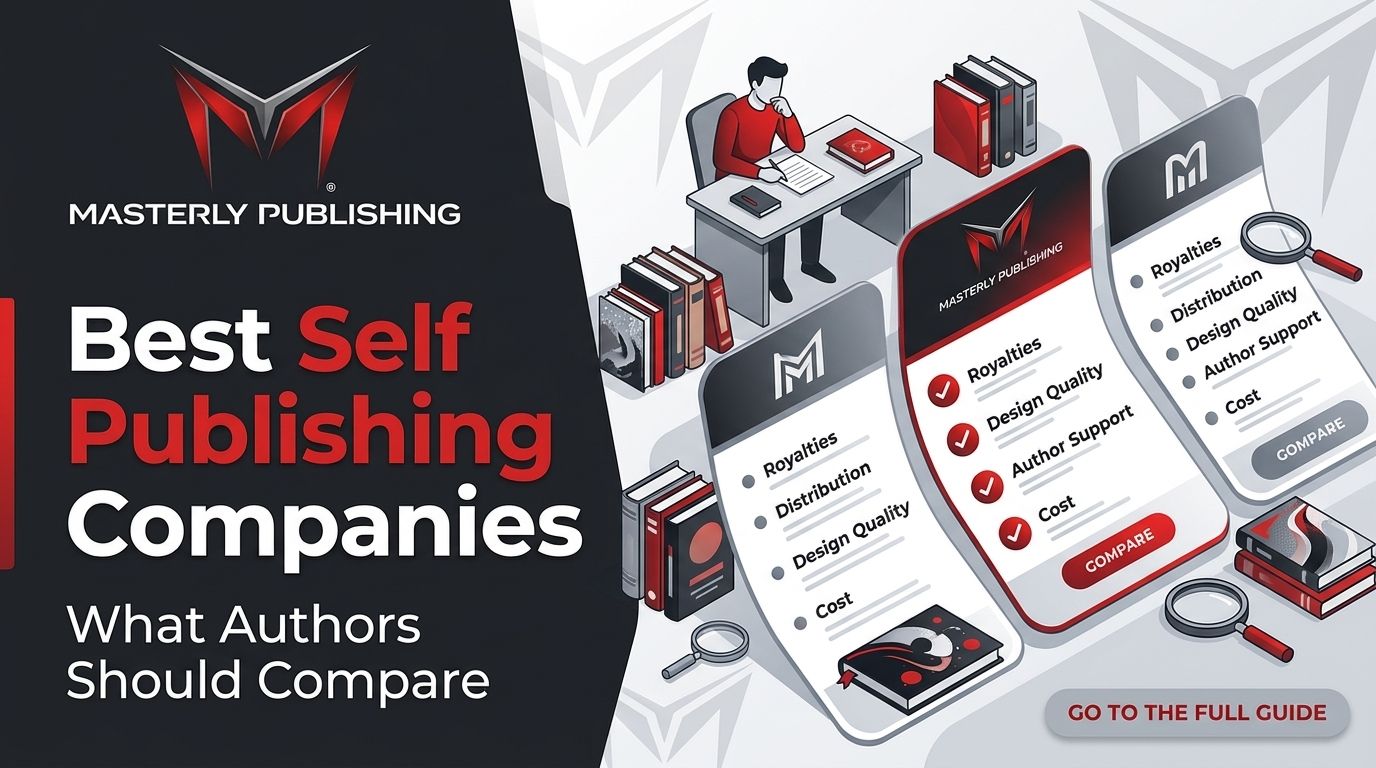
For authors, this means labels should be followed by questions about what a company is called versus how it actually operates.
Does the company vet manuscripts?
Who owns or controls the ISBN?
Whose imprint appears on the book?
What does the publishing contract say?
What distribution responsibilities does the company assume?
What editorial and design standards are provided?
How are sales proceeds handled?
Authors should understand exactly what deal they are being asked to sign.
These questions help reveal the actual publishing model behind the marketing language.
The Right Publishing Path Depends on What the Author Wants
There is no single publishing model that is automatically correct for every author.
An author seeking a traditional acquisition may be comfortable giving a publisher greater authority over the book in exchange for the traditional publishing structure.
Another author may prefer hybrid publishing because they want professional publisher involvement while accepting an author-subsidized financial model.
Another may choose self publishing because ownership, flexibility, timing, or greater author control are the priorities.
A fourth author may want to self-publish but hire professionals to handle most of the work.
The important question is not:
"Which publishing model is best?"
It is:
"Which publishing relationship fits this author, this book, and these goals?"
Masterly Publishing Provides a Professionally Supported Independent Path
Masterly Publishing's current public materials position the company as a full-service publishing partner for self-published authors rather than identifying the company as a hybrid publisher under IBPA's formal criteria.
That distinction is useful for authors comparing options.
An author does not need to manage every part of self publishing alone simply because they want an independent publishing path.
Masterly Publishing can provide professional assistance across the process, including:
- Writing and manuscript development for fiction and non-fiction authors
- Editing and proofreading, including support for research-driven, business, and expert books
- Book cover design
- Interior formatting
- Ebook publishing
- Custom book printing
- ISBN-related publishing support
- Distribution assistance
- Book marketing and author branding, including practical examples of positioning and launch materials
- Legal guidance related to publishing and intellectual property
These current services allow authors to receive coordinated professional support while discussing the publishing path that best fits their goals, especially for writers who want to publish their expertise or knowledge professionally.
Authors can review Masterly Publishing's publishing services and company information for its current approach to writing, editing, design, publishing, distribution, marketing, and legal support, and to see whether that support fits their needs as independent authors learning from fellow authors.
Choosing a Publishing Partner Means Looking Beyond the Label
Authors comparing traditional publishers, a publishing house, a hybrid company, or a vanity publisher should understand that these businesses do not operate in the same way. Publishing expert Jane Friedman has written extensively about publishing models, which can help authors recognize why a company's claim about its model should be examined alongside its actual services and contract. Whether the project is a novel or another type of own book, the central idea is to choose professional support that fits the author's goals for producing and distributing print books and other formats. There is no single theory of publishing success that applies to every author or guarantees how readers and other users will respond. A professional publishing conversation can instead help an author understand the available path before making an important commitment.
Frequently Asked Questions About Hybrid Publishing
What is hybrid publishing?
Hybrid publishing is an author-subsidized publishing model in which the author contributes financially while a professional publisher assumes publishing responsibilities. IBPA has established 11 criteria it says professional hybrid publishers should meet.
Is hybrid publishing the same as self publishing?
No. In self publishing, the author functions as the publisher and is responsible for managing publication, either personally or through hired service providers. Self-publishing can mean higher royalties and more money from each sale, but it also leaves the author responsible for more decisions and more of the work. IBPA treats hybrid publishers and self-publishing service providers as separate models.
Is hybrid publishing the same as traditional publishing?
No. In traditional publishing, the publisher typically finances publication after acquiring a manuscript, which means they usually pay production costs upfront. Traditional Publishing may also include an advance, but it usually comes with lower royalties and less control than more independent models. In hybrid publishing, the author contributes toward publishing costs.
Does paying a publisher make it a hybrid publisher?
Not necessarily. IBPA states that companies using the hybrid publisher label should meet all of its professional hybrid publishing criteria.
Do authors have more control with hybrid publishing?
The level of author control depends on the publisher and contract. Authors should review who controls editorial, design, pricing, rights, distribution, and other important decisions before signing an agreement.
What is a hybrid publisher responsible for?
Under IBPA's criteria, a professional hybrid publisher should assume responsibilities including professional editorial and production quality, publishing under its imprint and ISBNs, distribution, rights management, and other publishing functions.
Is Masterly Publishing a hybrid publisher?
Masterly Publishing's current public website describes the company as a full-service publishing partner specializing in comprehensive support for self-published authors. It does not currently identify Masterly Publishing as an IBPA-qualified hybrid publisher.
What publishing support does Masterly Publishing provide?
Masterly Publishing currently offers services including writing and editing, cover design, formatting to prepare each page professionally for publication, printing, ebook publishing, distribution assistance, marketing and branding, legal guidance, and a free consultation.
Schedule a Masterly Publishing Consultation to Discuss the Right Publishing Path
Choosing between hybrid publishing, traditional publishing, self publishing, and professionally supported independent publishing can affect how you bring your story or body of expertise to market, along with your control, investment, rights, production process, and path to market.
You should understand those differences before committing your manuscript to a publishing model, because the choice can shape your broader professional goals and the publishing role your book plays in your life.
Masterly Publishing provides comprehensive publishing support for authors who want professional help moving from manuscript development through editing, design, publication, distribution, marketing, and related publishing needs so they can reach the right readership or professional community, whether their goals are authority, sales, or visibility such as aiming for recognition on lists like the New York Times.
Call Masterly Publishing at (888) 209-4055 or visit MasterlyPublishing.com to schedule a consultation and discuss the publishing path that fits your book and goals.