



How to Write a Book Chapter: A Step by Step Guide
To write a book chapter, start with a chapter outline that names the single big question or purpose the chapter answers, then draft the opening, the main points with examples, and a closing that leads into the next chapter, and revise only after the full draft exists. In a nonfiction book, every chapter should deliver one clear idea that supports the book's larger promise to the reader. Writing chapter by chapter from an outline is the most reliable way to turn a book idea into a complete manuscript.
This guide walks through the writing process step by step, how long a chapter should be, a simple chapter template, how to structure nonfiction writing, how academic book chapters differ, and the common mistakes that stall writers in the middle of a draft.
Start With the Book Outline
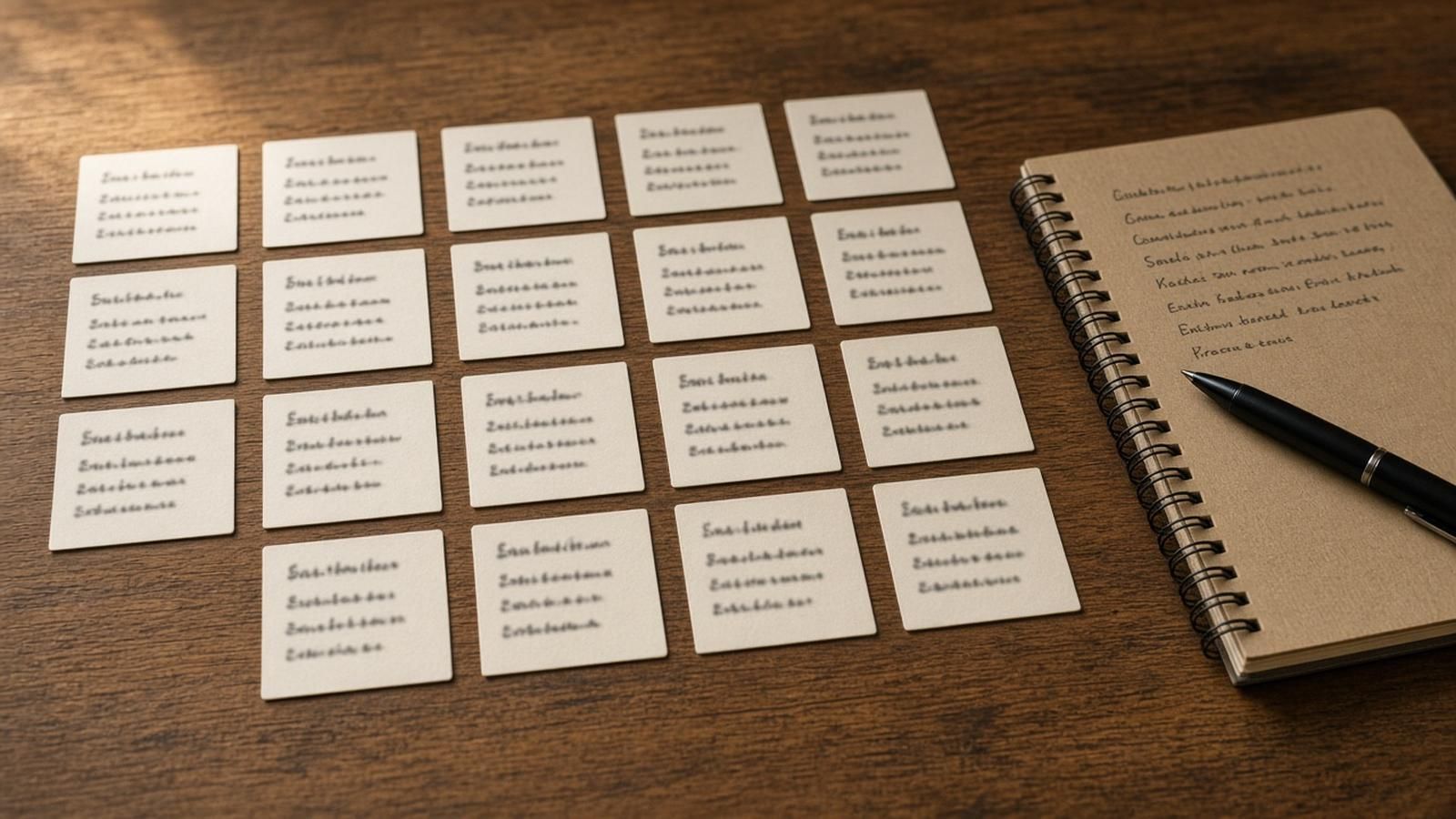
Before you write a single chapter, you need a book outline. The outline shows how each chapter fits into the whole: what the reader knows at the start, what they learn in each chapter, and where they end up. Without it, sections tend to repeat each other, wander, or leave gaps.
A simple book outline for a nonfiction book includes:
- The book's promise. One or two sentences describing what the reader will be able to do, understand, or believe by the end.
- The chapter list. A working title for each chapter and one sentence describing its purpose.
- The sequence. The order that moves the reader logically from problem to solution, or from basics to advanced ideas.
If you are still shaping the book idea, our article on author coaching explains how to move a book from idea to a clear, marketable manuscript.
How to Write a Book Chapter, Step by Step
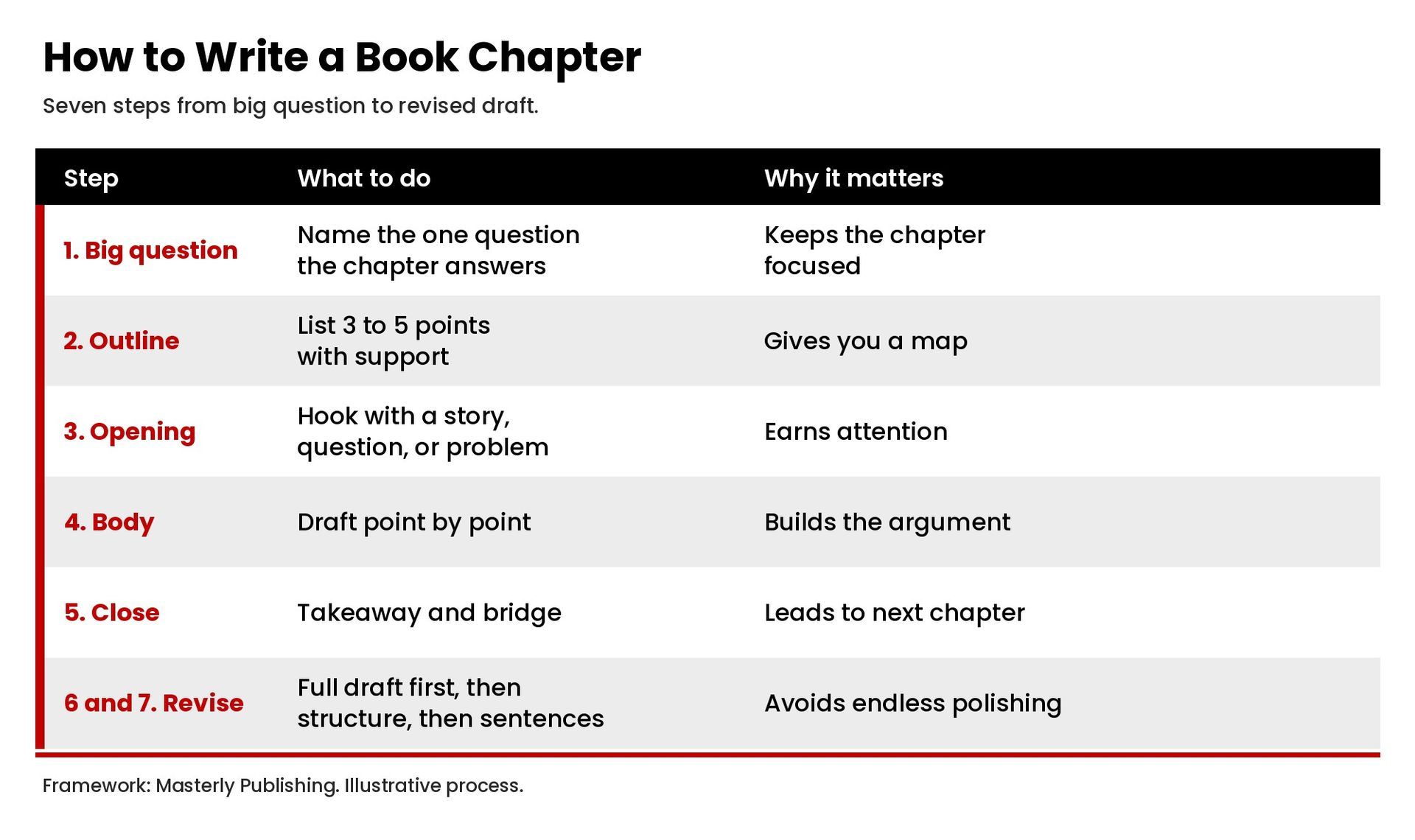
1. Define the chapter's big question
Every strong chapter answers one central question. For a nonfiction book, that might be "Why do most budgets fail?" or "How do you run a better meeting?" Write the question at the top of your draft. If a section does not help answer it, it probably belongs in another chapter or nowhere at all.
2. Build a detailed plan
The plan is a short list of the points you will make, in order. For most nonfiction chapters, three to five main points is a manageable structure. Under each point, note the example, story, data, or exercise you will use to support it. This plan is your map when you start writing, and it makes the first step of each writing session obvious.
3. Write an opening that earns attention
The first page of a chapter has one job: make the reader want to keep going. Common openings include a short story, a surprising fact you can source, a question, or a problem the reader recognizes. Connect the opening to the central question quickly, so readers know why the chapter matters.
4. Draft the body point by point
Work through your outline one point at a time. For each point, state the idea clearly, support it with an example or evidence, and explain what it means for the reader. Use headings to help readers follow along, especially in longer sections of a nonfiction book. Keep each paragraph focused on one point, and use your own voice rather than imitating other writers.
5. Close with a takeaway and a bridge
End the chapter by summarizing the key idea and pointing toward the next chapter. A good closing gives readers a sense of progress and a reason to turn the page.
6. Finish the draft before you revise
The biggest risk when you start writing is getting stuck polishing the first chapter. Write the whole draft, then move to the next one. Revision works better when you can see the full manuscript and how the parts of the book relate.
7. Revise for structure, then for sentences
When the draft is complete, revise in two passes. First, check structure: does the chapter answer its central question, are the points in the right order, and is anything missing or repeated? Then revise the sentences for clarity and flow. Our article on developmental editing services explains how an editor can help with structural revision.
How Long Should a Book Chapter Be?
There is no fixed rule. Chapter length depends on the genre, the complexity of each idea, and the reading experience you want. Many authors find it helpful to keep the sections of a book roughly consistent in length so readers know what to expect, while letting a chapter run longer or shorter when the content requires it. Focus on whether the chapter fully answers its question without padding. A useful check is word count: track the words in each finished draft, and if one runs far longer than the others, see whether it is really two topics.
A Simple Book Chapter Template
Many writers search for a book chapter template because a blank page is the hardest part of the process. You can copy this template into your writing software and fill it in before you draft:
- Working title. A clear, specific title that tells readers what they will learn.
- Central question. One sentence: what does this chapter answer?
- Why it matters. One or two sentences on the reader's problem or goal.
- Opening. The story, question, research finding, or moment you will start with.
- Point one, two, and three. For each point, the claim, the evidence or example, and what the reader should take from it.
- Application. An exercise, checklist, or set of questions that helps the reader use the idea.
- Takeaway. The key idea in two or three sentences.
- Bridge. One sentence that sets up the next chapter.
Fill in the template in short notes first. Once every line has something in it, you have a detailed plan, and the first draft becomes a task of turning notes into paragraphs.
How to Structure a Nonfiction Chapter
Most nonfiction chapters follow a similar shape:
- Hook. A story, question, or problem that draws the reader in.
- Big idea. A clear statement of what the chapter is about.
- Main points. Three to five sections that develop the idea, each with support.
- Application. What the reader should do with the idea: steps, exercises, questions, or examples.
- Summary and bridge. The key takeaways and a lead into the next chapter.
This structure works for business books, self help, history, memoir with a teaching element, and many other types of nonfiction book. Fiction follows different conventions: a novel's chapters are built around scenes, conflict, and the main character's choices, though the principle of giving each chapter a purpose still applies.
Writing a Chapter for an Academic Book
Some writers searching for this topic are not writing their own book at all. They have been invited to contribute a chapter to an edited academic book, where an editor collects chapters from several authors around one theme. This kind of writing has its own rules:
- Follow the call for chapters. Edited volumes usually start with a call that sets the topic, the scope, the length, and the deadlines. Read it closely before you begin.
- Use the publisher's template and style guide. Many academic publishers provide a template or style guide for formatting, references, and figures. Download it at the start so you do not have to reformat later.
- Write for the volume, not only for yourself. Your chapter should connect to the book's theme and, where possible, to other chapters. The editor may ask for changes so the volume reads as one book.
- Know how it differs from a journal article. A journal article usually reports original research for specialists, while a book chapter often synthesizes knowledge, frames a debate, or presents an argument for a wider academic audience. Check the call for chapters, since some volumes do publish original research.
- Expect review. Chapters are often reviewed by the volume editors, and sometimes by outside reviewers, before the book is published.
Before you submit, confirm the word limit, reference style, and file format the editor asked for, and check whether the publisher needs a signed contributor agreement.
Chapter Writing for Self Published Authors
If you plan to self publish your nonfiction book, structure matters even more, because there is no publisher's editor shaping the manuscript by default. Readers browsing a self published book often decide whether to buy from the table of contents and the opening pages, so clear titles and a logical book outline help them see the value quickly and keep readers interested. Plan to invest in editing before you publish: a developmental edit to check how the chapters work together, then line editing and proofreading. Our article on book publishing services explains what to expect from manuscript to finished book.
Writing Habits That Help You Finish
- Set a regular writing routine. Short, consistent sessions add up faster than occasional marathons, especially for first time authors.
- Write from the plan. Begin each session by rereading your notes and the main point you are drafting.
- Use bullet points to get unstuck. If a section will not come together, list the thoughts as bullet points and turn them into prose later.
- Keep a notes file. Capture stories, research, and examples for later sections so they do not distract you from the current one.
- Track progress by milestones, not pages. Finishing a full draft is a clear milestone that keeps the writing process moving.
Common Mistakes When Writing Chapters
- Writing without an outline. Sections drift and overlap when there is no plan.
- Trying to cover too much. If a chapter answers three separate questions, it may need to be split.
- Over editing early. Rewriting the first chapter repeatedly delays the rest of the book.
- Skipping examples. Abstract ideas are hard to remember without stories or concrete cases.
- Ending abruptly. Chapters that stop without a takeaway or bridge feel unfinished.
When to Get Feedback
Getting feedback after you have drafted a few sections can save time later, and it is good advice for writers at every level. A manuscript evaluation shows what the book needs before you commit to full editing. Once the full draft is complete, see our articles on manuscript editing services and book editing services.
Frequently Asked Questions
How do you start writing a book chapter?
Start by defining the one central question the chapter answers, then write a short chapter outline of three to five points. Open with a story, question, or problem that connects to that central question.
How many chapters should a nonfiction book have?
It depends on the scope of the book. Plan enough chapters to cover each major idea once, in a logical order, without repeating or padding.
Is there a template for writing a book chapter?
Yes. A simple template lists the working title, central question, why it matters, the opening, three to five points with evidence, an application, the takeaway, and a bridge to the next chapter. Fill it in as notes before you draft.
How is a book chapter different from a journal article?
A journal article usually reports original research for specialists. A chapter in an edited academic book often synthesizes knowledge or frames an argument for a wider audience and must fit the volume's theme and the publisher's template.
Should I write chapters in order?
Many authors write in order because each chapter builds on the last, but you can write out of order if you work from a clear outline. Just check transitions when you revise.
How do I end a chapter?
Summarize the key takeaway and point toward the next chapter, so readers feel progress and want to keep reading.
What is a chapter outline?
A chapter outline is a short plan listing the chapter's central question, main points in order, and the examples or evidence for each.
Write One Chapter at a Time
Writing a book becomes manageable when you break it into chapters, and each chapter into a clear question and a few strong points. That is true whether you plan to self publish, work with a traditional publisher, or contribute to an academic volume. Outline first, draft fully, and revise in passes. If you want support taking your book from outline to finished manuscript, see our book publishing services or contact Masterly Publishing.