

Beta Readers: What They Do and How to Find Good Ones
Beta readers are people who read a finished draft of a book before it is published and give the author honest feedback from a reader's point of view. They are not editors. Good beta readers tell you where the story or argument lost them, what confused them, and what worked, so you can revise before the manuscript goes to an editor or to market.
Beta reading is one of the most useful steps between a complete draft and a polished book, and one of the easiest to get wrong. This guide explains what beta readers do, how they differ from alpha readers, critique partners, and editors, where to find beta readers, what questions to ask, and how to use their feedback without losing your own voice.
What Are Beta Readers?
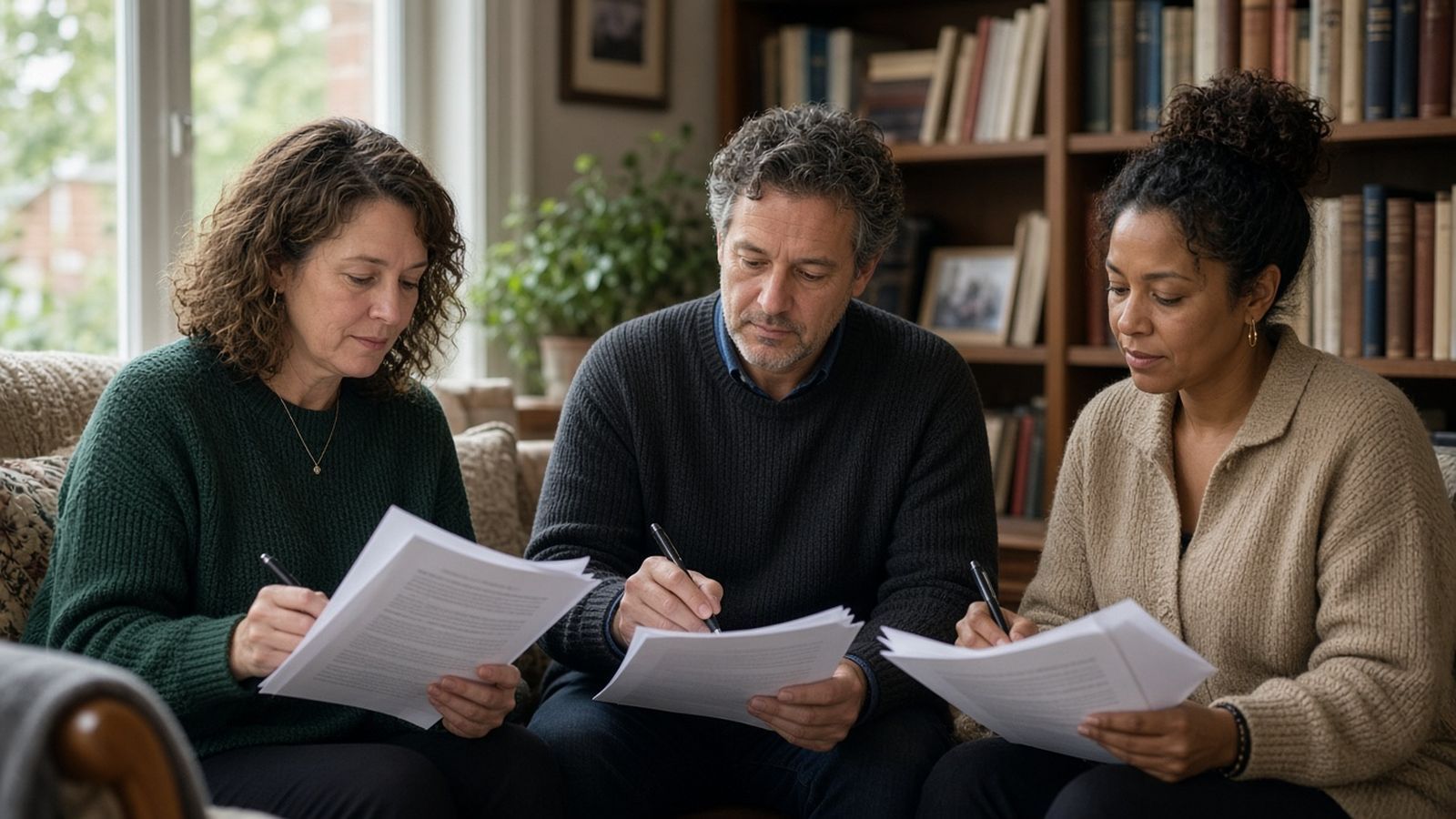
Beta readers are test readers. The term borrows from software, where a beta version is shared with users before release. In publishing, beta readers read a full manuscript, or a large part of it, after the author has revised it at least once and before professional editing or publication.
Most beta readers are not paid professionals. They are readers who match the book's target audience and are willing to read carefully and share an honest opinion. Some authors also use paid services that provide beta reading by experienced readers. Either way, the value of beta readers comes from their perspective: they read the book the way a buyer will.
Beta readers can help with fiction and nonfiction. A novel needs readers who can say whether the story holds their interest, whether characters feel real, and whether the plot makes sense. A nonfiction book, such as a business book, memoir, or expert guide, needs readers who can say whether the argument is clear, whether the advice is useful, and whether each chapter delivers on its promise.
What Is the Difference Between Alpha Readers, Beta Readers, and Critique Partners?
These roles overlap, but each one comes at a different point in the writing process:
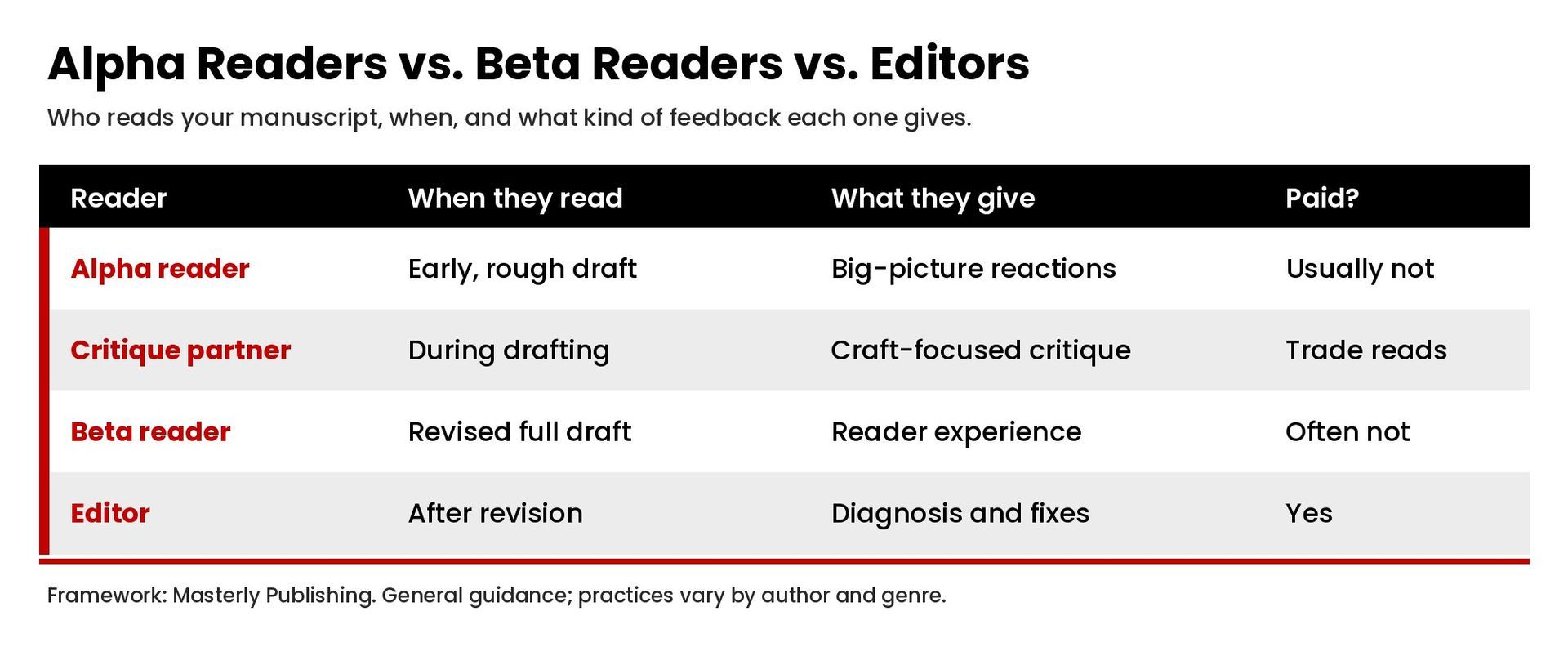
- Alpha reader. An alpha reader sees an early, rough draft, sometimes chapter by chapter. Alpha readers are often trusted fellow writers or a close friend who can look past messy writing and comment on the big idea.
- Critique partners. Critique partners are usually other writers who exchange work and give each other detailed, craft-focused critique. The relationship is reciprocal and often ongoing.
- Beta readers. Beta readers read a complete, revised draft and respond as readers, not as writers. Their job is to report their experience, not to fix the writing.
- Editors. Professional editors, including developmental editors, line editors, and copyeditors, are trained to diagnose and fix problems. Beta readers tell you where a problem is. An editor helps you solve it.
Understanding these differences helps you ask each person for the right kind of feedback. Asking a beta reader to fix sentences wastes their time. Asking an editor whether a chapter is "good" wastes yours.
Why Do Authors Need Beta Readers?
Authors need beta readers because no writer can read their own book as a stranger. By the time a draft is finished, the author knows what every sentence is supposed to mean. Beta readers do not. Their feedback shows the gap between what the author intended and what a reader actually experiences.
Beta readers are especially helpful for:
- Clarity. Where readers get lost, skim, or reread.
- Pacing. Where a story drags or a nonfiction chapter runs long.
- Engagement. Where readers stopped reading, and why.
- Credibility. Whether claims, characters, or examples feel believable.
- Audience fit. Whether the book matches what readers in the genre or target market expect.
- Questions left unanswered. What readers still want to know at the end.
Good beta readers save authors time and money. Fixing structural problems before professional editing means the editor can focus on making a strong manuscript better instead of repairing a weak one.
When Should You Use Beta Readers?
The best time for beta reading is after you have completed at least one full revision yourself and before you hire an editor for line editing or copyediting. The draft should be complete, readable, and as good as you can make it on your own. If the manuscript still has major gaps, an alpha reader or a developmental editor is a better fit.
Some authors run two rounds: a first group of beta readers, a revision, and then new beta readers to check whether the changes worked. New beta readers are important for the second round, because readers from the first round already know the story or argument.
Where Can You Find Beta Readers?
Knowing where to find beta readers is the question most authors ask first. There are several reliable options:
- Your existing readers. Newsletter subscribers, social media followers, and past readers often make excellent beta readers because they already like your work.
- Writing communities. Online writing communities, forums, and genre-specific groups connect authors with readers and fellow authors who are willing to beta read, often in exchange for reading your work in return.
- Local writing groups. Libraries, bookstores, and community centers often host local writing groups where you can meet fellow writers and readers.
- Facebook groups and online platforms. Many Facebook groups and online platforms exist specifically for connecting authors with beta readers. Read the rules before you post, and post a short description of your book, its genre, word count, and timeline.
- Professional networks. For nonfiction, colleagues, clients, or members of your industry can be ideal readers, because they match the book's target audience.
- Paid services. Paid beta reading services provide feedback from experienced readers on a set schedule. They cost money but can be useful when you need reliable turnaround or specific expertise.
Close friends and family members can be supportive, but they are rarely the most honest readers. They may not want to hurt your feelings, and they may not be part of your target audience. Use them for encouragement, and look further for honest feedback.
How Do You Find Beta Readers Online?
Most authors today find beta readers online. A few practical tips help you find beta readers who will actually finish the book:
- Join the right community first. Join a writing community where readers of your genre already gather, and take part before you ask for help. Writing communities respond better to members who contribute than to strangers who post once.
- Write a clear call for readers. When you post, include the title, genre, word count, a two-sentence summary, any content notes, and your deadline. Readers who are interested can then contact the author directly.
- Offer something in return. Many betas in a writing community expect to trade reads. Offering to read their work is fair, and it builds relationships with other writers you can call on for future books.
- Screen before you send. Ask a few questions about what they read and how they like giving feedback. Some authors send the first chapter as a test before sharing the full manuscript.
- Watch for red flags. Be careful with anyone who asks for payment upfront without a clear agreement, wants to submit your manuscript somewhere on your behalf, or asks you to click unfamiliar links to read their terms.
Indie authors often build a list of trusted betas over several books. Once you find beta readers who give great feedback, keep a note of their strengths. One reader may be strong on pacing, another on character, another on technical accuracy. A suspense writer, for example, might keep one reader who always catches plot holes and another who reacts honestly to the twists.
Many beta readers found online are generous with their time, and they do the work because they love books and hope to help an author succeed. Treat them with respect, keep your requests reasonable, and you will find good beta readers willing to read again.
What Makes Good Beta Readers?
Not every reader makes a good beta reader. Look for people who:
- Read your genre or subject. A reader who loves historical fiction will give better feedback on historical fiction than one who reads only thrillers. A business leader will give better feedback on a business book than a casual reader.
- Can explain their reactions. "I didn't like it" is not useful. "I lost interest in chapter six because the example felt repetitive" is.
- Will be honest. You need readers who will tell you what is not working.
- Meet deadlines. A beta reader who disappears for three months can stall your schedule.
- Respect confidentiality. Your unpublished manuscript should not be shared without permission.
Most authors aim for a small group, often somewhere between three and ten readers. Fewer than three makes it hard to tell an individual opinion from a real pattern. Too many creates more comments than you can use.
What Questions Should You Ask Beta Readers?
Specific questions get specific answers. Give beta readers clear, specific guidance on the feedback you want. Useful questions include:
For any book
- Where did you lose interest or feel tempted to skim?
- Was anything confusing? Where did you have to reread?
- What did you enjoy most?
- What questions did you still have at the end?
- Would you recommend this book to a friend? Why or why not?
For fiction
- Which characters did you care about, and which felt flat?
- Did the plot make sense? Were any twists predictable or unbelievable?
- Did the ending feel earned?
For nonfiction
- Was the main argument clear by the end of the first chapter?
- Which chapters were most and least useful?
- Were the examples relevant to your work or life?
- Did any claims feel unsupported?
Ask readers to leave inline comments in the manuscript where they react, then answer a short questionnaire at the end. Inline comments show exactly where a reaction happened. The questionnaire captures the overall experience.
How Do You Work With Beta Readers?
A simple, organized beta reading process keeps the experience positive for everyone:
- Prepare the manuscript. Proofread it for obvious errors so readers can focus on the reading experience.
- Set expectations. Share the genre, word count, deadline, the type of feedback you want, and how to send comments.
- Share the file securely. Use a shared document with comments enabled or a format readers can annotate. Ask readers not to share it.
- Check in once. A short, friendly check-in halfway through the deadline helps keep progress on track without pressure.
- Thank every reader. Many authors acknowledge beta readers in the book's acknowledgements or send a signed copy at launch.
How Should You Use Beta Reader Feedback?
Beta reader feedback is information, not instructions. Before you revise, wait a few days so you can read the comments calmly rather than defensively. Read every comment, then step back and look for patterns. If one reader dislikes a chapter, that is an opinion. If four out of six readers stalled in the same place, that is a problem to fix.
A few guidelines help:
- Look for consensus. Prioritize issues that several readers raised.
- Separate the problem from the suggestions. Readers are usually right that something is wrong and often wrong about how to fix it. Treat their suggestions as clues about the problem, not as the solution.
- Consider who said it. Feedback from readers in your target audience counts more than feedback from readers outside it.
- Do not argue. Thank readers for their comments, even when you disagree. Defending the book will not change how it reads.
- Keep your voice. Revise to solve real problems, not to please every reader.
After revising, the manuscript is ready for professional editing. A developmental editor addresses structure, while a line editor refines sentences. Our guide to line editing services explains what happens at that stage, and our overview of developmental editing services covers structural revision. If you are still drafting, see our step by step guide to writing a book chapter.
Should You Pay Beta Readers?
Many beta readers volunteer, especially within writing communities where authors trade reads. Paid beta readers are also an option, and paid services can offer faster turnaround, more structured reports, or readers with specific knowledge. Whether to pay depends on your budget, timeline, and how hard it is to find readers in your genre or field. Be cautious with any service that promises outcomes, such as sales or publishing deals. A beta reader's job is to give helpful feedback, nothing more.
Frequently Asked Questions
What do beta readers do?
Beta readers read a complete draft of a book before publication and give honest feedback as readers. They point out where they were confused, bored, or engaged, and what questions they still had.
How many beta readers should I have?
Most authors use a small group, often between three and ten. That is enough to spot patterns in the feedback without being overwhelmed by comments.
Where can I find beta readers for free?
Your newsletter list, social media followers, online writing communities, Facebook groups for authors, and local writing groups are common free sources. Many authors also trade beta reads with fellow writers.
What is the difference between a beta reader and an editor?
A beta reader responds as a reader and tells you where problems are. An editor is a trained professional who diagnoses and helps fix problems in structure, sentences, and grammar.
Should beta readers sign an NDA?
Some authors ask for a simple confidentiality agreement, especially for nonfiction with business information. At minimum, ask every reader in writing not to share the manuscript.
Turn Reader Feedback Into a Stronger Book
Beta readers give you something you cannot get on your own: an honest view of how your book reads to someone seeing it for the first time. If you are preparing a manuscript and want support with editing, production, and publishing, contact Masterly Publishing to talk through your next step.