

Cost to Publish a Book: What Actually Drives the Budget Before Production Begins
The cost to publish a book is not a single number. It depends on your genre, goals, format choices, and how much of the process you handle yourself. This post breaks down each major cost category with concrete figures so you can build a realistic budget before spending a dollar.
Quick answer: What does it really cost to publish a book?
Self publishing can technically cost zero dollars. Platforms like Amazon KDP and IngramSpark let you upload an ebook for free, and print-on-demand services allow authors to avoid upfront printing costs. But publishing a book that readers expect to look, read, and feel professional requires real investment.
Most serious self published authors spend between $1,000 and $5,000 or more across editing, cover design, formatting, printing, and marketing efforts. Editing costs alone for an 80,000-word manuscript run $2,160 to $5,040, depending on which services you hire. A professional cover averages $930. Add formatting, distribution setup, and a launch campaign, and you can see how costs accumulate.
Traditional publishing costs the author $0 upfront because the publisher pays for all production, from editing to printing to distribution. The trade-off: traditional publishers keep a larger share of revenue and control over the process. Self publishing gives authors more control over the publishing process, along with higher per-copy royalties.
Masterly Publishing Group does not sell pre-set packages or promise specific outcomes. We help authors understand available options and assemble a tailored plan that fits their goals and budget. If you want a line-by-line breakdown of your own likely publishing costs instead of generic ranges, request a customized Masterly Publishing project consultation.
The big picture: How the cost to publish a book breaks down
Before diving into each category, here is where your money goes when you publish a book:
- Editing: editorial assessment, developmental editing, line editing, copyediting, proofreading
- Design: cover design, interior layout, illustrations if needed
- Formatting and file prep: ebook (EPUB), print-ready PDF, audiobook files
- Printing: per-copy costs for paperback or hardcover, binding options, proof copies
- Distribution: platform fees, retailer royalty splits, ISBNs
- Marketing and launch: author website, advertising, book reviews, launch team management
Some authors also invest in book coaching, ghostwriting, or translation, but none of these are required to publish a book. What drives total publishing costs is not just word count. Genre, goals (hobby vs. business asset), format mix (ebook, print books, audiobooks), and how much writing and production you DIY vs. hire out all shape the final number.
Editing costs: The foundation of a publishable manuscript
Editing is usually the single largest line item in self publishing costs. It is also the factor that most affects reader satisfaction and book reviews. A professionally edited book can increase sales potential because readers notice the difference between polished prose and a rough draft.
Editing costs can range from $300 to $5,000 depending on the type of service. Here is what each stage covers and what it costs for an 80,000-word manuscript:
Editorial assessment: A high-level review of the first few pages and a scan of the full manuscript that gives overall feedback on story, structure, and market fit. An editorial assessment costs approximately $2,000 for an 80,000-word book. Indie authors who cannot yet afford a full developmental editing round sometimes start here.
Developmental editing: This stage focuses on plot, structure, pacing, argument, and reader experience for the entire book. Editors who offer developmental editing work at the deepest level, and the cost reflects that. Developmental editing costs between $3,200 and $5,600 for 80,000 words. This investment can save an author from paying for cover design and printing on a manuscript that is not ready.
Line editing and line notes: This pass refines voice, clarity, rhythm, and consistency at the sentence and paragraph level. Some professional editor relationships combine a line edit with developmental feedback into a single full edit. Rates for line editing typically fall in the $0.04 to $0.08 per word range for fiction; non fiction and historical fiction often cost more due to research complexity.
Copyediting: A copy edit targets grammar, usage, continuity, and fact-checking. Copy editing typically costs $2,160 for an 80,000-word manuscript. This stage is critical for business books, non fiction, and any author treating publication as a professional asset.
Proofreading: The last pass after formatting catches lingering typos, layout glitches, and page-number errors. Proofreading services average around $1,600 for a full manuscript.
Editors charge per word, per hour, or per project, and costs vary depending on genre. An author working on a heavily researched non fiction title will pay more than one writing contemporary romance.
To keep editing costs under control without sacrificing quality, do at least one thorough self editing pass and use beta readers before hiring a professional editor. Ask any editor you are considering for a sample edit so you can evaluate fit before committing to the full project.

Cover design and visual branding costs
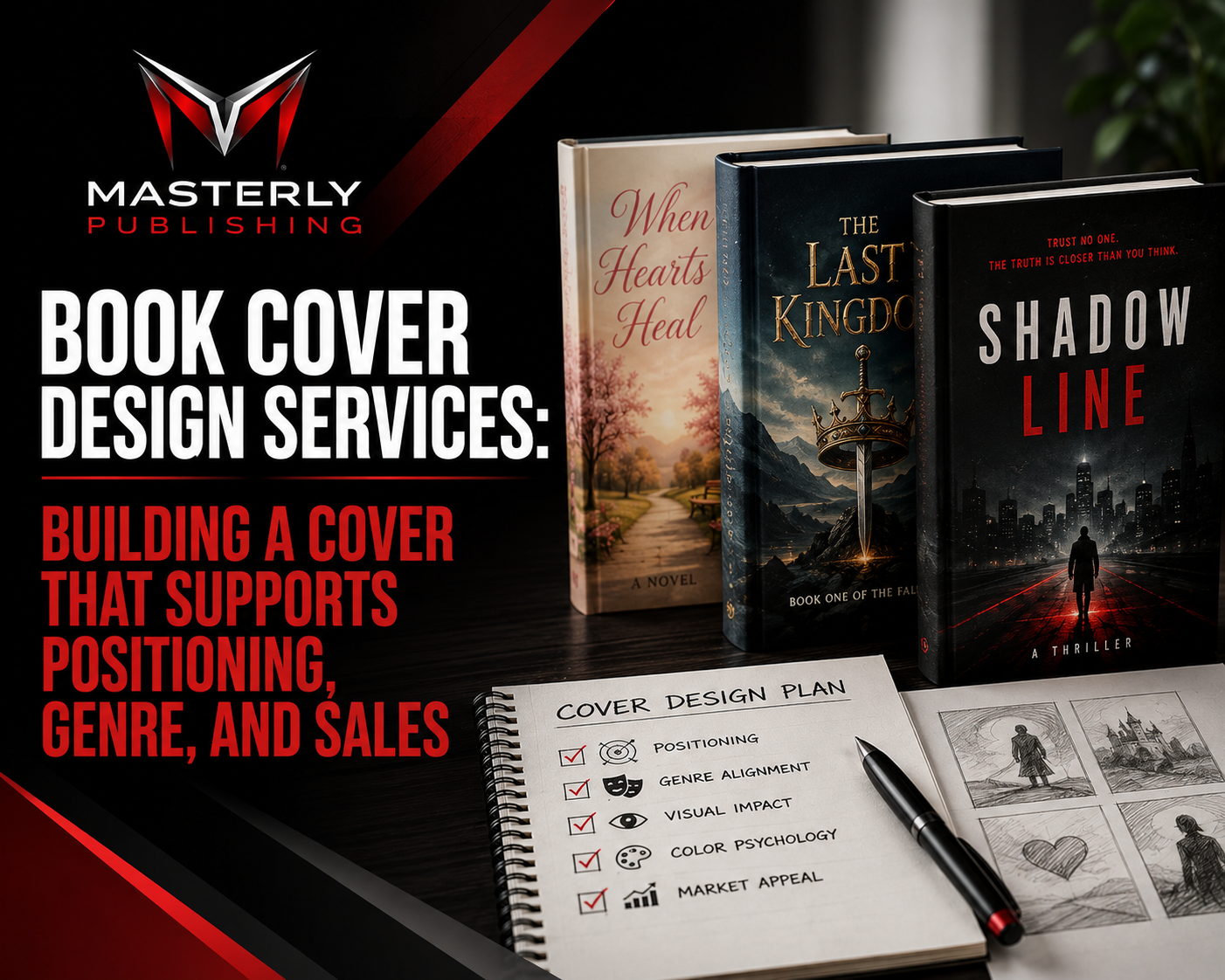
Cover design is a conversion tool. Readers expect genre-appropriate visuals, and books with professional covers are perceived as more credible. Amateurish covers can lead to assumptions of poor writing quality before a person reads a single word.
Cover design costs typically range from $50 to $1,500 or more depending on customization. Professional cover design averages $930. A well-designed cover can boost book sales because first impressions matter; an attractive book cover grabs attention both on a book store shelf and in an online thumbnail.
What a cover designer delivers for that investment:
- Custom front cover aligned with genre conventions
- Spine and back cover for print books
- Separate ebook cover file sized for retailer requirements
- One to three rounds of revisions
Premade templates cost $50 to $350 but are not unique and may not match your genre's visual signals. DIY tools like Canva can produce passable results for some non fiction categories, but for commercial fiction, children's book illustration, or fantasy maps, commissioning original artwork can push book design costs to $1,500 to $8,000 or more.
Consistent visual branding across the cover, author website, and launch graphics reduces friction in your overall book marketing budget. Masterly Publishing collaborates with vetted designers rather than generic templates, helping authors balance aesthetics with genre expectations and cost.
Interior formatting, layout, and available options by format
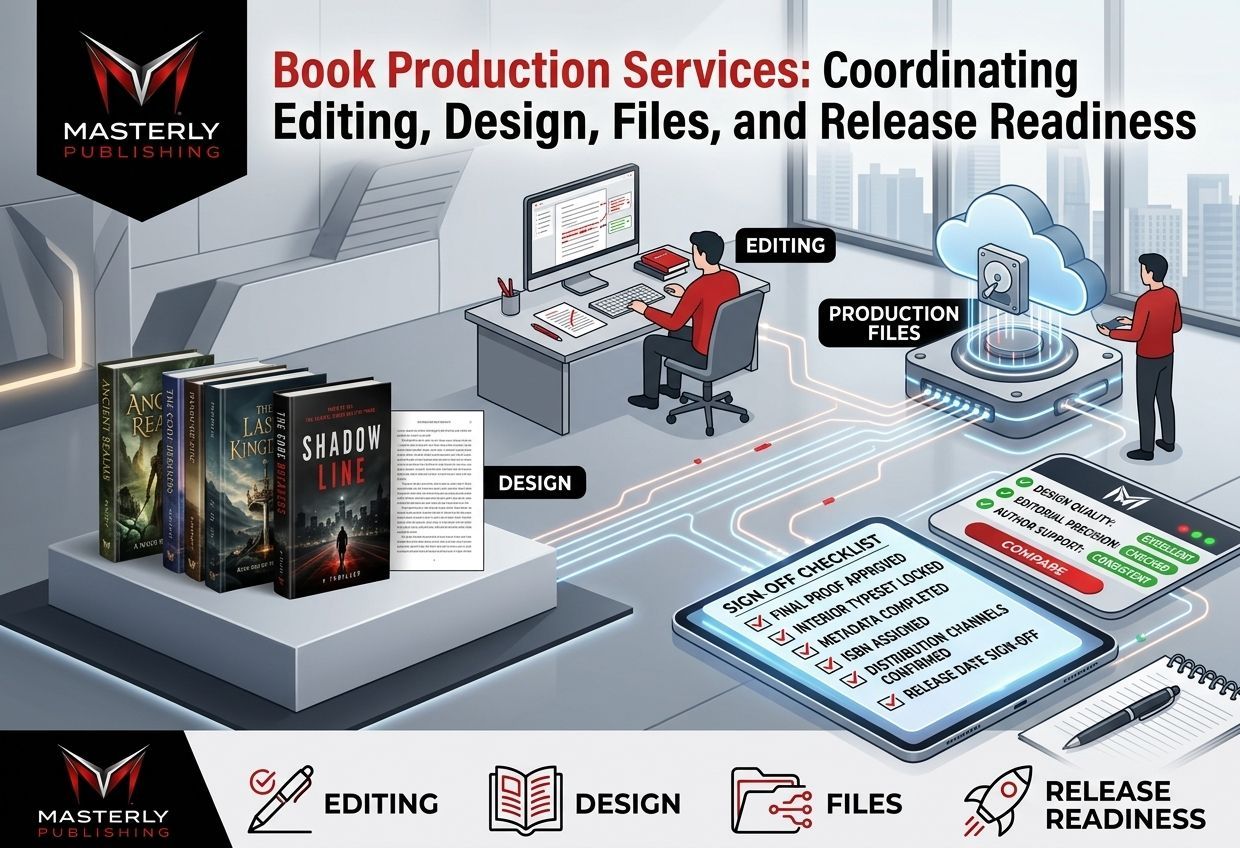
Once editing is complete, the manuscript must be formatted for each output: ebook, paperback, hardcover, and sometimes large print or workbook editions.
Interior formatting and typesetting costs usually range from $0 to $500. Simple novels and memoirs can often be formatted with DIY software (Vellum, Atticus, or free tools). Complex layouts for cookbooks, textbooks, or heavily illustrated non fiction usually require a professional layout designer and can exceed $1,000.
Key formatting decisions that affect cost:
- Trim size: standard 5.5" x 8.5" vs. custom dimensions
- Color vs. black-and-white interior: color pages cost several times more to print
- Number of formats: each format (EPUB for ebook, print-ready PDF for paperback, separate hardcover file) requires its own production time
- Binding options: paperback (perfect bound), hardcover with dust jacket, case laminate, coil for workbooks; each affects printing costs and reader perception of value
Changes after file approval add incremental costs and delays, so reviewing proof copies before finalizing is worth the modest expense.
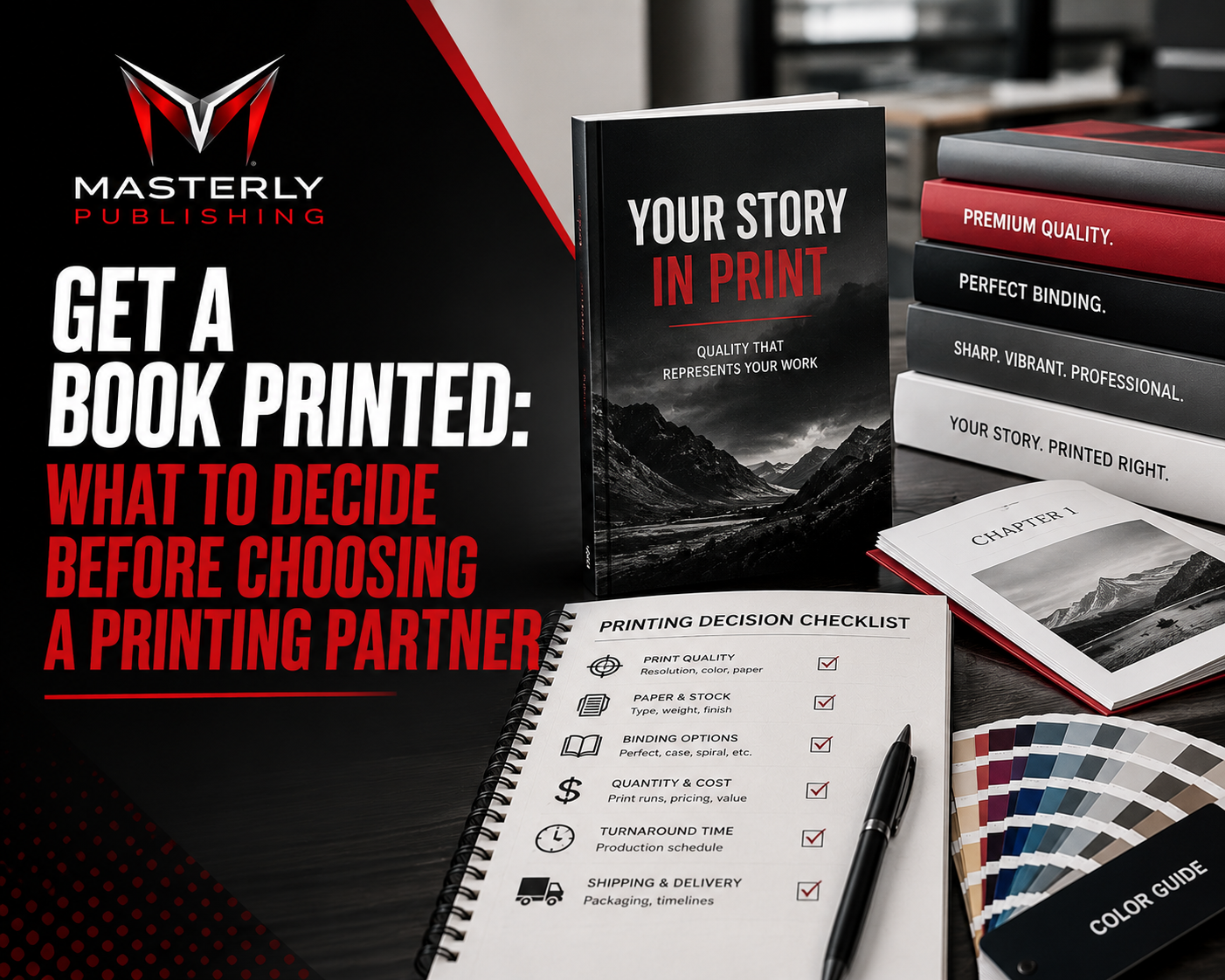
Printing costs: How physical books affect your budget
Printing costs only apply to physical copies. Digital-only self publishers avoid this line item entirely.
Two main models:
- Print-on-demand (POD): E-books cost $0 upfront to publish, and POD paperbacks through Amazon KDP or IngramSpark print only when a customer orders. No inventory risk, but per-copy cost is higher. Print book production costs range from $2 to $5 per copy depending on page count, trim size, and interior color.
- Offset/wholesale printing: Requires ordering many copies upfront (often 500+). Unit cost drops below $2 for simple paperbacks at volume, but you pay for shipping, storage, and risk unsold inventory.
Factors that move printing costs: page count, trim size, interior color vs. black-and-white, paper quality, and binding options (paperback vs. hardcover). A 300-page black-and-white paperback through IngramSpark costs roughly $5.57 per copy at small quantities.
Budget for one or more proof copies to check color, layout, and binding before wider release. Proofs cost the same per unit but prevent expensive reprints.
Distribution and retailer cuts: What "free" really means
Uploading to Amazon KDP, Apple Books, Kobo, or IngramSpark is free or near-free. The actual cost is the percentage each platform takes from every sale. Ebook distribution typically incurs a fee of $0.10 to $0.50 per sale, on top of royalty splits that can range from 30% to 65% of list price going to the retailer.
Key distribution decisions:
- Exclusive vs. wide: KDP Select requires ebook exclusivity to Amazon in exchange for promotional tools. Going wide (multiple platforms) diversifies income but requires more management.
- ISBNs: Some platforms provide free identifiers, but owning your own gives full control. ISBNs cost $125 for one or $295 for ten through Bowker.
- Aggregators: Services that distribute to many stores from one dashboard charge flat fees or take a small royalty percentage.
Masterly Publishing helps authors interpret the fine print on distribution agreements so they can choose the platform mix that best supports their revenue goals.
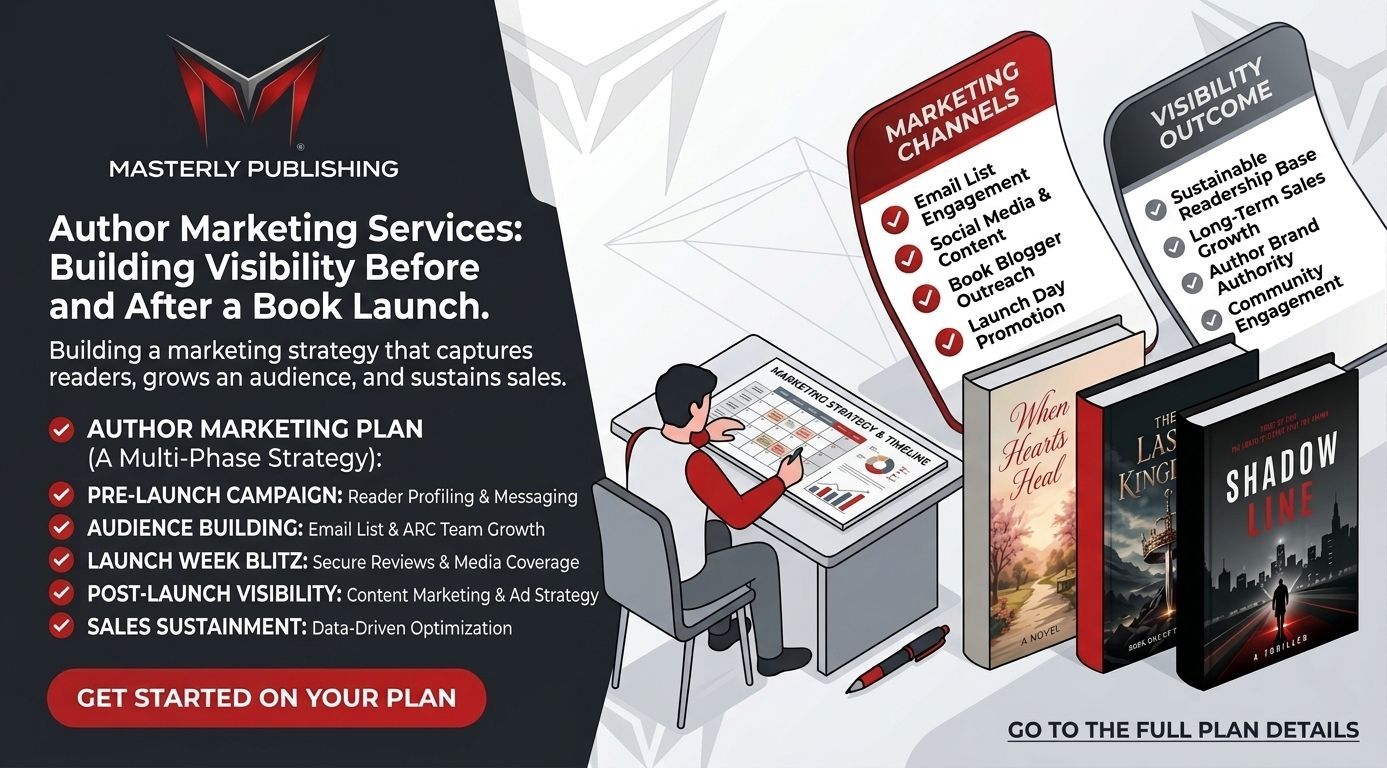
Marketing, launch, and ongoing promotion: Setting a realistic book marketing budget
Even the best-crafted book will not sell itself. Self published authors and indie authors without a traditional house behind them need a realistic book marketing budget.
Self-publishing marketing expenses can vary from $0 to over $5,000. Here is where that money goes:
- Author website: $60 to $500 per year for hosting, domain, and a basic landing page
- Email newsletter: Free to $30/month depending on list size and platform
- Paid advertising: Digital ads can start from $5 per day on Amazon or Facebook
- Hiring a book marketer: Costs between $570 and $1,320 for campaign management
- Editorial reviews: Services like Kirkus or similar outlets charge around $299 per review
- Launch team and ARC management: Often free in money but high in production time
Marketing costs range from $60 to $1,500 for a lean-to-balanced launch. Self publishers treating their book as a core business asset may spend thousands of dollars over the life of the book.
The first few pages of your book function as a key marketing asset. Many readers decide to buy after sampling a preview online, so investing in strong opening chapters and back-cover copy often outperforms unfocused advertising spend.
Book marketing is not a one-week event. Ongoing content, speaking engagements, podcast interviews, and reader engagement spread distribution costs and marketing efforts across months and years. Masterly Publishing helps authors prioritize high-ROI tactics like optimized metadata and professional copy before they spend heavily on ads that may not convert.

DIY vs. professional help: Where to spend and where to save
Not every task requires a hired specialist. Here is a practical framework for indie publishers and self published authors deciding where to allocate budget:
Almost always worth hiring out:
- Professional editor (at minimum a copy edit and proofread; recommend buying a developmental editing round for debut books)
- Professional cover design for any commercial genre
Depends on your skills and time:
- Author website setup
- Simple interior formatting for text-only books
- Basic social media marketing and design services
Usually optional or advanced:
- Ghostwriting or book coaching
- Translation
- Complex custom illustration (unless writing a children's book or illustrated non fiction)
The risk of skipping core professional services is real. A low-budget launch with weak editing and a generic cover leads to poor book reviews, which then undermines every later marketing effort. If funds are limited, prioritize at least one round of professional editing and a market-appropriate cover, even if that means delaying launch.
Masterly Publishing offers project consultations that help authors build a phased plan: for example, starting with an ebook-only release to test positioning before investing in hardcover print books and expanded campaigns.
Putting it together: Sample budgeting scenarios and next steps
Every author's cost to publish a book looks different. Three scenarios illustrate how budgets shift:
- Lean first-time indie launch (ebook + POD paperback): One round of professional editing, a premade or mid-tier custom cover, DIY formatting, minimal ads. Total: roughly $1,000 to $3,000. Editing and cover dominate.
- Professional business or non fiction book: Several rounds of editing (developmental through proofreading), custom cover and interior layout, hardcover option, audiobook production ($50 to $2,000+ depending on scope and narrator), PR outreach. Total: $5,000 to $15,000+.
- Illustrated children's book: Original illustration, color interior, premium paper, possibly hardcover. Illustration and printing costs dominate. Total: $10,000 to $30,000+.
Think in ranges and trade-offs. An author planning a long series may invest more in developmental editing and less in initial ad spend. Break-even depends on royalty per copy, genre norms, and whether the book feeds other revenue like speaking or consulting.
FAQ
- Can I publish for free? You can upload an ebook to Amazon KDP at $0 upfront. But skipping a professional editor, cover designer, and any marketing efforts produces a book that rarely sells or earns positive reviews.
- Do I need every type of edit? In most cases, no. A first-time author benefits most from at least a copy edit and proofread. If you are unsure about your manuscript's structure, an editorial assessment or developmental edit is worth the investment.
- Is a hardcover worth the extra printing costs? For business books sold at events or given as client gifts, yes. For a debut novel sold primarily online, paperback and ebook cover the majority of sales.
- Should I pay for book reviews? Editorial reviews from established outlets (around $299) can add credibility. Organic reviews from beta readers and early fans cost nothing but time.
Ready to get a custom cost breakdown?
Contact Masterly Publishing Group at (888) 209-4055 or through the website to request a customized project consultation. We will help you align publishing costs with your goals for impact, income, and long-term career; no generic packages, no fabricated promises, just a plan built around your own book.