

Publishing Company: How to Choose the Right Partner for Your Book
Introduction: What a Publishing Company Really Does for an Author
A publishing company is responsible for producing and distributing works for public consumption - but that single sentence hides enormous variation. A publishing company manages the process of turning a manuscript into a finished product, which means it is not the same as a printer, an aggregator, or a self publishing platform like Amazon Kindle Direct Publishing. Core functions of publishing companies include acquisition, editorial development, design, marketing, and distribution, and those functions shape whether your first book reaches readers or sits in a digital void.
The real challenge for authors today is choosing between traditional publishing, hybrid publishing, and independent routes without signing the wrong publishing agreement. A company like Masterly Publishing Group operates as a full-service publishing company supporting independent authors through the entire publishing process - an approach worth understanding before you commit anywhere.

What a good publishing company should handle:
- Developmental, professional editing and proofreading
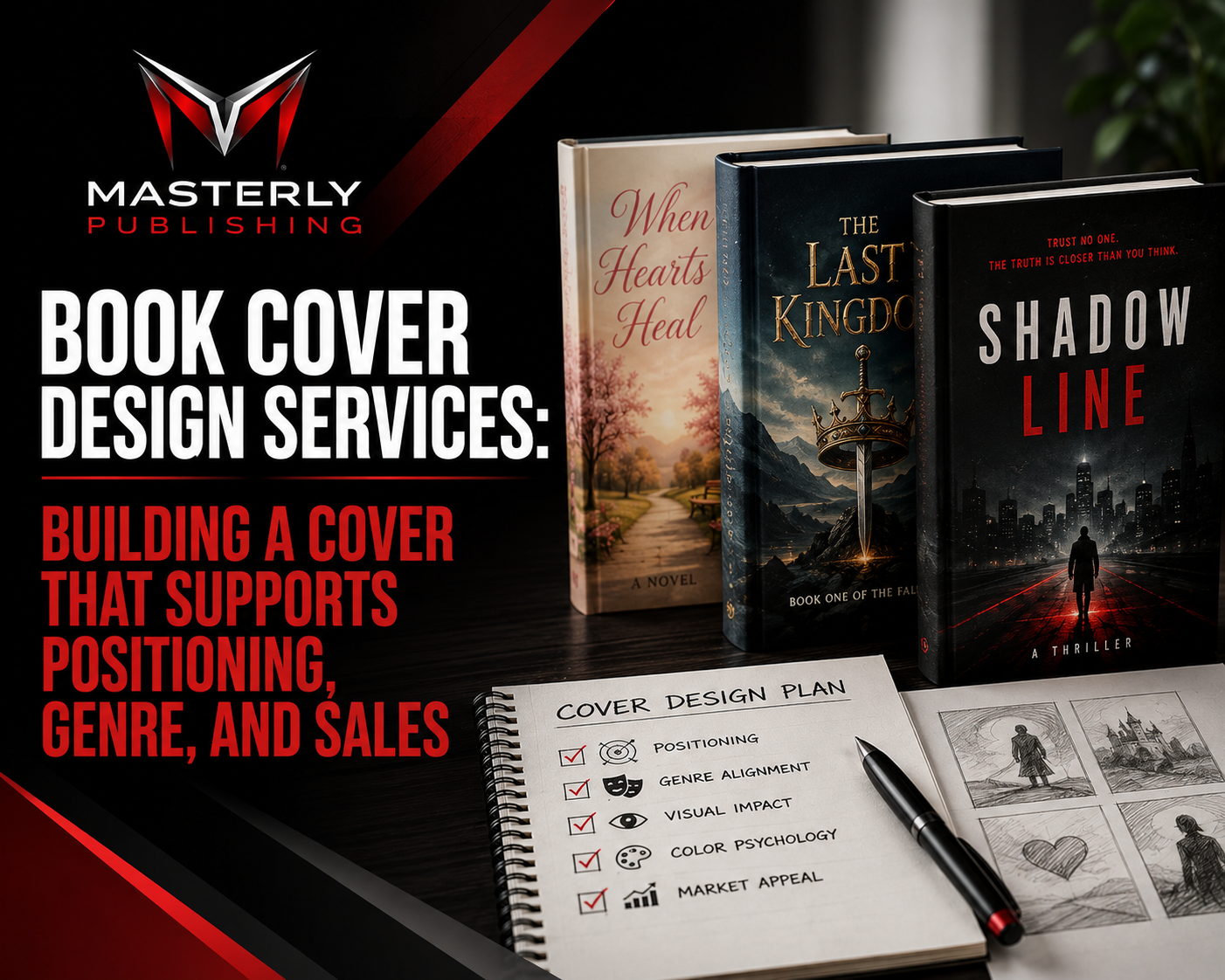
- Book cover design and interior layout for print books and ebooks
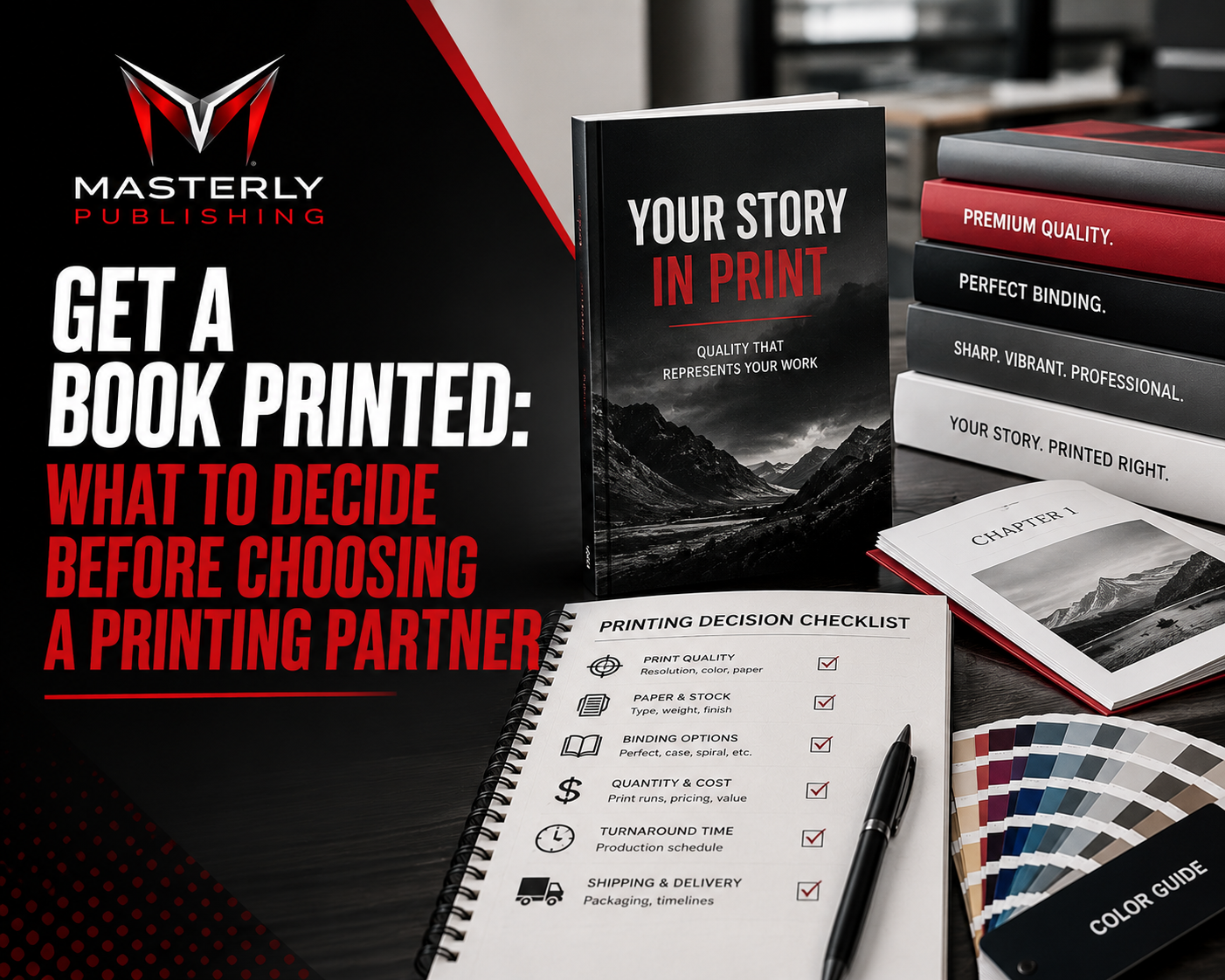
- Print on demand or offset book printing
- Book distribution to retailers, wholesalers, and libraries
- Clear author rights terms and transparent publishing agreement
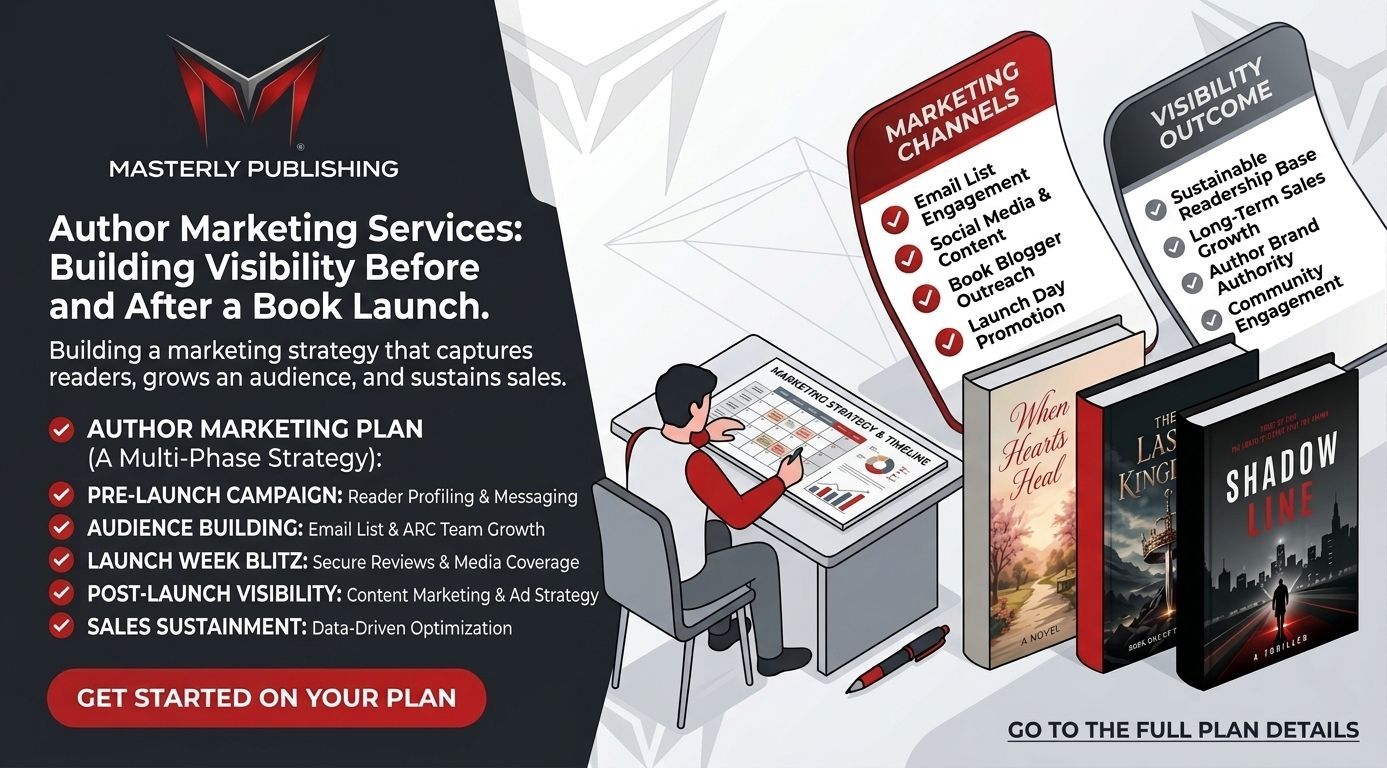
- Marketing and branding support with realistic marketing plans
Types of Publishing Companies and How They Work Today
Not every publishing company operates the same way. The focus here is on partners you can actually approach - not just the major publishers that require agents and years of waiting.
- Large trade publishers (e.g., Penguin Random House, which publishes over 300 titles annually): Traditional publishers pay authors advances and cover production costs in exchange for book rights. Timelines run 12–24 months. Best for authors with agents and strong platforms. These are the major players in the publishing industry.
- Midsize and university presses: University presses prioritize academic content and peer-reviewed works over mass-market appeal. Midsize houses offer more editorial support with moderate advances. Good for non fiction, literary fiction, and educational publishing - educational publishers create learning materials, including textbooks and online resources.
- Small/independent presses: Independent publishers often focus on niche genres and may not require upfront fees. Timelines range from 6–12 months. Ideal for debut novelists, memoir writers, and other writers exploring specialized subjects like self help or children's books.
- Service-based and hybrid publishers: Hybrid publishing involves sharing costs and profits between the author and publisher, typically yielding higher royalties and faster timelines (4–9 months). Publishing service companies provide services like editing and design for self-publishing authors. Unlike vanity presses, legitimate hybrids are selective, transparent, and meet IBPA's Hybrid Publisher Criteria.

Who fits each type best: business authors and nonfiction experts often benefit from hybrid or midsize presses. Debut novelists writing fiction may start with small presses. Self published authors who want to level up production quality often move toward service-based companies.
Author Rights and Ownership: The First Thing to Check
Before discussing fees or publishing services, evaluate author rights. Contracts should be examined for terms related to rights, royalties, and reversion clauses - this is the single most important step in your publishing journey.
Key rights to understand: print rights, ebook rights, audiobook rights, translation rights, territorial rights (covering the U.S., Europe, the Middle East, and beyond), and film/TV adaptation rights. Self-publishing allows authors full creative control over their work and authors retain full rights to their work when self-publishing, but self-publishing allows authors to retain rights only if they manage all publishing aspects themselves. When working with a publishing partner, the balance of creative control and rights ownership varies greatly.
Red flags to watch for: lifetime exclusive rights in all digital formats, language like "all media now known or hereafter devised," copyright assignment instead of licensing, or no mention of rights reversion.
Questions to ask about rights:
- Do I retain copyright, or is this a transfer?
- Which formats, territories, and languages are covered?
- How long is the exclusive license?
- What triggers rights reversion (low book sales, out-of-print status, time limit)?
- Who controls subsidiary rights - audiobook, translation, film?
- Are there AI-training or future-media clauses in the grant?
Publishing Agreements: Contracts, Royalties, and Red Flags
A publishing agreement is the legally binding contract covering term, territory, formats, advances, royalties, and what both sides owe each other. Royalty structures vary greatly across models. In traditional publishing, ebook royalties often sit around 25% of net receipts; KDP royalties are 70% for ebooks priced between $2.99 and $9.99. Hybrid models typically offer authors 50% or more of net revenue. Self-publishing costs range from hundreds to thousands of dollars depending on the level of editorial support and design involved.
Print on demand reduces financial risk by printing books as ordered, eliminating warehousing costs. Print on demand also reduces financial risk for self-publishing authors and smaller presses. However, returnability matters - bookstores like Barnes & Noble often prefer returnable inventory from publishers using offset or Ingram-backed distribution.
Contract items to highlight and review with a lawyer:
- Mandatory bulk purchase requirements (a vanity presses signal)
- Non-refundable "marketing packages" bundled into hidden fees
- Non-compete clauses restricting future writing in similar books or genres
- Automatic renewals without notice periods
- Cross-collateralization across multiple platforms or titles
Core Publishing Services: Editing, Design, and Production Quality
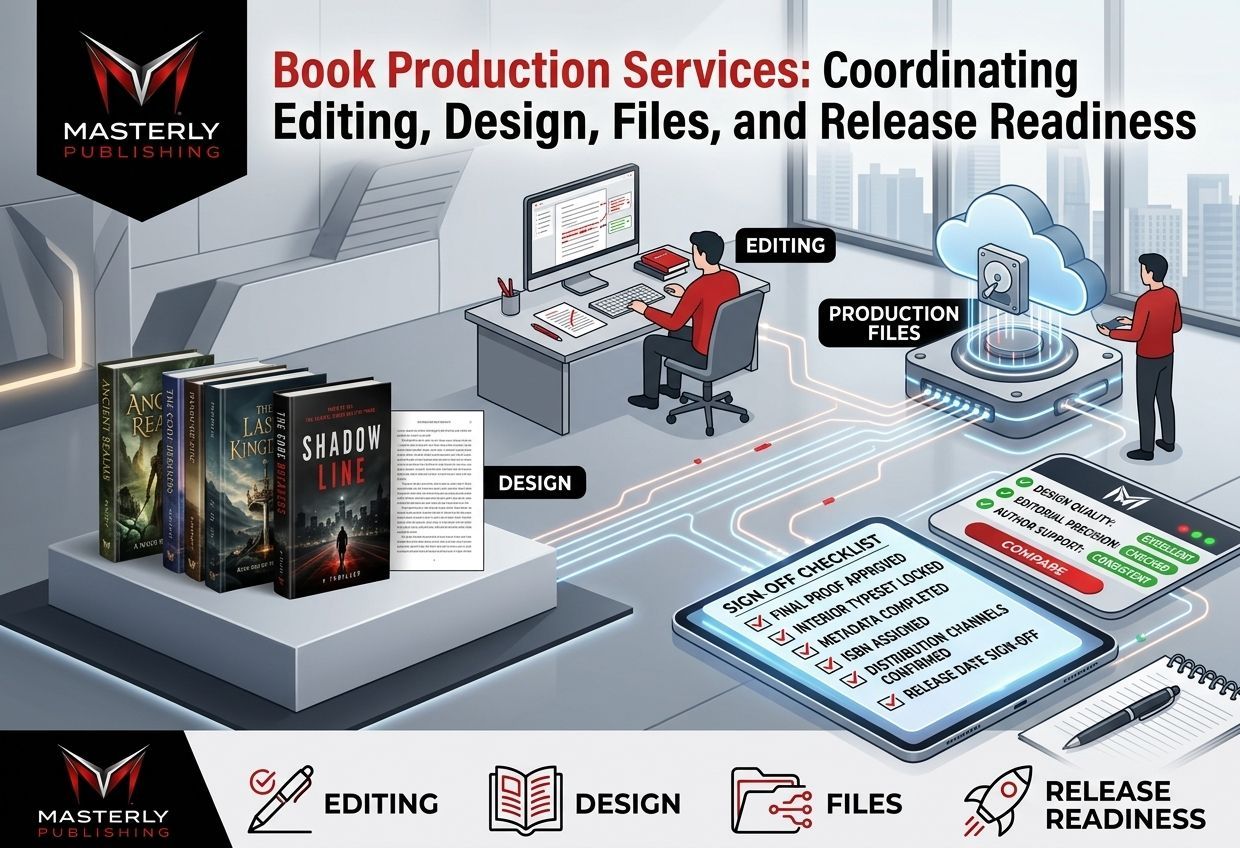
A professional quality book requires layered editorial support: developmental feedback, at least one full copyedit pass, and a final proofread before files go to book printing. Professional editors should shape structure, pacing, and clarity - not just catch typos.
A professional book cover can significantly boost sales. Design quality markers include readable typography, genre-appropriate covers, proper trim sizes, and separate optimized files for Amazon Kindle Direct Publishing, Apple Books, Nook Press, and other ebook distribution outlets. Self-publishing services include editing, design, and distribution, and companies like BookBaby offer services for authors to retain full rights to their work.

For production cost context: BookBaby prints novels for as low as $4.95 each, hardcover children's books can cost as low as $8.75 each, and cookbooks can be printed for as low as $11.75 each. Knowing these benchmarks helps authors evaluate whether a publishing company's pricing is reasonable or inflated.
Quality checklist for any publishing partner:
- Review similar books the company has published on Amazon or Barnes Noble
- Check cover design quality and interior formatting in sample pages
- Confirm the number and type of edit passes included
- Ask whether ebooks are tested on multiple platforms and devices
- Verify ISBN ownership and metadata standards
Distribution and Reach: Where Your Book Will Actually Be Available
There is a difference between listing a finished book on a single platform and achieving real book distribution. Amazon KDP accounts for 68% of global ebook sales - Amazon KDP launched in 2007, offering global publishing access - and 87% of indie authors named Amazon as their top revenue source. But relying on one channel limits your global reach.
IngramSpark is a leader in self-publishing and print-on-demand services and is ideal for getting books into brick-and-mortar stores. Kobo Writing Life distributes ebooks to over 190 countries, helping you distribute ebooks and reach readers worldwide. Barnes & Noble Press allows authors to self-publish for free and publish directly to millions of readers.
Minimal distribution vs. robust distribution:
- Minimal: book listed only on Amazon; no wholesale presence; no library access; limited to one territory
- Robust: listed across Amazon, Barnes & Noble, Apple Books, Kobo, and Google Play; available via Ingram for bookstores and libraries; print on demand fulfillment in multiple regions; ebook distribution through aggregators; a small print run option for events or bulk orders
Authors should ask each publishing company for a precise list of retailers and markets - not vague promises of worldwide availability - and verify a few live titles on key sites.
Timelines, Communication, and Project Management
Traditional houses often take 12–24 months from signed publishing agreement to publication. Agile publishing companies working with independent authors can move from contract to launch in 4–9 months, depending on manuscript readiness.
Before you sign, ask:
- What is the milestone schedule (editing, design, proofing, upload)?
- Who is my named project manager or publishing partner contact?
- How are delays handled, and what are agreed response times?
- Will I see and approve each stage before files go live?
- When are ARCs or advance copies available for reader engagement and reviews?
Marketing, Platform, and What a Publishing Company Really Promises
Most publishers - including major publishers - expect authors to participate actively in marketing. Authors considering traditional publishing should investigate the publisher's track record and distribution capabilities, and authors should evaluate a publisher's actual book quality and marketing effectiveness before signing.
Authors should optimize keywords for better discoverability on Amazon. Book descriptions should connect emotionally with potential buyers. KDP offers various marketing tools but has poor customer support, so relying solely on platform-provided tools is risky. Credible marketing support includes retailer metadata optimization, BISAC category selection, author bio preparation, ARC distribution, and a launch calendar with realistic marketing plans.

Marketing promises to verify:
- What specific deliverables are included (media kit, book descriptions, ad setup)?
- Are there case studies or anonymized campaign outlines available?
- What is included versus optional paid services?
- Does the company help with reader engagement strategy or just hand off digital content?
How to Compare Publishing Companies Step by Step
Follow this framework before committing:
- Clarify your goals: Is your priority wide distribution, prestige, speed, higher royalties, or full control?
- Shortlist 3–5 companies across different types (traditional, midsize, hybrid) to compare fairly.
- Review sample titles: look up actual books on Amazon, Barnes & Noble, or Apple Books and evaluate covers, formatting, and book sales rank.
- Review contracts carefully: focus on rights, royalties, reversion, and territories.
- Speak with a representative: ask for a sample project timeline and service breakdown.
- Talk to past authors: request references or search for reviews from self published authors and other writers who have worked with them.
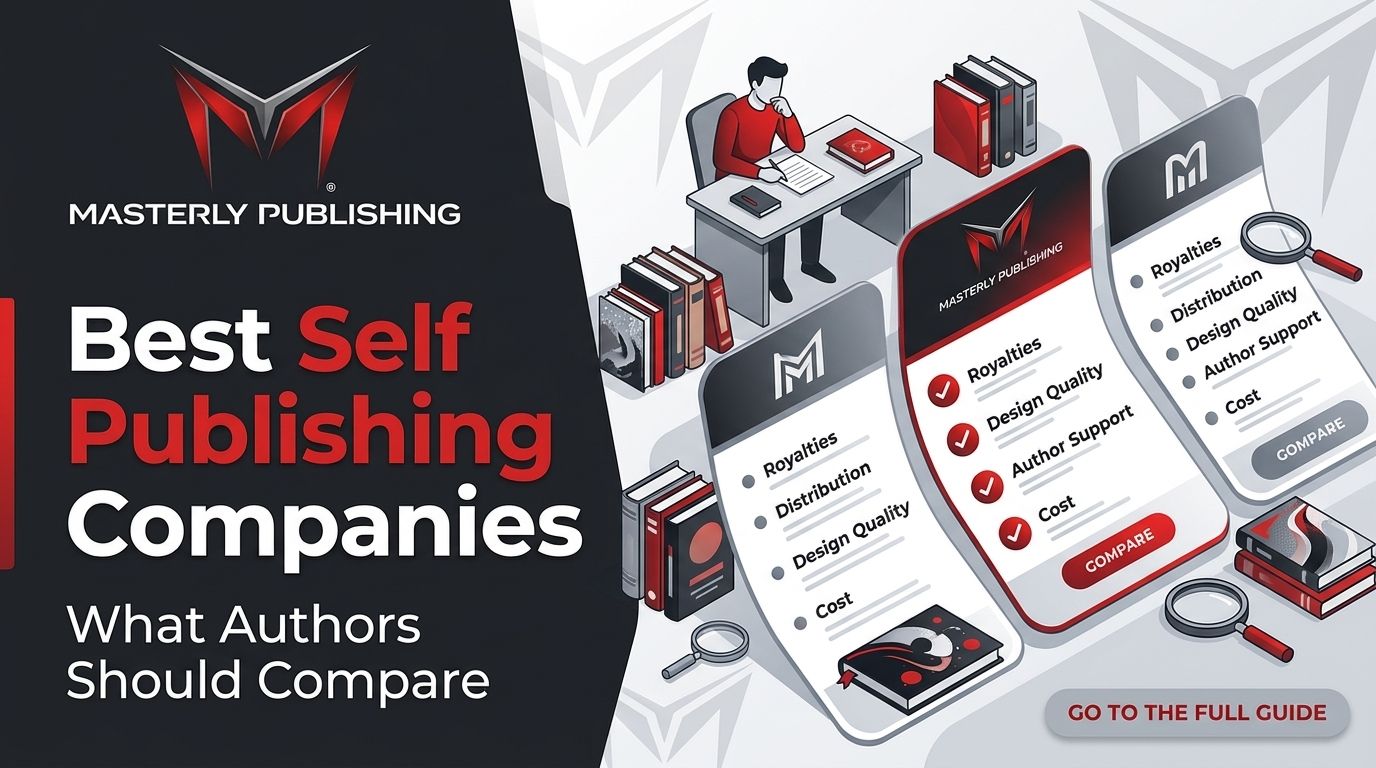
- Score on a comparison worksheet: rate each publishing company on rights, services, distribution reach, transparency, and alignment with your genre and the book market.
Example scenario: A business author targeting a 2027 release might compare submitting to a midsize press (longer timeline, lower royalty, wider prestige) against a service-based publishing partner (faster launch, higher cost sharing, more creative control). The right answer depends on platform readiness, budget, and whether the author can manage the financial risk.
Working with Masterly Publishing Group as Your Publishing Partner
Masterly Publishing Group operates as a full-service publishing company that supports independent authors from manuscript through market - not as a one-off service vendor.
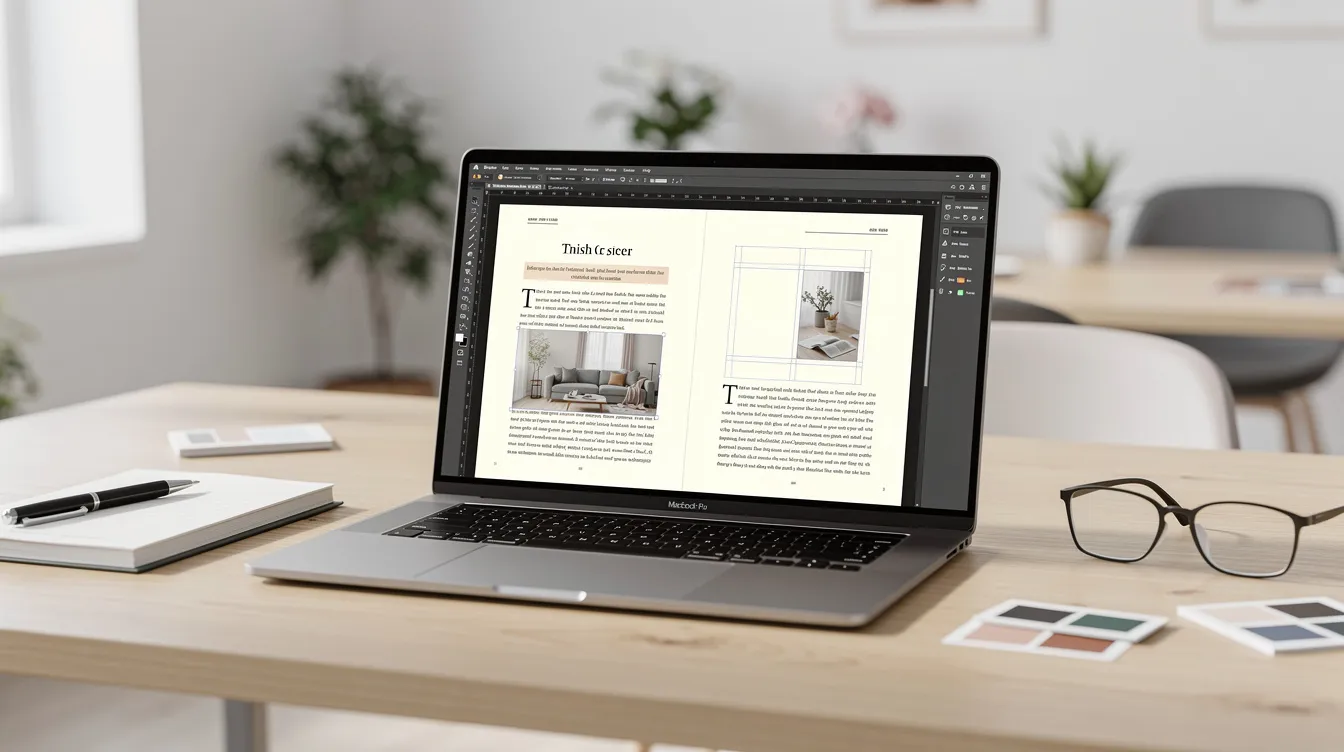
- Guided publishing process covering developmental and professional editing, book writing support, and final proofreading
- Book cover design and interior layout for both print and digital formats
- Custom book printing options including print on demand and offset runs
- Translation services for authors targeting readers beyond North America
- Marketing and branding support integrated into the publishing journey, not sold as an afterthought
- Transparent communication with a named contact who works closely with authors at every stage
Ready to discuss your manuscript and find the right publishing path? Contact Masterly Publishing Group at (888) 209-4055, email info@masterlygroup.com, or visit the contact page to start the conversation.
FAQs About Choosing a Publishing Company
How is a publishing company different from a self publishing platform like Amazon KDP? A publishing company acts as a publishing partner - investing in or coordinating editing, design, marketing, and distribution under its imprint. A self publishing platform like Amazon KDP provides tools to upload and distribute your work, but you bear all costs and responsibilities. KDP accounts for 68% of global ebook sales, making it a powerful channel, but it is not a publisher.
Can I still use print on demand if I work with a publishing company? Yes. Many small presses, hybrid publishers, and even some major publishers use print on demand for backlist titles, international orders, or small print run needs. It reduces financial risk while maintaining access to global retailers.
Do I need an agent to work with a reputable publishing partner? Not always. Large trade publishers typically require agented submissions, especially for fiction. Midsize, independent, and hybrid publishers generally work directly with authors. Regardless, legal review of any publishing agreement is essential.
What happens if my book doesn't sell - can I get my rights back? You should insist on reversion clauses. Common triggers include sustained low royalty earnings, publisher inactivity, or the book going out of print. KDP allows free editing after publication with minor changes, but rights reversion from a traditional or hybrid publisher depends entirely on contract language.
Is hybrid publishing the same as paying a vanity press? No. Legitimate hybrid publishing is selective, provides trade-level editing and distribution, offers transparent cost sharing, and gives authors higher royalties. Vanity presses accept anyone, deliver little value, and often hide fees. This comprehensive guide and IBPA criteria help authors distinguish the two.
Can a publishing company help me reach readers outside North America, including Europe and the Middle East? Yes - if they have international distribution partnerships, translation capabilities, and use global print-on-demand or ebook distribution networks. Kobo Writing Life, for example, distributes ebooks to over 190 countries. Ask for specific territories and verify existing titles in those markets. A user friendly interface on a single platform is not enough - real global reach requires intentional distribution strategy.