

Strengthening Your Legal Position Before Brand Conflicts Arise
Why Authors and Publishers Cannot Ignore Trademark Risks
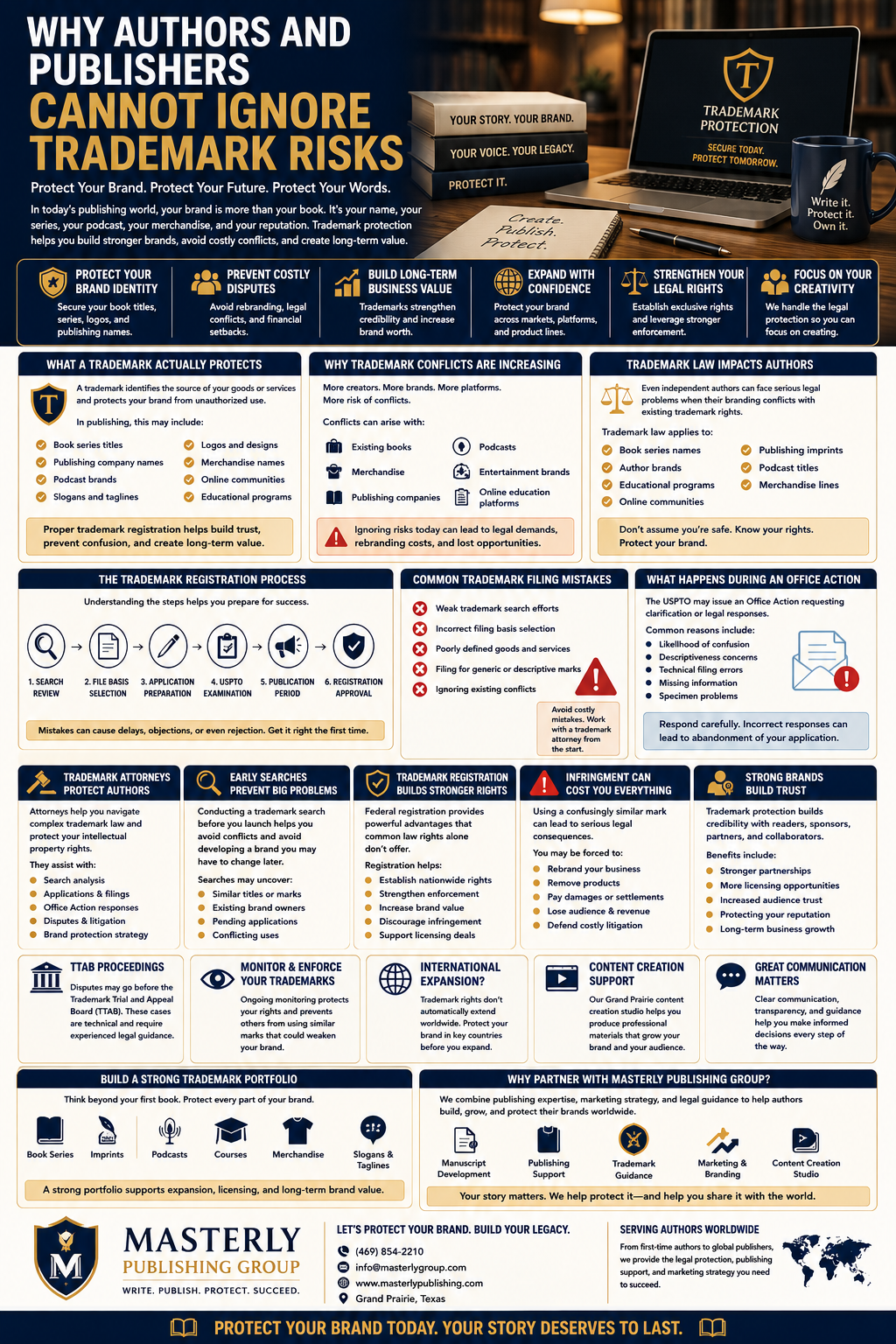
Many authors spend years building a story, creating a book series, developing characters, and establishing a recognizable brand before realizing someone else may already own similar trademark rights. Unfortunately, by the time a conflict appears, the financial and emotional damage may already be significant. Rebranding book titles, websites, podcast names, publishing imprints, or promotional materials can become expensive and stressful for writers trying to grow their audience.
In today’s publishing world, authors are not just writers. They are building businesses, personal brands, speaking platforms, podcasts, merchandise lines, and digital communities. This means trademark protection has become more important than ever before for self-published authors and publishing companies alike.
At Masterly Publishing Group, we help authors strengthen their legal position before brand conflicts arise. From manuscript development to trademark filing guidance and marketing support, our team works closely with writers worldwide who want to protect the future of their creative work. We understand that publishing success involves more than writing a great book. It also requires protecting the intellectual property connected to your brand.
What a Trademark Actually Protects
A trademark helps identify the source of goods or services connected to a particular brand, business, or creator. In publishing, a trademark may involve book series titles, publishing company names, podcast brands, slogans, logos, or other distinctive elements associated with an author’s work.
Trademark rights help consumers identify products coming from the same source while protecting creators from unauthorized use by competitors or imitators. When authors fail to secure trademark protection early, they may later discover someone else already controls similar brand names or marketing assets.
Proper trademark registration can help authors:
- Protect book series branding
- Prevent consumer confusion
- Build long-term business value
- Establish exclusive rights
- Strengthen licensing opportunities
Without legal protection, growing a publishing brand becomes much riskier.
Why Trademark Conflicts Are Increasing
The publishing industry has become extremely competitive, especially with the rise of self-publishing and online content creation. Thousands of new books, podcasts, online courses, and digital brands launch every month. As more creators enter the marketplace, potential conflicts involving trademark use continue increasing.
Authors often unknowingly choose names already connected to:
- Existing books
- Podcasts
- Merchandise
- Entertainment brands
- Publishing companies
- Online education platforms
These conflicts may eventually lead to trademark disputes, legal demands, rebranding costs, or even litigation if not addressed early.
Trademark Law Impacts Authors More Than They Realize
Many writers assume trademark law only affects large corporations or major entertainment companies. In reality, even independent authors can face serious problems when their branding conflicts with existing trademark rights.
Trademark law applies to:
- Book series names
- Publishing imprints
- Author brands
- Podcast titles
- Educational programs
- Merchandise lines
- Online communities
Writers who ignore trademark law may accidentally create branding that exposes them to future legal challenges.
Why Early Trademark Searches Matter
One of the most important steps before launching a publishing brand is conducting a proper trademark search. A trademark search helps identify existing registrations, pending trademark applications, or similar uses that may create future conflicts.
Without proper trademark clearance, authors may invest heavily into branding only to receive cease-and-desist letters later.
Trademark clearance searches may help uncover:
- Similar book titles
- Existing publishing brands
- Competing merchandise names
- Confusingly similar marks
- Pending trademark filing conflicts
Early due diligence often prevents expensive problems later.
Conduct Trademark Clearance Searches Before Launching Your Brand
Before investing in websites, logos, podcasts, social media campaigns, or book marketing, authors should conduct trademark clearance searches carefully. This process helps identify whether another business or creator already owns similar trademark rights.
Many trademark attorneys strongly recommend authors conduct trademark clearance searches before:
- Publishing a book series
- Launching a podcast
- Selling merchandise
- Creating educational programs
- Expanding into multiple countries
Skipping this step can create major obstacles later if conflicts emerge after your audience begins growing.
Trademark Registration Strengthens Long-Term Protection
Trademark registration offers stronger legal protection than relying only on common law rights. While some rights may exist through use alone, federal registration through the united states patent and trademark office provides additional advantages.
Trademark registration may help:
- Establish nationwide rights
- Strengthen enforcement options
- Improve legal standing
- Discourage infringement
- Increase brand value
Authors planning long-term growth should strongly consider registration early in the branding process.
Understanding the Trademark Registration Process
The trademark registration process involves several stages that require careful attention to detail. Many authors underestimate how technical the process can become until they encounter filing issues or office action responses.
The registration process often includes:
- Trademark search review
- Filing basis selection
- Trademark submission preparation
- Application review
- Trademark office examination
- Publication period
- Registration approval
Mistakes during the trademark process can delay or jeopardize approval entirely.
Why Trademark Filing Mistakes Can Become Expensive
Improper trademark filing can create major delays, rejections, or future legal conflicts. Many creators attempt to handle the process alone without fully understanding trademark law requirements or filing standards.
Common trademark filing mistakes include:
- Weak trademark search efforts
- Incorrect filing basis selection
- Poorly defined goods and services
- Filing for generic marks
- Ignoring existing conflicts
Working with an experienced trademark attorney often helps reduce these risks significantly.
What Happens During an Office Action
After a trademark submission is reviewed, the trademark office may issue an office action requesting clarification, corrections, or legal responses before approving the registration.
Office action issues may involve:
- Likelihood of confusion
- Descriptiveness concerns
- Technical filing errors
- Missing information
- Specimen problems
Responding improperly to an office action may result in abandonment of the application. This is why many authors seek assistance from trademark attorneys during the registration process.
Trademark Attorneys Help Protect Publishing Brands
Trademark attorneys help authors navigate complex trademark law issues while protecting their intellectual property rights. Writers often underestimate how important professional legal guidance becomes once their brand starts growing publicly.
Trademark attorneys frequently assist with:
- Trademark search analysis
- Trademark applications
- Trademark filing strategy
- Office action responses
- Trademark disputes
- Trademark litigation
- Brand protection planning
At Masterly Publishing Group, we understand how closely publishing success connects to strong brand protection strategy.
Why Intellectual Property Matters for Authors
Authors create valuable intellectual property every time they publish original work. Unfortunately, many writers focus only on copyright concerns while overlooking broader trademark issues connected to branding and marketing.
Intellectual property may include:
- Book titles
- Logos
- Publishing brands
- Course materials
- Podcast names
- Merchandise branding
Protecting intellectual property early helps authors avoid losing control over the identity connected to their creative work.
Trademark Protection Helps Build Author Credibility
Readers, sponsors, collaborators, and business partners often view strong trademark protection as a sign of professionalism and long-term business planning. Successfully registered trademarks help strengthen credibility within competitive publishing markets.
Trademark protection may also help authors:
- Secure partnerships
- Expand product lines
- Build audience trust
- Increase licensing opportunities
- Protect business reputation
Professional branding creates stronger long-term opportunities for growth.
Why Trademark Infringement Can Damage Your Business
When someone else uses a confusingly similar mark associated with comparable products or services, it is considered trademark infringement. In publishing, this may involve competing book series, podcasts, coaching programs, or merchandise.
Trademark infringement disputes may force authors to:
- Rebrand their business
- Remove products
- Change marketing materials
- Defend litigation claims
- Lose existing audience recognition
Preventive trademark strategy is usually far less expensive than resolving disputes later.
Trademark Disputes Can Escalate Quickly
Many trademark disputes begin with warning letters or online complaints before escalating into formal legal proceedings. Authors sometimes assume small businesses or self-published writers are unlikely targets, but publishing conflicts occur frequently.
Trademark disputes may involve:
- Similar titles
- Brand confusion
- Domain name conflicts
- Merchandise disputes
- Unauthorized use
Even accidental conflicts can become expensive if not addressed properly.
Why Brand Protection Matters for Self-Published Authors
Self-published authors often work extremely hard building visibility, reader loyalty, and online communities. Without strong brand protection, years of effort may become vulnerable to imitators or competing businesses.
Brand protection helps authors:
- Protect audience recognition
- Maintain business identity
- Preserve marketing investments
- Strengthen long-term growth
Authors who think strategically about trademark rights often build stronger publishing businesses over time.
Trademark Trial and Appeal Proceedings Can Become Complicated
Some disputes eventually reach the trademark trial and appeal board when parties challenge trademark applications or existing registrations. These proceedings often involve highly technical legal arguments and detailed evidence requirements.
Trademark trial and appeal matters may involve:
- Opposition claims
- Cancellation proceeding disputes
- Likelihood of confusion arguments
- Trademark ownership conflicts
Handling these cases without experienced attorneys can become extremely difficult.
Understanding the Trial and Appeal Board
The trial and appeal board reviews disputes involving trademark registration matters before the united states patent and trademark office. These proceedings are often referred to as ttab proceedings.
The trademark trial and appeal board does not typically award damages, but its decisions can strongly affect trademark rights and future business opportunities.
Writers and publishers involved in trademark trial and appeal disputes often require experienced legal guidance to protect their brand interests effectively.
USPTO’s Trademark Trial Procedures Are Technical
Uspto's trademark trial procedures involve strict deadlines, evidentiary standards, and procedural rules that many creators do not fully understand. Missing deadlines or filing improper responses may seriously damage a trademark applicant’s position.
Because these cases resemble litigation in many ways, authors often benefit from working with experienced trademark attorneys who understand intellectual property law and trademark practice thoroughly.
Trademark Litigation Can Threaten Growing Brands
Trademark litigation can become financially and emotionally draining for authors and publishing businesses. Legal conflicts often distract creators from writing, marketing, and audience growth.
Litigation may involve:
- Federal court proceedings
- Trademark infringement claims
- Injunction requests
- Damages disputes
- Settlement negotiations
Preventive trademark work is often one of the smartest investments authors can make early in their career.
Experienced Trademark Attorneys Help Reduce Risk
An experienced trademark attorney can help authors identify potential conflicts before they become major legal problems. Preventive legal strategy often saves substantial time, money, and stress later.
Experienced attorneys frequently help clients:
- Conduct trademark clearance
- Prepare trademark applications
- Respond to office action issues
- Manage trademark portfolio strategy
- Address infringement concerns
Strong legal planning creates stronger long-term publishing opportunities.
Trademark Owners Must Monitor Their Brands
Trademark owners cannot simply register a mark and ignore future enforcement issues. Protecting trademark rights often requires ongoing monitoring and enforcement against unauthorized use.
Failing to protect a mark consistently may weaken legal protection over time.
Authors should monitor for:
- Similar publishing brands
- Confusing book titles
- Unauthorized merchandise
- Online impersonation
- Competing domain names
Active monitoring supports stronger long-term brand protection.
Managing Intellectual Property Requires Long-Term Strategy
Managing intellectual property effectively involves more than filing a single application. Successful authors often develop multiple trademarks connected to books, podcasts, coaching programs, speaking engagements, and merchandise.
A strong trademark portfolio may eventually include:
- Publishing imprints
- Series titles
- Podcast brands
- Educational products
- Merchandise branding
Strategic planning helps authors expand confidently while protecting their business interests.
Why Trademark Applications Need Careful Preparation
Trademark applications require detailed information regarding goods, services, filing basis, and supporting documentation. Mistakes may delay approval or increase the likelihood of rejection.
Careful preparation becomes especially important when authors plan to:
- Expand internationally
- Sell merchandise
- Build educational programs
- Launch podcasts
- Develop licensing opportunities
Strong preparation often improves long-term registration success.
International Expansion Creates Additional Trademark Challenges
Authors reaching audiences in multiple countries may encounter additional trademark risks because trademark rights often vary by jurisdiction. A brand available in the United States may already be registered elsewhere internationally.
Authors planning international growth should consider:
- Foreign trademark filing
- International trademark association guidance
- Cross-border brand protection
- Local registration requirements
International growth often requires broader intellectual property planning.
Trade Dress Can Also Affect Publishing Brands
Trade dress involves the visual appearance associated with a brand or product. In publishing, trade dress issues may arise involving packaging, website appearance, product presentation, or distinctive branding styles.
While many authors focus only on titles, visual branding may also create legal risks or valuable protection opportunities.
Strong trade dress strategy may help reinforce broader brand recognition within competitive markets.
Trademark Rights Create Valuable Business Assets
Many authors underestimate how valuable trademark rights can become over time. Successful brands often increase in value as audience recognition grows.
Trademark rights may eventually support:
- Licensing agreements
- Merchandising
- Film adaptations
- Educational products
- Sponsorship opportunities
Protecting trademarks early helps preserve these future opportunities.
Why Authors Should Register Before Problems Arise
Many creators wait until conflicts appear before seeking trademark registration or legal guidance. Unfortunately, waiting too long often creates avoidable complications.
Authors should strongly consider registration before:
- Launching major marketing campaigns
- Printing merchandise
- Expanding product lines
- Building podcasts or coaching programs
Early planning creates stronger legal positioning later.
Trademark Lawyers Help Resolve Complex Conflicts
Trademark lawyers frequently assist authors involved in disputes over confusingly similar brands, unauthorized use, or registration conflicts. Legal representation often becomes critical once formal disputes emerge.
Trademark lawyers may help:
- Negotiate settlements
- Challenge improper applications
- Defend trademark rights
- Handle litigation matters
- Respond to infringement claims
Professional legal guidance often improves the likelihood of favorable outcomes.
Why Publishing Businesses Need Strong Legal Strategy
Publishing is no longer just about books. Authors now operate multimedia brands involving courses, podcasts, video content, merchandise, and online communities.
This means publishing businesses increasingly face complex intellectual property matters involving:
- Trademark law
- Copyright concerns
- Brand protection
- Licensing issues
- Litigation risks
Strong legal strategy helps businesses grow more confidently and sustainably.
Law Students and Young Authors Often Overlook Trademark Issues
Many law students, first-time authors, and new entrepreneurs focus heavily on creative development while overlooking trademark concerns entirely. Unfortunately, branding conflicts often emerge only after marketing investments and audience growth have already occurred.
Early education regarding trademark law helps creators avoid preventable mistakes that may later require expensive rebranding efforts or legal disputes.
Why Great Communication Matters During Trademark Work
Trademark matters often involve technical procedures, legal deadlines, and detailed documentation. Great communication between attorneys and clients helps ensure authors understand the process clearly while making informed decisions.
At Masterly Publishing Group, we believe authors deserve transparency, professionalism, and guidance throughout every stage of publishing and brand development.
Clear communication helps reduce confusion and build confidence during complex legal processes.
Best Lawyers Understand Both Branding and Publishing
The best lawyers handling publishing-related trademark matters understand both intellectual property law and the realities of building creative brands. Publishing businesses face unique challenges involving titles, audience recognition, digital content, and merchandise.
Strong legal guidance should balance:
- Creative goals
- Business growth
- Brand protection
- Risk management
Protecting creativity requires practical legal strategy alongside publishing expertise.
Why Extensive Experience Matters in Trademark Law
Trademark law can become highly technical, especially when disputes involve trademark trial proceedings, cancellation actions, or federal litigation. Attorneys with extensive experience often identify risks and strategic opportunities more effectively than inexperienced practitioners.
Experienced trademark attorney guidance becomes especially valuable when:
- Conflicts already exist
- Multiple applications overlap
- Litigation threats emerge
- Brands expand internationally
Strong experience helps authors navigate difficult situations more confidently.
The Trademark Process Is Easier When Planned Early
The trademark process becomes far smoother when authors think strategically before launching branding publicly. Last-minute legal reviews often uncover conflicts after businesses have already invested heavily into marketing and content creation.
Early planning allows authors to:
- Conduct trademark search review
- Evaluate filing options
- Strengthen registration strategy
- Protect future expansion opportunities
Proactive strategy almost always creates better outcomes than reactive damage control.
Why Authors Need Legal Services Beyond Publishing Alone
Modern authors often need broader legal services than simple publishing contracts. Writers today operate brands, businesses, online platforms, and educational programs that create additional legal exposure.
Legal services may involve:
- Trademark filing
- Brand protection
- Contract review
- Licensing strategy
- Intellectual property enforcement
Strong legal support helps authors focus on creativity while reducing unnecessary risk.
Masterly Publishing Group Helps Authors Protect Their Future
At Masterly Publishing Group, we understand that authors are building more than manuscripts. They are building businesses, audiences, intellectual property, and personal brands with long-term value.
We specialize in helping self-published authors and professional writers navigate publishing, marketing, branding, and legal hurdles with confidence. From manuscript development to promotional strategy and trademark guidance, our team works closely with clients worldwide who want to grow and protect their creative work.
Our Grand Prairie content creation studio also helps authors produce professional promotional materials, podcasts, book trailers, and multimedia branding assets designed to strengthen visibility and audience engagement.
Protect Your Brand Before Someone Else Claims It
The longer authors wait to address trademark concerns, the greater the risk that another business or creator may claim similar rights first. Rebranding after audience growth can become extremely expensive and emotionally exhausting.
Strong trademark protection helps authors:
- Protect business identity
- Preserve audience trust
- Reduce legal exposure
- Strengthen long-term growth
Protecting your brand early often prevents much larger problems later.
Why Legal Protection Matters for Authors and Publishing Brands
Strong legal protection can help authors safeguard the time, creativity, and financial investment they put into building their publishing brand. Many writers spend years developing book series, online communities, podcasts, and educational content without realizing how vulnerable their branding may be without proper trademark strategy. Legal protection becomes especially important once an author’s audience grows and competitors begin creating similar products, titles, or marketing materials. Taking proactive steps early may help reduce future disputes, prevent unauthorized use, and strengthen long-term business opportunities connected to intellectual property. Protecting your creative work today can help preserve the value of your brand for years to come.
The Patent and Trademark Office Plays a Major Role in Brand Registration
The patent and trademark office is responsible for reviewing trademark applications, evaluating potential conflicts, and determining whether marks qualify for federal registration protection. Many authors assume the registration process is simple until they encounter filing issues, office action responses, or confusing legal requirements during the review process. Proper preparation before submitting trademark applications can help reduce delays and improve the likelihood of successful registration approval. Because trademark filings become part of the public record, accuracy and strategic planning are extremely important from the beginning. Authors building long-term publishing businesses should understand how critical the patent and trademark office process can become for protecting their intellectual property rights.
Experienced Attorneys Help Authors Avoid Costly Trademark Mistakes
Working with experienced attorneys can help authors identify branding risks before they turn into expensive legal problems. Trademark law often involves technical procedures, strict filing requirements, and complex legal standards that many creators are unfamiliar with when launching a publishing brand. Experienced attorneys may help authors conduct trademark searches, evaluate potential conflicts, prepare stronger applications, and respond effectively to registration issues or disputes. Early legal guidance often provides writers with greater confidence as they expand their books, podcasts, merchandise, and digital content platforms. For authors serious about protecting their brand, professional legal strategy can become one of the most valuable long-term investments they make.
Why Choosing the Right Law Firm Can Protect Your Publishing Brand
Choosing the right law firm can make a major difference when authors and publishing businesses face trademark conflicts, branding concerns, or intellectual property disputes. Many creators wait until serious problems arise before seeking legal guidance, only to discover the situation has become far more expensive and stressful than expected. A professional legal team can help authors strengthen their trademark strategy early while protecting long-term business goals connected to publishing, merchandise, podcasts, and online branding. At Masterly Publishing Group, we understand how important proactive legal planning can be for writers building recognizable brands in competitive markets. Strong legal support often helps prevent avoidable trademark disputes before they threaten your audience, reputation, or publishing success.
Why World Trademark Review Recognition Matters in Intellectual Property Strategy
Many authors researching intellectual property professionals look at publications such as world trademark review when evaluating legal experience and industry reputation. Recognition within respected legal and trademark communities often reflects a professional’s knowledge of trademark law, litigation strategy, and brand protection matters. Writers investing
Trademark Services Help Authors Protect Their Brand Identity
Professional trademark services can help authors, publishers, and creative entrepreneurs protect the names, logos, book series, and business branding connected to their work. Many writers focus heavily on publishing and marketing while overlooking the legal side of building a recognizable brand. Trademark services often include trademark searches, application preparation, registration guidance, office action responses, and long-term brand protection strategy. Taking proactive legal steps early may help authors avoid future conflicts, expensive rebranding efforts, and unnecessary trademark disputes. For creators building long-term publishing businesses, strong trademark strategy is just as important as strong storytelling.
Experienced Trademark Attorneys Represent Clients Through Complex Disputes
When trademark conflicts arise, experienced attorneys may represent clients during negotiations, registration disputes, infringement claims, and other intellectual property matters. Authors facing branding conflicts often feel overwhelmed because trademark law involves technical procedures, strict deadlines, and legal standards that are unfamiliar to most creators. Professional legal representation can help writers protect their publishing brand while responding strategically to challenges involving unauthorized use or confusingly similar marks. Early legal guidance may also help reduce the likelihood of disputes escalating into costly litigation or formal trademark proceedings.
The American Bar Association Supports Professional Legal Standards
Many attorneys handling trademark and intellectual property matters maintain involvement with organizations such as the american bar association to stay informed about evolving legal developments and professional standards. Publishing and branding laws continue changing alongside digital media, online marketing, and international commerce. Authors working with knowledgeable legal professionals often benefit from attorneys who remain engaged with continuing legal education and current trademark practices. Staying informed about developments in intellectual property law helps strengthen legal strategy for publishing brands and creative businesses.
Finding the Best Attorney for Trademark Protection Can Save Time and Money
Choosing the best attorney for your trademark matter can make a major difference in how effectively your brand is protected over time. Many creators attempt to handle trademark filing alone, only to discover later that technical mistakes or overlooked conflicts created expensive problems. An attorney with experience handling publishing-related intellectual property matters may help identify risks early while building stronger long-term protection strategies. Authors investing significant time and resources into growing their brand should carefully evaluate legal experience, communication style, and familiarity with trademark law before moving forward.
Technical Backgrounds Like an Electrical Engineer Can Strengthen Intellectual Property Knowledge
In some areas of intellectual property law, professionals with technical backgrounds such as an electrical engineer may bring additional analytical skills and industry understanding to complex legal matters. While publishing-related trademark issues often focus on branding and creative works, intellectual property law can overlap with technology, software, digital products, and multimedia platforms. Authors expanding into online education, apps, digital publishing, or technology-driven content may benefit from working with professionals who understand both technical systems and intellectual property strategy. Diverse professional backgrounds can strengthen the overall approach to protecting modern creative brands.
Leadership Roles Such as Co Chair Positions Often Reflect Industry Experience
Attorneys serving in leadership positions such as co chair roles within legal organizations or professional committees often demonstrate substantial experience in their area of practice. Leadership involvement may reflect a strong understanding of trademark law, intellectual property strategy, litigation procedures, and evolving legal trends affecting businesses and creators. Authors researching legal representation often look for professionals who actively contribute to the broader legal community while maintaining extensive experience handling trademark matters. Strong leadership involvement can provide additional confidence for writers seeking long-term protection for their publishing brand and intellectual property assets.
Speak With Masterly Publishing Group About Protecting Your Brand
If you are building an author platform, launching a publishing brand, creating a podcast, or growing a self-publishing business, Masterly Publishing Group is here to help. We understand how important it is to strengthen your legal position before conflicts arise that could threaten your work, reputation, and long-term success.
Our team works with authors, entrepreneurs, publishers, and creative professionals seeking guidance regarding trademark filing, brand protection, intellectual property strategy, publishing support, and marketing growth. Whether you are just beginning the trademark registration process or facing trademark disputes involving your brand, we are committed to helping clients protect what they have worked so hard to build.
Contact Masterly Publishing Group at (888) 209-4055 for a free consultation so we can answer your questions, discuss your publishing goals, and help you develop a stronger strategy for protecting your brand and intellectual property moving forward.