



Book Design: How Cover, Interior, and Reader Experience Work Together
A manuscript can be carefully written and professionally edited, yet still feel unfinished when the design does not support the book.
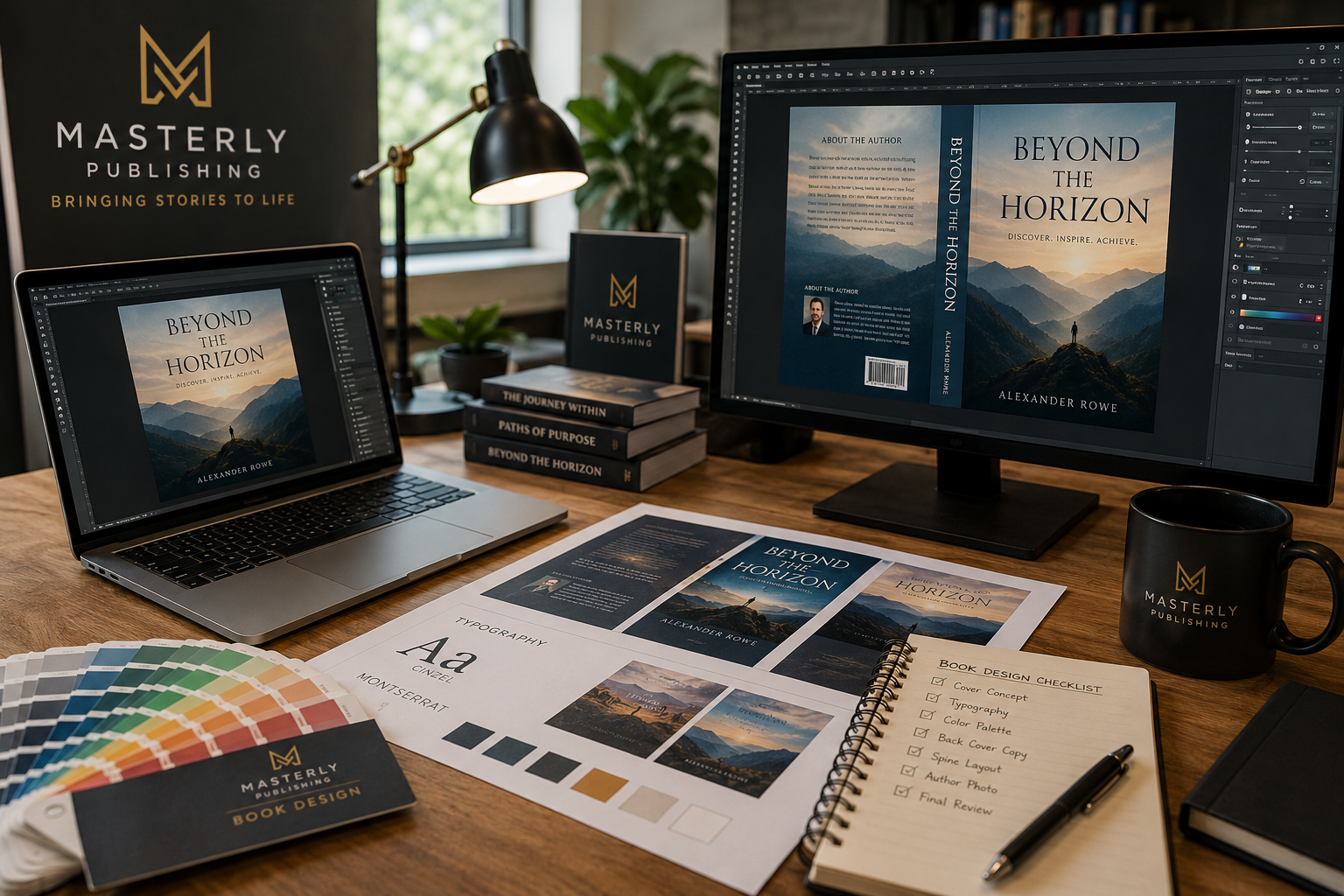
That is the problem professional book design is meant to solve. Book design is the visual planning of a publication — from the cover and interior layout to typography, page structure, and the overall reader experience.
The cover may look disconnected from the subject. The interior may feel crowded. Headings may change from chapter to chapter. Page spacing may make the text harder to read. A book that took months or years to write can reach publication looking less polished than the ideas inside it deserve, weakening readability, audience fit, and the professional brand behind the book.
For authors, entrepreneurs, professionals, consultants, executives, and organizations publishing a book to support their ideas or brand, the finished product is not only a manuscript placed between two covers. The cover, interior pages, typography, chapter structure, visual hierarchy, print design, and the relationship between editing and design all work together to shape how the book is perceived and used.
Masterly Publishing helps authors move from edited manuscript to professionally designed publication through custom book cover design, interior book design, layout and formatting, and broader publishing support.
Good Book Design Begins Where the Manuscript Ends
Writing and editing focus primarily on the words.
Design determines how those words are presented.
Imagine an author who has completed a serious business book. The manuscript has been edited carefully, but the cover uses an informal typeface and generic imagery. Inside, the pages have narrow margins, long blocks of text, inconsistent headings, and very little visual structure.
The information may still be valuable.
The presentation tells a different story.
Readers often make judgments about a book before they have read enough to evaluate the writing itself. The visual experience can signal whether the publication feels thoughtful, credible, appropriate for its genre, and easy to use.
Professional book design helps make the presentation consistent with the quality and purpose of the manuscript.
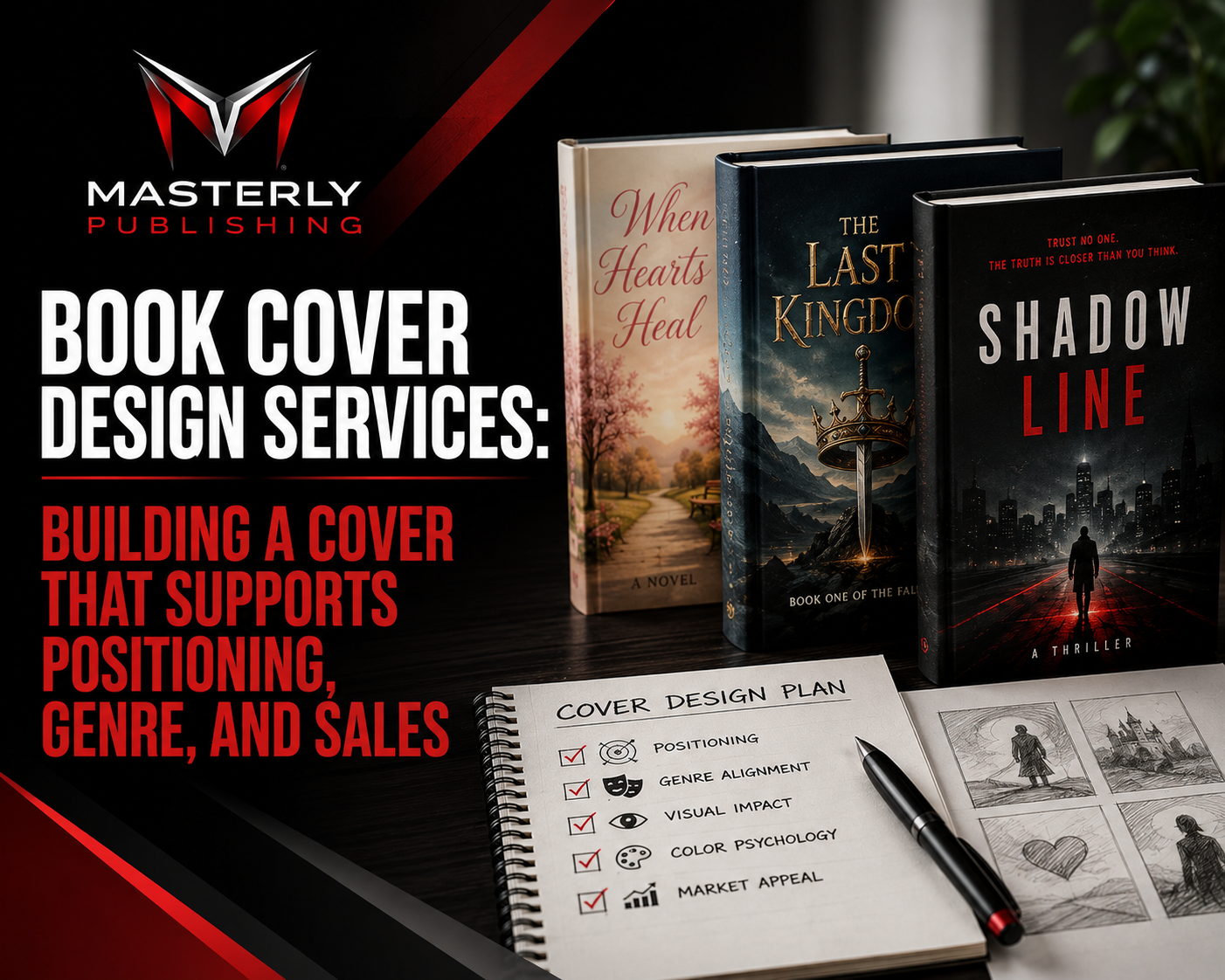
Book Covers and Cover Design Create the First Visual Expectation
The book cover design is usually the first part of the publication a potential reader sees.
It needs to do several jobs at once.
The cover should fit the subject and intended audience. It should create a clear visual hierarchy. The title and author information should be easy to understand. The overall direction should reflect the book’s theme and visual style in a way that feels appropriate for the type of book being published. A minimalist design can suggest intellectual depth and elegance when that suits the manuscript. A vintage design can create a sense of nostalgia and authority when that supports the subject and audience.
A children's book may require a very different visual language from an executive leadership book.
A memoir may need a different emotional tone from a technical guide.
A thriller should not accidentally look like a corporate handbook.
This is why professional cover design is not simply about making something attractive.
It is about creating the right expectation.
Masterly Publishing currently provides custom book covers for print books, ebooks, and children's books as part of its publishing services.
Interior Book Design Determines What Reading Feels Like
A strong cover may convince someone to open the book.
The interior book design determines what happens next.
Readers interact with margins, line spacing, chapter openings, headings, page numbers, paragraph spacing, images, tables, callouts, and many other visual details throughout the book. Interior pages should remain legible without a magnifying glass.
When those elements work together, readers may barely notice them.
That is often a sign of effective design.
When they do not work together, the page can become tiring or confusing.
For example, a business book with many short sections may need stronger heading hierarchy than a novel. A workbook may require enough space for readers to interact with the material, including tables or graphics. A children's book may depend heavily on the relationship between words and illustrations.
Interior design should respond to the content rather than force every manuscript into the same template.
Book Layout Gives the Content a Clear Structure
Book layout is where the manuscript becomes a page-by-page reading experience.
The layout determines how content occupies physical or digital space.
A useful way to think about professional book design is through four connected areas:
Attract. Organize. Read. Remember.
Attract With the Right Visual Direction
The cover creates the first invitation.
Its typography, imagery, color, composition, and overall tone should support the book's positioning.
A cover does not need to explain every idea in the manuscript.
It needs to establish a clear identity that makes sense for the audience.
Organize the Interior Clearly
Inside the book, design should help readers understand where they are.
Chapter openings need distinction.
Headings should follow a logical hierarchy.
Special sections should look intentional. In a first book and other nonfiction-style projects, recurring navigational elements such as running headers should stay consistent and appear on both sides of each spread when the format calls for them.
Page elements should remain consistent enough that readers do not have to relearn the structure from chapter to chapter.
This is especially important for nonfiction, business books, educational books, and other publications where readers may move between sections rather than read every page in order.
Typography and Body Text Can Change How a Book Feels
Typography is more than choosing a font; it includes decisions about fonts, type size, width, contrast, x height, and the design of individual letters and characters.
It includes decisions about typefaces, size, spacing, line length, hierarchy, emphasis, white space, vertical spacing, and how different text elements relate to each other.
These choices can influence the personality of a book.
Some type choices feel formal.
Others feel modern.
Some serif fonts support long-form reading well for body text.
A sans serif typeface may work better for headings or display text.
In non-fiction books, body text is typically set in a serif font to keep pages more readable.
That body text is also often left justified for easier reading in books.
Comfortable line lengths are usually around 40 to 60 characters.
The goal is not to make readers admire the font.
It is to make the content comfortable to read while maintaining a visual identity appropriate to the publication.
Readability refers to ease of sustained reading, while text is legible when readers can quickly recognize individual letters and words, which also affects reading speed.
A professionally designed book uses typography as part of the larger system rather than treating each page as a separate design exercise.
Reader Experience Should Guide Interior Decisions
The reader experience is one of the most important reasons to invest in professional book design.
Readers should be able to focus on the ideas, story, or information without fighting the page.
Consider a nonfiction book that includes exercises, quotes, case examples, and practical takeaways.
If every element looks the same, the reader may struggle to recognize when the content changes purpose.
A thoughtful design can create distinctions among those elements without making the page visually busy.
The same principle applies to fiction.
A novel may use simpler interior design, but details such as chapter openings, spacing, page proportions, and typography still contribute to the overall experience.
Design supports the reading behavior the book requires.
Print Design Requires Thinking Beyond the Computer Screen
A book may look correct on a monitor and still need additional attention before printing.
Print design has physical considerations. Paper stock and binding quality also shape the tactile experience of the finished book.
Page size affects line length and margins.
Binding affects usable space near the spine.
Full-bleed images require different preparation from ordinary text pages.
Front matter, chapter openings, blank pages, page numbering, and other elements need to work as part of the finished object.
The cover also needs to function as more than a front image.
For print editions, the full cover may include the front, spine, and back, with dimensions affected by the book's final specifications.
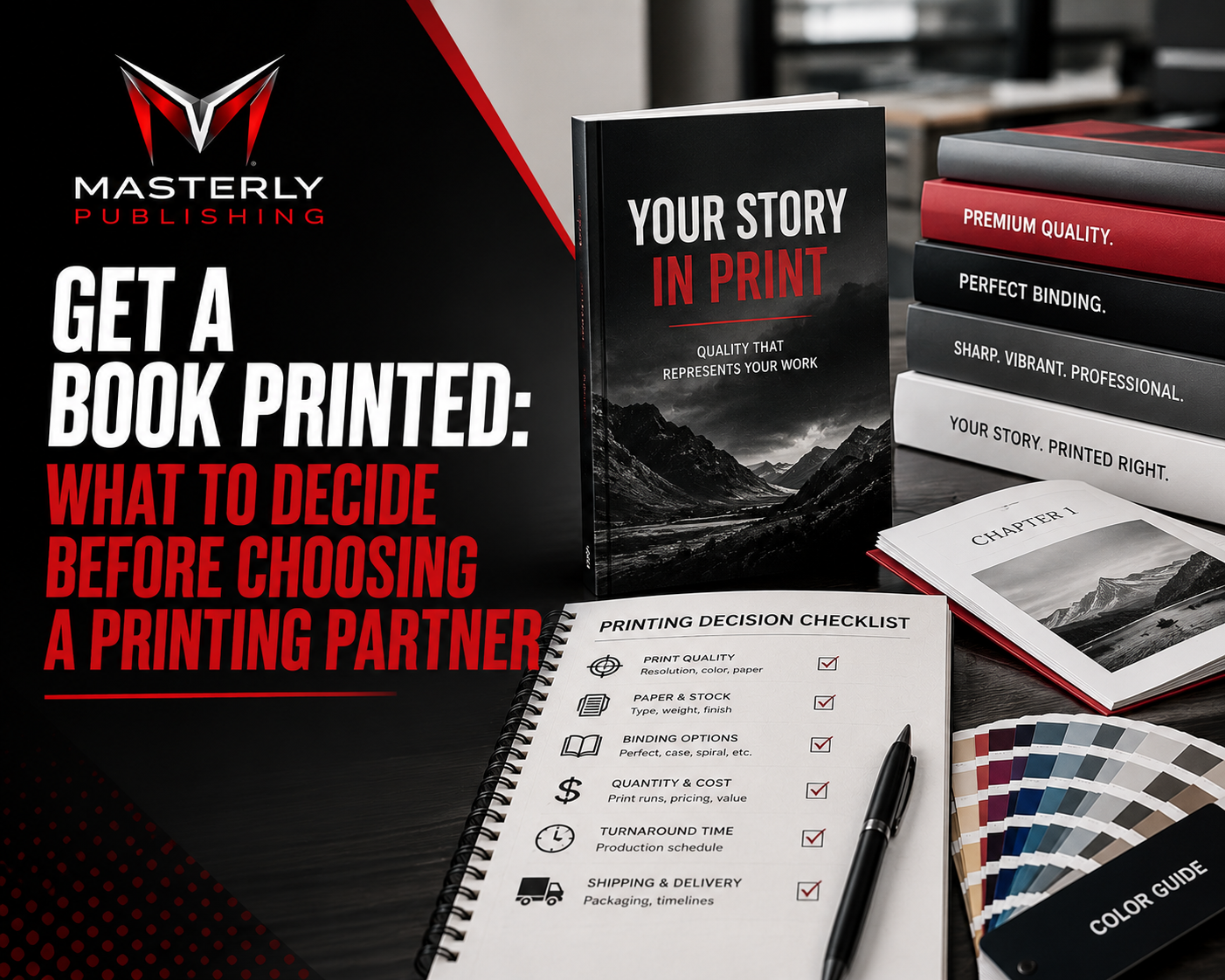
This is one reason design and publishing preparation should be connected, since print production methods affect both appearance and handling.
Masterly Publishing currently provides book formatting for print and digital formats, including a pdf file for proofing or sharing, and states that its design services support major publishing platforms.
Cover and Interior Should Feel Like the Same Book
One of the easiest ways for a publication to feel disconnected is when the cover and interior appear to have been designed independently.
The cover may feel elegant and modern.
The interior may look generic.
The title typography may establish one visual identity while the chapter headings establish another.
Professional book design should create continuity.
That does not mean every interior page should copy the cover.
It means the visual decisions should feel related.
Typography, spacing, recurring graphic elements, image treatment, and chapter presentation can create a consistent experience from the moment a reader sees the cover through the final page.
This is especially important for authors using a book to support a professional brand.
The publication becomes part of how readers experience that author.
Book Design Should Follow Editing, Not Compete With It
Design works best when the manuscript is stable.
If major structural changes continue after interior layout begins, revisions can affect page breaks, chapter lengths, cross-references, image placement, and other design decisions.
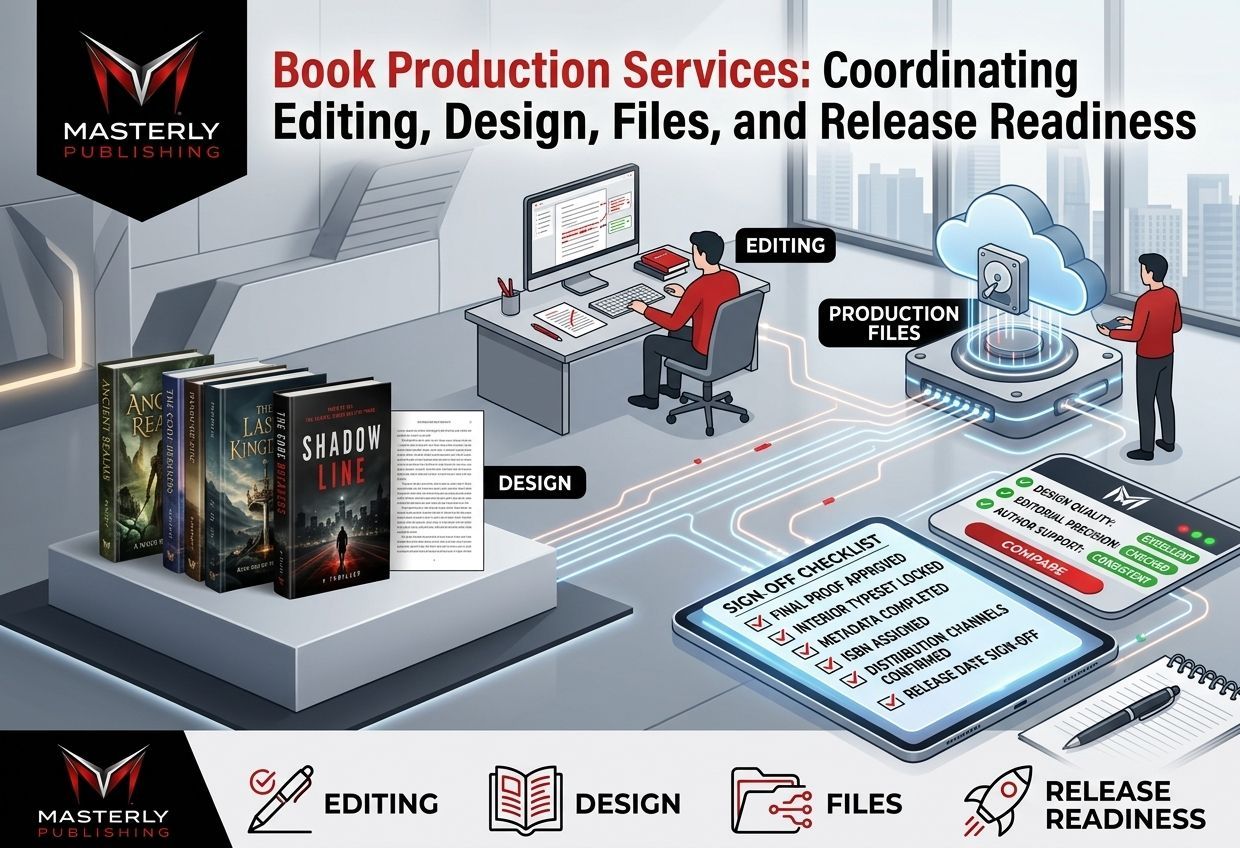
That is why editing and design should be treated as connected stages rather than unrelated services.
Masterly Publishing currently offers developmental editing, line editing, copy editing, proofreading, cover design, and book formatting as part of its larger publishing process.
An author who still needs manuscript refinement can explore Masterly Publishing's Book Editing Services before final design and formatting.
This is a relevant internal path because a polished design cannot correct structural, grammatical, or editorial problems that remain inside the manuscript.
Generic Templates and Professional Book Design Solve Different Problems
Templates can provide a basic starting point.
Professional design addresses the specific publication.
A template does not understand the manuscript's tone.
It does not know whether the audience is reading for entertainment, instruction, professional development, or reference.
It does not know how the author's brand should influence the cover.
It cannot decide whether a chapter opening deserves more visual space or whether a repeated content element needs its own design treatment.
Those decisions require context.
The value of professional design comes from making the book feel intentional rather than assembled.
Your Book Is Also Part of Your Reputation
For entrepreneurs, professionals, consultants, executives, and organizations, a book may serve more than one purpose.
It may support thought leadership.
It may introduce the author's expertise.
It may accompany speaking engagements.
It may become part of a larger professional brand.
In those situations, design affects more than shelf appeal.
A publication that looks inconsistent or poorly prepared may undermine the authority the manuscript is meant to establish.
A professionally designed publication creates greater alignment between the author's ideas and the way those ideas are presented.
That is why cover design and interior design should be considered part of the publishing strategy rather than the final cosmetic step.
Masterly Publishing Provides Done-for-You Book Design, Self Publishing, and Publishing Support
Authors and students should not have to become professional designers in order to publish professionally.
Masterly Publishing currently provides custom book cover design, book formatting, interior layouts, illustrations, writing and editing, printing, distribution, graphic design, typographic design, and related publishing support.
That broader approach allows the design to be considered in the context of the finished publication rather than as an isolated graphic.
Authors can explore Masterly Publishing's full publishing services when they need support moving from manuscript preparation through design and publication.
The objective is a finished book where the words, visual identity, page structure, and aesthetics feel like parts of the same project.
Book Design FAQ
What is book design?
Book design is the visual planning of a publication, including elements such as the cover, interior layout, typography, page structure, and overall reader experience.
What is book cover design?
Book cover design creates the visual identity presented on the outside of a book. It may involve typography, imagery, composition, and other elements appropriate to the genre and audience.
What is interior book design?
Interior book design determines how content appears throughout the book, including headings, paragraphs, chapter openings, margins, images, page numbers, and other recurring elements.
What is book layout?
Book layout is the arrangement of text and visual elements across individual pages and sections of the publication.
Why is typography important in a book?
Typography affects readability, hierarchy, visual tone, and consistency. Professional typography helps support the content without distracting from it, and keeping text readable depends on more than font choice alone, including type size, contrast, white space, and line length. Readability refers to sustained reading comfort, while legibility concerns how easily readers distinguish letters and characters. Serif fonts are often a strong choice for body text, while a sans serif typeface can work well for headings or short display elements.
How does book design affect reader experience?
Design can make information easier to navigate and reading more comfortable. Poor spacing, weak hierarchy, or inconsistent formatting can interfere with the reader experience.
Is print design different from ebook design?
Print and digital editions have different format considerations. Print design must account for physical page dimensions, margins, binding, cover specifications, and other production requirements.
Should a manuscript be edited before book design begins?
Major editing is generally best completed before final interior design because substantial manuscript changes can affect layout, pagination, and other design decisions.
Does Masterly Publishing provide book cover and interior design?
Yes. Masterly Publishing currently provides custom book covers, interior layouts, illustration support, book formatting for print and digital publications, and can also incorporate photos, graphics, and other visual elements when a project calls for them. Cover and interior work are developed to fit the book’s theme and overall style.
Can Masterly Publishing also help edit the manuscript?
Yes. Masterly Publishing currently offers professional editing services including developmental editing, line editing, copy editing, and proofreading.
Request a publishing and book-design consultation
If your manuscript is strong but the finished publication still feels incomplete, the problem may be the connection between the words and the way readers experience them.
Professional book design brings the cover, interior layout, typography, print design, and reader experience into one visual system built to industry standard.
Masterly Publishing provides authors with professional design and broader publishing support, including editing, formatting, custom covers, printing, and distribution.
Your book should not look like an edited manuscript placed inside a template. It should feel like good design, not a template-based assembly.
Call Masterly Publishing at (888) 209-4055 or visit the web at MasterlyPublishing.com to request a publishing and book-design consultation.