


What Full-Service Book Publishing Should Include Before Launch
Professional Book Publishing Services: What Authors Should Expect Before Day One
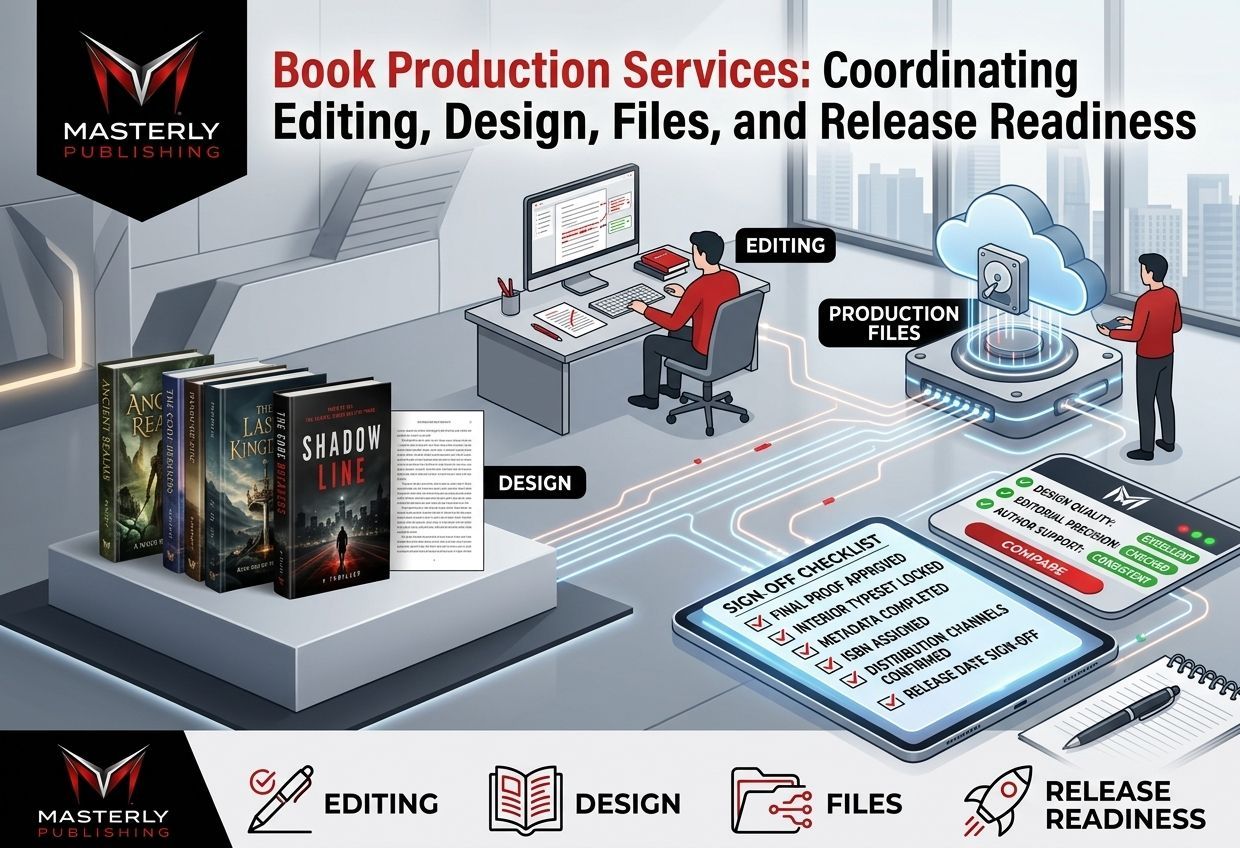
If you are a consultant, healthcare leader, law firm partner, nonprofit director, or B2B brand, your book is a business asset. The publishing process for professionals requires far more than publishing directly to a single platform. Full-service book publishing services coordinate editing, cover design, interior layout, ISBN registration, distribution, and launch strategy into a single, managed workflow.
This is not about upload-only self publishing. Amazon KDP allows free publishing for ebooks and print books, and Amazon KDP publishes 1.5 million new titles annually. That volume means your finished book competes with everyone. Amazon KDP allows authors to publish ebooks and print-on-demand books, but without professional support, most expert titles disappear into noise. Professionals and organizations with reputational risk, multiple stakeholders, or a dream of using their book as a platform asset should not rely on DIY alone.
- A professional team manages platforms like amazon kindle, apple books, IngramSpark, and Barnes & Noble behind the scenes. Here is what "full-service" means in practice:
- Strategic alignment of your book with your business and publishing goals
- Multiple rounds of manuscript editing by domain-experienced editors
- Custom book cover design and interior layout for print formats and digital formats
- ISBN acquisition, metadata optimization, and cataloging
- Global distribution across retailers, wholesalers, and library channels
- Launch planning and marketing foundations tied to your intended audience
The first step is aligning the book with your platform, audience, and goals before anything else.

Clarifying Author Goals, Audience, and Positioning Before You Publish
Professional book publishing services for experts start with strategy, not formatting. Before a single word is edited, a publishing partner should clarify why the book exists and what success looks like 6–24 months after publication.
Typical goals for expert authors include lead generation, speaking invitations, media credibility, policy influence, fundraising, or internal training. A 2025 healthcare founder, for example, might publish a business book to secure keynotes at major health-tech conferences and attract institutional partnerships. Choosing between traditional, self, hybrid, and assisted self-publishing depends on goals, budget, and control desired. Publishing in multiple formats can widen the audience reach-but only if the content is positioned for the right audience.
A publishing consultant should help define your primary reader persona. "Time-poor CIOs at $50M–$500M companies concerned about AI ethics" requires a different book than one written for first-time SaaS founders. Positioning also means clarifying how the book fits with your existing content-podcast, newsletter, reports-and how it differs from what you offer for free.
A strong discovery process should cover:
- Goals, metrics, and what you want to create with the book
- Current platform, brand assets, and competitive landscape
- Core message, reader pain points, and differentiation
- Monetization, follow-on strategy, and timeline
- Budget range and marketing decisions already in play
Misalignment-writing for the wrong audience, repeating free content, or conflicting with your price point-wastes the entire investment. Strategy conversations prevent this.
Manuscript Editing: From Expert Draft to Market-Ready Book
Professional editing is crucial for producing a quality book. Most expert drafts need significant work before they are ready for readers, and skipping stages leads to incoherent messaging or inconsistent voice.
Editing services include copy editing and line editing, but a complete editorial process has five stages:
- Editorial assessment: A big-picture review of the final manuscript to determine what levels of editing are needed before your first chapter reaches design.
- Developmental editing: Restructuring for logic and flow. Example: reorganizing a leadership framework so the 3-part model appears earlier, cutting repetitive case studies.
- Line editing: Refining sentence-level writing-voice, pacing, tone. Tightening academic language into active, persuasive prose. Editors help preserve your unique voice during editing while making the text sharper.
- Copyediting: Correcting grammar, syntax, citation format (APA, Chicago), and internal consistency across chapters. This is where fiction, poetry, short stories, and nonfiction all benefit from close attention to every word.
- Proofreading: Final check in layout to catch typos, formatting slips, orphan lines, and page-break errors.
Book editing improves clarity and narrative flow. Professional editing enhances your manuscript's potential, and a polished manuscript is essential for publication readiness. For business nonfiction, serious book publishing services match authors with publishing specialists experienced in domains like finance, healthcare, law, or engineering-not generic freelancers. This matters for compliance-sensitive content involving legal disclaimers, HIPAA-adjacent topics, or regulated industries.
Collaboration norms for a ~60,000-word manuscript: expect the full editorial process to take 6–10 weeks when managed well, with 2–3 revision rounds at the developmental stage, track changes throughout, and clear deadlines for author feedback. Independent authors get more control and faster decisions than those working under traditional publishers, but the standards should be equally rigorous.
Professional Book Cover Design That Signals Authority
Your book cover is a positioning tool, not decoration. Custom cover design is important for appealing to the target audience, and professional book covers significantly improve discoverability-especially in thumbnail views on Amazon and apple books where readers discover new titles in seconds.
A professional cover design process should include:
- Creative brief: Purpose, audience, tone, desired emotional response, and competitor covers in your genre
- Competitor research: Analysis of current bestsellers in your category (2023–2026) to stay focused on what works
- 2–3 initial concept directions with refinement rounds based on your feedback
- Final production files: Print PDF with correct bleeds and trims, ebook cover (JPEG/PNG), spine layout calculated from final page count, and social media mockup versions
For business, leadership, and academic books, genre-appropriate cues include clean typography, restrained color palettes, and minimal illustration. Memoir or fiction covers may use emotionally evocative photography. The wrong choice-overbusy design, stock photo clichés, or a title that is unreadable at thumbnail size-undermines trust with your intended audience.
Common pitfalls: generic templates, covers that look beautiful at full size but fail as small thumbnails in online stores, and design that ignores your organization's existing brand identity.

Interior Layout and Formats: Print, Ebook, and Beyond
Interior formatting ensures the manuscript meets retailer requirements and directly affects readability and perceived professionalism. For business,
technical, or academic books with charts, models, sidebars, or footnotes, good layout prevents visual fatigue and signals authority.
Core print layout decisions include:
- Trim size: The most common for business nonfiction is 6" × 9", balancing professionalism, readability, and print cost. Smaller sizes like 5.5" × 8.5" work for memoir or literary nonfiction.
- Font pairings and heading hierarchy: Serif for body, sans-serif for headings; consistent treatment of pull quotes, callouts, and sidebars
- Footnotes vs. endnotes and whether the book needs a professional index
- Copyright page, permissions, and front/back matter
Professional book publishing services create separate master files for print (PDF/X-1a) and ebook (EPUB) and test them across Kindle devices, Kindle apps, Apple Books on iOS and macOS, and other readers. Accessibility matters: reflowable text for ebooks, alt-text for images, and avoiding layout tricks that break on different screen sizes.
Organizations may also need companion PDFs, workbooks, internal bulk-print editions for events or onboarding, and branded editions for corporate
partners. Once the edited manuscript is finalized, interior layout and proofing typically take 2–4 weeks with a coordinated team, including author proof review, book printing verification, and final quality checks.
Metadata, ISBN, and Cataloging: Making Your Book Discoverable
Metadata is the structured data that makes your book findable: title, subtitle, series, author bio, description, keywords, BISAC subject codes, and pricing.
These feed directly into platforms like amazon kdp and apple books, determining where your book appears in search results and category listings.
Authors should retain copyright and understand who controls their ISBN. An ISBN uniquely identifies each format-hardcover, paperback, ebook-and ownership determines long-term control. Key distinctions:
- Platform-assigned identifiers (e.g., Amazon's free ASIN) limit portability and reduce legitimacy across channels
- Owned ISBNs through a national agency like Bowker ensure inclusion in databases like Books in Print, library catalogs, and wholesale ordering systems
- Each format needs a distinct ISBN; revised editions require new ones
A professional service should craft retail-optimized descriptions and keywords that balance SEO with brand voice. Effective book marketing includes keyword optimization for discoverability-your subtitle, BISAC codes, and keyword fields should reflect how your right audience actually searches.
Category strategy differs across retailers: Amazon allows more flexibility, while apple books uses its own taxonomy.
For academics and organizations, optional steps include obtaining a Library of Congress Control Number (LCCN), submitting for CIP data, and indexing in relevant catalogs.
Many DIY manuscript publishing attempts fail here. Poor metadata, wrong categories, and generic descriptions make even well-written print books invisible-wasting all upstream investment in writing and editing.
Distribution and Global Reach: Beyond "Just Uploading" to Amazon
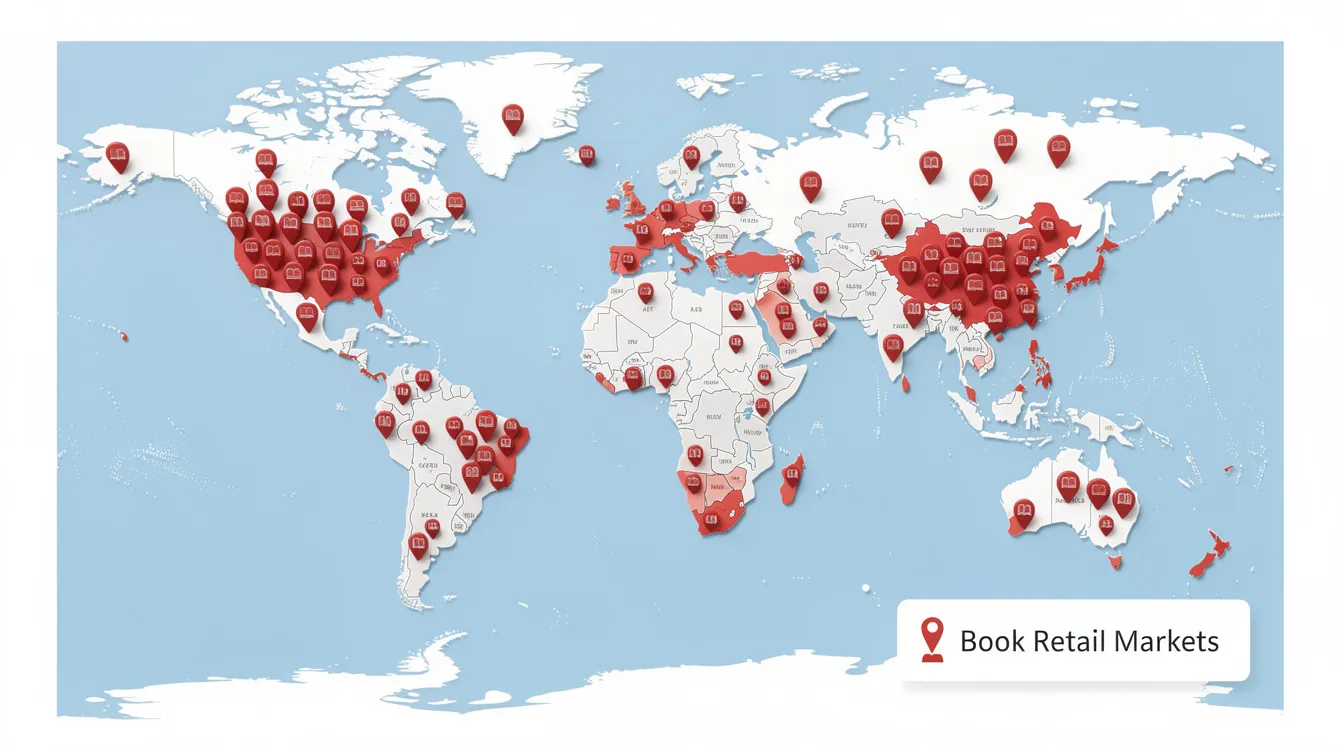
There is a significant difference between publishing directly on a single platform and coordinating global distribution. Amazon KDP enables authors to publish ebooks and print-on-demand books, and Amazon KDP allows authors to publish in digital and print formats-but it only covers Amazon's storefronts. A quality publishing service helps distribute books through major retailers, wholesalers, libraries, and international channels.
Professional partners set up distribution across multiple platforms:
- Amazon KDP: Authors can earn up to 70% royalties on amazon kindle sales
- Apple Books: Allows free ebook publishing with up to 70% royalties
- Barnes & Noble Press: Offers free self-publishing for print and ebooks, and allows authors to publish directly to millions of readers
- IngramSpark: Provides access to over 40,000 retailers, libraries, and wholesalers in 200+ countries, with Global Connect printing in markets including Brazil, Germany, India, Japan, South Korea, and more
- BookBaby: Distributes eBooks to major retailers worldwide
- Berg Publisher: Distributes books through 60+ global retailers
- Lambert Academic Publishing: Offers global distribution for academic works
- Omniscriptum: Provides free book publication with global distribution
Print On Demand reduces financial risk for authors, and self-publishing can reduce financial risk through Print On Demand services-no large print runs or warehousing required. Your book can be distributed on demand across the world.
Key strategic choices include wide distribution vs. exclusivity, hardcovers vs. paperbacks, direct sales from an author's website, and bulk orders for events. Authors retain full rights in properly structured agreements. Professional services should never lock in rights or require vanity press–style exclusivity, and royalties plus reporting across all channels should be fully transparent.
Launch Planning and Marketing Foundations for Professional Authors
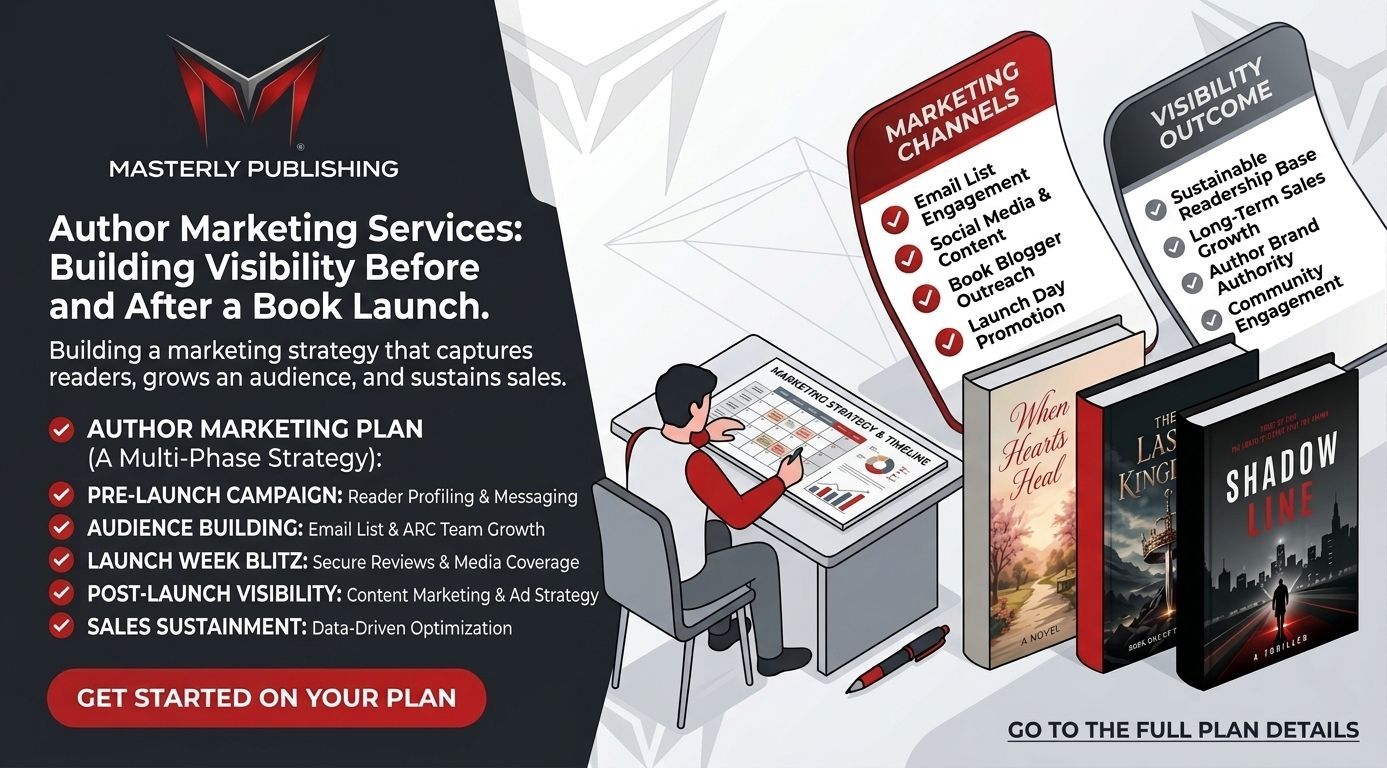
Serious book publishing services should help design a launch strategy 3–6 months before publication-not in the final week. Marketing support aids in the promotion of the book after publication, but the groundwork must start early.
Core components of a professional launch plan:
- Positioning statement and messaging pillars aligned with your audience
- Advance reader strategy: ARCs or advance copies sent to reviewers and endorsers
- Email list plan: Pre-launch sequences, lead magnets derived from the book
- Media and PR angles: Press release, media kit, talking points
- Speaking and webinar tie-ins: Aligning launch with conferences, product releases, legislative cycles, or academic calendars
- Landing page: With pre-order links, sample chapter PDF, and clear calls to action
Launch assets should include a one-sheet, LinkedIn post series, slide deck for talks, and a book teaser. For experts, realistic expectations matter: five new advisory clients or one keynote contract may deliver more value than earning royalties from unit sales alone. Stay focused on strategic outcomes.
Launch timing is a marketing decision. Align it with industry events, fiscal years, or seasonal demand in your field. A coordinated marketing calendar with scheduled milestones-pre-launch, launch week, post-launch-keeps momentum. Expert guidance from a professional publisher should include advice on where not to spend money, avoiding broad unmeasured ads or vanity placements.
Comparing Paths: Traditional Publishers, DIY Self Publishing, and Professional Services
Understanding the three main paths helps you make informed decisions:
Traditional publishing house:
- Traditional publishers handle production, editing, design, distribution, and marketing
- Long timelines-often 18–36 months from acceptance to publication
- Lower royalties and less creative control; difficult to access without an agent or large platform
- Authors typically surrender full creative control over cover, title, and marketing decisions
DIY self publishing:
- Self-publishing offers the highest royalty rates, often 70% or higher; authors can earn up to 100% royalties in self-publishing
- Self-publishing allows authors to retain full rights to their work, with full control over every decision
- Self-publishing can take as little as 2 to 4 weeks to complete
- Risks: amateur editing and design, weak metadata, no strategic launch support, inconsistent branding
- Vanity presses are companies an author pays to publish their book without providing real editorial or strategic value-avoid them
Professional book publishing services (hybrid model):
- Hybrid publishers provide professional publishing services for a fee, while authors retain full rights
- BookBaby offers comprehensive publishing services including editing and design
- Berg Publisher serves over 5,000 authors with full publishing services, and authors retain 100% ownership of their manuscript with Berg Publisher
- Authors retain full rights when publishing with Lambert Academic Publishing
- The author keeps control while delegating complex production, distribution, and strategic planning to specialists
When to use which: A solo consultant with strong writing skills and design sense might handle parts of the process. A law firm, university center, startup leadership team, or any company with reputational stakes and multiple stakeholders should not DIY. The majority of professionals benefit from a managed, full-service approach.
What a Professional Publishing Workflow Actually Looks Like
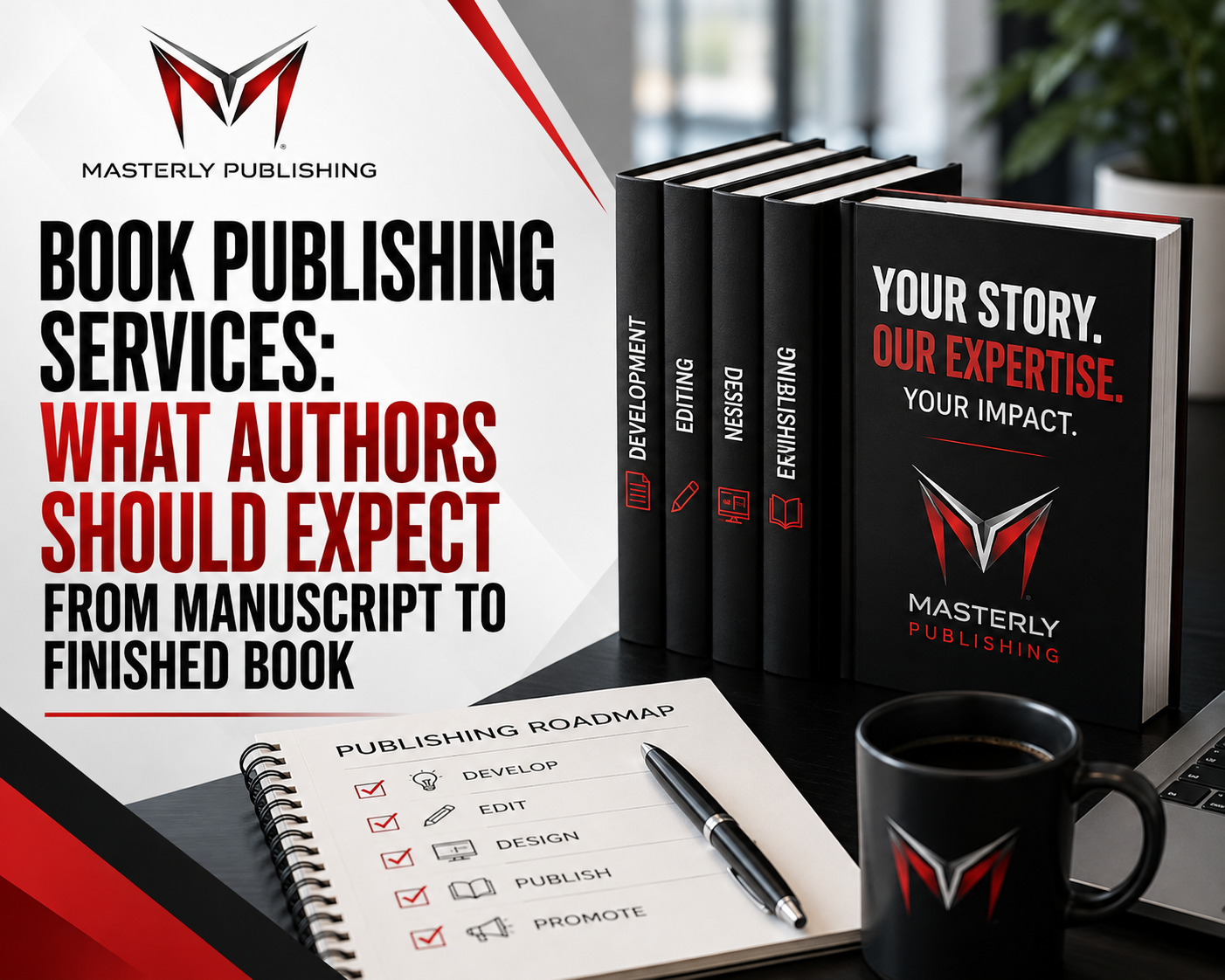
Here is what a typical end-to-end workflow looks like for an expert-level nonfiction book started from a complete draft and launched within 6–9 months:
- Discovery and strategy (weeks 1–3): Goals, audience persona, competitive positioning, timeline, and budget alignment
- Editorial plan (weeks 3–4): Assessment of the manuscript; scope of developmental, line, copy editing, and proofreading defined
- Manuscript revisions (weeks 4–14): Developmental and line editing with author collaboration; 2–3 revision rounds with clear feedback loops
- Design-cover and interior (weeks 12–18): Creative brief, concept development, refinement, final files for print and ebook formats
- Proofing (weeks 18–20): Layout proofread, author review, quality checks on images, tables, front/back matter
- Metadata and ISBN (weeks 18–20): ISBN registration, keyword and category strategy, retail descriptions, cataloging
- Distribution setup (weeks 20–22): Accounts configured across Amazon, apple books, IngramSpark, and other channels
- Launch planning (weeks 10–24, overlapping): Marketing assets created, advance copies sent, PR and media outreach, email sequences live
- Live launch (week 24–26): Coordinated release across all platforms
- Post-launch (weeks 26+): Sales analytics, platform optimization, ongoing marketing adjustments
Good author support includes having a dedicated project manager and responsive service throughout this process. For multi-author works-organizational anthologies, academic collections, or stories from multiple contributors-the workflow also manages permissions, contributor approvals, and version control.

Choosing the Right Book Publishing Partner and Next Steps
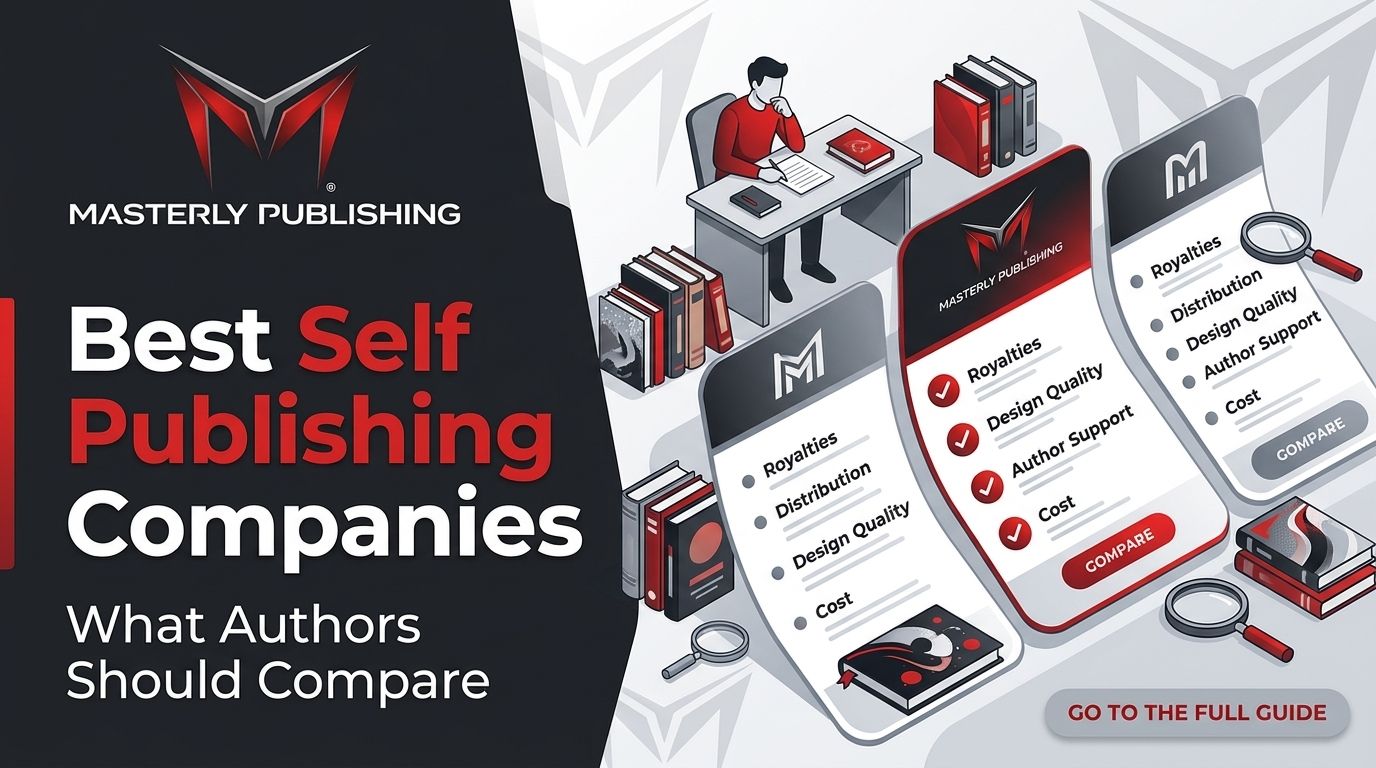
Selecting a publishing partner is a high-stakes decision. Transparent pricing helps avoid unexpected costs when choosing publishing services. Editorial quality, distribution reach, royalty structures, and rights are key considerations when choosing publishing services.
Evaluate any provider against these criteria:
- Pricing transparency: Flat-fee or clearly scoped pricing with no hidden charges
- Rights and control: You retain copyright, ISBNs, and access to all retailer accounts. Higher royalties should flow to you, not the publisher
- Scope of work: Written agreement covering editing, design, layout, metadata, distribution, and launch support
- Team credentials: Named editors and designers with relevant domain experience
- Case studies and references: Positive customer reviews and case studies indicate provider reliability
Questions to ask in any consultation:
- Who owns the ISBN and the retailer accounts?
- How are royalties reported and paid across platforms?
- Which platforms and channels will the book be distributed through?
- What does the editorial and design team look like?
- How is launch strategy supported-and what is not included?
Red flags: required long-term exclusivity, vague marketing guarantees, lack of editorial rigor, refusal to share sample work, or any promise of a "guaranteed bestseller." Writers who want to retain full rights and full creative control should walk away from any arrangement that limits access to their own sales data or locks them into a single platform.
If you are a professional, expert, or organization ready to produce a book that supports your platform and reaches your audience with credibility, the logical next step is to request a publishing project assessment. Get clarity on what your manuscript needs-before it reaches the world.