


Book Marketing Plan: What To Build Before Your Launch Begins
Introduction: Why Your Book Marketing Plan Must Start Early
Amazon's Kindle Direct Publishing sees over 1.4 million new indie titles per year. Books released without a structured marketing strategy often sell fewer than 250 copies over their lifetime. A successful book launch requires preparation weeks or months in advance; if your release date is set for early 2027, your marketing efforts should start 6 to 12 months before your book launch.
A book marketing plan is the document that organizes your target audience, positioning, assets, launch channels, and timeline before promotional activity begins. An author marketing plan is broader: it covers your long-term brand, platform, and catalog across multiple titles. Neither is the same as a one-off tactic like a single ad burst or signing event.
The business value is concrete: better first-week sales trajectory, stronger early reviews, and a sustainable author platform that compounds across future releases. An effective book marketing plan combines digital presence and community building rather than relying on any single channel.
This framework applies to every type of writer. An indie author controls all assets (cover, launch date, distribution) and needs a plan for each. A hybrid author juggles publisher timelines while filling marketing gaps. A traditionally published writer still benefits from defining audience and positioning so they can support or supplement their publisher's efforts.
This article focuses on the planning framework, assets, and timelines you need to build before any paid promotion. It is not a day-by-day publicity playbook.
Clarify Your Goals, Audience, and Positioning
Before choosing channels or spending a dollar on paid ads, define what you are selling and to whom.
- Describe your book in 2-3 sentences. Include genre (literary fiction, fantasy, business nonfiction, memoir), format (ebook, paperback, audio), and tone. This description will guide your book cover design, your book description copy, and every social media post you write.
- Define specific, measurable goals for your marketing plan. Examples: sell 1,000 copies in the first 90 days, collect 50 reviews on Amazon or Goodreads before launch week, or grow your email list by 500 new subscribers in six months.
- Identify specific reader profiles for effective marketing. Your primary target audience might be "women aged 25-45 who read commercial fantasy, fans of Sarah J. Maas, active on BookTok." A secondary reader could be audiobook listeners of epic fantasy. Target audience research helps identify reader demographics that shape every later decision.
- Contrast your positioning by category. Literary fiction: "lyrical prose exploring identity through emotional complexity." Commercial genre fiction: "high-stakes suspense with constant plot twists." Practical nonfiction: "a step-by-step productivity system for early-career professionals using behavioral psychology."
- Write a simple positioning statement: "My book helps [specific audience] achieve/experience [clear benefit] because [unique angle]."
Before moving on, confirm you have: a 2-3 sentence book description, 2-3 measurable goals with deadlines, primary and secondary reader personas, and a positioning statement.
Do Focused Market Research Before You Finalize the Book
Market research belongs in the book marketing plan because it determines what readers expect from books in your category: cover tropes, hooks, price points, and how they discover new titles.
Analyze the top 20 books in your exact category on Amazon and Goodreads. Note cover styles, subtitle hooks, review counts, and ebook pricing. Use retailer bestseller lists and "also boughts" to see what your book will sit beside. Look for comp titles that share your audience and study their promotional material.
Create 2-3 reader personas grounded in real data. Where do they spend time: TikTok, Facebook groups, podcasts, blog tours? How quickly do they buy new releases? Do local readers rely on bookstore recommendations, or do they browse online communities?
Free tools help here: Amazon search autocomplete reveals what readers type; Google Trends shows whether a subgenre is growing or shrinking; basic keyword research tools surface relevant keywords for your book page metadata. Your book cover must fit genre conventions to attract readers who browse visually. Book descriptions should spark curiosity and set clear expectations for what is inside.
Record your findings in a one-page "market snapshot": top 5 competitors (cover style, pricing, review count), reader personas, keyword list, and category gaps. This snapshot guides every later marketing decision.

Design Your Core Author Brand and Author Platform
Your author brand is how readers perceive you. Your author platform is where and how you reach them. Both need to be intentional before launch.
Choose 3-4 brand pillars that will guide visuals and messaging. Examples: "hopeful literary fiction," "dark, twisty thrillers," "evidence-based career advice." Build branding around the author, not a single book, so future titles inherit audience trust and support potential bestseller status.
If you write across genres (romance and business nonfiction, for instance), a pen name for one category avoids brand confusion. If your catalog stays in one lane, your legal name keeps things simple and leverages existing connections.
Social media should be chosen based on where specific readers are active. For YA fantasy and romance, TikTok and Instagram are primary social platforms. For business nonfiction, LinkedIn newsletters or Substack reach the right readers. Social media helps connect with new fans and influencers, but depth on 1-2 social channels beats a shallow presence across six.
Create consistent bios, profile photos, and taglines across social, your author website, and every retailer author page. Before moving on, finalize: color palette, fonts, elevator pitch, headshots, and a voice guide that matches your brand pillars.
Build an Effective Author Website Before Your Book Launch
Your author website should serve as your marketing hub. Social platforms change algorithms; your website stays yours.
Place your email marketing signup form in the header, footer, a dedicated landing page, and inline on high-traffic blog posts. Add basic SEO elements: page titles with your name plus genre (e.g., "Jane Doe | Fantasy Author"), meta descriptions with book titles, and heading tags targeting phrases your ideal readers actually search.
Engage with the audience through content and updates during the marketing process. Even one useful evergreen article or reading guide attracts organic traffic and gives you material for blog tours or reader outreach later. A clean one-page site built on Squarespace or WordPress works for authors not comfortable with web design.
Set Up Your Email Marketing and Reader Outreach System
Email marketing is the most effective channel for book sales. It is also the most effective book marketing channel overall, and the only audience you truly own. Engaged email subscribers are your most valuable audience asset, your greatest marketing asset for every release.
Start building your mailing list 6-12 months before launch. Choose an email service provider suited for small lists: MailerLite, ConvertKit, or Mailchimp all offer free tiers with basic automation. Create a mailing list to engage readers before your book release.
A compelling sign-up incentive can grow your email list. Offer a reader magnet aligned with your book: a bonus chapter, deleted scene, checklist, or free PDF reading guide. For nonfiction, a free book excerpt or case study works. This free content gives potential readers a reason to hand over their email address.
Build a 3-5 email automated welcome sequence:
- Deliver the lead magnet
- Introduce your author brand and values
- Share an excerpt from the upcoming book
- Invite readers to your online communities or social channels
- Ask a question or offer another piece of free content
Plan a basic email marketing calendar: 1-2 newsletters per month leading up to launch, then increase to weekly during the pre launch phase, and daily during launch week. Form partnerships with other authors or influencers for broader reach through joint list-building promotions, newsletter swaps, and cross-promotions with comparable authors. Always include unsubscribe links and respect reader privacy.
Prepare Your Book's Sales Assets: Description, Metadata, and Retail Pages
No book marketing plan succeeds if the sales page does not convert browsers into buyers. Before turning on any paid ads or Amazon Ads, optimize these core assets.
Book description: For fiction, use a character/conflict/stakes structure. For nonfiction, follow problem/promise/proof. A strong book description on your Amazon page, your book page on Kobo, and Apple Books should spark curiosity and set clear expectations.
Metadata and keywords: Use five of Amazon's seven keyword fields for maximum visibility, mixing general, niche, and long-tail terms. Research relevant keywords by checking competitor listings and reverse-ASIN tools. Consistency across retail platforms helps AI recommend your book to more readers.
Book cover: A professional book cover can increase ad clicks by 164%. Your cover must fit genre conventions; a romance cover that looks like a thriller confuses browsers and kills conversion.
Author bio: Your author bio is crucial for establishing credibility on retailer pages. Include awards, relevant experience, and a one-sentence mission. Keep it consistent with your author website bio.
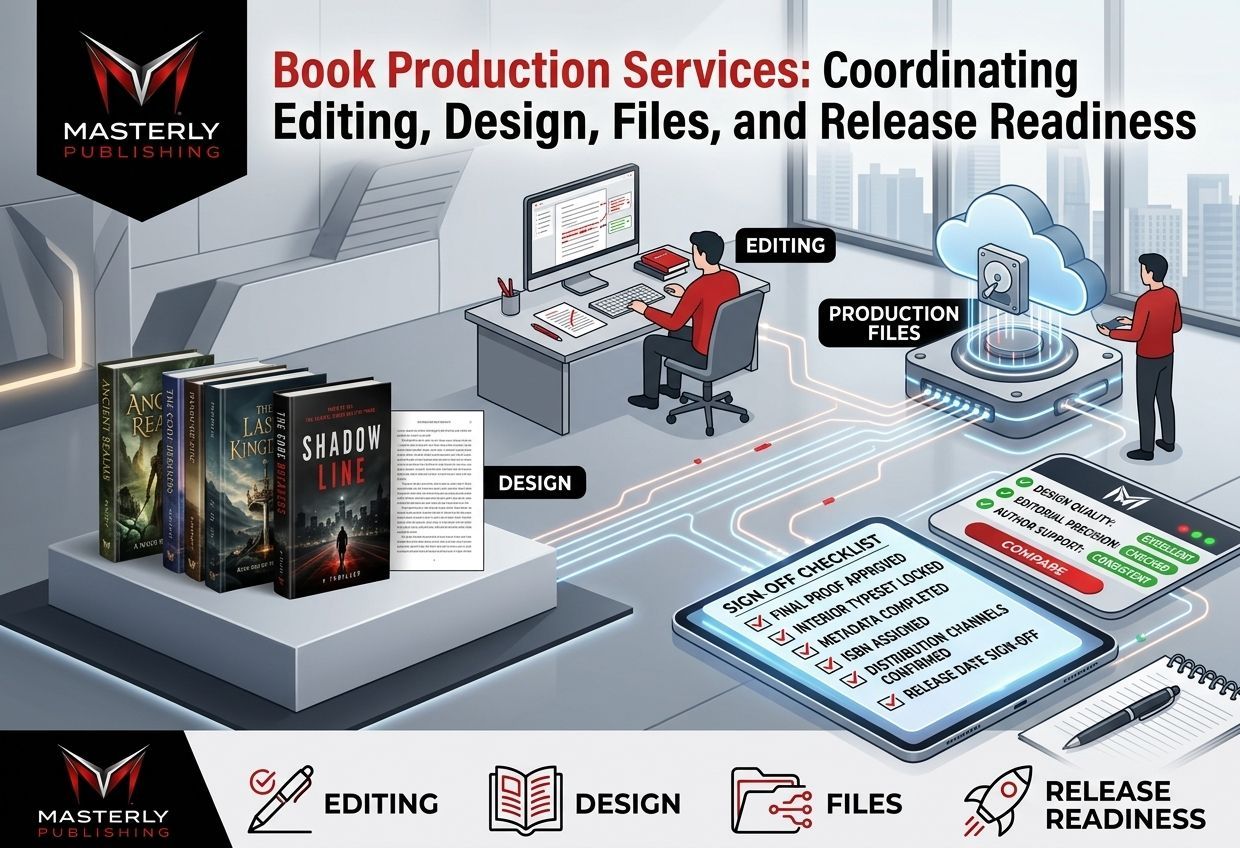
Advance reader copies: Use advance reader copies to secure early reviews before launch. Send ARCs to readers 3-6 months before launch. Build a team of advance readers for reviews by using online communities to find ARC readers. Include direct review links in ARC emails to reduce friction. Note: Amazon requires reviewers to spend $50 in the last year to leave a review.
Create a single internal "sales assets" document containing description drafts, metadata, author bios, taglines, and promotional material for reuse across every channel.
Choose Your Launch Channels and Outreach Strategy
Launch channels are where you show up (email list, social platforms, podcasts, local bookstores). Tactics are how you show up (guest blog post, live video, giveaway of a free book, in person events).
Select a realistic mix based on genre and capacity. A literary fiction launch might focus on book clubs, podcasts, and local readers at independent bookstores. A thriller launch might lean on Amazon Ads, email promotions, and a large audience on social media. Podcasts are a growing platform for connecting with new readers across both fiction and nonfiction.
Plan a modest blog tour or guest-post series focused on 5-10 highly relevant outlets rather than unfocused mass outreach. Map specific blogs, newsletters, and podcasts to contact three months before the book launch. Prepare a simple digital media kit: professional author photos, book cover in multiple sizes, short and long bios, book description, and sample interview questions.
Track outreach in a simple spreadsheet: date contacted, outlet name, response, follow-up date, final outcome. This prevents duplication and missed opportunities.
Create a Practical Marketing Calendar From Pre-Launch to Post-Launch
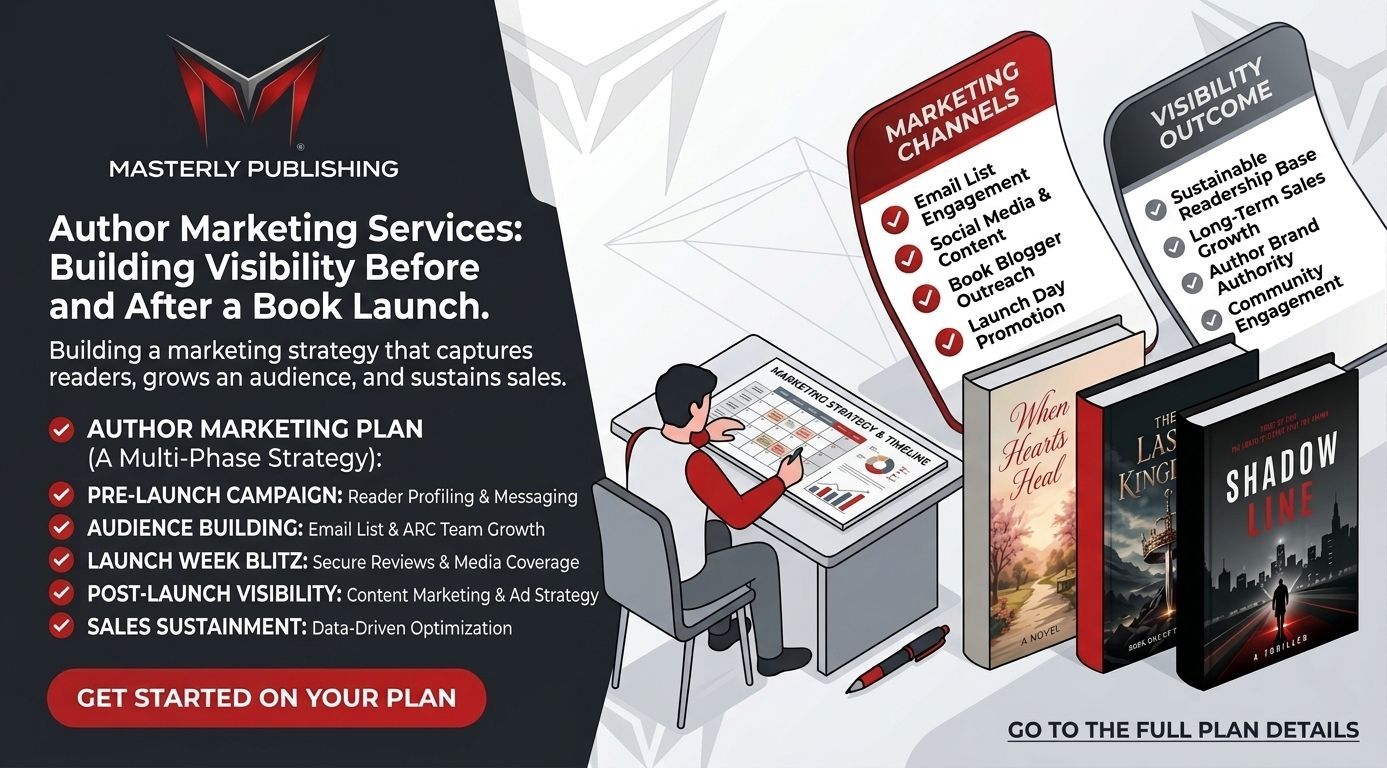
A written marketing calendar prevents launch overwhelm. A structured launch timeline includes pre-launch and post-launch activities, and a pre-launch campaign typically lasts between 10 to 12 weeks.
Three phases:
Pre-launch (3-6 months before): ARC distribution, cover reveal, metadata finalized, list building, early reviews secured, pre-order open, social proof building through advance readers
Launch (launch week + first 30 days): Social media posts across chosen social platforms, dedicated email series, virtual events or live streams, outreach to as many readers as possible through your target market channels
Post-release (months 2-12): Marketing efforts should continue after launch to maintain visibility. Targeted advertising can increase book visibility post-launch.
Schedule quarterly pricing promotions, cross-promotions, and content that reaches new readers and new fans.
Choose a firm launch date, then build a 12-week work-back plan with milestones: ARC deadline, final cover reveal, pre-order push, and launch day events. Schedule recurring tasks: weekly social posts, bi-weekly newsletters, monthly outreach to new partners. Leave buffer weeks with lighter tasks to handle delays and avoid burnout.
The calendar can live in a simple spreadsheet or paper planner. Following it matters more than perfecting it.
Measure Results and Adjust Your Book Marketing Plan
Treat your book marketing plan as a living document. Track key metrics to evaluate the success of marketing activities:
- Email list growth (new signups per week)
- Website traffic to your Books and sign-up pages
- Conversion rate on retailer pages
- Number of reviews (launch week vs. month three)
- Book sales over time by format and channel
Schedule simple monthly reviews comparing planned vs. actual activity. Use free tools: KDP Reports and retailer dashboards for sales, Google Analytics for website traffic, your email service provider's reports for open and click rates.
Capture qualitative feedback as well: reader emails, social comments, and ARC responses tell you what messaging resonated and what fell flat. This is great advice for shaping your marketing strategy for future titles.
Document what worked and what did not in a one-page post-launch reflection. Which channels delivered the right readers? Where did you spend time with low return? Which social media strategy connected you with the most engaged specific group of readers? Self published authors who track these lessons report that their second and third books earn better returns because they start writing the next marketing plan with real data.
Improving from one release to the next matters more than trying to perfect the first book launch. The publishing industry rewards consistency. Start building now, and your launch will have a foundation that paid promotion can actually amplify.

Ready to build a marketing plan that sells books? Contact Masterly Publishing Group at (888) 209-4055 to discuss a professional publishing and book marketing plan tailored to your next release.