


Book Launch: Building a 90-Day Plan Before Publication Day
A professional book launch is the coordinated process around a book’s release: publishing preparation, positioning, author assets, and audience communication working together before, during, and after publication day.
A book can be professionally written and carefully edited and still reach publication day without a clear release plan. The manuscript is ready, but the author biography needs work. The cover has been approved, but promotional materials are still being discussed. The publication date is approaching, yet the website, book description, digital edition, or audience communication may not be aligned with the release.
That creates unnecessary pressure around a moment that should have been planned well in advance, and it often limits how effectively the book reaches the people it was written for.
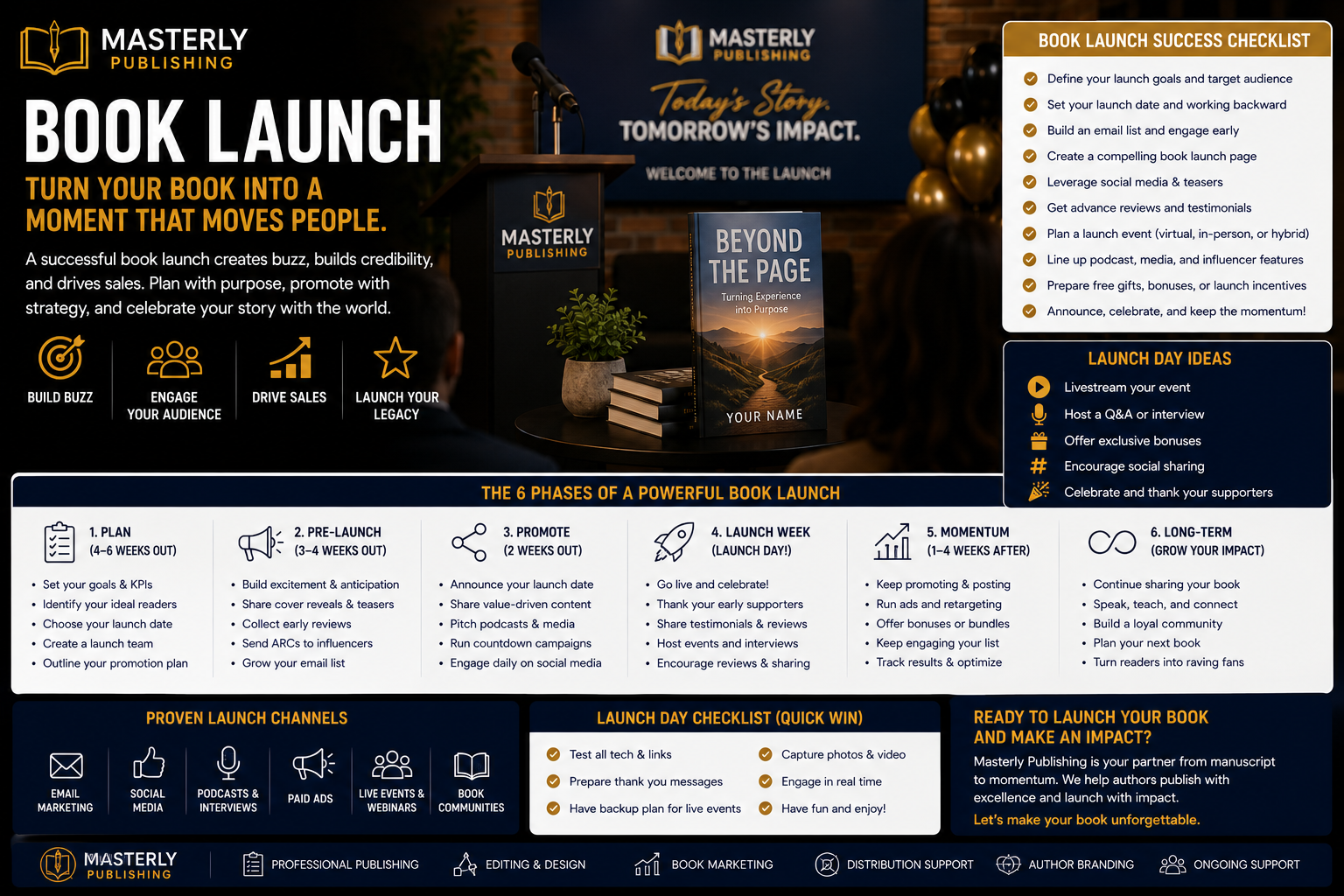
For authors, experts, executives, educators, and organizations preparing to publish a book, a strong launch means more than announcing a release date. It includes confirming the publishing foundation, aligning the author brand with the book, defining the target audience, coordinating publishing with promotion, preparing launch materials, managing publication day, and continuing promotion after release.
Masterly Publishing helps authors approach publication as a coordinated professional project. Instead of waiting until the book is finished to begin thinking about launch, the publishing and release strategy can be considered together through a structured timeline that reduces last-minute pressure and supports a more effective release.
A Successful Book Launch Starts Before Publication Day
Publication day is a milestone.
It should not be the beginning of launch planning.
A book launch can involve several connected parts of the publishing project, and those parts may require decisions at different stages. Waiting until the final days can force authors to make important choices under unnecessary time pressure.
A 90-day planning window provides a useful framework for thinking about the period leading into and immediately following publication, but the larger process often starts at least six months before a book is published. It is not a guarantee or a fixed schedule that fits every book.
Some projects may require more time. Authors often need to pick a launch date and begin promotion or event planning at least six months in advance. Others may have different priorities.
The purpose is to create enough space to coordinate the work instead of treating launch day as an isolated event.
The First Part of the 90-Day Plan Should Confirm the Foundation
Before attention shifts heavily toward promoting a book, the publishing foundation needs to be considered.
The manuscript itself matters.
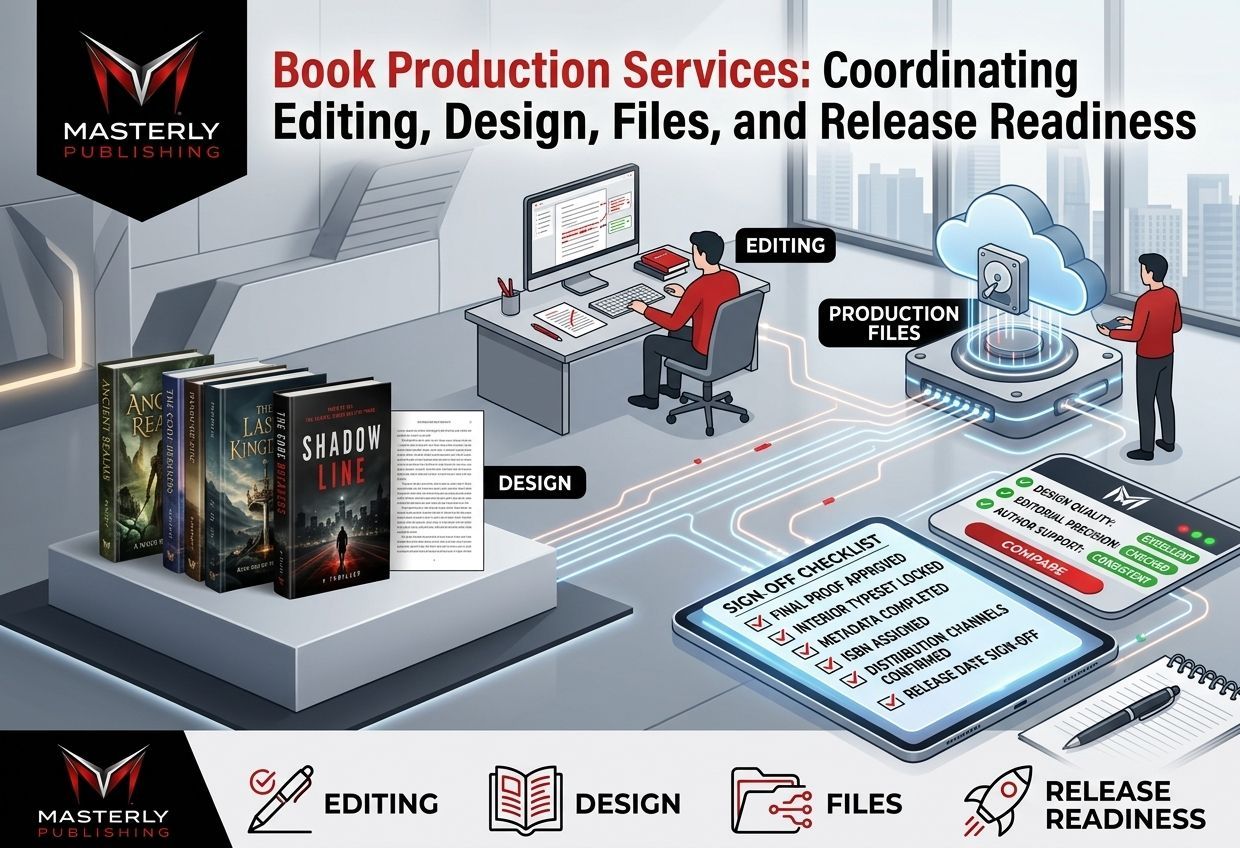
Editing, proofreading, design, formatting, cover development, book information, and other appropriate publishing elements can affect whether the project is truly ready to move toward release.
This stage is also a useful time to confirm the book's intended audience and positioning.
Who is the book for?
What problem, question, story, or subject gives that audience a reason to care?
A launch strategy becomes much harder to focus when those answers remain unclear.
The Book and the Author Brand Should Make Sense Together
For experts, executives, educators, and professionals, a book may become part of a larger public identity.
Readers may encounter the author through a website, professional biography, speaking appearance, interview, social content, or another channel before discovering the book.
Those experiences should not feel disconnected.
The author does not need to turn every professional activity into book promotion. The larger brand should, however, provide enough consistency for readers to understand the relationship between the author and the work.
That alignment deserves attention before release.
A Professional Launch Needs Clear Book Positioning
Trying to promote a book to everyone usually creates an unclear message.
Different books serve different readers.
A business book may address a particular leadership or operational problem. A memoir may appeal to readers interested in a specific experience or perspective. An educational work may serve professionals, students, institutions, or another defined audience.
The launch should reflect that positioning.
Clear positioning can influence the book description, a captivating book summary, author messaging, website content, interviews, promotional materials, and ad copy so they speak clearly to the target audience and support the book launch.
The objective is not to manufacture a marketing identity after the book is complete.
It is to communicate the value and purpose of the finished work clearly.
The Middle of the Launch Window Should Connect Publishing and Promotion
As publication approaches, several parts of the project may begin moving at the same time.
This is where coordination becomes especially important.
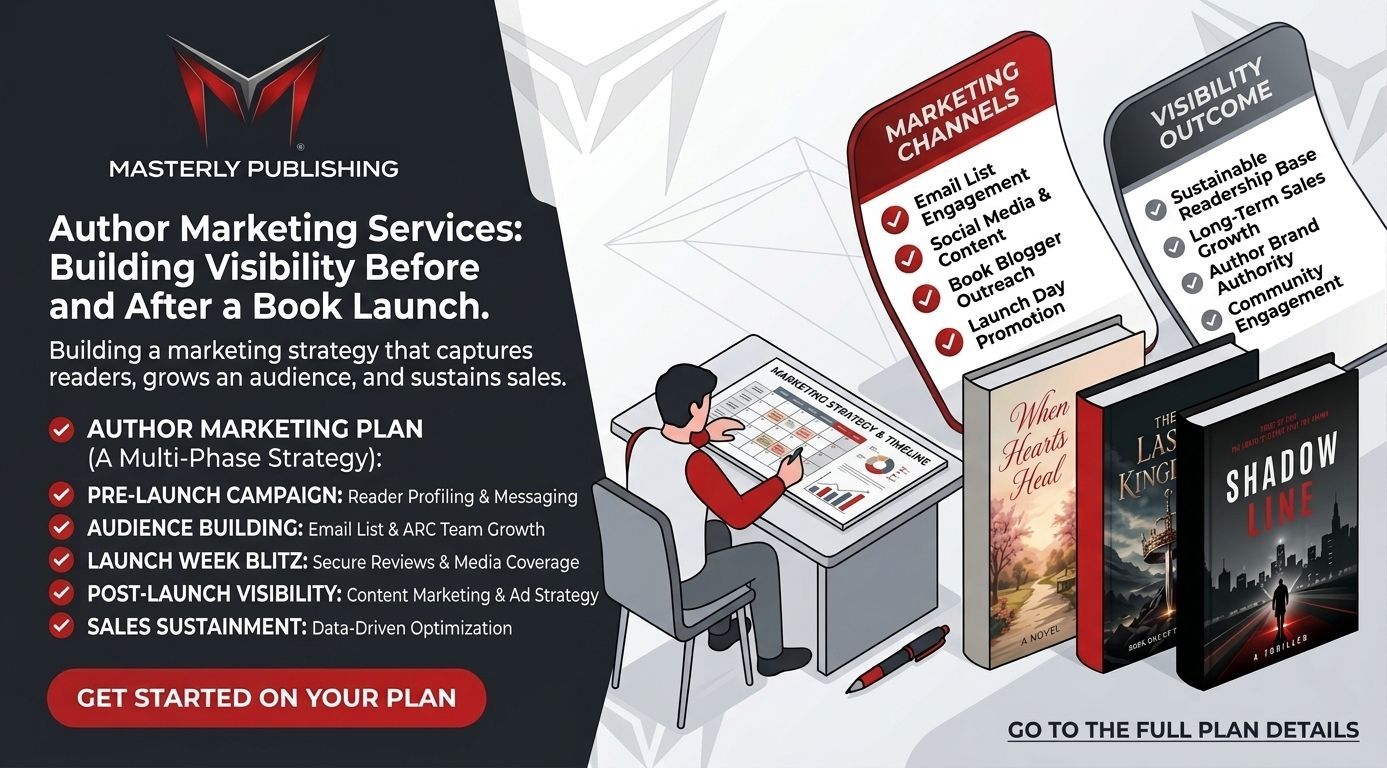
Promotion may also include planning 5–10 email campaigns over several weeks, using social media to promote the book over roughly six months, and deciding where to spend time so you can talk with early readers and influencers as publication approaches, since engaging influencers can significantly boost visibility.
Book files may be approaching final preparation while the author is also considering website content, communications, interviews, launch materials, and other promotional opportunities appropriate to the project.
Without a central plan, these activities can become separate projects with different deadlines.
Coordinated paid advertising can also support early book sales when it is timed with the rest of the launch plan.
A professional publishing strategy helps establish what needs to happen, in what order, and which elements depend on something else being completed first.
That can reduce last-minute conflicts.
Your Author Platform Should Support the Launch
A book launch becomes more difficult when the author has no clear place to direct interested readers.
An author platform can provide that foundation.
Depending on the author and project, the platform may involve a professional website, an existing audience, an email list, speaking relationships, professional networks, organizational channels, social media, Goodreads, or other relevant points of connection.
Not every author needs the same platform. Where relevant, authors can build interest before release by engaging with future readers, reaching potential readers, and claiming an author profile.
The important question is whether people who become interested in the book have a clear way to understand the author, the work, and what to do next.
Building that presence is usually more useful before publication than attempting to create everything after release.
A Book Launch Checklist and Materials Should Be Prepared Before They Are Needed
A publishing project can generate several pieces of information that may be needed repeatedly.
The author biography is one example.
A book description is another, and it also helps to prepare selected quote excerpts, simple graphics for social media, and other materials tied to early reviews before they are needed.
Professional photographs, book-cover files, appropriate author information, talking points, and other materials may also become useful as the author prepares for interviews, events, website updates, or other opportunities.
Preparing appropriate assets in advance can create greater consistency.
Because book reviews are crucial for attracting future readers, authors can also reuse strong feedback across promotional materials and share graphics of review quotes on social media to support the book launch.
It can also prevent every new opportunity from requiring the author to start from a blank document.
Interviews Need Preparation Too
Experts and authors may be comfortable discussing their subject or writing but still benefit from having a clear interview message around the book.
An interview is not simply a chance to summarize every chapter.
The conversation should make sense for the audience and format.
Thinking through the book's major themes, relevant questions, and the author's perspective can help connect interviews with the broader release strategy without turning every appearance into the same conversation.
Publication Day Should Be a Coordinated Moment
Publication day deserves attention, but it should not carry the entire weight of the launch.
By this stage, the core publishing work and appropriate launch assets should already be coordinated according to the project's plan. Early readers can also be prompted to leave honest reviews on publication day to support the new book at the moment it goes live.
The author should not be discovering major unfinished tasks on the morning the book is released.
A planned release allows publication day to function as one point within a larger campaign.
That distinction is important.
A book remains available after its initial release. Authors therefore need to consider what happens after the immediate publication period as well.
A Book Launch Does Not End After the First Week
It is easy to place all attention on launch day and the days immediately surrounding it.
That can make the rest of the plan feel like an afterthought.
A launch event, whether in-person or virtual, gives you a way to celebrate the release, generate energy and community engagement, and mark the moment your book enters the wider world.
A stronger strategy considers how relevant book conversations can continue after publication.
An expert may have opportunities to discuss individual themes from the book. An educator may connect the work with professional learning. An executive may address issues from the book through interviews or speaking opportunities.
The book contains more than one announcement.
You can also capture photos, video, or audience reactions during the launch event to support post-event marketing after release.
Its ideas can support meaningful conversations over time when those opportunities fit the author and audience.
A 90-Day Plan Creates Deadlines Without Making the Launch Mechanical
A plan should create structure, not unnecessary rigidity.
Some tasks depend on others.
Promotional materials may depend on finalized book information. The timeline may also schedule launch-specific social media posts, a Facebook event, and tools such as Instagram's Countdown feature once those details are confirmed. Website updates may need approved cover assets. Interview planning may depend on final positioning.
Putting those responsibilities into a coordinated timeline can make dependencies easier to see. Event amplification can also be built into that schedule with a custom hashtag and clear posting responsibilities.
The plan can also assign responsibility when multiple people are involved.
That becomes especially important when an organization is publishing a book on behalf of an executive, expert, or institutional author.
Professional Publishing Protects the Quality of the Launch
Promotion cannot compensate for an unfinished publishing project.
A book that is rushed toward release can carry preventable issues into the marketplace.
For authors building a professional reputation, the quality of the book itself remains central.
Editing, proofreading, design, cover presentation, digital preparation, and other applicable publishing work should support the professionalism expected from the author.
The launch then introduces a finished work rather than creating pressure to release before the project is ready.
Masterly Publishing Coordinates the Book With the Publishing Strategy
Authors often come to publication with different starting points.
One author may have a completed manuscript but little understanding of what comes next. Another may have an established professional audience but need publishing support. An organization may be coordinating a book alongside a broader executive or educational initiative.
Masterly Publishing helps authors approach the project as a professional publishing process.
That means looking at the book itself and considering the appropriate work required to prepare it for publication and release. When events are part of the release, that can also include planning a launch-day event at a local bookstore or venue, coordinating cross-promotion with local venues, and identifying the right local contact or influencer so each person involved helps expand reach and boost attendance.
Rather than forcing every author into the same launch formula, the strategy should reflect the manuscript, audience, author platform, publishing pathway, and goals of the project.
Your Book Deserves More Than a Publication Date
Finishing a manuscript is significant.
But a completed manuscript and a coordinated release are not the same thing.
A professional book launch connects the work that prepares the book for publication with the strategy that prepares the author and supporting assets for release.
Planning that process before publication day gives authors more room to make thoughtful decisions.
When an event makes sense, that planning may also cover a local bookstore venue, a traditional two-hour format with a reading and Q&A, a book signing, smoother purchasing for attendees, exclusive merchandise, and even filming or sharing moments of the author signing books with personalized copies and a strong photo backdrop.
It also keeps the launch focused on the larger objective: presenting a professionally prepared book to the audience it was written to serve.
Frequently Asked Questions About a Book Launch
What is a book launch?
A book launch is the coordinated process surrounding the release of a book. A book launch plan may include publishing preparation, audience communication, event planning, and post-release follow-up. A book launch checklist helps organise those steps so nothing important is missed before or after release. The goal is a successful book launch that supports visibility, sales, and long-term momentum.
When should book launch planning begin?
Planning should begin early enough to coordinate the publishing project and appropriate release activities before publication. The timeline varies by book, and a first book, an upcoming book, or a more complex publication may require earlier planning.
Does every book need a 90-day launch plan?
No. Ninety days can provide a useful framework for a book plan, but every book has different requirements. Some projects start earlier and may need a longer or different schedule, especially for more complex releases.
Should editing be finished before the book launch?
The book should receive the appropriate editorial and production work before publication. Specific sequencing depends on the publishing project.
Does an author need a website before launching a book?
A professional web presence can provide readers with a place to learn more about an author and book. Your website can work alongside a blog or other platform content when readers want to go deeper, and the appropriate author platform depends on the project and existing audience.
What materials may be useful for a professional book launch?
Depending on the project, useful materials may include approved book information, an author biography, cover assets, professional photographs, website content, relevant messaging, an optimized amazon book page, amazon book metadata and retailer copy, and other page assets that support launch materials.
Is publication day the most important part of a book launch?
Publication day is an important milestone because it is when the book is introduced more broadly, but a launch can include preparation before release and continued activity afterward. Authors should also plan how to sell the book before that date and keep supporting sales after it.
Can a book launch continue after publication?
Yes. Relevant interviews, content, events, professional conversations, and other appropriate opportunities may continue after the initial release. That can include reaching out to book bloggers, continuing conversations with other readers, and encouraging additional comments where those channels suit the project.
Can Masterly Publishing help with book launch planning?
Masterly Publishing provides professional publishing support. Authors can contact the team to discuss their manuscript, publishing needs, intended audience, and appropriate launch strategy. Support may also include planning for outreach, local venue coordination for cross-promotion during a book launch, or collaboration with project-appropriate partners when those activities fit the book and audience, because launch planning is not all the same from one author to another.
Does a book launch guarantee sales?
No. A professional launch can organize publishing and promotional efforts, but it cannot guarantee sales, rankings, media coverage, or other market outcomes, especially in crowded categories where many authors or too many authors may be competing for similar readers. Outcomes also differ depending on whether a project is self published or traditionally published and what support the publisher provides.
Request a Book Launch and Publishing Strategy Consultation With Masterly Publishing
Your book launch should not begin when the publication date is already on the calendar and important pieces remain unfinished.
Masterly Publishing can help you approach the book, publishing preparation, positioning, author platform, and release strategy as connected parts of a professional project.
Whether you are an author, expert, executive, educator, or organization preparing a book for publication, start the launch conversation before the deadline begins making decisions for you.
If you need support coordinating outreach, reviews, launch materials, and release communication to get the word out around your next book or other books, that kind of planning also takes hard work.
Call: (888) 209-4055
Website: masterlypublishing.com