



Book Outline: How to Structure a Nonfiction Book Well
A book outline is the plan for writing a book, and it is the plan that turns a loose idea into a finished manuscript. For authors, a solid outline answers three questions before the writing begins: what is this book about, who is it for, and what order will the reader move through it. This guide explains how to write a book outline step by step, with methods for a non fiction book, a novel outline, and a self help or expert led business book.
If you want help turning an outline into a manuscript, see Masterly Publishing's book writing services. For the pieces that come next, see the guides on how to write a book chapter step by step and how to write a book synopsis.
What Is a Book Outline?
A book outline is a structured summary of your book, organized by chapter or section. It lists the main ideas, the order of those ideas and the purpose of each part. In a non fiction book, the outline shows the reader's path from a problem to a result. In a novel outline, it maps plot points, character arcs and the main events from beginning to end.
An outline is not a first draft. It is a working document. Authors change it as the writing process teaches them what the book needs. The goal is a logical flow, so the entire book hangs together and you are never facing a blank page without a plan.
Why Authors Need a Book Outline
Writing a book is a long project, and a plan helps in several ways:
- It clarifies the central idea. You write the core message in one or two sentences and test every chapter against it.
- It supports organizing ideas. Notes, stories and research become a sequence rather than a pile.
- It reduces writer's block. When you know what the next chapter must do, starting is easier.
- It exposes gaps early. Missing steps, repeated points and weak chapters are easier to fix in an outline than in a finished manuscript.
- It makes the writing journey measurable. You can see progress chapter by chapter.
Some writers prefer to discover the story as they write, and that is a valid choice for some fiction. Even then, a loose outline, built after a first draft, can help in revision.
Before You Outline: Define the Book
Answer these questions in writing before you outline a book:
- Who is the reader? Describe one specific person and the problem they want solved.
- What is the main theme or core message? State it in a sentence.
- What will the reader be able to do or understand by the end? Be specific.
- How does this book differ from existing books? Browse existing books on the subject and note what is missing.
- What is the scope? Decide what the book will not cover.
For a non fiction book, the central idea and the reader's problem anchor everything else. For fiction, the premise, the main character and the central conflict do the same job.
How to Outline a Non Fiction Book
A non fiction outline works best when it follows the reader's journey. Use this step by step approach.
Step 1: Brain dump your main ideas
Write every main point, story, example and lesson you might include. Do not sort yet. Mind mapping works well here: put the central idea in the middle of a page and branch out to related topics.
Step 2: Group related points
Sort your list into clusters. Each cluster is a candidate chapter. Merge clusters that overlap, and split any cluster that covers two different ideas.
Step 3: Choose a structure
Common structures for non fiction include:
| Structure | How it works | Often used for |
|---|---|---|
| Problem to solution | Defines the problem, then walks through the steps to solve it | Self help and business books |
| Chronological order | Follows events or a process in time | History, memoir, case studies |
| Framework | Teaches a named method one component at a time | Expert led and how to books |
| Thematic | Groups chapters by topic or idea | Essay collections, research based books |
Step 4: Put the chapters in logical order
Arrange chapters so each one prepares the reader for the next. Ask of every chapter: what must the reader already know, and what does this chapter let them do next? A logical order often puts foundations first, then methods, then application.
Step 5: Write chapter summaries
For each chapter, write two to five sentences that give the chapter's purpose, its main points and an example or story you plan to use. These chapter summaries become the backbone of your outline and, later, of your proposal or synopsis.
Step 6: Add the opening and closing
List an introduction that sets up the reader's problem, and a conclusion that gives next steps. Include final thoughts only if they add something new for the reader.
A Sample Non Fiction Book Outline
Here is a simple template for an expert led book:
- Introduction: The problem, who the book is for, and what the reader will gain
- Part 1: Foundations
- Chapter 1: The core problem and why it persists
- Chapter 2: The main principle behind the method
- Part 2: The method
- Chapter 3: Step one of the framework
- Chapter 4: Step two of the framework
- Chapter 5: Step three of the framework
- Part 3: Application
- Chapter 6: Common mistakes and how to fix them
- Chapter 7: A worked example from start to finish
- Conclusion: Summary and the reader's next steps
Under each chapter, list three to six main points, plus any story, example or exercise.
How to Outline a Novel
A novel outline focuses on story. Many authors use the three act structure:
- Act one: Introduce the main character, the setting details and the central problem, ending with an event that sets the story in motion.
- Act two: Raise the stakes with rising action, complications and a midpoint that changes the direction of the story.
- Act three: Bring the story to a climax and resolution.
List the plot points for each act, then add character arcs, which show how each main character changes. Note the main events of each chapter and the setting details you need to establish. A novel outline can be a page or a detailed chapter list, depending on how much planning you like.
Book Outline Tips for the Writing Process
A book outline is a roadmap for the writing process, and these tips help authors use it well. Writing a book outline is easier when you treat it as research and creating at the same time: you are mapping the book and discovering what you still need to learn. A good outline for any non fiction book includes the key points readers need, the order of the main ideas and the details that support each one. For writing non fiction, keep the audience in mind at every step, and note the genre conventions readers expect. A nonfiction book on a technical subject may need more process and more detail than a short guide.
Writing a novel works differently. The outline for fiction tracks the plot, the setting, the characters and the protagonist, plus the scenes that build to a climax. Writers of fiction often outline the beginning, the middle and the ending first, then fill in scenes. The same tips apply in both cases: stay open to change, focus on the concept that drives the book, and write a short description of each part. Organizing ideas this way is a defense against writer's block, because every session has a clear point. If you plan to self publish, the outline also helps you see where a book needs a cover, illustrations or other elements, and writing a timeline beside the outline shows how long each part may take.
Other Ways to Outline
Different authors prefer different tools:
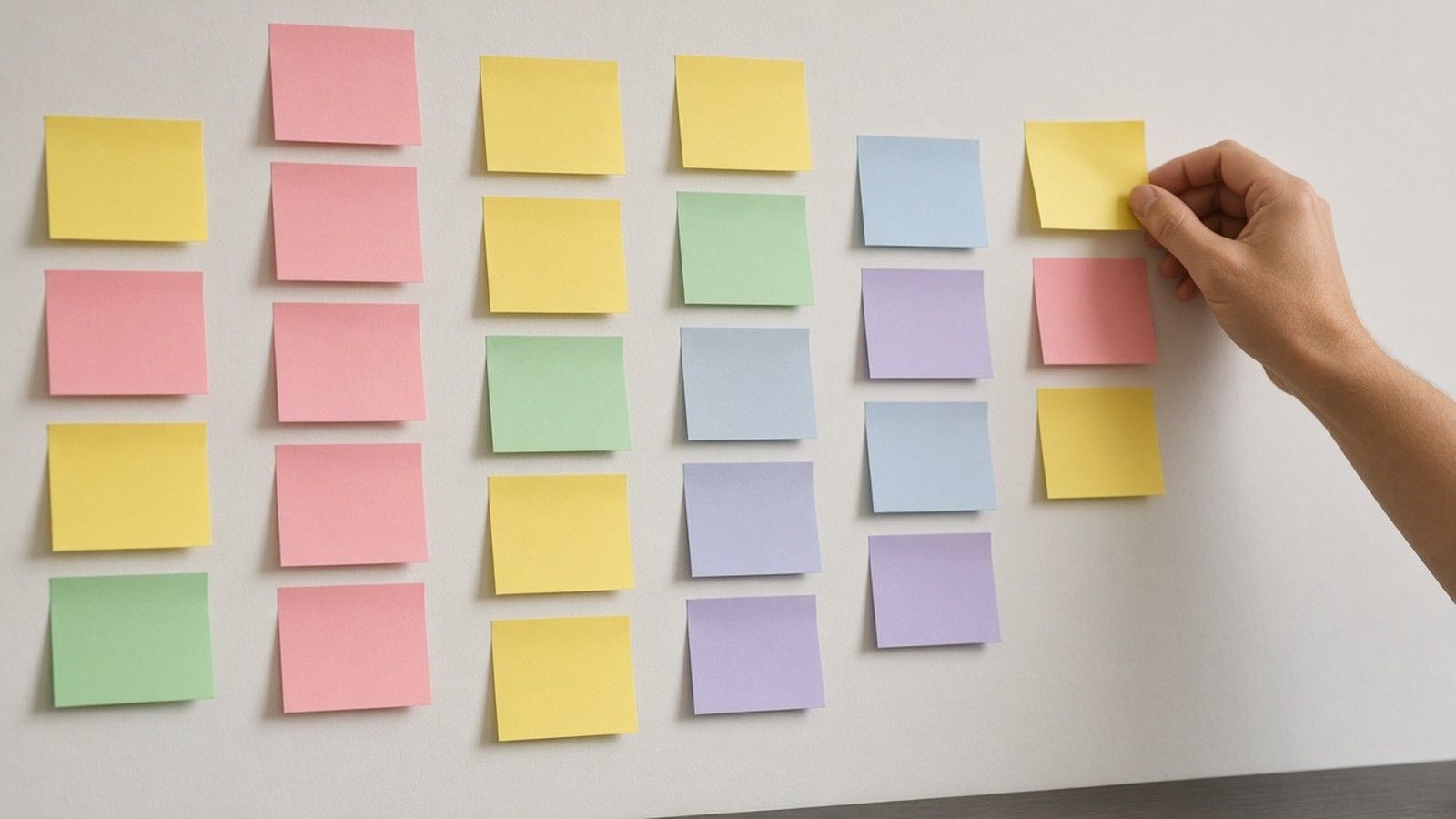
- Index cards or sticky notes. Write one idea per card and arrange them on a table or wall.
- A simple list. Use a numbered list of chapters with a sentence each.
- A spreadsheet. Track chapter titles, goals, word counts and status in columns.
- Writing software. Many tools let you drag chapters into a new order.
- A mind map. Start with the main theme and branch out.
The best method is the one you will use. Choose a format that lets you move parts around easily.
Outline for a Self Help or Business Book
A self help or expert led business book usually combines teaching with stories. For each chapter, plan three elements:
- The lesson. The single idea the chapter teaches.
- The proof. An example, a case or a story that shows the idea at work.
- The action. An exercise, checklist or question the reader can use.
This pattern keeps chapters consistent and gives readers something to do. It also makes it easier to see which chapters are thin on examples or actions.
How Detailed Should an Outline Be?
A one page outline helps you see the shape of the book. A longer outline, with chapter summaries and main points, helps you draft faster. Start simple, then add detail where you are unsure. If you plan to pitch the book to an agent or publisher, a detailed chapter by chapter outline will later feed into a book proposal. How many pages and how many chapters you need depends on the subject, the audience and the length of the book.
How to Use Your Outline While Writing
- Treat the outline as a guide, not a contract. If a chapter needs to move, move it.
- Write the first draft from the outline one chapter at a time. Do not stop to edit.
- Update the outline after each chapter with what you actually wrote.
- Review the outline at the end of each section to confirm the book still follows the central idea.
- Share the outline with a trusted reader or editor early. Feedback on structure is easier to use before the manuscript is long.
When the first draft is done, a professional editor can help with structure and clarity. See Masterly Publishing's book editing and editor services.
Frequently Asked Book Outline Questions for Writers
Writers often ask which structure is best, and the answer depends on the project. A writer of a self help book may favor a problem to solution order, and a writer of a history may favor chronological order. Writing a book outline for the first time can feel like a crucial decision, but remember that an outline is a roadmap you can redraw. Insights from your research and from early readers will change the plot, the setting or the order of the chapters, and that is normal. Keep a short description of each part on paper or on screen, and use a timeline to plan the writing. Think about the genre and the audience of readers you hope to reach, and discover how existing books in that genre are structured. An article, a lecture or a blog comment can be a source of ideas, but keep the focus on the concept that drives the book. Each instance of an idea in the outline should earn its place, so the reader's attention stays on the beginning, the middle and the end of the book's argument or story.
Common Book Outline Mistakes
- Starting with chapter titles before the central idea is clear
- Including everything you know instead of what the reader needs
- Placing advanced ideas before the basics
- Making every chapter the same length by default
- Forgetting a chapter that covers common objections or mistakes
- Treating the outline as final and ignoring what the draft shows
Frequently Asked Questions About Book Outlines
How do I write a book outline?
Define the reader and the central idea, list your main ideas, group them into chapters, put the chapters in logical order and write a short summary for each.
How long should a book outline be?
It can be one page or many. A short outline shows structure. A detailed outline with chapter summaries helps with drafting and with a later proposal.
What is the difference between an outline and a synopsis?
An outline is a planning tool for the author, organized by chapter. A synopsis is a summary written for others to read, and it usually covers the whole story or argument in a few pages.
Can I write a book without an outline?
Some authors do, especially in fiction. Most non fiction authors find that an outline saves time and prevents rewrites.
Start Your Book With a Plan
A clear outline gives your book direction and gives you a way to measure progress. If you want a second set of eyes on your plan or help with the writing, contact Masterly Publishing.