

How Trademark Registration Lawyers Prevent Brand Confusion in Publishing
In publishing, your name is more than a label on a cover—it’s your reputation, your credibility, and the signal readers use to decide whether they can trust what they’re buying. Authors and publishing companies spend months developing a manuscript, polishing a brand voice, and building a platform, only to realize too late that another business is using a similar name. That moment can feel like the ground shifts under your feet, especially when your book is already live and readers are searching online. Brand confusion in publishing is real, and it can cost authors money, momentum, and long-term recognition.
At Masterly Publishing Group, we specialize in helping self-published authors and professional writers achieve their dreams while navigating the publishing and legal hurdles that come with building a real brand. From manuscript to bestseller, we support authors through publishing, marketing, and protecting their intellectual property. Our Grand Prairie location also includes a state-of-the-art content creation studio where authors can create promotional materials, book trailers, and podcasts that strengthen their brand identity. When it comes to brand confusion, working with trademark attorneys early can make the difference between building a recognizable name and fighting to recover one.
Brand Confusion in Publishing Happens Faster Than Most Authors Expect
Many authors assume brand confusion only happens to big companies. In reality, it often hits first-time authors and small businesses because they move quickly to publish without doing legal checks. An author might choose a pen name, series title, imprint name, or podcast title and start promoting it everywhere. Then a reader searches that name and finds another creator with a similar brand, leaving people unsure about the same source of the content.
This confusion doesn’t just affect sales. It affects reviews, media coverage, and word-of-mouth growth. When readers can’t clearly recognize your brand, they hesitate to buy. The result is a slow leak in credibility that can be hard to fix later.
The Real Value of Trademark Registration in the Publishing World
A trademark is designed to protect the identity that your audience associates with your work. In publishing, that identity might include your author brand, your imprint name, your book series name, or even a signature logo. Trademark registration helps create legal recognition of your brand so you can defend it when others get too close. It’s not just paperwork—it’s part of building a professional publishing operation.
A registered mark can also support your marketing strategy. When your name is protected, you can confidently invest in ads, interviews, podcasts, and social media growth. You’re not just hoping your brand stays yours—you’re taking steps to secure it. That confidence matters when your goal is long-term success.
How Trademark Attorneys Prevent Confusion Before It Starts
The best brand protection is proactive, not reactive. Trademark attorneys help authors and publishers prevent confusion by guiding them through the right steps before they launch. This includes evaluating the uniqueness of a name, spotting conflicts, and advising on safer options. It also includes helping clients understand how trademarks work in real markets, not just in theory.
A strong legal strategy can prevent costly changes later. Rebranding after release can mean updating covers, changing metadata, rewriting marketing copy, and losing recognition. Trademark attorneys help reduce that risk by building protection into your publishing plan. That is especially important when you are launching multiple books or planning a long series.
What an Attorney Trademark Strategy Looks Like for Authors
A smart attorney trademark strategy starts with understanding what you are actually trying to protect. Many authors think they need to trademark the book title itself, but the more valuable assets are often the brand names that grow over time. That might include a publishing imprint, a pen name, or a series name that expands into multiple products. A well-planned trademark strategy protects the brand you’re building, not just the one book you’re launching.
Trademark attorneys also help clients understand how trademarks differ from copyrights. Copyright law protects the creative expression inside the book, while trademark law protects the branding that identifies the source. When authors understand this distinction, they make better decisions about where to invest. Protecting both can strengthen your publishing foundation.
Trademark Law vs. Copyright Law: What Publishing Brands Need to Know
Publishing involves multiple types of intellectual property, and it’s easy to confuse them. Copyright law protects the written content, including the manuscript text, cover art, and original creative work. Trademark law protects the brand identifiers that tell consumers who created the product. Both matter, but they solve different problems.
If someone copies your book content, that is a copyright issue. If someone uses a confusingly similar brand name that misleads readers, that is a trademark issue. Authors need both forms of protection depending on the risk. Trademark attorneys help clients understand which legal tool applies to the situation and what steps make sense.
Trademark Clearance Searches: The First Step Toward Brand Safety
Before you invest in cover design, marketing, and promotion, it’s wise to conduct a clearance review. Trademark clearance searches help identify whether your chosen name is already in use by another company or creator. A name might look available on social media but still be protected legally. That is why a proper clearance search matters.
Experienced trademark attorneys know how to look beyond surface-level checks. They evaluate similar names, related categories, and how consumers might interpret the source. This is about reducing confusion and protecting your future. When authors skip clearance, they often discover problems after they’ve already built momentum.
How Lawyers Conduct Trademark Clearance Searches the Right Way
A quick Google search is not the same as legal clearance. Trademark attorneys can conduct trademark clearance searches using databases and legal analysis to evaluate risk. They look at similarities in spelling, sound, meaning, and industry overlap. They also consider how a typical consumer might be confused, even if the names are not identical.
This is where strategy becomes important. A name might be legally risky even if it seems “different enough” to the author. Trademark attorneys help clients choose names that are strong, protectable, and less likely to trigger disputes. That guidance can prevent major setbacks later.
Trademark Registration Process: What Authors Should Expect
The trademark registration process involves more than filling out a form. It requires choosing the correct classification, describing the goods and services accurately, and submitting proper specimens when needed. It also involves monitoring deadlines and responding to issues that arise. Many authors are surprised by how technical the process can be.
Working with trademark attorneys helps reduce mistakes that lead to delays or rejection. It also helps authors avoid filing for the wrong thing, which can waste time and money. A properly filed application is a foundation for long-term protection. It’s a professional step for authors who want to build a lasting brand.
Trademark Applications and the Importance of Getting It Right
Trademark applications require accuracy and strategy. The way you describe your goods and services can affect the scope of your protection. If you file too narrowly, your brand may not be protected in the ways you need. If you file too broadly, you may face rejection or challenges.
Trademark attorneys help clients align the application with real-world publishing goals. That includes thinking about future expansion into audiobooks, courses, podcasts, and merchandise. A strong application supports growth, not just today’s release. This is especially important for authors planning multiple projects.
Filing With the Patent and Trademark Office
In the United States, trademark filings go through the patent and trademark office, commonly known as the uspto. This office reviews applications and determines whether they meet legal requirements. The process can include examination, publication, and possible challenges. It’s not always fast, and it’s not always simple.
Trademark attorneys guide clients through each stage, including how to respond when the office raises concerns. Filing correctly from the start helps avoid unnecessary delays. It also helps reduce the risk of losing rights due to procedural errors. For authors building a brand, that guidance is valuable.
Office Action Responses and How They Affect Your Timeline
An office action is a formal response from the trademark office that raises issues with your application. It might involve conflicts with existing marks, technical problems, or clarification requests. Office actions can be stressful because they often come with deadlines. Missing a deadline can result in losing the application.
Trademark attorneys help clients respond strategically and on time. They evaluate the issue, craft arguments, and submit the required documentation. This can protect the application and keep the process moving. Handling office actions correctly can be the difference between approval and denial.
Trademark Rights and the Power of Exclusive Rights
When you secure trademark protection, you strengthen your trademark rights in the marketplace. The exclusive right to use a registered trademark in relation to particular products or services. That matters because it gives you legal leverage when someone tries to imitate your brand. It also signals professionalism to partners, distributors, and retailers.
Trademark rights can support enforcement actions if needed. They also help prevent confusion before it spreads. In publishing, where discovery often happens online, clarity is everything. Protecting your name helps protect your reputation.
Domain Names and Online Identity Protection
Publishing brands live online, and domain names are often a major part of visibility. If your author name or imprint name is similar to another brand, you may lose traffic, emails, and credibility. Readers might end up on the wrong website or follow the wrong social media account. This can create real financial loss and long-term confusion.
Trademark attorneys help clients think about brand identity across platforms. That includes domain strategy, social handles, and naming consistency. A strong brand should be recognizable and easy to find. Protecting it legally supports your marketing efforts.
Trademark Infringement and Unfair Competition in Publishing
When someone uses a mark that is confusingly similar to yours in a way that deceives customers, it is considered trademark infringement. In publishing, that confusion can involve book series names, author brands, or publishing imprints. It can also happen in podcast branding, courses, or merchandise connected to your books. When confusion grows, it can damage your reviews and your sales.
Trademark law also addresses unfair competition, which can include misleading branding or deceptive practices. These issues are not just “drama” between creators. They are legal risks that can affect your business future. Trademark attorneys help authors understand the line and respond appropriately.
Trademark Owners Need a Plan for Trademark Enforcement
Being a trademark owner means thinking about protection long-term. Trademark owners may need a plan for monitoring and responding to potential conflicts. This is where trademark enforcement becomes important. Enforcement can involve warning letters, negotiations, or formal proceedings depending on the situation.
Trademark attorneys help clients enforce rights without overreacting. Not every conflict requires litigation, but ignoring infringement can weaken your position. A balanced enforcement strategy protects your brand while keeping costs controlled. That approach is especially important for authors and small publishing brands.
Opposition and Cancellation Proceedings: What They Mean
Sometimes trademark disputes happen through administrative processes. Opposition and cancellation proceedings allow parties to challenge trademark applications or registrations. These disputes can occur when someone believes a mark should not be registered or should be removed. For authors, this can feel confusing and intimidating.
Trademark attorneys help clients respond to challenges and defend their applications. They also help clients evaluate whether a challenge is worth pursuing. These proceedings are formal and require careful legal strategy. Having professional support matters.
The Trademark Trial and Appeal Board Explained
The trial and appeal board, often called the appeal board, is where many trademark disputes are handled. This includes oppositions, cancellations, and appeals of USPTO decisions. The board is part of the administrative system, not a typical courtroom. Still, the process can be detailed and demanding.
Trademark attorneys often represent clients in these proceedings. They gather evidence, submit arguments, and follow procedural rules. These cases can shape the future of your brand identity. For authors, it’s important to take them seriously.
USPTO’s Trademark Trial Procedures and Publishing Conflicts
The uspto's trademark trial process is designed to resolve disputes through structured procedures. These disputes may involve similar marks, claims of confusion, or challenges to registration. Even though this process is administrative, it can feel like litigation. Deadlines, evidence, and arguments matter.
Trademark attorneys guide clients through these procedures with professionalism. They help authors understand what the board expects and how to respond. They also help manage risk and cost. For publishing brands, this can protect years of work.
Trademark Trial and Appeal Board Strategy for Authors
The trademark trial and appeal process requires strategic planning. Authors may need to show how their brand is used, how it is recognized, and why confusion is likely. They may also need to respond to claims brought by others. These are not casual disputes—they are formal legal challenges.
Trademark attorneys help clients build strong evidence and persuasive arguments. They also help clients decide when to fight and when to pivot. In publishing, sometimes rebranding is more costly than defending a mark. A professional strategy helps you choose wisely.
Cancellation Proceedings and Protecting Your Brand Over Time
Cancellation proceedings can happen when someone claims a registered mark should be removed. This might involve arguments about use, confusion, or other legal grounds. For authors and publishing companies, cancellation proceedings can threaten the foundation of a brand. Losing a mark can mean losing protection and leverage.
Trademark attorneys help clients defend against cancellation and protect their registrations. They also help ensure trademarks are used correctly to maintain rights. This includes consistent branding and proper use across products. Long-term protection requires ongoing attention.
Trademark Portfolios for Authors and Publishing Companies
Many successful authors build multiple brands over time. That might include different pen names, series titles, imprints, or related products. Trademark portfolios help organize and protect these assets. A portfolio strategy is especially useful for authors expanding into audiobooks, podcasts, and educational products.
Trademark attorneys help clients plan portfolios with growth in mind. They also help prioritize what to register first based on risk and value. A portfolio approach makes protection scalable. It also supports long-term business development.
Trademark Counseling and Developing Strategies for Growth
Trademark counseling involves more than filing paperwork. It includes advising clients on naming, branding, and risk management. It also includes developing strategies for expansion into new markets or product lines. For authors, this might include adapting a book into a podcast or launching merchandise.
Trademark attorneys help clients align legal protection with business goals. They also help clients avoid choices that create confusion or risk. Counseling is proactive, not reactive. That proactive approach saves time and money.
Due Diligence and Corporate Transactions in Publishing
Publishing brands sometimes enter partnerships, licensing deals, or acquisitions. These deals require due diligence to evaluate the legal strength of the brand. A trademark that is unclear or disputed can reduce the value of a deal. That is why trademark protection matters beyond day-to-day publishing.
Trademark attorneys support due diligence and protect clients during corporate transactions. They help ensure brand assets are properly documented and transferable. This can be important for authors who want to scale their business. Strong trademarks increase credibility in negotiations.
Litigation and Federal Court: When Disputes Escalate
Not every trademark dispute stays administrative. Some disputes escalate into litigation in federal court, especially when damages or serious infringement is involved. Litigation can be expensive and time-consuming, which is why many authors prefer to prevent problems early. Still, sometimes legal action is necessary to protect a brand.
Trademark attorneys help clients evaluate when litigation is appropriate. They also help manage risk and pursue efficient resolutions. The goal is brand protection, not unnecessary conflict. Strategic legal support matters.
Trademark Protection for Authors Who Want to Build a Real Business
Publishing is not just art—it is also business. Authors who want long-term success need trademark protection as part of their plan. Protection supports marketing, reduces confusion, and strengthens credibility. It also supports enforcement when someone copies your identity.
Trademark attorneys help authors protect what they build. That includes names, logos, and brand identifiers. When your brand is protected, you can invest in growth confidently. That confidence changes how you operate.
Helping Businesses Protect Their Brands in a Crowded Market
Publishing is crowded, and brand identity is often the difference between being discovered and being ignored. Trademark attorneys focus on helping businesses protect the names that drive recognition. For authors, that protection supports long-term sales and reader trust. It also supports expansion into new products.
A protected brand is easier to market and easier to defend. It also reduces confusion in online search results. That clarity benefits both the author and the reader. Strong brands win.
Trademark Attorneys and the Role of Professional Representation
Trademark issues are legal issues, and professional support matters. Trademark attorneys represent clients in filings, disputes, and enforcement actions. They help clients understand the law and apply it to real situations. They also help clients avoid costly mistakes.
Working with a trademark attorney gives authors a clearer path forward. It reduces guesswork and strengthens confidence. It also provides a professional foundation for growth. For serious authors, it is a smart investment.
Experienced Trademark Attorney Support for Publishing Brands
An experienced trademark attorney understands how trademark law applies to real markets. They know how to evaluate risk, respond to office actions, and build strong applications. They also know how to protect clients during disputes. Experience matters because the process can be technical.
Trademark attorneys also help clients avoid unnecessary additional fees by filing correctly the first time. They help clients choose names that are protectable and less likely to be challenged. That strategy saves time and protects momentum. In publishing, momentum is everything.
Best Lawyers, Top Rated Attorneys, and What Authors Should Look For
Authors often search for the best lawyers or top rated attorneys when they feel their brand is threatened. But the best choice is not always the loudest marketing. The best choice is the attorney who understands publishing, branding, and practical business needs. Authors should look for clear communication and strategic thinking.
Trademark attorneys should also explain options in plain language. Authors should understand what they are paying for and what the next steps are. A good legal partner helps you feel confident, not confused. That partnership supports long-term success.
Intellectual Property Law in Publishing: A Bigger Picture
Publishing involves multiple forms of intellectual property law, including trademarks, copyrights, and sometimes patents. While patents are less common in publishing, some creators work with technology, apps, or unique product systems. Understanding the bigger picture helps authors protect what they build. It also helps them avoid legal blind spots.
Trademark attorneys focus on protecting brand identity, while copyright protects creative expression. Together, these tools create stronger legal coverage. Authors who understand this are better positioned to scale. Protection is part of professionalism.
Patents, Companies, and the Expanding Publishing Business
Some publishing brands expand into technology, tools, or unique systems that may involve patents. Authors may also build companies that manage multiple products and services. As publishing evolves, legal strategy becomes more important. Branding, content, and technology can overlap.
Trademark attorneys help companies protect names and marks as they expand. They also help ensure consistent use across products. A strong legal foundation supports growth. It also reduces confusion in the marketplace.
The Role of the International Trademark Association
The international trademark association is a major organization that supports trademark professionals and education. While many authors focus on U.S. protection, international considerations may matter for global distribution. Publishing is increasingly worldwide, especially with ebooks and audiobooks. A brand can cross borders quickly.
Trademark attorneys can help clients understand international strategy. They can advise on how to protect brands in multiple jurisdictions. This is important for authors with global audiences. Protection should match your reach.
Brand Names, Marks, and Preventing Reader Confusion
Brand confusion often starts with similar brand names and similar marks. Readers may assume two creators are connected when they are not. This can lead to misdirected reviews, mistaken purchases, and lost trust. The problem grows faster online because search results and algorithms amplify confusion.
Trademark attorneys help clients build distinctive brands that stand out. They also help protect those brands legally. Distinctiveness is a competitive advantage. It makes marketing easier and protection stronger.
Addressing Risk Early Protects Your Publishing Future
Every author wants their work to be recognized and respected. That recognition depends on a brand that is clear and consistent. When confusion happens, it can derail marketing and growth. Addressing risk early is one of the smartest moves an author can make.
Trademark attorneys help clients identify risks before they become emergencies. They help clients protect their identity and build confidence. That protection supports long-term success. It also supports peace of mind.
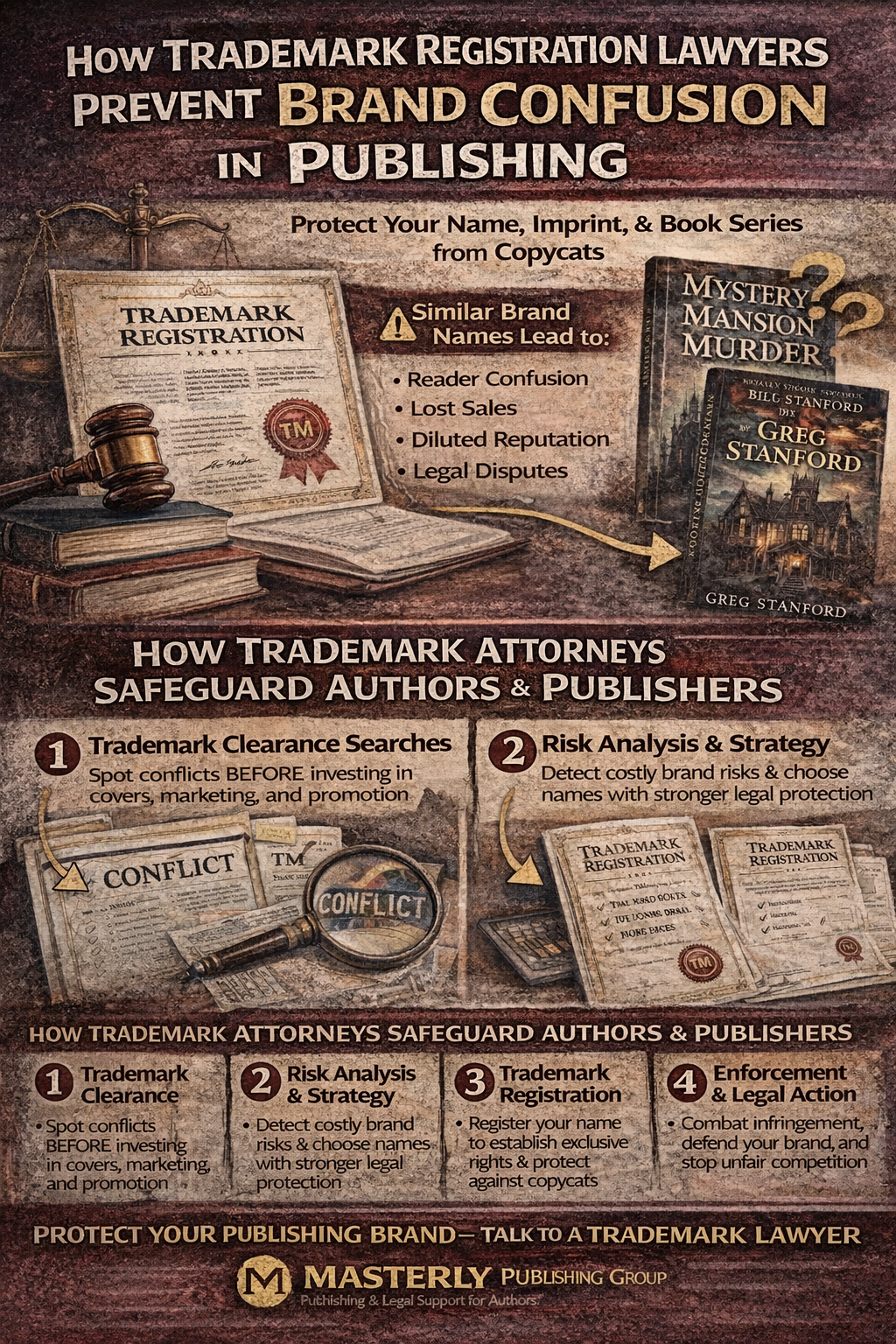
Masterly Publishing Group: Bringing Stories to Life With Protection and Professional Support
At Masterly Publishing Group, we help authors bring stories to life with expert publishing services and support. We guide clients through self-publishing, marketing, and the legal hurdles that can arise along the way. Our content creation studio helps authors build promotional materials, book trailers, and podcasts that strengthen brand identity. We serve clients worldwide and support authors at every stage.
We understand that authors want more than a finished book. They want a brand that grows, a platform that expands, and a publishing journey that feels secure. Trademark protection is part of that security. When your brand is protected, your story can travel further.
Contact Masterly Publishing Group for a Free Consultation
If you are building a publishing brand, protecting your name is not optional—it is a business decision that can protect years of work. Whether you are launching your first book, building a series, or expanding into podcasts and merchandise, trademark issues can surface fast. Working with the right legal support helps prevent confusion, reduce risk, and protect your long-term success.
Contact Masterly Publishing Group at (888) 209-4055 to schedule a free consultation. We can answer your questions about attorney trademark needs, publishing brand protection, and the next steps to protect your identity in the marketplace. We work with clients across the country and internationally, helping authors build brands that stand out and stay protected.