

Missed a USPTO Trademark Renewal Deadline? Here’s What Happens Next
Missing a USPTO trademark renewal deadline can feel like a punch to the stomach, especially if your trademark is tied to your author brand, publishing business, or growing media platform. You may have spent years building trust with readers, growing your audience, and making sure consumers associate your name with quality work. Then suddenly, one missed filing date threatens the legal protection you thought you already had. The good news is that missing a deadline doesn’t always mean the end of your trademark rights, but it does mean you need to act fast.
At Masterly Publishing Group, we help self-published authors and professional writers protect what they’ve built, including their trademark name, brand identity, and intellectual property strategy. From manuscript to bestseller, we’re your partner for publishing, marketing, and navigating legal hurdles that can disrupt momentum. Our Grand Prairie content creation studio also supports authors who want to build a real platform with podcasts, trailers, and promotional materials that strengthen brand protection. When deadlines get missed, the next steps matter more than ever, and the right legal services can make the difference between recovery and loss.
Why Trademark Renewal Deadlines Matter More Than Most People Realize
A trademark is not a “set it and forget it” asset. Trademark registration requires ongoing filing and maintenance to stay active and enforceable. If you miss a deadline, your registration can be canceled, which may open the door for infringement and unfair competition.
For authors and creators, the trademark is often tied to your business identity, your publishing imprint, your podcast, and even your domain names. When your trademark protection weakens, your ability to protect your brand names weakens too. This can impact licensing deals, collaborations, and even the way your audience views your credibility. A missed deadline might seem administrative, but it can turn into a serious legal problem quickly.
What the USPTO Is Actually Tracking Behind the Scenes
The uspto monitors filings tied to the registration lifecycle of every registered mark. Their system doesn’t know whether you were busy launching a book, dealing with life, or managing a growing business. It only knows whether the required filing was submitted on time.
This is why working with trademark attorneys matters. A missed deadline often happens because trademark owners assume they’ll get reminders, or they rely on a system like trademark engine without understanding what’s required. Even if you used a filing platform, it’s still your responsibility to maintain the trademark registration properly.
The Common Trademark Renewal Deadlines That Get Missed
Most missed deadlines happen because people don’t realize how many filings exist throughout the trademark registration process. Trademark registration isn’t just about getting approved once. It’s a long-term process of protecting and maintaining rights.
Here are deadlines that frequently trip up trademark owners:
- Maintenance filings between the fifth and sixth year after registration
- Renewal filing windows around the tenth year and every ten years after
- Statement-related filing requirements for certain types of trademark applications
- Deadlines related to office action responses during prosecution
When filing deadlines pass, the trademark office may cancel the registration. Once that happens, the window to fix it can be short, and the cost can rise due to additional government filing fees and legal work.
What Happens Immediately After You Miss the Deadline
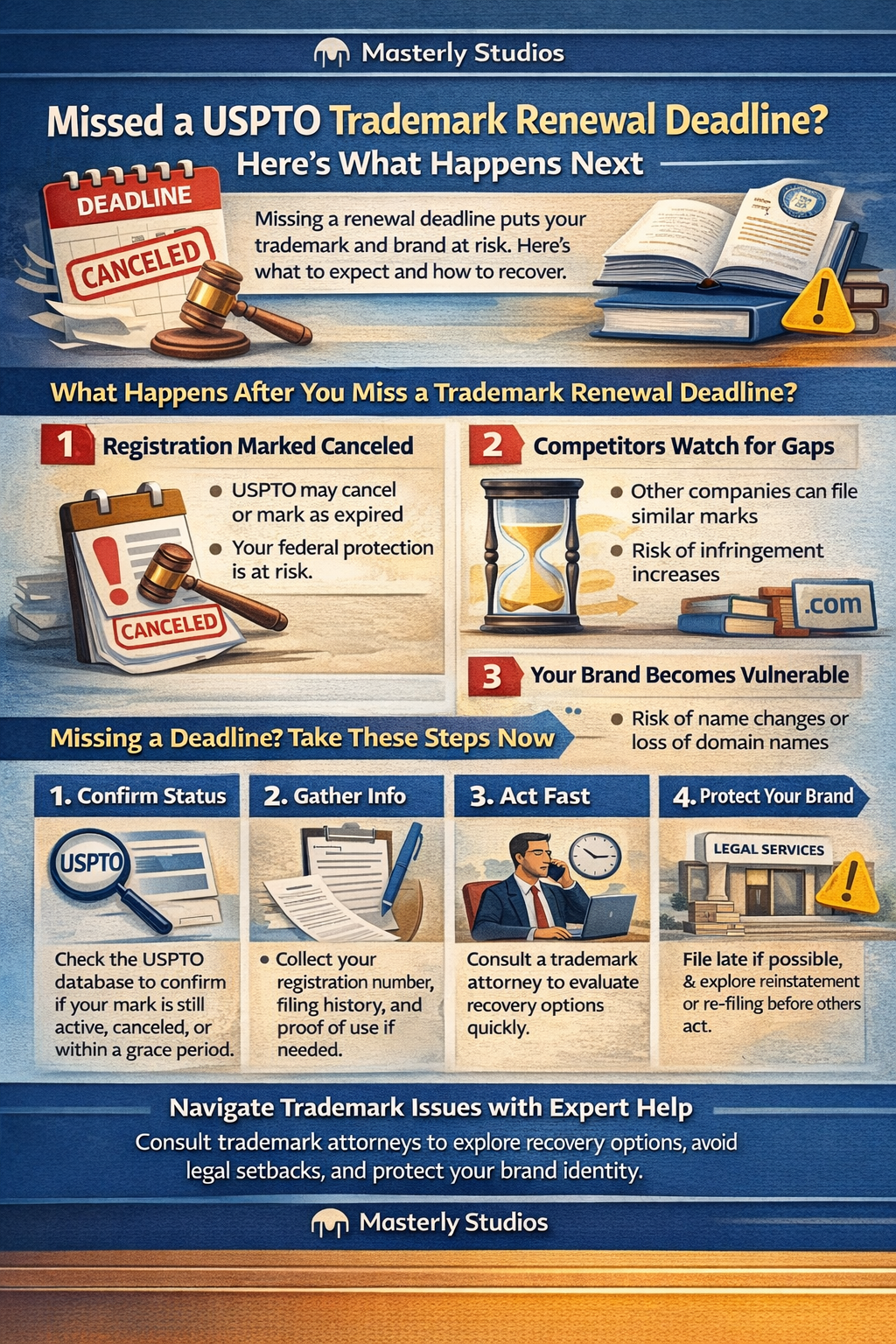
Once the deadline passes, the USPTO may mark the registration as canceled or expired. This does not always happen instantly, but it often happens quickly. Many clients only notice the issue when a platform flags it, a competitor files something similar, or a licensing opportunity requires proof of active registration.
If you missed the deadline, you should not assume you can “just file it late.” Late filing options depend on the type of registration, the time passed, and what exactly was missed. This is where an experienced trademark attorney can evaluate what happened and what recovery options exist.
Does Missing the Deadline Mean You Lose All Trademark Rights?
Not always, but you could lose your strongest rights. If your federal registration is canceled, you may still have common law trademark rights based on actual use in commerce. However, those rights are weaker, harder to enforce, and limited geographically.
That means you may still be able to protect your brand in certain ways, but you lose the major benefits that come with federal registration. If your trademark is tied to a book series, a publishing imprint, or a podcast, losing registration can create confusion and increase the risk of trademark infringement. In many cases, the best move is to act quickly and explore reinstatement or re-filing options.
Why This Hits Authors and Creators Especially Hard
Authors often build a brand that lives in multiple places at once. You may have a publishing name, a podcast title, a book series title, and matching domain names connected to your platform. That means your trademark isn’t just “legal paperwork,” it’s the foundation of your business identity.
When a registration lapses, you may be forced into name changes that disrupt your audience and your marketing momentum. Readers who were loyal might not recognize the new brand immediately. Even worse, someone else could register a similar mark, making it harder for you to reclaim what you built. This is why trademark law matters for creators, not just corporations.
The Risk of Competitors Filing After Your Registration Lapses
When a registration becomes vulnerable, other companies can take advantage. A competitor may file a similar trademark application, or they may claim your brand is no longer protected. This is where challenges brought by others can become expensive and stressful.
In some cases, disputes lead to opposition and cancellation proceedings, which require legal strategy and evidence. If the matter escalates, it can involve the trademark trial and appeal system. Even if you are right, defending your position takes time, money, and strong legal representation.
How the Trademark Trial and Appeal Board Can Become Part of Your Story
If your mark becomes contested, you may end up dealing with the trial and appeal board. This is a serious forum where trademark disputes are handled, including cancellation proceedings and other challenges. The appeal board can review issues involving registrability and rights.
The uspto's trademark trial process is not something most business owners or authors want to handle alone. It often requires attorneys who understand the rules, evidence, and procedural deadlines. Even small mistakes can cause major setbacks, especially if your brand is central to your business model.
When a Missed Deadline Turns Into a Legal Battle
Not every missed renewal becomes litigation, but the risk increases. If someone else starts using your brand name, you could face trademark infringement issues that force you to act quickly. At that point, it becomes less about paperwork and more about protecting your reputation.
Some cases involve unfair competition claims, especially if consumers associate the other party’s goods with your brand. Others may require enforcement actions that involve settlement demands or legal filings. If the dispute grows, it can escalate into federal court litigation, depending on the facts.
Why “I Didn’t Get a Reminder” Isn’t a Defense
The USPTO expects trademark owners to comply with deadlines regardless of reminders. Even if you relied on a service or assumed the patent and trademark office would send multiple notices, the responsibility stays with you. This is one reason many people seek trademark counseling.
Trademark attorneys often manage these deadlines as part of ongoing legal services. This helps reduce risk, especially for clients with multiple trademarks. If you have trademark portfolios for different brand names, series, or business extensions, tracking deadlines manually becomes difficult.
How Trademark Engine and DIY Platforms Can Create False Confidence
Many clients come to us after using trademark engine or similar automated systems. These tools can be helpful for basic filing, but they are not a replacement for legal analysis. They often don’t provide the same level of advising clients through strategy, deadlines, and enforcement risks.
In some situations, automated filing creates a “same source” problem where a brand owner assumes everything is handled. But trademark law is not just about clicking forms. It’s about protecting rights, preventing conflict, and maintaining registration properly. When the system fails or deadlines get missed, you need real attorneys to step in.
What You Should Do Immediately If You Missed the Deadline
The first step is to confirm the status of your registration. Don’t rely on assumptions or outdated screenshots. The USPTO database will show whether your mark is active, canceled, or in a grace period.
Next, gather your information and timeline. You’ll want your registration number, filing history, and proof of use if needed. If you’re unsure, a law firm can assist clients by reviewing the file and identifying the fastest path forward. This is where top rated attorneys can provide clarity and reduce the risk of further mistakes.
The Difference Between Fixing It and Starting Over
In some cases, you may be able to file a late renewal within a permitted window. In other cases, you may have to start over with new trademark applications. Starting over can expose you to new risks, including competitors filing before you do.
Re-filing may also require new trademark clearance work. You may need to conduct trademark clearance searches to see whether your mark is still available. A comprehensive search can identify conflicts early and prevent wasted government filing fees. This is a critical step if your brand is tied to revenue and long-term business growth.
Why Trademark Clearance Matters After a Lapse
When a trademark registration lapses, the marketplace may change quickly. New companies may appear, new marks may be filed, and your original clearance situation may no longer apply. That’s why trademark clearance searches are often needed again.
A proper trademark clearance review can help you decide whether to re-file, modify the mark, or adjust your strategy. Trademark attorneys can conduct trademark clearance searches and provide trademark counseling based on real risk factors. This reduces the chance of rejection, conflict, or future cancellation.
How Due Diligence Protects Your Brand’s Future
For authors, due diligence isn’t just for mergers or corporate transactions. It matters anytime your brand is expanding, licensing, or scaling into new products. If you’re launching merchandise, courses, podcasts, or new publishing imprints, your trademark becomes a key asset.
Your trademark is part of your ip assets, and those assets deserve a strategy. A missed renewal can create gaps in legal protection that hurt your growth plans. With the right legal services, you can protect your brand and move forward with confidence.
How Trademark Attorneys Help You Recover Faster
A missed deadline can create panic, but good legal guidance brings order back to the situation. Trademark attorneys can evaluate whether you qualify for reinstatement, whether you should re-file, and whether you need to adjust your filing strategy. They can also help you calculate government filing fees and avoid paying for the wrong class or filing type.
An experienced trademark attorney can also represent clients in disputes if someone challenges your rights. That includes preparing responses, gathering evidence, and handling communication with the trademark office. This type of support is especially important when the brand is tied to a growing author platform.
When Your Trademark Is Still in Use but Your Registration Is Gone
This is one of the most confusing situations for trademark owners. You may still be using the mark on your books, website, and marketing, but the registration is no longer active. That creates a mismatch between public perception and legal reality.
You might still have trademark rights, but enforcement becomes harder. You may need to prove priority, geographic scope, and consumer recognition. In many cases, it’s better to restore federal protection as soon as possible to avoid disputes and strengthen brand protection.
The Hidden Risk of Domain Names After Trademark Problems
Many authors build their entire business around domain names that match their brand. If your registration lapses, someone else may register similar names or claim your brand identity online. That can create confusion, lost traffic, and brand damage.
Domain names often connect to social accounts, email systems, and sales pages. Losing control of that ecosystem can harm your audience trust. Trademark protection is often the foundation for protecting domain names and stopping misuse. If you want to protect your digital footprint, you need both strategy and enforcement readiness.
Trademark Infringement Risks Increase When Your Registration Is Weak
When your registration is active, it’s easier to stop infringement. When it’s canceled, you may still fight, but your leverage may decrease. Some bad actors watch for vulnerable marks and move quickly.
Trademark infringement can show up as copycat book titles, fake websites, counterfeit merchandise, or misleading brand pages. These actions can confuse readers and damage your reputation. Strong legal protection helps you protect the integrity of your brand and the trust you’ve earned.
Trademark Enforcement Options When Problems Escalate
Trademark enforcement doesn’t always mean going to court, but you need a plan. Enforcement can include cease-and-desist letters, platform takedowns, and legal filings. When enforcement is needed, attorneys can counsel clients on the most effective steps.
If the conflict grows, it may involve litigation. In serious situations, the matter can move into federal court. Even if you want a peaceful resolution, you still need a strategy that protects your rights and positions you strongly.
Why Trademark and Copyright Law Both Matter for Authors
Many authors assume copyright law is enough, but copyright and trademark protect different things. Copyright protects the creative expression in your work. Trademark protects the brand identity that readers recognize and trust.
This is why trademark and copyright law should work together in a smart author strategy. If you want exclusive rights to your brand identity in commerce, trademark matters. If you want to protect the text, artwork, and creative content, copyright law matters. A complete plan uses both.
How Masterly Publishing Group Supports Authors Beyond Filing
At Masterly Publishing Group, we specialize in helping self-published authors and professional writers build real brands. That includes publishing, marketing, and helping businesses protect the identity they’re building around their books and platforms. We understand that trademark issues don’t happen in isolation, they happen in the middle of growth.
We assist clients who are expanding into podcasts, book trailers, and digital content. Our studio environment helps authors create promotional material that strengthens visibility and builds audience trust. When your brand is growing, protecting it is not optional, it’s part of the business strategy.
Why Professional Help Creates Urgency Without Panic
Urgency isn’t about fear, it’s about reality. The longer you wait after missing a renewal deadline, the more your options shrink. The risk of competitors filing increases, and the cost of recovery can rise.
Working with a law firm helps you move quickly and confidently. You get clarity, a plan, and professional execution. That’s what best lawyers focus on: protecting the client’s future, not just reacting to the problem.
How Best Lawyers Help You Avoid the Same Problem Again
Fixing the issue is only step one. The bigger goal is preventing future missed deadlines. This is where ongoing trademark counseling and systems matter, especially if you have multiple registrations or growing trademark portfolios.
Many clients benefit from a long-term maintenance plan that tracks deadlines and filing requirements. Trademark attorneys can counsel clients on how to structure their protection as the business evolves. That includes advising clients on new filings, brand expansion, and potential conflicts.
What to Expect If You Need to Re-Register Your Trademark
If re-filing is required, the process may feel frustrating, but it’s manageable with the right guidance. You may need to update information, review your address records, and confirm your use in commerce. The trademark registration process can move smoothly if it’s done correctly from the start.
Re-filing also means you should consider clearance again. You may need to conduct trademark clearance searches and evaluate risks. With a strong plan, you can rebuild protection and restore confidence.
The Role of Professional Organizations and Standards
Trademark professionals often follow best practices guided by organizations like the american bar association. Many also stay informed through resources connected to the international trademark association. These standards matter because trademark law changes and procedures evolve.
For clients, this means working with attorneys who stay current and who understand how to protect intellectual property in a modern marketplace. A good legal team doesn’t guess, they verify, document, and execute. That’s how you protect your brand long-term.
Why Your Trademark Is a Business Asset, Not Just a Legal Form
A trademark supports your marketing, your reputation, and your ability to scale. It’s part of what makes your business recognizable and trustworthy. When readers or buyers see your mark, they know what to expect.
That recognition can translate into sales, partnerships, and platform growth. It can also support licensing and expansion into other products. When you protect your trademark, you protect your future income and your brand legacy.
How Corporate Transactions and Licensing Can Be Impacted
Even authors can face corporate transactions, especially when partnering with companies, negotiating distribution deals, or licensing brand assets. If your trademark registration is inactive, it can weaken your negotiation position. It can also complicate due diligence reviews.
A strong trademark portfolio helps you show ownership and stability. It proves your brand is protected and properly maintained. This is one reason serious creators treat trademark maintenance as a business priority.
When Disputes Lead to Trial and Appeal Proceedings
In complex cases, disputes may involve trademark trial and appeal proceedings. These matters can arise when someone challenges your mark, files opposition, or attempts cancellation proceedings. If your registration is already vulnerable, defending it becomes harder.
The trademark trial and appeal board handles many of these disputes. The appeal board may review evidence, arguments, and procedural compliance. Having attorneys who understand the system can protect your position and reduce costly mistakes.
Why You Should Act Before the Problem Gets Bigger
If you missed a renewal deadline, waiting is rarely the best choice. The longer you delay, the more complicated the recovery process can become. You may lose exclusive rights, face infringement risks, and be forced into name changes that disrupt your brand.
Acting quickly gives you more options. It also helps you avoid panic-driven decisions that cost more later. The best move is to get guidance early and build a plan based on facts, not fear.
How Masterly Publishing Group Helps You Protect What You’ve Built
We believe authors deserve more than just publishing support. You deserve a partner that understands how to build a brand that lasts. That includes helping businesses protect their identity through smart planning, professional execution, and reliable support.
We assist clients who need legal services tied to publishing, branding, and growth. We understand how trademarks connect to marketing, platform building, and long-term business strategy. When something threatens your brand, we help you respond with clarity and speed.
Trademark Filing and Why It Should Be Handled Correctly From the Start
Trademark filing is one of the most important steps in securing long-term brand protection, especially when your business identity is tied to your books, services, and digital presence. The process connects directly to the United States Patent system through the USPTO, and even small mistakes can delay approval, increase costs, or weaken your legal position later. While some people rely on automated services, serious brands often need real legal guidance because trademark disputes can escalate quickly, including conflicts that reach major courts like the Arizona Supreme Court in certain high-stakes matters. At Masterly Publishing Group, we help clients understand how trademark systems work, including how the states patent and trademark rules and federal registration standards can impact enforcement, ownership, and future expansion.
Contact Masterly Publishing Group for a Free Consultation
If you missed a USPTO trademark renewal deadline, don’t guess your way through the next step. The stakes are too high when your trademark is tied to your books, your business, and the reputation you’ve worked hard to earn. Our team can help you understand what happened, what options you still have, and what actions to take now to protect your trademark rights and brand protection.
If you want guidance from a team that understands authors, creators, and the real-world value of intellectual property, contact Masterly Publishing Group today. Call (888) 209-4055 for a free consultation, and let’s talk about how the best trademark lawyers approach recovery, prevention, and long-term trademark protection for serious brands.