

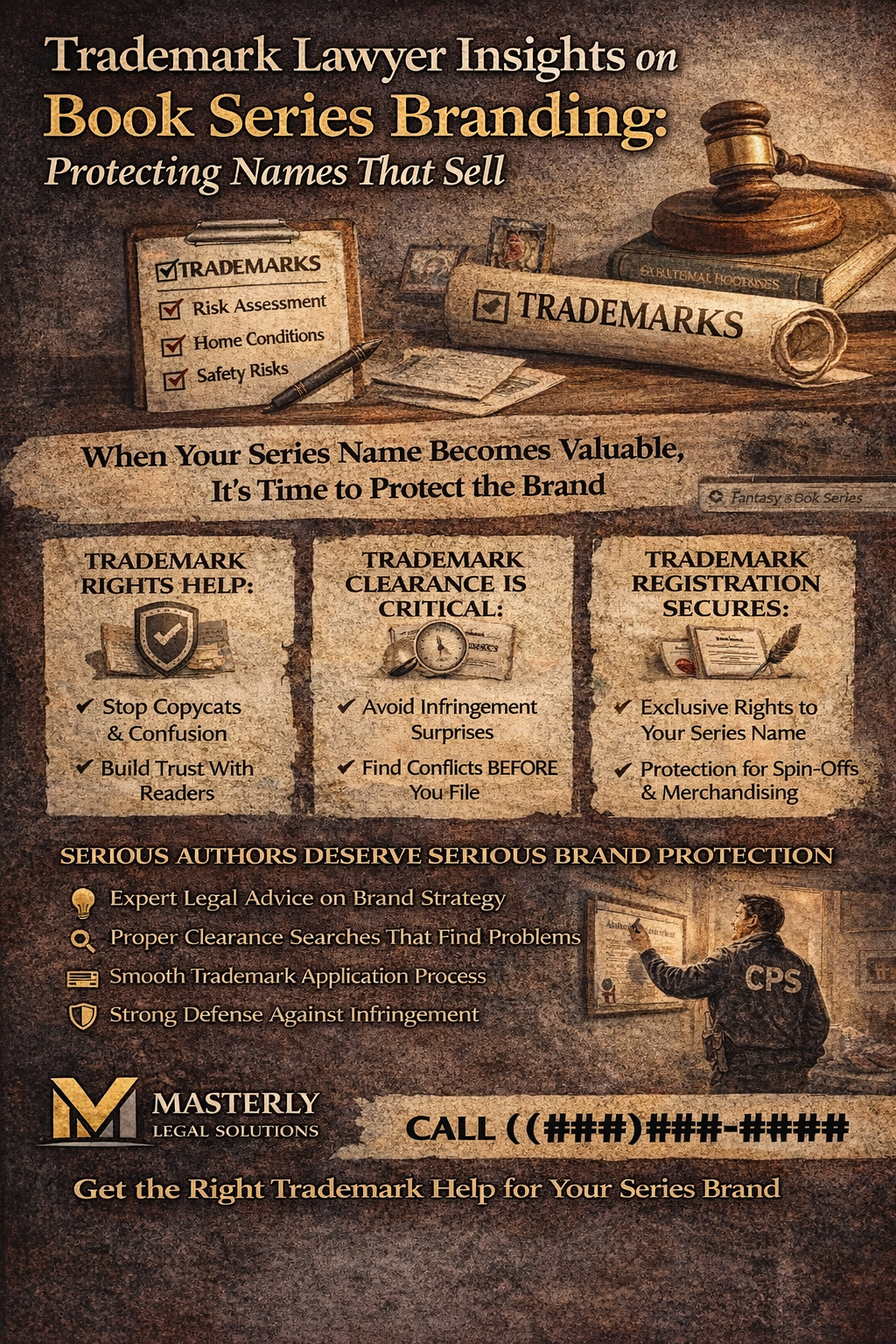
Trademark Lawyer Insights on Book Series Branding: Protecting Names That Sell
A great book series name can feel like magic. It’s the phrase readers remember, the hook that makes them click “Buy Now,” and the brand that follows your stories for years. But here’s the part most authors don’t hear early enough: the same name that sells books can also attract copycats, confusion, and legal headaches if you don’t protect it properly. When your series grows, your branding becomes more than creative—it becomes business.
At Masterly Publishing Group, we work with self-published authors and professional writers who are building real momentum. Sometimes that momentum happens quickly: one book takes off, the sequel gets preorders, and suddenly readers are searching your series title on Amazon, Google, and social platforms. That’s when the name becomes a valuable asset. And that’s also when problems can start if the name isn’t protected.
This guide breaks down what a trademark lawyer would want you to understand about book series branding. We’ll cover the trademark registration process, why trademark clearance searches matter, what the trademark application really does, and how to avoid the painful surprises of infringement, rejection, and delays. If your series name is something you want to own long-term, you need a plan that protects it before someone else tries to claim it.
Book Series Branding Is a Business Asset, Not Just a Title
Many authors think branding is only about cover design and tone. In reality, your series title can become one of the most valuable “business assets” you own. When readers connect with the name, it becomes a signal of style, quality, and genre expectations. That recognition can bring repeat sales even before your next launch.
Your series name often becomes a searchable identity. Readers type it into online stores, audiobook platforms, and social apps. The more visibility you gain, the more important it becomes to control how that name is used. Branding without protection can be a long-term risk to your income and your reputation.
The Difference Between a Book Title and a Series Brand Name
One of the biggest misunderstandings involves what can be protected. A single book title is often treated differently than a series name when it comes to trademark law. A series name is more likely to function like a true brand because it identifies a continuing product line. That is why series branding is a stronger candidate for a trademark strategy.
If your name appears on multiple releases, readers start associating it with your authorship and your content. That is exactly what trademarks are designed to protect—brand identity in commerce. Your series name is not just creative; it is part of your marketplace presence. Treating it like a brand is the first step toward long-term protection.
What “Trademark” Really Means for Authors
A trademark is more than a symbol or a registration number. It is a form of identity that tells consumers, “This comes from the same source.” For authors, a trademark can apply to series names, publishing imprints, logos, pen names (in some cases), or branded programs tied to your books.
When your brand becomes recognizable, the name starts doing work for you. It brings readers back, encourages trust, and helps your marketing convert faster. This is why trademarks matter for authors with a long-term plan. A good series name should be protected like any other business name.
Intellectual Property: The Legal Side of Your Creative Work
Authors live inside creativity, but success brings legal realities. Intellectual property includes the rights connected to your writing, branding, and content. Many writers understand copyright because it protects the text of the book. But trademarks protect branding—what identifies your products and separates you from others.
If you want long-term growth, you need to understand both systems. Copyright protects your words and story expression. Trademark protection helps you protect the name readers associate with your series and your platform. Together, they build a safer foundation for sales, licensing, and marketing.
Copyright Law vs. Trademark Law for Book Series Branding
Copyright law protects original creative expression like your manuscript, character development, and story structure. It does not automatically protect your series name as a brand in the way most authors assume. That’s where trademark law becomes important.
Trademark law focuses on names, marks, and branding elements used in commerce. A trademark helps secure brand identity and helps prevent marketplace confusion. This matters when your series is visible enough that someone could copy your naming style or publish under a confusingly similar mark. If your series name sells, it needs a legal strategy.
How Trademark Rights Help You Protect Names That Sell
When a series name grows, it becomes a valuable piece of your marketing system. Trademark rights can help you stop other creators from using a confusingly similar name in related categories. This helps avoid reader confusion, review mix-ups, and lost sales. It also supports long-term brand stability.
Trademark rights can become an advantage when you expand into audiobooks, merchandise, courses, or media. The bigger your brand gets, the more you need control. Owning your brand identity is what makes scaling feel possible instead of risky.
Why Trademark Owners Think in Terms of Protection and Expansion
Successful trademark owners don’t wait until something goes wrong. They plan early so their branding is protected before they invest heavily in promotion. The goal is not just to win disputes—it’s to avoid them. The best brand protection happens before conflict starts.
This approach matters for authors because publishing is a momentum business. You don’t want to pause your series growth to fight over a name. Strong trademark planning reduces that risk. It keeps your series building cleanly and confidently.
Trademark Clearance Searches: The Step Most Authors Skip
Before you file, you need to know if your name is already taken or too similar to an existing brand. That’s why trademark clearance searches are so important. A clearance search looks for similar marks that could block your registration or trigger a dispute. It also helps reduce the risk of being accused of infringement.
Many authors search Amazon and think that’s enough. It’s not. A name might not appear on Amazon but could still be registered elsewhere or used in related ways. Clearance searching is the difference between confident branding and expensive surprises.
How to Conduct Trademark Clearance Searches the Right Way
It’s not only about searching a database. To conduct trademark clearance searches properly, you need to consider spelling variations, similar pronunciations, and the categories the mark is used under. You also need to look at how consumers might confuse your brand with another. That confusion is the heart of trademark disputes.
Authors should look beyond exact matches. A name with one word changed can still create legal conflict. The point is to avoid getting attached to a name that becomes a battle. A strong clearance search helps you protect your time, money, and future releases.
Trademark Clearance and the “Too Close for Comfort” Problem
Even if a name is not identical, it may still cause conflict. Trademark clearance is about evaluating the risk of confusion. If your series brand name sounds similar to another brand in publishing, media, or entertainment, it could be a problem. The stronger the other brand is, the higher the risk.
This can be frustrating for authors who feel their name is unique. But trademark law is not only about originality—it’s about consumer confusion. If readers might think your books come from the same source as another brand, conflict can arise. That is why clearance is a smart early step.
The Trademark Registration Process for Authors Who Want to Scale
The trademark registration process can feel intimidating at first, but it becomes manageable when you understand the steps. You choose the mark, confirm clearance, determine the proper filing approach, and submit the trademark application through the USPTO. After filing, the mark is reviewed, and the process moves through examination stages. Delays happen, but planning reduces risk.
For authors, the biggest benefit is stability. Registration helps you build a brand you can confidently advertise, license, and expand. It supports long-term publishing strategies without fear that your name will be taken. Your series deserves that kind of protection.
Trademark Registration: What It Can Do for Your Book Series
Trademark registration is what turns your brand name into a stronger legal asset. It creates a public record of your claim and can improve your ability to stop copycats. It also provides credibility when you work with partners, platforms, or businesses. A series name with registration is easier to defend.
Registration also helps when your series becomes recognizable beyond books. If your name appears on podcasts, content channels, or promotional events, the brand carries more value. The goal is not paperwork for paperwork’s sake. The goal is control over what you’ve built.
Trademark Application Basics Every Author Should Know
A trademark application requires more than the name itself. You must list the correct owner, choose a filing basis, and identify the right categories of goods or services. Authors often misfile by choosing the wrong classification or listing overly broad coverage. That can lead to delays or rejection.
The application also becomes a legal record, so accuracy matters. If your ownership structure changes later, the application details may affect enforcement. This is why many authors benefit from professional legal services when they file. Filing correctly the first time saves time and stress.
Filing Basis: One Detail That Can Change the Entire Case
Your filing basis describes whether you’re already using the mark or plan to use it soon. Filing as “in use” requires proof of use in commerce. Filing as “intent to use” supports early protection before launch. Many authors choose the wrong basis and get stuck.
The correct filing basis depends on your publishing schedule and marketing timeline. If you’re preparing for a major launch, early filing can help. But you need accuracy, because mistakes can slow down registration and create new obstacles. Filing is a strategic move, not just a form.
The Trademark Office Review and What Happens Next
After you file, your trademark application is reviewed by the trademark office, which in the U.S. is part of the USPTO. The application goes to an examining attorney who checks for conflicts and compliance issues. This stage is where many authors encounter delays, questions, and rejections.
The review process can be frustrating because it feels slow compared to publishing timelines. But this step is critical for your long-term protection. A well-prepared filing reduces the chance of major setbacks. When your brand matters, patience and strategy pay off.
Office Action: The Most Common Setback Authors Face
An office action is a letter from the examining attorney explaining issues that must be fixed before registration can move forward. It might involve conflicts with existing marks, clarity issues, or classification problems. Many authors panic when they receive an office action, but it is common.
The key is to respond correctly and on time. A sloppy response can hurt your chances of approval. A strong response can move the application forward and improve your long-term rights. This is one of the biggest reasons authors hire trademark attorneys.
USPTO and the Patent and Trademark Office Explained
The USPTO is the United States Patent and Trademark Office, sometimes referred to as the patent and trademark office in general language. It is the agency that handles trademark filings and approvals. Authors often confuse patents and trademarks, but both run through the same office structure. The agency’s job is to review applications and maintain accurate records.
You might also see references to united states patent filing systems because the office handles both categories. For authors, the focus is trademark, not patent. Your brand name and series identity are the assets you want to protect. Understanding the USPTO process helps you plan your publishing timeline realistically.
Trademark Trial and Appeal: When a Case Gets More Serious
Not every trademark dispute happens in court. Some disputes are handled through trademark-specific procedures. This is where the trademark trial and appeal framework comes into play. Authors may face challenges during the registration process that require formal arguments and documented responses.
The trial and appeal board handles many disputes related to registration, including opposition and cancellation. If someone believes your mark conflicts with theirs, they can challenge it. When your series name is valuable, you need a plan to defend it strategically.
USPTO’s Trademark Trial and Appeal Board and What It Handles
The uspto's trademark trial and appeal systems are often tied to formal proceedings through the USPTO. The appeal board—formally connected to the Trial and Appeal Board—hears disputes and appeals. These disputes might involve refusal decisions, opposition filings, or cancellation cases. Authors should not ignore these notices, because deadlines matter.
Even if your mark is strong, the process can become complex. The board expects organized evidence and legal arguments. That is why working with experienced trademark attorney guidance can matter. When conflict arises, strategic legal help protects your brand and future earnings.
Opposition and Cancellation Proceedings: The Risk of Waiting Too Long
If you file a trademark and someone believes it conflicts with their mark, they can start opposition and cancellation proceedings. Opposition happens during registration, while cancellation proceedings can occur after registration. These disputes can delay approvals and create legal costs. They can also interrupt your publishing plans.
The risk grows when you wait too long to protect your name. By the time your series gains traction, other parties may already have similar marks. Early planning helps you file with confidence and reduce conflict. The best approach is proactive brand protection, not reactive panic.
Trademark Infringement and Unfair Competition in Publishing
Trademark infringement happens when someone uses a brand name or mark in a way that creates confusion. In publishing, confusion can mean similar series names, similar branding, or misleading marketing that causes readers to buy the wrong book. That is not only frustrating—it can be financially damaging.
Trademark disputes can also involve unfair competition, which includes deceptive branding practices. When your series is building loyal readers, you don’t want anyone siphoning that trust. You deserve to protect what you built. Strong trademark protection helps keep your brand clean and credible.
Infringement Problems That Affect Real Sales and Reviews
Infringement can create real-world harm beyond legal language. Readers might leave reviews on the wrong series. They might recommend the wrong books to friends. They might think you copied someone else, even when you didn’t. This confusion can affect your credibility fast.
The bigger your audience gets, the more expensive confusion becomes. If your mark is protected, you have more options to stop misuse. Without protection, your brand may be harder to defend. That’s why trademark registration becomes part of a serious author growth plan.
Trademark Enforcement: How Authors Defend Their Brand Over Time
Trademark enforcement is the strategy of monitoring and stopping improper use of your mark. This can include sending notices, requesting takedowns, or addressing conflicting uses. Enforcement helps prevent your brand from being diluted. It also shows that you treat your mark as valuable property.
Authors often feel uncomfortable enforcing a brand because they don’t want conflict. But protecting your series name is not aggression—it is responsibility. A mark that sells books deserves legal protection. Enforcement is how you maintain the value of your brand identity.
Domain Names and Digital Branding for Book Series
A series name is not only on the cover. It lives online through websites, links, social handles, and marketing pages. Domain names tied to your series can help you control search results and reader access. If your name is popular, someone else may buy a similar domain and create confusion.
This is why authors should secure domains early. Even if you don’t build the site yet, owning the domain protects your brand space. Domains also matter for advertising and future product expansion. Your series brand should be protected in both legal and digital environments.
Protecting Your Business Name vs. Protecting Your Series Name
Authors often ask whether to trademark the series name or the publishing imprint name. Sometimes you need both. Your business name might represent your publishing brand, while the series name represents a specific product line. The decision depends on how you plan to grow.
Some authors expand into multiple series, courses, podcasts, and merchandise. Others focus on one flagship series. In either case, the goal is consistent brand protection. Protecting your business name supports the umbrella brand. Protecting the series name protects what sells.
Trademark Portfolios: Thinking Beyond One Book Series
When your career grows, you may build multiple brand assets. That is where trademark portfolios become important. A portfolio can include series names, publishing imprints, logos, and branded services. Managing those trademarks strategically helps protect multiple income streams.
Authors who treat publishing like a real business often build a portfolio over time. That includes planning new marks before launch. It also includes maintaining registrations and monitoring conflicts. A portfolio mindset turns creativity into long-term security.
Trademark Counseling and Planning Your Brand Strategy
Trademark counseling is not only about filing forms. It is about strategy: what to protect first, what to avoid, and how to build a brand that stays clean. Counseling includes naming advice, clearance guidance, and long-term planning for expansions. For authors, this is extremely valuable.
It’s easy to fall in love with a name that later becomes a legal problem. A counselor helps you choose a name with staying power. They help reduce conflict and protect your publishing timeline. When your brand is built carefully, your marketing becomes easier.
Trade Secrets and Corporate Transactions: When Authors Grow Into Businesses
Most authors don’t expect to deal with corporate transactions, but growth can lead there. You might license your series, sell rights, partner with a production company, or form a publishing entity. These moves often require due diligence. Strong legal structure supports smooth deals.
Authors may also develop trade secrets in business operations, like ad strategy, sales systems, or unique production methods. While trade secrets are different from trademarks, both are part of intellectual property planning. Smart authors protect assets that create income. Legal planning becomes part of scaling.
Due Diligence and the Hidden Problems That Show Up Later
When your brand grows, people may request proof that you own what you claim. This is where due diligence matters. Partners may ask about registration, ownership, and conflict risks. If your branding isn’t protected, deals can slow down or fall apart.
Due diligence also matters when you work with designers, co-authors, or collaborators. You want clean rights and clear ownership. Trademarks help create clarity that businesses respect. This is how professional authors protect value.
Litigation and Federal Court: The Last Resort Most Authors Want to Avoid
Most authors do not want legal conflict, and that’s understandable. But serious disputes can lead to litigation, sometimes involving federal court. Trademark law can be enforced through the courts when conflicts become severe. Litigation is expensive, stressful, and time-consuming.
The best strategy is avoiding litigation through smart filings and early protections. Good trademark planning reduces risk of conflict. It also gives you tools to solve issues before court becomes necessary. A protected mark gives you leverage without needing a courtroom.
Trademark Trial: When Disputes Become Formal
A trademark trial can refer to formal proceedings at the trademark board level or disputes that escalate. These cases are documentation-heavy and deadline-driven. Evidence, timelines, and market confusion analysis matter. For authors, it can feel overwhelming.
This is where experienced legal services make a real difference. A strong strategy can help resolve disputes efficiently. Your goal is to protect your brand without losing focus on writing and publishing. The right law firm helps keep you moving forward.
The Role of Trademark Attorneys and Experienced Trademark Attorney Support
Working with trademark attorneys helps authors avoid costly mistakes. From clearance to filing to responses, trademark attorneys guide the legal process. Many authors can write a bestselling series but still struggle with filing technicalities. Legal support fills that gap.
An experienced trademark attorney can help you choose a filing strategy that matches your goals. They can address office actions, manage disputes, and guide enforcement. Authors don’t need to know every rule. They need a team that does. That’s what professional trademark services provide.
Helping Businesses Protect Brand Names That Readers Trust
Authors are not only artists—they are also business owners. A book series is a product line. Your audience is your customer base. That means you are building a business brand whether you planned to or not. Trademark planning is about helping businesses protect identity and consumer trust.
Brand names are valuable because they carry reputation. If your series becomes recognizable, your name becomes part of your sales engine. Protecting that name protects your future income. It also protects the reader experience from confusion.
Lawyers for Trademark: What Authors Should Look for
Choosing lawyers for trademark is not only about credentials. It is about finding a team that understands brand strategy and creative industries. Authors need a balance of legal precision and business thinking. You want someone who can explain the process clearly and keep your timeline in mind.
Strong trademark lawyers help you see the future. They think about expansions, digital branding, enforcement, and portfolio growth. They also help you avoid weak names that create long-term risk. The right legal help protects your series and your peace of mind.
Best Lawyers, Best Attorney, and Top Rated Attorneys: The Real Standard
Many authors search phrases like best lawyers, best attorney, or top rated attorneys when they feel uncertain. That makes sense—your brand matters, and you want strong help. But “best” should mean more than popularity. It should mean experience, strategy, and reliable support.
Authors need attorneys who communicate clearly and understand what’s at stake. They need legal professionals who can represent clients professionally and handle complex trademark challenges. The best legal team keeps your project moving instead of creating confusion. That is what real legal assistance looks like.
Represent Clients With Strategy, Not Just Paperwork
The best law firm support doesn’t treat trademarks like a simple form submission. Strong attorneys represent clients by building strategy, reducing risks, and protecting brand value. That includes filing correctly, responding to office actions, and defending against challenges brought by competitors. It also includes maintaining a strong brand presence as your series grows.
Your series name should be an asset you can build on, not a liability you worry about. That’s what legal services are meant to provide—protection you can trust. When you have a plan, you can focus on writing. Your legal team handles the risk.
Practice Law With Publishing Reality in Mind
Some lawyers understand trademarks, but not publishing culture. Others understand publishing, but not legal enforcement. The best fit is a team that can practice law with a clear understanding of authors, branding, and online marketplaces. Your series title lives on digital platforms, not just bookstore shelves. That reality changes everything.
Publishing also moves fast. You may be preparing a launch while dealing with registration steps. Your legal team must understand how to protect your brand without slowing your momentum. The best trademark strategy respects your timeline and your marketing goals.
Professional Associations and the Bigger Trademark Community
Trademark work exists inside a larger professional world that includes organizations such as the American Bar Association and the International Trademark Association. These communities support education, ethics, and professional standards. While authors don’t need to join these groups, it helps to know that trademark practice has deep structure behind it.
This structure is part of why trademark filings are taken seriously. The rules exist because brands matter in commerce. Your series name is part of commerce once you sell books. Treating it professionally strengthens your credibility and your long-term position.
Real-World Challenges: Same Source Confusion and Copycat Branding
Trademark problems often come down to consumer confusion, which includes whether buyers think two products come from the same source. In publishing, this can happen when series names are similar, cover design styles overlap, or marketing keywords create misleading impressions. Even if you never intended confusion, the market might interpret it that way.
This is why authors need clarity and protection. The bigger your brand becomes, the more confusion can harm you. Trademarks help reduce confusion and protect your readers. They also protect your reputation from copycat behavior.
The Big Picture: Brand Protection That Supports Your Publishing Dreams
Your book series isn’t just a creative project—it can become your income, your legacy, and your long-term business. Strong brand protection keeps that future stable. It supports your ability to market confidently, license opportunities, and expand into media. It also helps prevent disputes that steal your time and energy.
At Masterly Publishing Group, we understand how authors grow. We’ve seen small series become major projects. We’ve seen book names become brands. Protecting your trademark is part of protecting your future.
Masterly Publishing Group: Publishing Support Plus Legal Awareness
At Masterly Publishing Group, we help authors from manuscript to finished product, but we also help them think like professionals. Our team supports publishing, marketing, and the legal side of building a name that lasts. We serve authors worldwide and understand what it takes to stand out in competitive markets. When your branding is valuable, it should be protected with intention.
Our Grand Prairie location also includes a state-of-the-art content creation studio, empowering authors to create promotional materials, book trailers, and podcasts. Your series branding shows up everywhere—covers, ads, trailers, interviews, and media content. Trademark planning helps keep that identity consistent and protected across platforms.
Contact Masterly Publishing Group for a Free Consultation
If you’re building a book series and you want to protect the name that sells, now is the time to get clear answers. Trademark issues often become urgent only after a series gains traction—when copycats appear, readers get confused, or a trademark application hits an unexpected rejection. Whether you need trademark clearance guidance, help with the trademark registration process, or support from trademark attorneys who understand publishing, we’re here to help.
At Masterly Publishing Group, we support authors nationwide and internationally with publishing services, brand-building strategy, and access to professional legal services through a trusted law firm network. If you’re serious about long-term trademark protection, brand identity, and owning your mark with confidence, we’d love to talk through your next step.
Call (888) 209-4055 to book a free consultation, and let Masterly Publishing Group help you protect your series branding with clarity, confidence, and a plan built for real growth.
Disclaimer: This article is for educational purposes only and does not constitute legal advice or legal guidance. For advice about your specific situation, consult a qualified attorney.