

Trademarking Your Publishing Brand: Steps Authors Should Take Before the First Book Release
Your first book release is exciting for so many reasons. You’re finally ready to share your story, build an audience, and step into the world as an author with something real to offer. But there’s another side to publishing that many writers don’t think about until it’s too late—your brand. The name you publish under, your publishing imprint, and even the logo on your cover can become valuable intellectual property that deserves protection from day one.
At Masterly Publishing Group, we specialize in helping self-published authors and professional writers achieve their dreams. Whether you're new to the publishing process or an experienced author looking for comprehensive self-publishing services, we’re here to help. Headquartered in Dallas, Texas, with offices in Houston, West Palm Beach, and Grand Prairie, we’re proud to serve clients worldwide. Our Grand Prairie location features a state-of-the-art content creation studio, empowering authors to create promotional materials, book trailers, and podcasts. Bringing Stories to Life: Expert Publishing Services for Authors Worldwide isn’t just a slogan—it’s how we support authors through the entire journey, including publishing strategy, marketing, and navigating legal hurdles.
This article breaks down how authors can approach trademark planning before launch day. You’ll learn how trademark law works in the publishing world, why registration matters, what the trademark registration process involves, and how the right legal strategy can protect your future income. More importantly, you’ll understand why getting this right early can save you stress, money, and potential disputes later.
Why Authors Should Think About Trademark Before Publishing
When most authors think about legal issues, they think about plagiarism, contracts, or copyright law. But trademark protection is what guards your publishing identity in the marketplace. Your brand is how readers recognize you, how bookstores find you, and how buyers tell your books apart from competitors. If you build momentum around a name you don’t own, you could be forced to rebrand right when your audience is growing.
A strong trademark plan gives you long-term brand protection, especially if you plan to publish more than one book. It also helps protect your ability to sell courses, merchandise, and related services. In publishing, your identity often becomes the business. The earlier you protect it, the more stable your growth can be.
What Counts as a Publishing Brand Worth Protecting?
Your publishing brand is more than a pretty logo. It includes the words and visuals that tell the world your books come from the same source. In trademark law, this is about protecting what signals your work is from you and not from someone else. If customers associate a name with your books, that name can become a protectable asset.
Common publishing brand elements include:
- Your author pen name used commercially
- A publishing imprint or company business name
- A series title or recurring collection name
- A slogan associated with your writing brand
- A logo used on covers, websites, or promotional materials
These types of brand names can develop value quickly, especially when a launch goes well. That is why planning your trademark approach early makes sense.
Trademark vs. Copyright: Why Both Matter for Authors
Many creators assume copyright law and trademark are the same thing. They’re not. Copyright protects original creative work like book content, illustrations, or written manuscripts. Trademark protects the name, mark, or branding used to identify the source of goods or services.
Your book text may be protected through copyright matters, but your publishing identity needs trademark protection. If another person uses a similar name on books or author services, it can confuse customers and harm your sales. That’s where trademark infringement becomes an issue. Both areas are important, but they protect different parts of your author business.
Why Trademark Registration Helps Authors Build Exclusive Rights
There’s a difference between using a name and owning it. Trademark use can create limited rights, but trademark registration creates stronger legal protection. Registering your mark can help you claim exclusive rights to use that name for certain goods or services in commerce. This matters when your brand grows beyond a local audience and begins selling nationwide.
Trademark registration also makes it easier to enforce your rights if someone copies your name. It can strengthen your ability to stop infringement and protect your reputation. For authors, that protection can be priceless during launch season. When you’ve invested money into cover design, editing, and marketing, you want to secure the brand behind it.
Where Trademark Filing Happens: Understanding the USPTO
In the United States, trademark registration is handled through the United States Patent and patent and trademark office system, commonly called the uspto. Your application is reviewed by the trademark office and evaluated under federal trademark law. This process is detailed and can take time, so planning early is essential.
Many people use the phrase states patent and trademark when describing the system, but the official federal pathway runs through the patent and trademark office under the uspto. Your trademark applications are submitted and reviewed based on your filing basis, your goods and services, and whether your mark conflicts with existing registrations. Understanding how the trademark office reviews marks helps you avoid surprises.
The Trademark Registration Process Authors Should Expect
The trademark registration process is not a quick “submit and done” system. It involves preparing the application, identifying the correct classes, submitting evidence, and responding to questions if the USPTO raises concerns. Authors are often surprised by how technical the process can be. That’s why many choose to work with trademark attorneys.
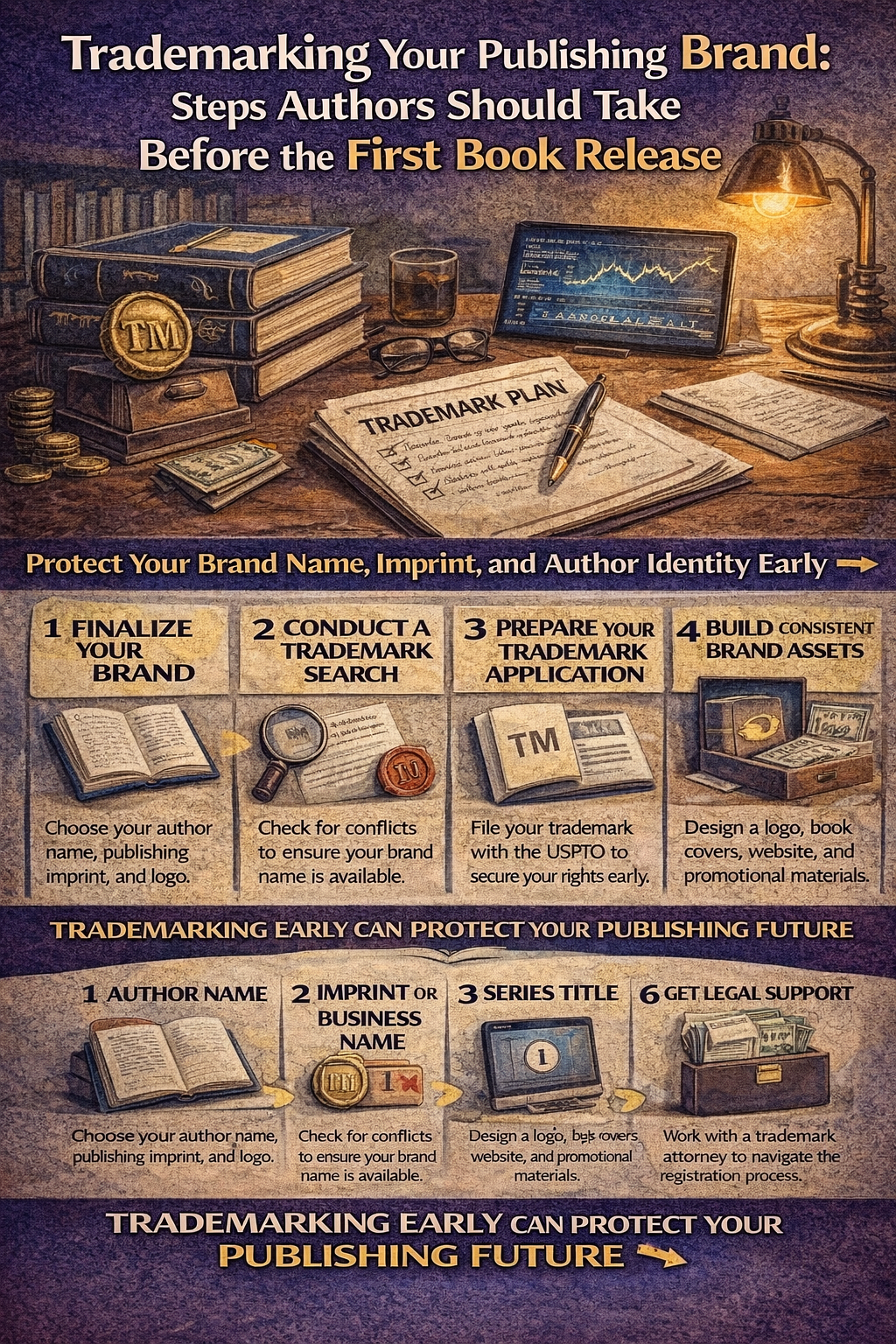
For authors, the process typically includes:
- Selecting the mark you want to protect
- Choosing the correct filing basis (use in commerce or intent to use)
- Conducting trademark clearance
- Preparing trademark applications properly
- Submitting the filing through the uspto
- Responding to any office action requests
- Completing approval, publication, and final registration
Each step affects whether your trademark is approved or delayed. Starting early gives you room to respond without panic.
Trademark Clearance: The Step Most Authors Skip (and Regret)
Before you commit to a publishing imprint name or author brand, you need trademark clearance. Clearance helps you avoid building a business around a name that already belongs to someone else. This is part of smart due diligence and protects your brand long before you reach publication day.
Trademark clearance is not just a quick Google search. It includes reviewing similar names in the trademark office database and evaluating whether the marks are too close in sound, appearance, or meaning. Authors should also check for related categories that could cause conflict. The goal is to avoid issues that trigger a refusal or a future dispute.
Conduct Trademark Clearance Searches the Right Way
Serious brand protection requires that you conduct trademark clearance searches with real strategy. Proper searches look at similar spelling variations, similar sounding marks, and marks used in related industries. Publishing can overlap with education, entertainment, coaching, and media, so the search must be broad enough to catch risks.
Many trademark attorneys also do trademark clearance searches that go deeper than basic tools. These searches help evaluate not only registered trademarks but also potential conflicts in common law use. If a similar imprint is already active, it could create serious problems. Taking the time to clear your brand early protects your launch later.
Picking a Strong Mark That Can Be Registered
In trademark law, some names are easier to protect than others. A unique mark is more likely to be approved and easier to enforce. Generic or descriptive names are harder to register because they don’t clearly identify a single source. Authors often choose names that sound “cool,” but they don’t always consider whether the name is protectable.
A strong mark typically:
- Is distinctive and not overly descriptive
- Does not closely resemble existing registered marks
- Creates a memorable brand identity for readers
- Works well across book covers, digital products, and podcast promotions
If your mark is strong, it becomes easier to register and defend. That’s one reason experienced trademark attorney guidance can help.
Business Name Planning for Authors Building a Publishing Company
If you’re creating an imprint or small publishing company, your business name matters beyond branding. It becomes part of your contracts, vendor relationships, and payment setup. Many authors also use their imprint name on a podcast website, social profiles, trailers, and advertising.
But business name registration at the state level is not the same as trademark registration. You can form a company and still not own the trademark. Trademark law focuses on who has the right to use that name in commerce for specific categories. If your imprint is the foundation of your publishing practice, trademarking it early protects your future.
How Trademark Applications Work for Publishing Brands
Trademark applications require careful details. You must identify the mark, choose the correct class of goods or services, and describe how it’s used. In publishing, this can involve books, digital content, and entertainment services. If you select the wrong category, your registration may be weaker or denied.
Trademark applications may also require proof of use, depending on your filing basis. That proof can include book covers, marketing screenshots, or branded sales pages. The trademark office wants to see that the mark is used as a source identifier. A well-prepared filing can save months of delays.
Office Action Letters and What They Mean for Authors
An office action is a letter from the trademark office that raises issues with your application. This can happen for many reasons, including similarity to another mark or problems with the description. Receiving an office action does not mean your trademark is dead. But it does mean you must respond correctly and on time.
Office actions are where many authors feel stuck. The language can be technical and intimidating. That’s why many authors seek legal services to respond properly. A skilled attorney can help build compelling arguments and keep the registration moving forward.
Opposition and Cancellation Proceedings: The Risk After Filing
Even if the USPTO approves your application, your mark may be published for others to challenge. This is where opposition and cancellation proceedings can happen. Another party may claim your mark is too similar or that it harms their existing brand. This is not common for every author, but it can happen when brand names overlap.
If opposition occurs, the matter may go to the trial and appeal board, also known as the appeal board process inside the USPTO system. This can involve evidence, legal arguments, and serious time investment. It’s one reason why clearance matters early—prevention is easier than fighting later.
The Trademark Trial and Appeal Board and Publishing Disputes
The trademark trial and appeal system exists to handle disputes over registration decisions and opposition claims. The USPTO has a tribunal called the uspto's trademark trial system that oversees these disputes. Many people refer to it as the TTAB, but the core idea is the same: it’s where trademark disagreements can become formal.
A trademark trial can feel overwhelming for authors who simply wanted to protect a name. It may involve filings, evidence submissions, and legal briefs. That is why authors often choose to work with attorneys who have extensive experience in these cases. When your publishing brand is at risk, you need solid support.
Trademark Enforcement and Why Authors Need a Plan
Trademarking your brand is not just about paperwork. It’s also about trademark enforcement when problems arise. If someone starts using your name, copying your logo, or imitating your imprint branding, you may need to take action. Enforcement can involve notices, takedown requests, and sometimes formal legal steps.
Trademark enforcement is part of maintaining protection. It helps prevent customer confusion and protects your reputation. If you ignore infringement, it may weaken your position over time. A well-planned trademark strategy gives you tools to respond quickly and professionally.
Trademark Infringement: What It Looks Like in Publishing
Trademark infringement in publishing can happen in several ways. Someone may publish books under a similar imprint name, launch a coaching program under your brand name, or create a confusingly similar logo. Even if they claim it was accidental, the damage can be real. Readers may think their work is connected to yours.
Infringement can also show up online through social media handles and domain names. This is why your trademark office registration matters. It gives you stronger ground to request changes. Protecting your mark protects your audience and your business.
Trademark Portfolios for Authors With Multiple Series or Imprints
Some authors plan to release more than one series, genre, or imprint. In that case, building trademark portfolios can be a smart long-term plan. A portfolio means you protect multiple marks connected to your publishing business. This is especially helpful for authors who expand into merchandise, podcasts, courses, or speaking.
Some creators even build global trademark portfolios when they sell internationally or work with global audiences. This is where international planning becomes important. If your brand is growing, portfolio planning keeps your assets organized. It also shows professionalism to partners and companies.
International Trademark Association Guidance and Global Thinking
Authors today don’t just sell locally. E-books and audiobooks travel worldwide instantly. If your brand expands internationally, it helps to understand global trademark concepts. The international trademark association provides education and resources around trademark systems and best practices.
While U.S. registration protects you within the United States, other countries have their own trademark office systems. Authors with international sales may want to plan early for expansion. Even if you don’t file globally right away, global thinking helps protect your future. It also supports professional growth in publishing.
Licensing, Commercial Transactions, and Your Author Brand
When you build a recognizable publishing brand, you create opportunities beyond book sales. You may get offers for licensing, partnerships, or adaptations. These opportunities often involve commercial transactions and contracts that reference your intellectual property rights. Having a registered trademark strengthens your position.
Licensing can include merchandise, collaborations, or rights for international distribution. It can also apply to podcast content, brand sponsorships, and educational products. A trademark helps clarify ownership. It makes negotiations easier and reduces confusion.
Why Authors Work With Trademark Attorneys Instead of Doing It Alone
Some authors try to file trademarks on their own, and sometimes it works. But many authors run into problems when the trademark office rejects the mark or issues an office action. That’s when the process becomes difficult without experience. This is why authors turn to trademark attorneys and seek assistance early.
A strong law firm can guide you through strategy, filing, and follow-up. An experienced trademark attorney can help you avoid mistakes and protect your brand properly. Good attorneys also help represent clients if disputes arise later. For authors building a serious business, attorney support is often a smart investment.
How an Experienced Trademark Attorney Supports Authors Long-Term
Trademark work doesn’t stop after filing. A strong attorney can provide trademark counseling, enforcement guidance, and portfolio planning. That support matters when you release new books, expand into different categories, or start selling products. It also matters when someone copies you.
Over time, your trademark becomes one of your most valuable business assets. Trademark owners who protect their marks early often avoid costly rebranding later. When you have legal support, you can move faster with confidence. That confidence is a major advantage in publishing.
Litigation, Federal Court, and When Trademark Disputes Escalate
Most trademark disputes are resolved without major courtroom battles. But in some cases, disputes escalate into litigation. If infringement is serious, a case may involve federal court. This can be stressful, expensive, and time-consuming, especially for independent authors.
Litigation is why prevention is so important. Clearance, proper registration, and monitoring reduce the chance of major disputes. But if the dispute becomes serious, having the right attorneys and legal strategy matters. Strong legal services can protect your brand when the stakes rise.
Protecting Your Brand While You Build Your First Release Plan
Trademarking isn’t meant to slow you down—it’s meant to protect your momentum. Your first release should be exciting, not stressful. But if your brand name is at risk, your marketing can become unstable. That’s why trademark planning should be part of your publishing checklist.
Your first release plan should include:
- Finalizing your imprint or author brand name
- Conducting trademark clearance early
- Preparing your trademark applications correctly
- Building a content plan for your launch
- Creating a consistent look across platforms and covers
When your legal foundation is solid, you can focus on building readers and growing your business.
Masterly Publishing Group Helps Authors Publish and Protect Their Brands
At Masterly Publishing Group, we support authors from manuscript to bestseller. We help clients navigate publishing, marketing, and the legal hurdles that often catch new writers off guard. Our services are designed for self-published authors and professional writers who want comprehensive support, not scattered advice.
We’re proud to serve clients worldwide and support creators who want to build strong brand names that last. Our Grand Prairie content creation studio helps authors create promotional materials, book trailers, podcasts, and marketing content that matches the professionalism of their writing. When your book looks polished and your brand is protected, you stand out.
Talk With a Lawyer for Trademark Support Before You Launch
Your publishing brand is the name readers will remember, search, and share. If you wait until after your first book release to protect it, you may discover another company already owns the rights—or that your brand is too risky to keep. The earlier you plan, the more control you maintain over your publishing future.
At Masterly Publishing Group, we can connect you with the guidance you need, including support from a lawyer for trademark matters. Whether you need help preparing trademark filing steps, dealing with the trademark office, or building a long-term trademark strategy, our team is here to assist clients with real-world publishing goals and real-world legal protection.
Call (888) 209-4055 for a free consultation.
Let’s talk about your publishing brand, your first release timeline, and how to protect what you’re building before your story reaches the world.