

New Author Mistakes: Skipping Trademark Protection and Losing Your Publishing Name
You can spend months—or even years—creating the perfect book, building your author identity, and finally pressing publish. That moment feels like a milestone, especially when your cover looks professional, your story is polished, and your brand name finally feels “real.” But for many new authors, the biggest mistake happens after the book is done: they forget to protect what they just built.
In the publishing world, your name is not just a creative choice. Your publishing name, imprint name, series name, and even your logo can become valuable intellectual property assets. And when you skip trademark protection, you may be building your audience on a name you don’t legally own.
At Masterly Publishing Group, we specialize in helping self-published authors and professional writers achieve their dreams—from manuscript to bestseller—while also navigating the legal hurdles that can disrupt your momentum. We support authors worldwide, and our Grand Prairie location includes a state-of-the-art content creation studio where authors can create promotional materials, book trailers, and podcasts. But one of the biggest things we help our clients understand is this: publishing success moves faster when your brand is protected from day one.
Why Your Publishing Name Matters More Than You Think
Your publishing name is the anchor of your brand. It’s what readers search, what bookstores recognize, and what reviewers mention when they share your work. It can also become a business name that grows into a larger creative company over time.
Once you build a reputation, your name becomes connected to trust. That trust can lead to more sales, higher speaking opportunities, and stronger collaborations. But the value of a name only helps you if you can legally keep it.
Many new authors assume that buying a domain or creating social media accounts means they are safe. Unfortunately, online presence does not automatically create exclusive rights. The law treats trademarks differently than usernames.
The New Author Trap: “I’ll Trademark It Later”
One of the most common mistakes new writers make is waiting. They think registration can happen after the book launch, after the ads start, or after the first five-star reviews. This delay is understandable, but it creates serious risk.
The publishing world moves fast, and another creator might choose a similar name without realizing you exist. Or worse, someone may intentionally copy your brand once they see your success. If you wait too long, you may be forced into a painful rebrand.
The hard truth is that “later” often becomes “too late.” A strong trademark strategy begins before your brand becomes valuable, not after.
What a Trademark Really Protects in Publishing
A trademark protects the identity your audience uses to recognize your work. That can include your imprint name, your publishing brand, your logo, and sometimes even a series name. Trademarks help prevent confusion in the marketplace, especially when customers believe two products come from the same source.
That matters for authors because readers often buy based on familiarity. If someone else launches under a confusingly similar name, your readers may buy the wrong content. That confusion can damage your reputation and your revenue.
This is why authors who take branding seriously also take trademarks seriously. Your brand is not only creative—it is commercial.
Why Trademark Law Hits Authors Harder Than They Expect
Most authors don’t enter publishing expecting to learn trademark law. You planned for edits, cover design, printing, and marketing. You didn’t plan for a cease-and-desist letter or accusations of trademark infringement.
But the moment you sell a product under a name, you are operating in commerce. That means your name becomes part of intellectual property law, whether you meant for it to or not. And once money is involved, disputes get real.
Even one small misunderstanding about a trademark can create a major disruption. That’s why authors need clear legal guidance early.
Trademark vs. Copyright: A Mistake That Costs Authors Money
A common confusion is assuming copyright law protects your publishing name. Copyright protects original creative works, like your manuscript, characters, and written content. Trademarks protect names, logos, and branding that identify products and services in the marketplace.
Your book content may be copyrighted, but your publishing brand may still be unprotected. That gap is where many new authors get exposed. A strong brand needs both content protection and identity protection.
When authors don’t understand the difference, they often skip the trademark step. Unfortunately, that step is often the one that protects the business side of your career.
The Real Risk: Losing Your Publishing Name After You Build an Audience
The nightmare scenario is simple: you build momentum, then get forced to rebrand. Your readers can’t find you. Your ads stop converting. Your website traffic drops. Your book series looks disconnected.
This happens more often than people think. When a competing brand has earlier rights, you may have to stop using your name completely. Even if you didn’t intend harm, the law may still require you to change.
That’s why legal protection is not a luxury for authors. It’s part of protecting your future.
How Trademark Registration Creates Long-Term Power
Trademark registration is one of the strongest tools for protecting your author brand. It can give you nationwide rights and a clearer legal position to enforce your brand identity. It also helps prevent confusion by placing your mark in official records.
When you register a trademark, you’re not just filing paperwork. You’re building a legal barrier between your brand and copycats. This is especially important if your goal is to grow into merchandise, courses, coaching, or licensing deals.
Strong authors think beyond one book. Registration helps you protect that larger vision.
Why the Trademark Office Is Not “Just a Form”
Many authors assume the trademark office is like a simple online application portal. In reality, the patent and trademark office processes trademarks under strict rules, with reviewing attorneys, deadlines, and legal standards.
The trademark registration process is structured, technical, and easy to misunderstand if you’ve never done it. One missed detail can slow your filing or trigger an office action. That delay can cost time when you’re trying to launch.
That’s why working with a legal professional makes a real difference. Good strategy protects your timeline and your brand.
The Role of the USPTO in Your Trademark Journey
The uspto is the federal agency that reviews and manages trademark applications. Many authors don’t realize how often the uspto becomes the gatekeeper of their brand launch plans. The process is about more than your name—it’s about legal standards, categories, and clarity.
Your filing must be accurate, supported, and properly classified. It also must meet rules about confusion and distinctiveness. When it doesn’t, the uspto may challenge it.
This is where experience matters. The stronger the filing, the smoother the process.
United States Patent and Trademark Systems: What Authors Should Understand
The united states patent system is commonly mentioned alongside trademarks, but authors should recognize trademarks and patents serve different purposes. Patents protect inventions. Trademarks protect brand identity. Both can matter in creative industries, especially when authors expand into innovative products, apps, or interactive experiences.
For example, authors working with artificial intelligence tools, digital publishing tech, or interactive content may eventually touch patent issues. Others may build branded products using virtual reality content tied to their storytelling world. In these cases, intellectual property planning becomes even more valuable.
Even if you never pursue patents, understanding the system helps you make smarter business decisions. Publishing is creative—but it is also commercial.
Filing Basis: The Detail That Can Make or Break an Application
Many authors don’t realize they must choose a filing basis when submitting a trademark application. The filing basis can relate to whether you’re already using the trademark or intend to use it. This detail matters because it affects what you must prove and when.
An incorrect filing basis can create delays or denial. It can also limit how quickly you can move forward with full registration. Authors often guess, which can create preventable problems.
A qualified professional can help you choose correctly and avoid unnecessary setbacks. That’s why planning is so important.
Trademark Filing Mistakes Authors Make When They DIY
DIY trademark filing is popular online, but it can be risky. Authors often file too broadly, too narrowly, or in the wrong category. They may use the wrong wording, misunderstand deadlines, or fail to respond properly to the trademark office.
Here are common DIY errors that lead to delays or rejection:
- Choosing the wrong goods/services description
- Not understanding how registration rules apply
- Filing without proper proof of use
- Failing to respond to an office action correctly
- Skipping clearance research entirely
When filing is wrong, you may lose time and money—and still not get protection. That’s why professional support matters.
Trademark Clearance: The Step Too Many Authors Skip
Trademark clearance is the process of checking whether your chosen brand conflicts with existing trademarks. This is one of the most important steps for avoiding disputes later. It’s also the step that authors skip most often because they assume their name is unique.
The reality is that conflicts can exist even when names aren’t identical. Similar sounds, similar meanings, or similar industries can trigger conflict. That conflict can stop your registration or create risk after launch.
Clearance helps you avoid building your brand on unstable ground. It’s a smart move before you invest in marketing.
Conduct Trademark Clearance Searches Before You Announce Your Brand
A major mistake is announcing your publishing name publicly before doing clearance work. Once your brand is public, you may invest in cover designs, ads, and promotions that you later can’t use. That’s a painful setback for any author.
To reduce risk, you should conduct trademark clearance searches before you print merch, publish your series name, or purchase large marketing packages. The earlier you do this, the easier it is to adjust.
Early clearance is not about fear—it’s about smart brand building. It protects your time, money, and momentum.
Trademark Clearance Searches and How Conflict Actually Happens
Trademark clearance searches are not just a quick Google search. They involve checking existing registrations and pending filings that may conflict with yours. Many conflicts happen because authors only look at social media and miss federal filings.
A name can appear available online and still be protected legally. That means you can unknowingly step into a dispute. Once your audience grows, that dispute can get expensive.
Clearance is like publishing due diligence. Skipping it creates risk you don’t need.
Trademark Applications: What Authors Should Expect
Trademark applications go through review, timeline phases, and potential objections. Authors are often surprised that even a strong name can be challenged. The review process looks for confusion, descriptiveness issues, and technical requirements.
Applications may also face opposition from other trademark owners. If someone believes your mark is too close to theirs, they can challenge your filing. That is where problems begin for authors who thought this was simple.
The best approach is to treat trademark applications like a strategic step, not a casual form. Preparation makes the process smoother.
Registration Is Not Instant—and That’s Why Timing Matters
Many authors assume they can file a trademark today and be protected next week. In reality, registration takes time. The process can include review cycles, waiting periods, and responses to office actions.
This matters because authors often plan launches around marketing calendars. If your trademark plan doesn’t match your business timeline, you may create unnecessary pressure. That pressure can lead to mistakes or rushed decisions.
Strong planning protects both your book release and your legal position. That’s how you launch with confidence.
Office Action: The Letter That Makes Authors Panic
An office action is a formal letter from the trademark office requesting clarification or raising an objection. Receiving one doesn’t mean you failed, but it does mean you must respond properly. Many authors panic, ignore it, or respond incorrectly.
An office action can involve technical issues, conflicts with existing marks, or problems with the wording in your filing. A strong response can keep your application alive. A weak response can cause denial.
This is why working with trademark attorneys is often worth it. The process is legal, not just administrative.
Trademark Attorneys vs. Guesswork: Why Experience Wins
A good team of trademark attorneys knows how to avoid traps before they happen. They understand what the patent and trademark office looks for and how to build applications that hold up. They also know how to position your mark to reduce risk of conflict.
New authors often feel they’re saving money by skipping legal support. But one mistake can cost far more than proper guidance. Your brand is valuable, and protecting it should be intentional.
Working with a professional is not about complexity—it’s about confidence. It’s how you avoid losing what you built.
Experienced Trademark Attorney Support for Authors Who Want to Scale
An experienced trademark attorney doesn’t just file paperwork. They help you plan how your author identity will grow. That includes choosing the right mark, protecting it in the right categories, and thinking ahead about future products.
Many authors start with books, then move into coaching, speaking, merchandise, and digital products. Your trademark should support that growth. If it doesn’t, you may need to refile later or create additional marks.
Planning early makes scaling easier. That’s what experienced support provides.
Trademark Law in the Real World: What Enforcement Looks Like
Once you have a trademark, you may need trademark enforcement. That means protecting your name from infringement, impersonators, and confusingly similar brands. Enforcement might include warnings, takedown requests, or legal action.
In the digital world, enforcement can also involve internet law issues. Copycats can appear on online marketplaces, social platforms, and ads. If you don’t monitor your brand, they can steal attention and credibility quickly.
Enforcement is not about being aggressive—it’s about protecting your readers and your reputation. That’s what brand protection looks like in action.
Trademark Infringement and Unfair Competition in Publishing
Trademark infringement happens when someone uses a confusingly similar mark in a way that harms your brand or creates marketplace confusion. It can also connect to unfair competition, especially when someone is trying to profit from your audience.
In publishing, confusion can happen through book titles, series branding, imprint names, or promotional materials. Readers might buy the wrong book, follow the wrong account, or assume you are connected to another brand. That confusion damages trust.
For authors, trust is everything. If your brand is your business, infringement is not a small issue.
The Trademark Trial Side of Disputes Authors Don’t Expect
Some disputes escalate into a formal trademark trial setting through administrative proceedings. Authors are often shocked when they hear legal terms like trial and appeal board, appeal board, and cancellation proceedings. These processes can feel overwhelming, especially if you’re just trying to publish books.
A trademark trial may involve evidence, written arguments, and legal standards that must be followed carefully. If you are not prepared, you can lose your name even if you used it first in your community. That’s why authors must treat trademarks seriously from the beginning.
The good news is that planning reduces the chance you ever reach this stage. Clear strategy prevents many disputes.
The Trial and Appeal Board and Why It Matters
The trial and appeal board is where many trademark disputes are decided. This is commonly connected to opposition actions and cancellation proceedings. Authors usually don’t know this exists until they’re facing a conflict.
The process can be technical and stressful. It involves deadlines, arguments, and legal positioning. Even if you’re not in federal court, this process can feel like litigation.
This is why it helps to have strong legal services available early. Trademark disputes don’t care that you’re a new author.
Trademark Trial and Appeal Board: When Your Brand Gets Challenged
The trademark trial and appeal process can affect whether your mark becomes registered or stays protected. This includes challenges brought by other trademark owners who believe your mark is too similar to theirs. It may also involve disputes over categories and commercial use.
When authors face this, they often feel blindsided. They believed they were simply creating a name and launching a book. Suddenly, they’re dealing with legal paperwork and deadlines.
This is where having attorneys who can represent clients becomes essential. You need strategy, not panic.
Opposition and Cancellation Proceedings: The Silent Threat to New Authors
Opposition and cancellation proceedings can block your trademark registration or cancel an existing registration. New authors are especially vulnerable because they often don’t monitor the trademark landscape. They may not even know their mark is being challenged until the deadline is near.
Opposition can come from a company that believes you are too close to their mark. Cancellation can come after registration if someone argues your trademark shouldn’t exist. These disputes can be expensive and stressful, especially during a book launch.
This is why professional help matters. These proceedings are not DIY-friendly when your career is at stake.
Cancellation Proceedings and What Authors Lose When They Ignore Them
Cancellation proceedings can result in losing registration rights. If you lose, you may lose the ability to protect your name effectively. That can lead to rebranding, confusion, and lost sales.
Many new authors assume legal disputes won’t happen to them. But the publishing marketplace is crowded. Names overlap. Similar branding happens frequently, even without bad intent.
When cancellation comes, it is not the time to scramble. It’s the time you wish you had prepared earlier.
Patent and Trademark Office Rules That Impact Authors
The patent and trademark office follows strict rules about how trademarks are filed, reviewed, and approved. Authors often underestimate how technical this process is. Small errors can create big delays.
The patent and trademark office also cares about clarity, distinctiveness, and classification. A name that feels creative may still be rejected if it’s too descriptive or too close to an existing mark. That’s frustrating, but it’s part of how the system works.
When you plan ahead, you reduce surprises. That makes publishing smoother and less stressful.
Trademark Portfolios: Thinking Beyond One Book Launch
A single trademark can protect a key brand, but successful authors often build trademark portfolios over time. This may include your imprint name, your series name, your podcast name, and your business brand. Each mark supports a different part of your long-term company.
This matters because authors rarely stay in one lane. They expand into audiobooks, speaking, coaching, conferences, and brand deals. If you want to scale, portfolio management helps you protect your growth.
Trademarks are not only legal documents. They are business assets.
Portfolio Management for Writers Who Want Long-Term Control
Portfolio management means tracking what you own, what you’ve filed, and what needs protection next. It also means maintaining your registrations and monitoring for infringement. For authors, that creates stability.
Without management, authors often forget renewal deadlines or fail to notice copycats. That can weaken your rights and invite confusion. Managing your portfolio is part of managing your business.
This is a smart step for authors who are building a serious brand. It’s how you protect your future revenue.
Trademark Owners: Who Actually Has the Power?
Trademark owners have legal tools to protect their brand. That power can include enforcement actions, takedowns, and formal disputes. If you are not the owner, you may be the one who gets forced to change.
Many new authors assume that being first online makes them the owner. That’s not always true. Trademark rights depend on specific rules, evidence, and sometimes registration.
The goal is to be on the protected side of that equation. Ownership creates stability and control.
Trademark Counseling: Legal Guidance That Prevents Brand Disasters
Trademark counseling helps you make smart decisions before problems appear. It includes selecting a name, checking clearance, filing correctly, and planning for enforcement. For authors, this guidance can prevent expensive rebrands and painful disputes.
Counseling also helps you avoid accidentally infringing on someone else’s mark. Even innocent mistakes can become costly. Preventing disputes is better than reacting to them.
This is where the right law firm becomes a business partner. It’s not only about paperwork—it’s about protection.
Litigation, Federal Court, and the High-Stakes Reality of Disputes
Most authors don’t want legal conflict, but trademark disputes can lead to litigation. In some cases, disputes escalate into federal court, especially when damages or serious infringement is involved. This can become expensive and overwhelming quickly.
Even if your dispute doesn’t reach federal court, the threat can still disrupt your brand. Marketing may pause, collaborations may stall, and your audience may get confused. That is why planning early matters.
Legal battles don’t care whether you’re a new author. Protection is what keeps you safe.
Enforcement Actions and Why Authors Should Take Them Seriously
Enforcement actions can include formal letters, platform disputes, or administrative claims. Some enforcement begins with polite warnings, but others become aggressive quickly. If your brand is growing, copycats may notice you.
Some authors ignore small infringements because they don’t want conflict. But ignoring problems can allow them to grow. Enforcement protects your readers from confusion and protects your reputation.
Protecting your brand is part of protecting your business. It’s a professional step, not an emotional one.
Licensing and Commercial Transactions Authors May Miss Out On
Once your brand is protected, you can explore opportunities like licensing deals, collaborations, and other commercial transactions. These opportunities become more realistic when you can prove ownership and control.
For example, a brand partnership may want to use your series name on merchandise. A podcast sponsor may want to feature your imprint. A speaking program may want to package your brand. These opportunities often require clear trademark ownership.
If your brand isn’t protected, you may lose deals. Protection supports monetization.
National Advertising Division and the Bigger Brand Battlefield
As authors scale, brand disputes can extend beyond books. Claims about advertising, branding, and unfair competition can become part of the business landscape. Some disputes involve marketing claims and comparisons, which can connect to entities like the national advertising division in broader commercial contexts.
Most authors won’t interact with this directly. But it highlights an important point: brand growth creates more scrutiny. The more visible you are, the more protection you need.
Your brand is your business identity. Treat it like a real asset.
International Trademark Association and Professional Standards
Many professionals reference the international trademark association when discussing standards and best practices. While authors don’t need to become legal experts, it helps to know trademarks are a recognized professional field with structured rules and global considerations.
If you plan to sell internationally, speak globally, or expand distribution, trademark planning becomes more complex. Cross-border considerations can come up earlier than authors expect. Even digital products can reach worldwide audiences overnight.
Strong planning keeps your growth smooth. It also keeps your identity consistent across markets.
Helping Businesses Protect Their Brands: Authors Are Businesses Too
A major mindset shift is realizing authors are businesses. If you sell books, run ads, build an email list, and offer products, you are operating as a business owner. That means you need the same brand protection mindset that companies use.
Your publishing name is not “just creative.” It’s part of your business model. Protecting it is what serious founders do.
This is why we focus on helping businesses protect what they build. Authors deserve the same support and strategy.
Why Best Lawyers and Top Rated Attorneys Matter in Trademark Work
Trademark work is detail-heavy. You don’t just need someone who can file forms—you need someone who understands strategy, enforcement, and risk. That’s why many authors look for best lawyers and top rated attorneys when they want to protect their brand seriously.
A strong team can prevent mistakes before they happen. They can also help you respond fast when challenges appear. The better your legal support, the less likely you are to face brand disruption later.
This is not about fear—it’s about professionalism. Your brand deserves serious protection.
Law Students, Online Templates, and the Limits of DIY Advice
The internet is full of trademark advice, and some of it is helpful. But much of it is incomplete or overly generic. Authors sometimes rely on advice meant for other industries, or they rely on templates created by people who are not qualified to represent clients.
Even well-meaning advice can lead to errors. Trademark filing is not the same as creating a logo or buying a domain. It has legal consequences and strict rules.
You don’t need to become a legal expert. You need a team that can assist clients with clarity and confidence.
Why Masterly Publishing Group Takes Trademark Protection Seriously
At Masterly Publishing Group, we believe publishing success is more than printing a book. It’s building a brand that can last. We support authors worldwide with publishing, marketing, content creation, and the strategy needed to grow professionally.
We also understand that authors face unique risks when building a name. One legal obstacle can erase months of progress. That’s why we encourage smart trademark planning early—before you invest heavily in branding and launch campaigns.
Your publishing name is your platform. Protecting it protects everything you’re building.
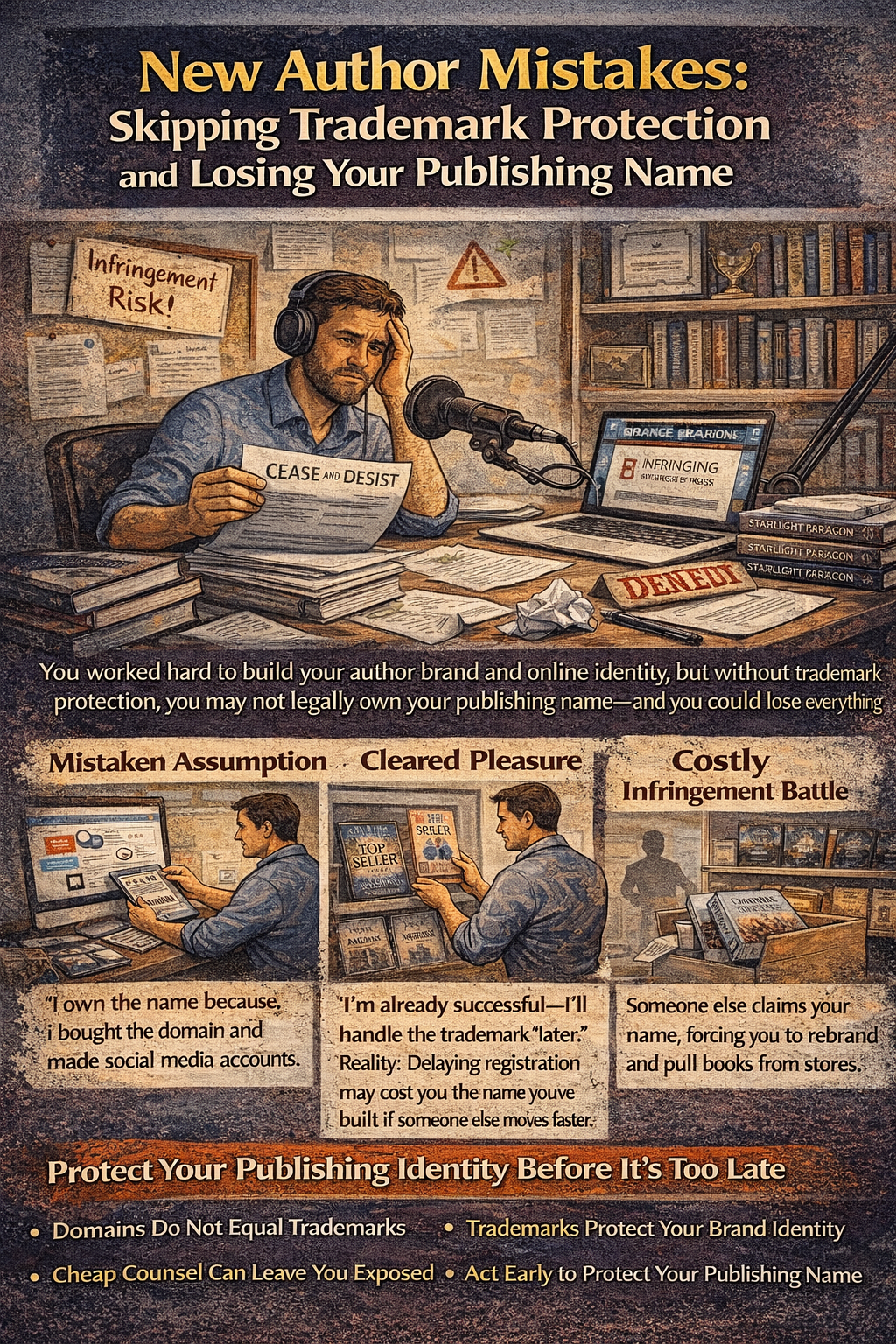
Bringing Stories to Life While Protecting Your Brand Identity
We love helping authors bring stories to life. But we also know authors don’t just want to publish—they want to build something sustainable. Your books should connect to a recognizable identity that grows stronger over time.
Trademarks support that identity. They protect the name readers trust. They reduce confusion, strengthen your authority, and help you scale without fear.
When authors get this right early, their entire publishing journey becomes smoother. They build with confidence, not uncertainty.
Contact Masterly Publishing Group for a Free Consultation
If you’re a new author building your publishing name, this is the moment to protect what you’re creating—before it becomes expensive to fix. Skipping trademark protection can lead to a forced rebrand, lost marketing momentum, and confusion that damages your credibility with readers. The good news is you don’t have to figure it out alone.
At Masterly Publishing Group, we help self-published authors and professional writers build brands with confidence—while navigating the legal hurdles that can threaten everything you’ve worked for. If you need guidance from a texas trademark attorney, we can connect you with the right support and help you move forward with a smart plan. Call (888) 209-4055 for a free consultation, and let’s talk about protecting your publishing identity before someone else claims it.