

How Trademark Registration Lawyers Protect Long-Term Publishing Growth
Publishing a book is an incredible accomplishment, but building a real publishing brand is a different level of success. The moment your book starts gaining traction, your brand name, imprint name, logo, and even your series title can turn into valuable business assets. That’s when many authors, coaches, and publishing entrepreneurs realize the same thing: success attracts attention, and attention can attract copycats.
This article is worth reading because trademark problems often show up after you’ve already invested time, money, and momentum into growth. Authors may launch a series, build an online store, start a podcast, and run paid ads—only to find out they never secured proper trademark registration. And when that happens, competitors can create confusion, steal your credibility, and threaten everything you’ve built.
At Masterly Legal Solutions, we work with publishers, authors, and businesses who want long-term growth—not short-term hype. A skilled trademark attorney doesn’t just fill out paperwork; they help protect your brand, your reputation, and your future opportunities with real strategy. If you’re serious about publishing success, understanding the trademark registration process can help you avoid expensive mistakes and protect what you’ve worked so hard to create.
Quick Outline: What You’ll Learn in This Guide
Before we dive in, here’s a simple outline of how this article is structured. These sections focus on what a law firm can do to protect your publishing brand through trademark strategy, filing, and enforcement.
- Why trademark matters more in publishing than most creators realize
- What a trademark attorney actually does for growing brands
- Trademark clearance and why you should never skip it
- Trademark applications and how the registration process works
- What happens at the trademark office and what an office action means
- How publishing brands protect domain names and brand names
- Trademark trial, litigation, and enforcement strategies
- The Trial and Appeal Board and the appeal board process
- Opposition and cancellation proceedings (and how to defend your mark)
- How intellectual property supports corporate transactions and licensing
- How Masterly Legal Solutions helps clients build trademark portfolios
Publishing Growth Is a Business Strategy, Not Just a Creative Goal
A successful publishing business is more than selling books. It’s building trust, creating consistent quality, and developing recognizable branding across multiple formats. Over time, your audience begins to associate your name, series, or imprint with a certain experience.
That recognition is where the real value lives. It’s also where intellectual property becomes a major factor in long-term success. A book title alone may not always qualify for a trademark, but a brand identity that customers recognize absolutely can.
If you want to scale, your publishing brand must be protected like any other serious business.
Why Trademark Protection Is So Important in Publishing
Publishing brands grow faster than many people expect. One book can turn into a multi-book series, a course, a coaching program, live events, and merchandise. Once your brand expands, it becomes easier for someone else to imitate it or cause confusion.
This is why trademark protection matters in publishing. A trademark helps signal to the public that your brand is the authentic source of your work. It can protect your imprint name, publishing company name, business name, logo, podcast name, and more.
If your goal is long-term growth, trademark protection isn’t optional—it’s foundational.
The Risk of Confusion: Same Source Problems
One of the biggest legal issues in publishing is consumer confusion about “source.” If customers see two similar brand names and assume they are the same source, your reputation can be harmed. Even if the other party claims it was accidental, the damage can still be real.
This is where trademark law becomes highly practical. It’s about protecting the connection between your brand and your audience. Without that connection, growth becomes unstable.
A strong trademark registration strategy helps reduce that risk early.
What a Trademark Attorney Does for Publishers and Authors
A trademark attorney helps clients protect the brand identity behind their publishing business. That includes identifying what can be protected, helping clients avoid risky names, and guiding them through proper filing. More importantly, the attorney helps build a plan that fits real-world business goals.
Many people think a trademark is just an online form. But good trademark work includes strategy, analysis, and planning for future expansion. That’s why publishers often benefit from working with an experienced trademark attorney who understands how publishing brands scale.
When your brand matters, your legal strategy should match your ambition.
Trademark Attorneys Help You Protect Intellectual Property Assets
Publishing companies often don’t realize how many assets they’re building. Your brand name, logo, website, and product lines are all potential intellectual property assets. A trademark lawyer helps you identify which assets should be protected now and which can be protected later.
This is where long-term planning makes a difference. Instead of scrambling after you grow, you build a structure that supports growth from the start. That’s how smart businesses protect value.
Your publishing brand should be treated like a real investment—because it is.
Trademark Clearance: The Step Most Publishers Skip (And Regret)
One of the biggest mistakes publishers make is choosing a name they love without checking whether it is already in use. A name can feel original, but legally, it can still be too close to someone else’s mark. This is why trademark clearance is such a critical first step.
Proper trademark clearance helps you avoid conflicts before they happen. It also helps you avoid wasting money on branding, covers, logos, and marketing campaigns that could be forced to change later. A strong trademark clearance plan is proactive protection.
If you want stability, start with clearance.
Trademark Clearance Searches and Why Google Isn’t Enough
Many businesses believe searching on Google is “research.” But Google doesn’t show the full legal picture. Real trademark clearance searches look deeper than social media profiles and domain names.
A professional can evaluate similar spellings, similar meanings, and related industries. A trademark attorney can also assess risk based on the way the patent and trademark office evaluates marks. That deeper review matters.
Choosing a brand without clearance is like building a house without checking the foundation.
Conduct Trademark Clearance Searches the Right Way
At Masterly Legal Solutions, we often help clients conduct trademark clearance searches before they invest heavily. This allows the business to make a smart decision with real information. When the name is strong and available, filing becomes much safer.
When the name is risky, we can help clients adjust early—before money is wasted. That’s not just legal work; it’s business protection. It also saves time, stress, and reputation damage.
Clearance is one of the most valuable services a trademark attorney provides.
Trademark Registration Process: What Publishers Should Expect
The trademark registration process includes several steps, and most of them take time. The process often begins with identifying what you want to register, what class of goods and services applies, and how the mark will be used. Then the application is filed and reviewed.
Many publishers assume approval is instant. In reality, the process can take months and may require responses or changes. Your trademark lawyer helps you avoid common issues that slow the process down.
A smart filing strategy supports long-term growth instead of creating delays.
Trademark Applications: What You’re Really Filing For
A trademark application isn’t just asking for a stamp of approval. It’s a legal claim to protect your brand in specific categories. This is why details matter, including how you describe your goods and services.
In publishing, trademark applications often cover education, entertainment, downloadable content, printed materials, and business services. A weak application can limit protection later. A strong application supports expansion as your brand grows.
This is why trademark counsel is about strategy, not just forms.
Trademark Filing Mistakes That Can Cost Publishers Years
Many publishers file a trademark too broadly or too narrowly. Others file the wrong name, file the wrong owner, or file without proper examples. These mistakes can delay approval or create vulnerabilities later.
A proper trademark filing approach helps you avoid traps that can cost time and money. It also helps you protect the brand you actually use in the marketplace. A trademark attorney can help ensure your mark is structured correctly from the start.
For growing businesses, accuracy is protection.
Filing Basis: A Key Detail Many Start Ups Miss
Your filing basis matters because it affects what you can claim and when you can register. Some businesses file based on current use, while others file based on intent to use. In publishing, this can matter if your imprint or series is launching soon but not live yet.
A lawyer can help you pick the right filing basis based on your timeline. This is especially useful for start ups and creators building a full publishing pipeline. When filing basis is wrong, it can complicate registration.
A strong filing plan keeps your growth on schedule.
The Trademark Office Review: What Happens After Filing
Once you file, your application goes through review at the trademark office. This is where many clients get nervous because the process feels slow and unclear. The office checks for conflicts, clarity, and compliance with trademark law.
The examiner may request clarifications or issue concerns. This is normal in many cases. Your attorney helps you understand what’s happening and respond the right way.
The process is manageable with good legal guidance.
Office Action: What It Means and Why It Isn’t the End
An office action is a formal letter from the trademark office explaining issues with your application. Some office actions are simple and easy to fix. Others require stronger legal arguments and careful planning.
The key is not to panic or ignore it. An office action has deadlines, and failing to respond can end your application. A trademark attorney helps respond clearly and protects your position.
Office actions are common—but they must be handled properly.
USPTO and the Patent and Trademark Office: Who Controls the Process?
In the United States, trademarks are handled through the USPTO, also known as the United States Patent and trademark office system. Your trademark application is reviewed under federal standards. This matters because federal registration provides stronger protection and broader enforcement options.
Publishers often think trademarks are “just a business formality.” But the USPTO process is legal, technical, and highly structured. The better your preparation, the smoother the process tends to be.
Understanding the USPTO helps you avoid common mistakes.
Why USPTO Strategy Matters for Publishing Brands
The USPTO reviews whether your trademark is confusingly similar to others. It also reviews whether the mark is descriptive, generic, or otherwise weak. A publishing brand needs a name that is distinct enough to stand out and be protected.
That’s why a trademark attorney helps clients choose strong marks. A strong mark is easier to register and easier to enforce. It also becomes a more valuable asset over time.
Smart brand strategy starts before the first book launch.
Trademark Rights: What Registration Actually Gives You
A registered trademark provides enforceable trademark rights that can protect your brand identity. It can also help you take action against confusingly similar names. Most importantly, it gives you legal leverage when disputes happen.
In publishing, trademark rights help protect your imprint, your series, and your associated brand products. It also helps when you expand into other media like courses, podcasts, or licensing. The broader your business, the more valuable a trademark becomes.
Registration is not about ego—it’s about control.
Exclusive Rights and Why They Matter for Growth
A major advantage of registration is the ability to claim exclusive rights in the registered categories. That gives your brand stability, especially when competitors try to imitate your success. It also strengthens your ability to demand changes or removals in many situations.
Exclusive rights also make your brand easier to license. If you want partnerships or media deals, a registered trademark shows seriousness. It signals that you built a brand with intention.
Publishing growth thrives when your identity is protected.
Domain Names: The Publishing Asset People Forget to Protect
Many publishers buy domain names early, but they don’t protect the brand legally. That creates risk because owning a domain does not equal owning the trademark. Someone else could still claim rights and force a change.
Protecting domain names is often part of a larger brand strategy. Your trademark lawyer can help align your domain strategy with your registration plan. This prevents future problems as your audience grows.
A domain is a tool. A trademark is the protection behind it.
Brand Names That Are Stronger Than Book Titles
In many cases, a brand name has more long-term protection potential than a single book title. Your imprint name or publishing brand name is what stays consistent across projects. That’s why a trademark strategy often focuses on the brand structure.
A strong trademark brand can support a wide array of products. It can grow into multiple series, services, and business lines. That’s how publishing becomes a real company.
Protecting the brand name protects the future.
Trademark Infringement: How It Threatens Publishing Growth
Trademark infringement happens when someone uses a name or mark that creates confusion with your brand. For publishers, infringement can show up on social media, websites, ads, or even book listings. It can harm your reputation and disrupt customer trust.
Infringement can also steal your momentum. Your audience may buy from the wrong seller or assume your brand is unreliable. That confusion can slow growth and reduce revenue.
A trademark attorney helps protect you when infringement appears.
Infringement Doesn’t Always Look Obvious at First
Some infringement is blatant, but many cases are subtle. Competitors may use a similar spelling, similar logo style, or similar messaging. They may even claim they didn’t realize your brand existed.
This is why trademark enforcement matters. Without enforcement, confusion grows. Your brand becomes diluted.
A trademark strategy is only valuable if it can be defended.
Trademark Enforcement: Protecting the Brand You Built
Trademark enforcement is the process of taking action to stop misuse. It can include warning letters, takedowns, formal proceedings, or litigation. Enforcement isn’t about being aggressive—it’s about protecting what you earned.
Publishers often hesitate because they don’t want conflict. But enforcement is part of business maturity. If you don’t enforce your trademark rights, your protection becomes weaker in practice.
A strong legal strategy helps you enforce without unnecessary drama.
Enforcement Strategies That Match the Business Goal
Different situations require different approaches. Sometimes you can resolve it quickly with a letter. Other times you need a stronger legal step. Your attorney helps you choose the right enforcement strategies based on cost, risk, and outcome.
This is where experience matters. A proven track record helps your legal team move decisively. It also helps protect your reputation while defending your rights.
Enforcement is part of long-term brand protection.
Trademark Trial and Appeal Board: Where Disputes Get Serious
When trademark disputes arise, they may be handled through the trial and appeal board, often called the TTAB. This board handles challenges to registration, including opposition and cancellation matters. For publishers, this can become serious if a competitor challenges your mark.
This process is legal and formal. It includes deadlines, arguments, and evidence. Having an experienced attorney matters because mistakes can be costly.
When your brand is challenged, your strategy must be strong.
Trademark Trial and Appeal: What It Means for Publishers
The trademark trial and appeal process can include disputes over whether a mark should register. It can also involve disputes about priority and confusion. These cases often require legal briefing and careful planning.
Publishers should not attempt to navigate this alone. It can become complex quickly, especially when the other side hires experienced counsel. A trademark attorney helps you understand the risks and defend properly.
This is where long-term brand protection becomes real.
Appeal Board Matters: How to Fight a Bad Trademark Decision
When the trademark office denies registration, the case may go to an appeal board. This is where legal reasoning, evidence, and strategy matter. Appeals can be won, but they require careful legal work.
Publishers often feel discouraged when they get a rejection. But many cases can be fixed or defended. The key is responding correctly and on time.
Appeals are a normal part of some trademark journeys.
Challenges Brought by Others: Opposition and Cancellation Proceedings
Sometimes disputes happen not because the office denies the mark, but because someone else challenges it. These challenges brought can include opposition and cancellation proceedings. These are formal actions that can delay or destroy a trademark if not defended properly.
This is one reason early clearance matters. It reduces the risk of opposition later. It also helps you build a stronger file from day one.
When challenges appear, a defense strategy protects your future.
Cancellation Proceedings and Why Publishers Must Take Them Seriously
Cancellation proceedings involve attempts to remove an existing trademark registration. If someone tries to cancel your mark, it can threaten your business identity. Publishers who build a long-term brand must defend against cancellation risks.
A cancellation dispute can become expensive if handled poorly. But good legal counsel helps manage the process and focus on the right evidence. This is where trademark portfolios and usage documentation become important.
A trademark is not “set it and forget it.” It must be maintained and defended.
Prosecuting Trademark Applications Is a Long-Term Skill
Good trademark strategy includes prosecuting trademark applications properly. That means managing the process from filing through approval, responding to office actions, and defending the mark when needed. Many publishers don’t realize how much work can happen behind the scenes.
Prosecution is legal craftsmanship. It’s a blend of business strategy and legal structure. It protects your brand while supporting growth.
This is why working with experienced attorneys matters.
Trademark Counseling: A Practical Tool for Publishers Scaling Fast
Trademark work isn’t only about filing. Trademark counseling helps publishers make better decisions about names, brand expansions, licensing, and enforcement. It helps you avoid risks before they become lawsuits.
Counseling is especially valuable for growing publishers with multiple product lines. If you are launching new series, podcasts, courses, or merchandise, you need legal alignment. Trademark law touches all of it.
Counseling makes expansion safer and smoother.
Helping Businesses Protect Growth Beyond One Book
Publishing growth isn’t always predictable. One project can open doors to speaking, coaching, licensing, and collaborations. A trademark strategy can support all of these expansions.
This is why we focus on helping businesses protect their brand identity, not just filing trademarks blindly. Your intellectual property matters because it becomes a foundation for new income streams. Protecting it early creates stability.
A protected brand grows faster with less fear.
Trademark Portfolios: How Successful Publishers Build Long-Term Value
As publishers grow, they often build multiple trademarks. This can include separate imprints, series names, product names, and logos. These become trademark portfolios that support expansion across many markets.
A portfolio approach is proactive and organized. It helps publishers maintain consistency and protect key assets. It also supports long-term licensing and corporate value.
Your trademark portfolio can become one of your biggest business assets.
Intellectual Property Assets Create Leverage in Business Deals
Publishing is no longer just selling books. It can include licensing, joint ventures, and partnerships. Strong intellectual property assets create leverage in these deals.
Investors and partners want to know the brand is protected. They want security and stability. That’s why trademarks matter when you grow beyond a small author business into a real company.
Protection builds credibility in high-level opportunities.
Corporate Transactions and Publishing Growth: Why Trademarks Matter
When publishers expand, they may enter corporate transactions such as acquisitions, asset sales, licensing, or partnerships. Trademarks become part of the value being bought or sold. If your trademarks are unclear or unregistered, deals can become risky.
This is where due diligence matters. Buyers or partners want to confirm ownership, registration status, and enforcement history. Strong trademark records make this process smoother.
Trademarks protect value when money is on the line.
Counsels Clients Through Growth Stages
At Masterly Legal Solutions, we often help businesses plan long-term brand growth. We counsels clients on what to protect now, what to protect later, and how to reduce legal risk during scaling. That includes protecting brand names, domain names, and other intellectual property assets.
A trademark strategy should match the business plan. That’s why we focus on long-term results. We don’t just file—we guide growth.
Strategy is how publishing becomes sustainable.
Federal Court and Litigation: When Trademark Disputes Escalate
Sometimes trademark disputes cannot be handled quietly. In severe cases, disputes can lead to federal court litigation. This can happen when infringement is strong, damages are significant, or negotiations fail.
Litigation is serious and expensive, but sometimes it’s necessary to protect a brand. A smart legal strategy aims to prevent litigation when possible. But when it’s unavoidable, you want a team prepared to defend your rights.
Trademark law can escalate quickly when growth is real.
Trademark Trial and Litigation Are Not Just “Big Company Problems”
Many small publishers assume litigation won’t happen to them. But growth attracts competition. If you become visible, infringement risk increases.
A proactive approach reduces the chance of getting forced into court. It also strengthens your ability to resolve conflicts early. Prevention is often cheaper than litigation.
Smart publishers protect early so they don’t fight later.
Best Lawyers, Best Attorney, and the Value of Experience
Many clients search for the best lawyers or the best attorney when they realize their brand is at risk. Experience matters because trademark law is technical and strategic. It requires understanding business goals, legal standards, and enforcement realities.
An experienced trademark attorney helps you avoid costly mistakes. They also understand what the USPTO cares about and how trademark disputes are resolved. Experience protects time, money, and momentum.
Your publishing brand deserves skilled protection.
Attorneys Who Practice Law with Publishing in Mind
Not all attorneys understand how publishing brands grow. A publishing business moves differently than a retail business. It includes multiple formats, online platforms, and evolving products.
That’s why it matters to work with attorneys who understand publishing, intellectual property, and long-term brand identity. Good counsel protects growth while keeping the brand flexible.
Legal support should match the creative business model.
International Trademark Association and Global Publishing Growth
As authors grow, many begin selling internationally. They may work with overseas publishers, translation companies, or global marketplaces. This is where international trademark considerations can matter.
The International Trademark Association is a major organization in the trademark space. It provides resources and education that help professionals track best practices and global brand protection developments. Even if you are filing in the U.S., global awareness matters.
Publishing growth can become global faster than expected.
Protecting Trademark Owners in a Competitive Market
Publishing brands can become valuable quickly, and that makes trademark owners targets. Competitors may file similar marks, create similar names, or build confusingly similar platforms. Without enforcement, the marketplace becomes noisy.
Trademark law is designed to protect brand identity and reduce confusion. That protection supports long-term growth. It also supports consumer trust.
Your audience deserves clarity, and your brand deserves protection.
Trademark Services That Protect Publishers Beyond Filing
Filing is only one part of long-term trademark support. Strong trademark services include clearance, filings, responses, monitoring, and enforcement. They also include strategy when expanding into new product categories.
Publishers need trademarks that match how they do business. That includes branding, author platforms, courses, and merchandise. Protecting trademarks is about protecting the business structure.
A long-term plan keeps you ahead, not behind.
Intellectual Property Matters Are Business Matters
Many publishers treat IP like a side topic. In reality, intellectual property matters are core business issues. Your IP is what makes your brand yours.
A strong legal strategy protects your creative identity and your long-term revenue. It can also prevent painful rebrands that disrupt audience trust. This is why IP should be handled early.
When your brand is protected, growth feels safer.
How Masterly Legal Solutions Supports Publishing Clients
At Masterly Legal Solutions, we provide legal services built for growth-focused clients. We help publishers protect their imprint, build strong trademark applications, and reduce infringement risk. We also represent clients in disputes and respond to office actions.
Our goal is to help clients protect what they build—before someone else takes advantage of their success. We understand the publishing world is competitive, fast-moving, and brand-driven. That’s why trademark strategy is a serious part of long-term growth planning.
We don’t just file trademarks. We protect publishing futures.
We Represent Clients With Strategy and Clarity
We represent clients who want to build stable brands that grow year after year. Whether you are a publisher, author, or business owner creating educational content, your brand name deserves protection. Trademark registration is often one of the most valuable steps you can take.
We also help clients choose strong marks, handle office actions, and protect trademark rights through enforcement. That’s how real brand protection works. It’s proactive, not reactive.
Your long-term growth deserves real legal structure.
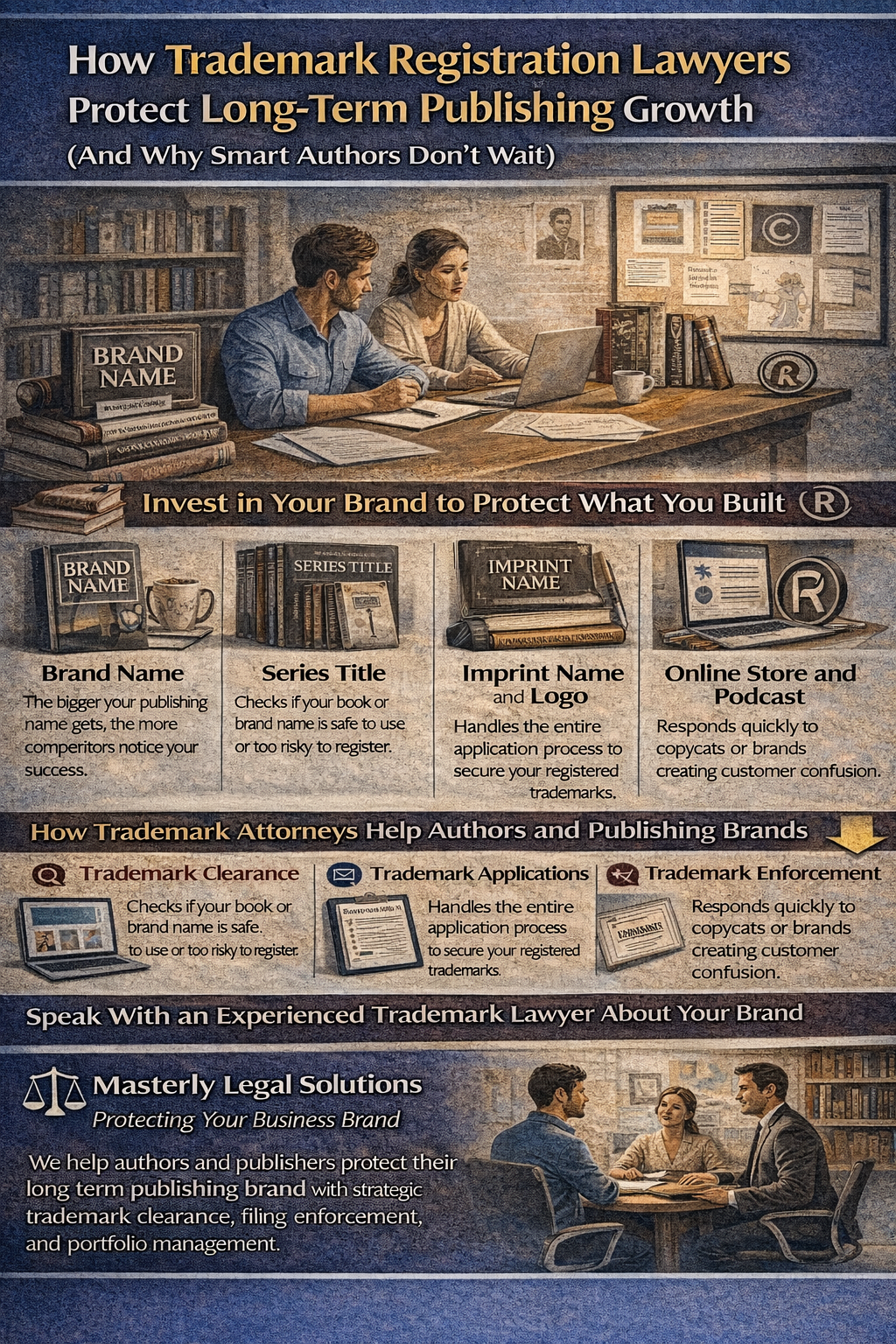
Key Takeaways for Publishers Thinking About Trademark Registration
Below are the most important things to remember if you want to protect your publishing brand long-term. These are practical lessons that apply to authors, publishers, and growing companies.
- Trademark registration protects brand identity, not just paperwork
- Trademark clearance searches can prevent expensive rebrands
- A trademark attorney helps you choose stronger brand names
- The trademark registration process takes time and must be managed carefully
- Office actions are common and must be handled strategically
- Trademark enforcement protects your audience from confusion
- Domain names do not replace trademark protection
- Trademark portfolios increase business value and stability
- Appeals and trial board disputes require serious legal planning
- Intellectual property is one of the strongest publishing assets you can build
Contact Masterly Publishing for a Free Consultation About Trademark Protection
If you’re building a publishing brand that you want to grow for years—not just launch once and forget—protecting your name matters. Many authors and publishing businesses invest time into a book series, cover design, marketing, and audience building, only to realize later that their brand identity was never legally secured. When that happens, growth can slow down fast, and the risk of copycats or confusingly similar names can become a real problem.
At Masterly Publishing, we support authors who are serious about long-term success by helping them understand how trademark protection fits into the bigger publishing picture. Whether you’re creating a new imprint, launching a book series, expanding into courses and merchandise, or building a recognizable publishing company name, we can connect you with the right resources and guidance so your brand is positioned for safe growth. Our goal is to help you publish confidently, protect what you build, and avoid the costly setbacks that can derail momentum.
Call (888) 209-4055 today to schedule a free consultation. We’ll answer your questions, help you understand the smartest next step for your publishing goals, and support you as you build a brand that’s meant to last.