

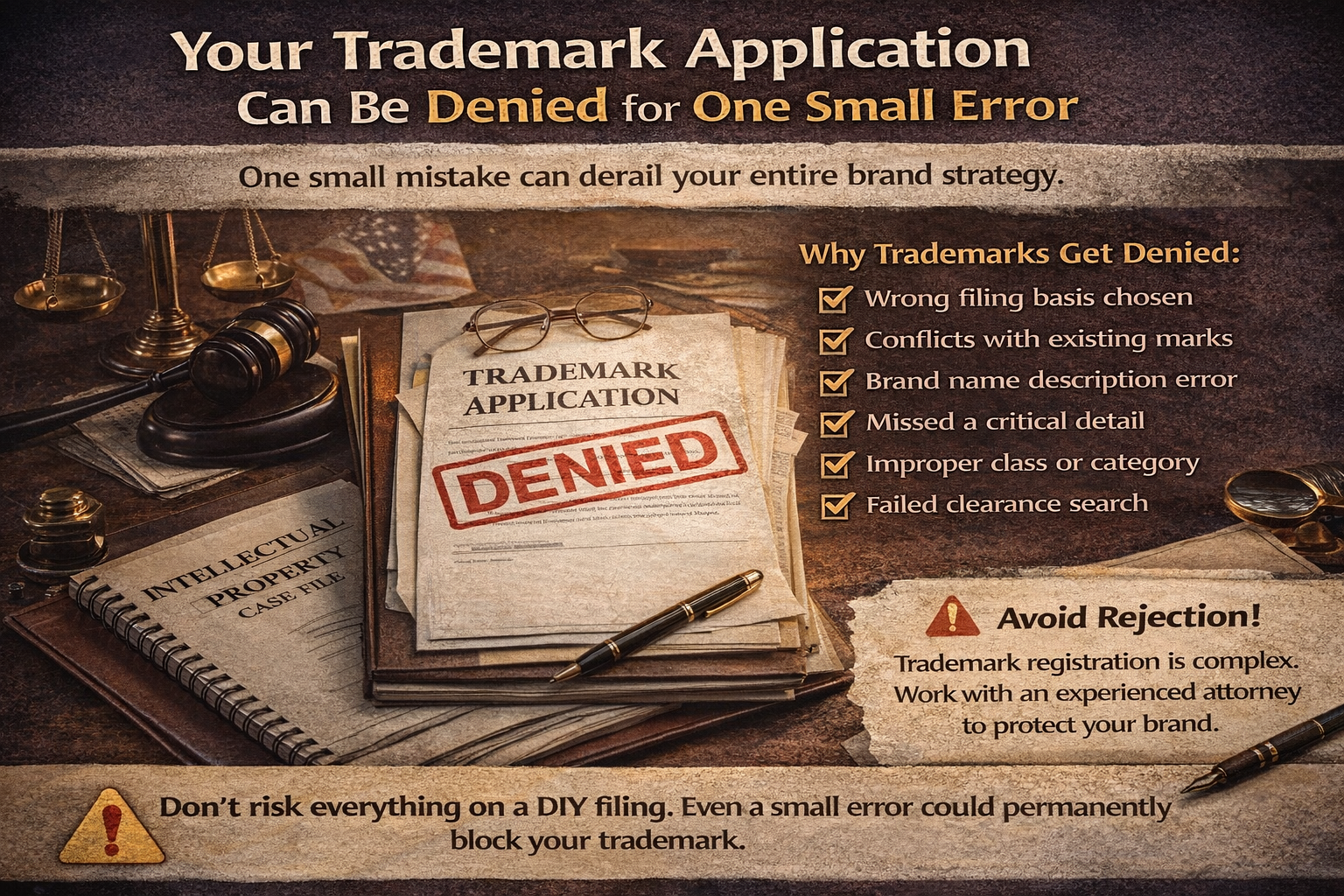
Your Trademark Application Can Be Denied for One Small Error
You can spend months building a brand name, designing a logo, and pouring your time into a book, a series, or a growing publishing identity—only to find out the name you love can’t be protected the way you expected. For authors and creators, that moment feels personal. It’s not “just paperwork.” It’s the name you imagined readers searching, sharing, and remembering.
At Masterly Publishing Group, we specialize in helping self-published authors and professional writers bring their work to life—while also navigating the business and legal realities that come with building a real brand. From manuscript to bestseller, we support publishing, marketing, and the legal hurdles that can show up when your audience starts growing. We’re proud to serve clients worldwide, and we also offer a state-of-the-art content creation studio experience that helps authors create promotional materials, book trailers, and podcasts.
This article breaks down how one small error can derail your trademark registration—and how working with the right legal team can protect what you’re building before someone else claims it first.
What a Trademark Really Protects for Authors and Creators
A trademark protects the brand identity that tells the world, “This is you.” For authors, that might be a pen name, a publishing imprint, a logo, a series title, a slogan, or even a brand concept readers recognize instantly. Trademarks are part of your long-term credibility, not just a short-term business step.
When a reader sees your name online, on a cover, or in a search result, that brand association matters. Trademark protection helps you keep control of that identity so it doesn’t get diluted or copied. It also helps you protect income opportunities that come later, including licensing, speaking, collaborations, and expansion.
The Risk of Waiting Until After You Go Viral
One of the biggest misconceptions is that you should “wait until the brand grows” before filing. The problem is that visibility attracts attention, and not all attention is supportive. It’s common for creators to grow quickly and then discover the brand name is already claimed or too similar to another.
Once your platform grows, the stakes increase, because losing the name means losing momentum. You can also face additional fees if you have to rebrand, reprint, or rebuild assets across platforms. The earlier you protect the brand, the less vulnerable your success becomes.
How Trademark Registration Gets Handled in the Real World
The trademark registration process isn’t just filling in a form and paying a fee. It involves strategy, classification, proof, and precision. Your filing becomes a legal record, and the wording you choose can shape your rights.
This is also why trademark applications often get denied. It’s not because the idea is bad—it’s because the filing contains a technical mistake, an unclear description, or a conflict with an existing mark. Small errors can create big consequences when your application is reviewed by the patent and trademark office.
The Trademark Office Is Not “Just a Website”
Many people think of the trademark office as a portal that accepts submissions automatically. In reality, the Patent and Trademark Office functions like a legal gatekeeper. Your application is reviewed under trademark law, and the decision is based on defined rules, not opinions.
The United States Patent system includes strict standards for what qualifies as a protectable trademark and how it must be presented. A single technical flaw can create months of delay or a complete rejection. When your goal is real brand protection, accuracy matters.
One Small Error That Denies Applications: Choosing the Wrong Filing Basis
A common issue is selecting the wrong filing basis. Some applicants file as if they are actively using the mark in commerce when they are not, or they file as if they plan to use it but don’t provide the right details. That mistake may not feel “major” when you submit, but it can become a serious legal problem later.
Filing basis errors can trigger questions from the trademark office and lead to refusal or delays. If your application is wrong, the system may treat your submission as incomplete or inconsistent. This is where an experienced trademark attorney helps you avoid mistakes that are hard to undo.
Another Small Error: Inconsistent Brand Name Formatting
A trademark must match the brand you are actually using. If your business name is written differently in your application than it appears on your website, cover, or social accounts, that inconsistency can raise issues.
Sometimes the difference is small—spacing, punctuation, capitalization, or a word order change. But those differences can matter when the trademark office evaluates what exactly you want to register. If you submit the wrong version, you may end up protecting the wrong thing.
The Hidden Danger of Being “Too Descriptive”
Some trademarks are denied because they’re too descriptive of the product or service. Authors run into this when they try to trademark phrases that are generic in publishing or marketing. If the trademark is simply describing what it is, the Patent and Trademark Office may reject it.
This doesn’t mean you can’t build a brand with a descriptive phrase. It means you may not get exclusive rights to that phrase as a trademark. This is one reason trademark counseling is valuable before you invest heavily into the brand.
Trademark Clearance Is the Step People Skip (and Regret Later)
If you don’t check for conflicts first, you can walk straight into a denial. Trademark clearance helps identify whether a similar mark already exists, whether your name is too close to another brand, or whether you’re stepping into a high-risk area.
Many denials happen because applicants don’t conduct proper trademark clearance searches. The trademark office doesn’t only check identical matches—it looks for confusing similarity. A name that feels “different enough” to you might still be too close legally.
Conduct Trademark Clearance Searches Before You Invest in Branding
When we help clients, we often advise them to conduct trademark clearance searches before they commit to cover designs, podcasts, website branding, or advertising. It’s the most practical way to avoid wasting money on a brand identity you can’t protect.
Clearance searches can also uncover risks related to other industries. You might be in publishing, but a similar mark could exist in education, software, or entertainment. If the names overlap, your future expansion can be limited.
Domain Names Can Create a False Sense of Security
Owning domain names does not mean you own the trademark. This is one of the most common surprises for authors and creators. You can purchase a domain and still be blocked from registering the trademark for the same name.
In fact, domain names can sometimes create legal risk if the brand name conflicts with another mark. Buying the domain first doesn’t protect you—it just means you bought a web address. Trademark rights depend on legal standards, not domain ownership.
Social Media Handles Don’t Equal Trademark Rights Either
The same is true for social media. You might have the handle on every platform, but that still doesn’t guarantee trademark ownership. If another party already has trademark rights, your social presence can become a liability instead of an asset.
This is where brand protection becomes more than a buzzword. It’s about building a brand in a way that can legally survive growth.
“Same Source” Confusion Is a Common Denial Reason
The trademark office looks for whether consumers might believe two brands come from the same source. That’s a major factor in refusal decisions. If your mark is too similar to a registered trademark in a related space, you may face refusal even if you didn’t intend any conflict.
This is frustrating for creators because it feels subjective. But under trademark law, consumer confusion is taken seriously. Avoiding similarity is part of smart planning.
Office Action: The Letter That Stops Your Trademark in Its Tracks
If you receive an office action, it means the trademark office found issues with your application. Sometimes the office action is minor. Other times it’s a serious refusal that threatens the entire registration.
Office actions can involve technical corrections, proof issues, or legal refusals. You usually have a deadline to respond, and missing it can end the application. This is one of the biggest reasons creators hire trademark attorneys instead of trying to handle the process alone.
The Trademark Office Expects a Legal-Quality Response
The response to an office action isn’t casual. It’s a legal argument supported by rules and evidence. A weak response can lead to refusal, even if your brand is protectable.
This is where an attorney can protect your timeline and reduce your risk. A strong response can keep your application alive. A rushed response can waste months and force you to start over.
Trademark Attorneys Help Prevent the “Wrong Class” Mistake
Trademark registration requires selecting the correct class categories for your goods and services. Many authors choose the wrong class or choose overly broad categories that trigger problems.
Some writers try to register everything at once—books, podcasts, training, merchandise, and more—without structuring it properly. That can increase costs, increase refusal risk, and create unnecessary complexity. Trademark attorneys help align your filing with what you’re actually doing now and what you plan to do later.
Trademark Filing Should Match Your Real Business Plan
A strong filing strategy protects where your brand is going, not just where it is today. If you’re building a publishing imprint or media brand, your trademark should support that growth.
This is where trademark portfolios come into play. If you expect to grow into multiple products, series, or services, your trademark strategy should scale. Smart portfolio management prevents future brand collisions and protects your expansion.
Trademark Owners Often Don’t Realize They Have to Defend the Mark
Even after trademark registration, you may need trademark enforcement to protect your rights. Registration is not a magic shield that automatically stops misuse. It gives you power, but you must sometimes act to keep that power meaningful.
This can include monitoring, cease-and-desist strategies, and handling disputes. Trademark owners who ignore infringement can risk weakening their position. Protecting a trademark is an ongoing strategy, not a one-time task.
Trademark Infringement Can Show Up in Sneaky Ways
Trademark infringement doesn’t always look like a perfect copy. Sometimes it’s a confusingly similar brand name, a look-alike logo, or a competitor trying to benefit from your reputation.
For authors, infringement can show up through counterfeit books, copycat series branding, or misleading online promotions. This can damage readers’ trust and affect your sales. Trademark protection exists to help you preserve the identity you built.
Opposition and Cancellation Proceedings: When Someone Challenges You
Sometimes your application doesn’t get denied by the trademark office first—it gets challenged by another party. This can lead to opposition and cancellation proceedings, which are formal disputes inside the trademark system.
Opposition can happen after your mark is published for review. Cancellation proceedings can happen after registration if someone believes your mark should not have been registered. These challenges can feel shocking, but they’re part of the real trademark world.
The Trial and Appeal Board Is Where Disputes Get Real
Trademark disputes are often handled through the trial and appeal board, also known as the TTAB. You may see references to the trial and appeal board, trademark trial and appeal, or the appeal board in official communications.
This is where cases can move into litigation-like procedures, even without going to federal court. It’s serious, structured, and time-sensitive. This is not a DIY moment for most creators, because one mistake can cost the entire brand identity.
Trademark Trial Proceedings Are Not Only for Big Corporations
Many creators assume only massive brands deal with trademark trial issues. But authors and startups face these disputes too, especially in crowded spaces. A growing brand can become a target once it shows commercial value.
The trademark system doesn’t protect only large companies. It protects trademark owners who take their intellectual property seriously. If your brand is worth building, it’s worth defending.
USPTO’s Trademark Trial Process Can Involve Complex Steps
You may hear the phrase uspto's trademark trial when discussing TTAB disputes. These cases can involve evidence rules, deadlines, and argument structure.
Whether it’s opposition or cancellation, the process can require serious preparation. A strong legal team helps you protect your position without losing momentum in your publishing schedule.
Cancellation Proceedings Can Threaten Established Brands
Cancellation proceedings can be devastating because they target marks that already exist. A cancellation challenge can threaten your ability to keep using a name you’ve spent years building.
Creators often feel blindsided when they receive notice of cancellation proceedings. But these cases are defendable, especially when your trademark strategy and records are solid. The earlier you get support, the better your outcome usually becomes.
Litigation and Federal Court: When Trademark Conflicts Escalate
Not every case stays inside the trademark office system. Some disputes escalate into litigation and even federal court, particularly when infringement causes financial harm or confusion in the market.
Federal court cases can be expensive and high stakes. That’s why proactive trademark registration and enforcement strategies matter so much. Preventing conflicts is often far cheaper than fighting them.
Helping Businesses Protect Their Brand Includes Authors Too
Authors are businesses, whether they feel like it or not. If you’re selling books, building an audience, licensing content, running ads, or creating merchandise, you’re operating as a commercial brand.
That’s why the trademark conversation isn’t only for corporations. Helping businesses protect their names and brand systems includes creators who are building real revenue. Your intellectual property is part of your long-term financial plan.
Intellectual Property and Copyright Law: Know the Difference
Many creators mix up copyright law and trademark law. Copyright protects original creative work like the words in your book or the images you create. Trademark protects the brand identity associated with the product.
Both matter, but they do different jobs. A trademark can protect your series brand, publishing imprint name, or logo. Copyright protects the contents of your book itself. Building both protections creates stronger legal protection overall.
National Advertising Division Issues Can Affect Brand Claims
The national advertising division may become relevant when brand advertising crosses legal boundaries, especially for businesses making claims in promotions. Authors doing marketing, courses, or brand messaging should be careful about what they promise publicly.
While this may not apply to every creator, it’s part of professional brand responsibility. Trademark strategy should align with how you present your brand publicly.
Corporate Transactions and Due Diligence: The Future Value of Your Trademark
Trademarks can become valuable assets during corporate transactions, partnerships, licensing deals, or business expansion. When someone wants to invest in or acquire rights connected to your brand, they often conduct due diligence.
If your trademark is unclear, weak, or unregistered, it can reduce your negotiating power. A properly built trademark portfolio strengthens your position and makes your business more credible.
Your brand is not just a creative identity—it’s a transferable asset.
The Role of Attorneys in Trademark Counseling and Strategy
Trademarks aren’t only about filing. Trademark counseling includes strategic planning, brand risk review, and long-term portfolio considerations. When you work with attorneys who understand brand growth, you get support that prevents future mistakes.
Good attorneys also help represent clients in disputes and defense strategies. They don’t just submit forms—they protect your business identity with purpose.
What “Best Lawyers” Really Means in Trademark Work
People search for best lawyers or top rated attorneys because they want confidence. But in trademark matters, the best attorney is often the one who communicates clearly, moves quickly, and understands both the legal details and your business goals.
Trademark strategy is both legal and practical. You want attorneys who can protect your future, not just react to problems.
At Masterly Publishing Group, our legal services are designed to help creators avoid mistakes early, so they don’t pay for them later.
Law Students Don’t File Your Brand Strategy—Your Legal Team Does
Some creators assume trademark filings are simple enough that anyone can do them. While legal education matters, experience matters more. This isn’t about law students versus lawyers—it’s about having a real legal team with the ability to handle issues that arise.
Trademark filings can trigger office action responses, appeal board procedures, and trial-level disputes. You need legal services that don’t collapse when the process gets complicated.
The U.S. Flag Symbol and What Not to Misuse
Some branding involves the u.s flag or patriotic imagery, especially for Texas-based brands. It’s important to know that certain symbols can trigger trademark restrictions or be treated differently by the Patent and Trademark Office.
This doesn’t mean you can’t use patriotic visuals. It means you should be careful about how it’s used in a trademark context. Small design choices can create big filing problems.
States Patent and Trademark Confusion: Federal vs. State Protection
Many creators hear “state trademark” options and assume it’s the same as federal registration. Some search terms even mix into phrases like states patent and trademark, which can create confusion.
Federal registration through the USPTO generally offers broader legal protection across states. State registration may help in limited contexts, but it’s often not enough for authors selling nationally or online. A strong trademark strategy focuses on the level of protection that matches your audience and market.
What Happens When You Submit a Trademark Application
When you submit your trademark application, it enters review. The process includes internal examination, legal assessment, and publication periods. Depending on what happens, you might receive approval, an office action, or a refusal.
Many applicants assume the hardest part is submitting. But the real challenge is surviving the review and responding correctly if the trademark office raises concerns.
This is why filing is only the beginning.
Registering a Trademark Is a Business Decision, Not Just a Legal Step
To register a trademark is to protect brand equity. Your brand name is often the first thing readers remember, and it’s often the thing that separates you from everyone else.
Registration helps you protect that identity as your platform expands. It also helps you prevent copycats who try to attach themselves to your success. If you want to build something lasting, trademark registration is part of building a real brand foundation.
Trademark Rights Grow Stronger With Smart Use
Trademark rights are shaped by how you use the mark. Consistent use, clear branding, and real commercial presence strengthen your position. Confusing branding and inconsistent use weaken it.
This is why trademark counseling includes branding alignment. You want the brand you protect to match the brand your audience sees. That consistency supports enforcement and protects your long-term success.
How Masterly Publishing Group Supports Authors Through Legal Services
At Masterly Publishing Group, we’re built to support authors and publishing brands from idea to release and beyond. Our legal services are designed to assist clients who are building real commercial identities, not just one-time projects.
We help clients understand risk, protect their intellectual property, and avoid brand conflicts that can stall growth. We also understand that authors don’t have time to get buried in legal confusion. Our job is to simplify the process while protecting your rights.
Trademark Registration Attorney Support Can Prevent Expensive Mistakes
When creators file alone, the most expensive part is often the mistake they didn’t notice. That’s why working with a trademark registration attorney can be a smart move when your brand matters.
A good attorney helps you avoid denial traps, strengthen your filing strategy, and respond properly to office actions. They also help protect your future brand plans with portfolio thinking. One small error can cost you months—or cost you the brand entirely.
Trusted Guidance From a Law Firm That Understands Brand Protection
At Masterly Publishing Group, our law firm provides practical assistance for authors, creators, and growing businesses that want strong trademark protection without confusion or delays. Our practice is built around helping clients make smart decisions early—especially start ups and self-published professionals who can’t afford costly filing mistakes. We stay informed through professional standards and industry insight, including resources connected to the American Bar Association and the International Trademark Association, so our advice reflects real-world trademark expectations. Our experience encompasses trademarks across many industries, including highly regulated fields such as medical devices, which reinforces how careful and detail-focused trademark strategy must be from the start.
The Difference Between Filing Fast and Filing Correctly
Speed is important. But accuracy protects you long-term. A fast filing that gets denied doesn’t help you. It delays you, drains your energy, and creates uncertainty.
A correct filing helps you build confidently. It also supports your marketing, publishing, and brand expansion without fear that someone else will claim the name. In a competitive market, clarity and legal protection are powerful advantages.
Contact Masterly Publishing Group for a Free Consultation
If you’re building a book brand, a publishing imprint, a series name, or a business identity that readers will recognize, your trademark strategy deserves real attention—not guesswork. A single mistake in your trademark applications can trigger an office action, create long delays, or even shut down your registration efforts completely. And once your name starts spreading online, the risk of trademark infringement and challenges brought by other parties becomes much more real.
At Masterly Publishing Group, we assist clients with publishing, marketing, and legal services that support serious creators and growing businesses. Our team is here to guide you through trademark registration, trademark clearance, portfolio management, and dispute risks—so you can protect what you’re building and move forward with confidence. If you need an experienced trademark attorney or simply want clarity before you file, we’re ready to help.
Call (888) 209-4055 to schedule a free consultation today.
Let’s talk through your brand names, your business goals, and the smartest next steps to secure the legal protection you deserve.