

Trademark Lawyer Advice for Self-Published Authors Who Want to Build a Real Publishing Brand
Self-publishing gives authors something powerful: control. You control the timeline, the message, the design, the launch plan, and the long-term direction of your writing career. But there’s one piece that many authors forget until it’s too late—your trademark and the legal identity of your brand.
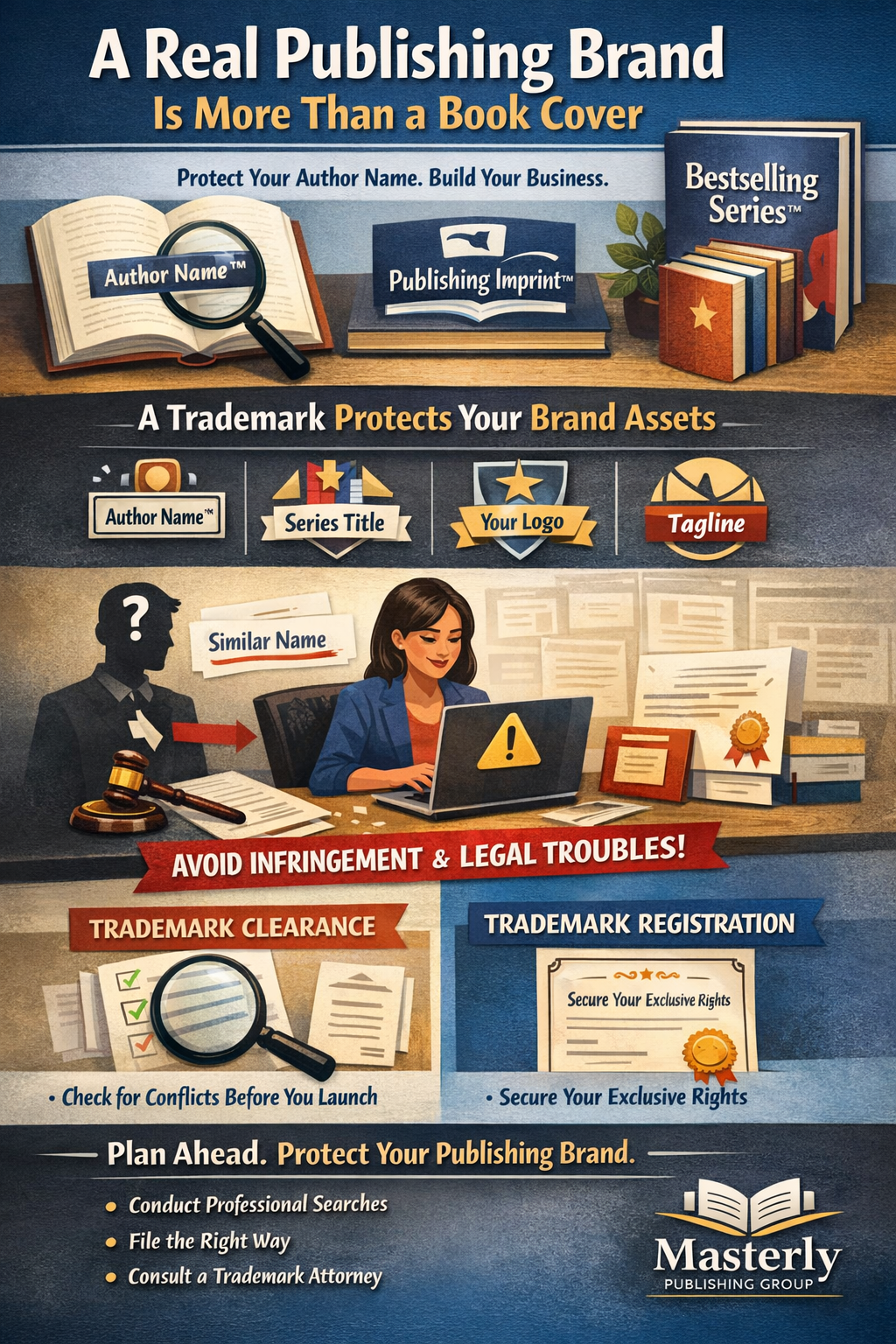
If you’re building more than “just one book,” you’re building a business. Your author name, your series title, your publishing imprint, your logo, and your signature tagline can become valuable assets. And if you don’t protect them early, someone else can claim something confusingly similar and create legal issues that slow down everything you’ve worked for.
At Masterly Publishing Group, we help self-published authors and professional writers create books, promote them, and navigate intellectual property decisions that can affect long-term success. From publishing and marketing support to smart guidance around brand identity, we’re here to help you move forward confidently. If you’re serious about building a real publishing brand, this guide will show you how trademark law works, what to protect, and when it’s time to talk to an experienced trademark attorney.
A Real Publishing Brand Is More Than a Book Cover
A publishing brand is what readers recognize when they see your work online. It’s the feeling people associate with your name, your style, your promise, and your message. When your brand is strong, readers come back for the next release without needing to be convinced.
Brand building usually starts with creative decisions. But it becomes protected through legal decisions. If you want to scale your business, you need to treat your trademark like an asset, not an afterthought.
That’s where trademark registration and consistent brand protection can change the future of your publishing career.
What a Trademark Really Does for Authors
A trademark is a legal tool that helps identify the source of products or services in the marketplace. In simpler terms, it helps the public recognize that your brand comes from you. That recognition matters when you’re selling books, courses, subscriptions, speaking services, and related creative products.
For authors, trademark rights can apply to names, logos, publishing imprints, and sometimes even a series identity. The goal is to establish clear ownership in a way that supports growth. When you invest in a brand, you want legal protection that supports it.
This is one reason authors often work with trademark attorneys instead of guessing their way through the process.
Why Self-Published Authors Are More Vulnerable Than They Think
Traditional publishers usually have teams that handle legal review and brand risk. Self-published authors often don’t. That means you might spend years building a recognizable business name or series, only to discover it conflicts with someone else’s registration.
In many cases, the first time authors hear the word infringement is after they receive a notice. That can be scary, expensive, and disruptive. It can also force rebranding right when your audience is growing.
Self-publishing is empowering, but it also means you need a smart trademark strategy early so you can scale without constant fear.
Trademark Registration Can Protect Your Long-Term Expansion Plans
Authors rarely stop at one product. Your brand can grow into coaching, online communities, workshops, merchandise, podcasts, and licensing deals. The stronger your brand becomes, the more important trademark registration becomes for protecting it.
When you register a trademark, you strengthen your claim to exclusive rights across the categories you’re using. That helps you defend your brand identity if confusion appears. It also supports professional credibility when you expand.
Smart registration planning protects your future opportunities, not just your current launch.
The Difference Between Copyright Law and Trademark Law
Many authors confuse copyright law and trademark protection, but they serve different purposes. Copyright law generally protects original creative works like books, manuscripts, and certain visual elements. Trademark law protects brand identifiers that help consumers recognize the source of products or services.
This distinction matters because your book content may be copyrighted, but your brand name might still be vulnerable. If another business uses a similar name in the marketplace, copyright won’t necessarily help you stop it. That’s where trademark rights come in.
When authors understand this difference, they make smarter decisions around intellectual property and legal protection.
What Authors Should Consider Trademarking First
Not everything needs to be trademarked immediately. The best approach is protecting what will be used consistently and publicly as part of your brand. That often includes names and marks that will appear across multiple releases.
Common author-related trademark targets include:
- Your publishing imprint name
- Your series name (when used as a brand)
- Your business name used for services
- A logo that appears on every platform
- A podcast title tied to your brand
A strong trademark plan focuses on what builds recognition and revenue over time.
Why Your Business Name Is Often the First Priority
Many authors build an LLC, publish under a brand, and create a website before they ever release their second book. That makes the business name a central brand identifier. If you’re selling services, products, or educational content under that name, it may be the main thing people associate with you.
If someone else already owns a similar trademark, you could face challenges later. Even if you didn’t intend to copy, legal conflict often depends on consumer confusion. That’s why trademark clearance matters before you get too attached.
A protected business name helps prevent expensive rewrites, redesigns, and marketplace confusion.
Trademark Clearance Helps You Avoid Branding Disasters
Trademark clearance is the process of checking whether your desired brand name or logo is likely to conflict with existing marks. It is one of the smartest steps an author can take before printing books, creating merch, or running ads. This is where many authors save money by avoiding a name that will cause trouble later.
Clearance isn’t just Googling a name. It often involves review of registrations, pending applications, and similar marks that could create conflict. The point is to reduce the chance of a legal dispute before it starts.
When authors treat clearance as part of launch planning, the entire brand becomes easier to protect.
Why Trademark Clearance Searches Matter More Than Social Media Checks
It’s easy to assume your brand is “available” because the domain name is open or the Instagram handle exists. But trademark rights don’t depend on social media availability. They depend on marketplace usage and legal filing history.
Trademark clearance searches look deeper than surface-level availability. They help identify conflicts that could lead to an office action, refusal, or future infringement claim. They also help you choose safer brand names with less risk.
Many authors build strong brands by choosing unique, protectable names that can survive long-term growth.
What It Means to Conduct Trademark Clearance Searches the Right Way
To conduct trademark clearance searches, you must look for exact matches and confusingly similar marks. Conflicts can arise even when spelling differs, especially if the names sound alike or serve a similar audience. This is where due diligence matters, because trademark disputes often revolve around confusion.
Professional clearance also considers the categories of goods and services connected to the mark. An author brand might overlap with education, entertainment, publishing, and digital content. That overlap can create risk if another mark already exists nearby.
A strong search reduces the chance of rejection and protects your business identity.
The Trademark Registration Process Should Be a Strategy, Not a Guess
The trademark registration process involves more than filling out an online form. You must select the right classification, provide a clear description, and choose a filing basis that fits your actual use. You also need to prepare for review at the trademark office, which may raise questions.
Many applications fail or stall because the filing was rushed. Others fail because the mark was too generic or too similar to an existing mark. This is why many authors prefer to work with trademark attorneys who understand how to file correctly.
When your brand is valuable, it’s worth doing the process with care.
Trademark Application Basics Every Author Should Understand
A trademark application typically includes your mark, your filing basis, your goods and services category, and supporting details. Your mark could be a name, logo, or stylized design. The strength of the application depends on how clearly it connects to your business identity.
A good application helps support brand recognition and exclusive rights. A weak application can lead to delays, refusals, or future disputes. This is where authors should slow down and make sure the foundation is correct.
The right trademark application makes your brand easier to defend and easier to scale.
Filing Basis Mistakes That Create Long-Term Problems
The filing basis is the legal reason you are applying, such as “use in commerce” or “intent to use.” Many authors choose the wrong basis because they are unsure what counts as real use. That can create avoidable obstacles later.
If you file too early without proof of legitimate use, you might struggle to complete the process properly. If you file too late, someone else could register first. Timing matters because trademarks are often a race without feeling like one.
Getting filing basis decisions right is part of smart trademark strategy and risk management.
The Patent and Trademark Office and What Authors Should Expect
In the United States, trademarks are reviewed through the patent and trademark office system, often called the USPTO. The review process checks conflicts, clarity, and whether your mark meets legal requirements. This is not a personal judgment of your brand—it’s a procedural legal review.
Authors should expect a timeline that includes examination, possible questions, and a wait period. Some marks move smoothly while others get stuck in review. A delay doesn’t mean failure, but it does require careful handling.
Professional guidance can keep your filing on track and help protect your long-term brand value.
USPTO Review and the Power of Preparation
The uspto review stage is where many authors feel stressed, especially if they receive questions. The USPTO may request clarification, deny part of the filing, or ask for proof. That’s when many people realize the process is more complex than expected.
This is where preparation matters most. A well-written application with strong trademark clearance reduces the chance of problems. A rushed application increases the chance of objections.
If the USPTO raises issues, you need to respond correctly to protect your filing and your brand.
Understanding an Office Action Without Panicking
An office action is an official letter from the trademark office raising a concern or refusal. It can involve technical issues or legal conflicts. Many authors panic when they receive one, but an office action is often fixable with the right response.
Some office actions involve name similarity, classification questions, or unclear descriptions. Others involve proof issues or filing problems. The key is responding clearly, professionally, and on time.
Trademark attorneys often help clients respond strategically so the application stays alive and moves forward.
Trademark Owners Think Like Long-Term Brand Builders
The best trademark owners don’t treat trademark filing like a one-time task. They treat it like brand building with legal structure behind it. That mindset helps authors protect what they create and plan for future growth.
If you’re building multiple books, series, or service offerings, your trademarks may evolve. That’s normal. But expansion should be planned, not chaotic.
Trademark owners who build intentionally often avoid conflict and protect their most valuable intellectual property.
Trademark Protection Should Match How You Publish and Sell
Your trademark protection should reflect how you actually operate. If you only publish one book and never promote services, your needs may be smaller. But if you build a publishing imprint, speaking brand, coaching program, or digital products, your trademark needs increase.
Your trademark should align with your marketplace activity. That includes your website, social media, product listings, and advertising language. Consistency matters because your use supports your claim.
When your publishing business grows, your trademark protection should grow with it.
Building Trademark Portfolios as an Author Business Grows
As authors scale, they may build trademark portfolios that include multiple marks. That might include a publishing imprint name, a series brand, a podcast title, and a coaching program name. A portfolio becomes a set of protected brand assets.
Portfolio growth should be strategic. Too many filings too fast can waste money and create confusion. Too little protection can leave valuable brand names vulnerable.
Strong trademark portfolios are built with planning, clarity, and long-term vision.
Portfolio Management Helps Authors Stay Organized and Protected
Portfolio management means tracking what you own, what you filed, and what needs renewal or expansion. Many authors forget that trademark maintenance matters. A registration is not a “forever” checkbox—it requires ongoing attention.
A professional system helps authors keep records organized and avoid missed deadlines. It also supports licensing deals and partnerships, because documentation is easy to produce. If you ever need to prove ownership, your records matter.
Good portfolio management protects what you built and supports future business decisions.
Trademark Infringement Is More Common Than Authors Realize
Trademark infringement can happen intentionally or accidentally. Sometimes someone copies your brand name. Other times, a new creator unknowingly chooses something similar. Either way, the result can be confusion in the marketplace.
Infringement can lead to lost sales, damaged reputation, and expensive disputes. It can also force you to rebrand at the worst possible moment—right when your audience is growing. That’s why it’s smarter to file early and protect what you’re building.
A strong trademark gives you leverage if infringement appears later.
Infringement Risk Increases When Your Brand Gets Popular
The more your books sell, the more visible you become. Visibility creates opportunity, but it also creates risk. When your name grows, others may imitate your branding, use similar logos, or create confusingly similar series names.
This is especially true in the online publishing world, where products move fast and copycats move faster. Protecting brand names early helps prevent confusion later. It also makes enforcement easier because you have official registration support.
A protected trademark helps you defend your business while staying focused on writing.
Trademark Enforcement Doesn’t Have to Be Aggressive to Be Effective
Trademark enforcement means taking steps to stop confusion and protect your brand identity. Enforcement can include letters, reporting misuse, and formal legal action when needed. Not every situation requires litigation, but ignoring infringement can weaken your position.
The goal is to prevent consumer confusion and protect your reputation. Smart enforcement is measured, documented, and strategic. It’s not about drama—it’s about protecting what you built.
Many authors feel more confident when they know their brand is legally backed and enforceable.
Enforcement Actions and When They Become Necessary
Sometimes infringement is minor. Other times, it threatens your identity directly. Enforcement actions may become necessary when the infringement is harming your business, confusing your audience, or interfering with your sales channels.
Actions can also be triggered by publishing platforms, ad networks, or business partners requiring proof of rights. When you have registration, you can respond faster and with more leverage. Without registration, your options may be limited.
If enforcement becomes necessary, an experienced trademark attorney can guide the next step effectively.
Trademark Trial and the Reality of Formal Disputes
Some disputes escalate into a formal trademark trial process. This doesn’t always mean a courtroom trial in the traditional sense. In trademark disputes, many issues are handled through administrative systems connected to the USPTO.
Authors may face disputes involving registration challenges or conflicts with similar marks. These matters can involve evidence, timelines, and legal argument. It’s not something most authors want to handle alone.
When the stakes are high, professional legal services help protect your brand and reduce costly mistakes.
Trademark Trial and Appeal Board Disputes Explained Simply
The trial and appeal board (often called the TTAB) handles certain trademark disputes connected to registration. This can involve opposition and cancellation issues. It’s a structured system, but it still requires careful legal strategy.
When your mark is challenged, the process can feel overwhelming. But having registration support and strong documentation helps. It’s not just about being right—it’s about proving your position through the proper legal process.
This is why authors often work with trademark attorneys who understand how to defend registrations effectively.
The Appeal Board Process and What Authors Should Know
The appeal board can become relevant if your application is refused or challenged. Appeals require careful framing and legal argument. Authors often feel frustrated because they believe the brand name is “clearly theirs,” but the legal standard focuses on confusion and marketplace use.
This is where smart legal help matters. An experienced trademark attorney can help evaluate whether appealing is worthwhile. Sometimes it’s smarter to adjust and refocus rather than fight endlessly.
A calm strategy protects your time, your money, and your publishing momentum.
Opposition and Cancellation Proceedings Can Disrupt Publishing Plans
Opposition and cancellation proceedings can delay trademark registration and create uncertainty. These actions are often filed by others who believe your mark conflicts with theirs. Even if you did nothing wrong, the process can take time and resources.
This is why trademark clearance is so important. A strong clearance step reduces the chance someone will object later. It also helps ensure your mark is more defensible.
Authors who plan ahead often avoid these disruptions and publish with more confidence.
Cancellation Proceedings and Protecting Your Existing Registration
Cancellation proceedings can be filed to remove or weaken someone’s trademark registration. If your mark becomes a target, you need to respond properly. These disputes can affect your rights and your ability to enforce your brand.
The best defense is often a strong foundation. That includes clear use, consistent branding, and good records. When your trademark is well supported, challenges are easier to fight.
Professional legal services help authors protect registrations and preserve long-term brand assets.
The International Trademark Association and Global Mindset for Authors
Many authors grow beyond the United States quickly, especially with online sales and translated books. This is where global awareness matters. Organizations like the international trademark association represent broader conversations about trademark standards worldwide.
You don’t have to file internationally on day one, but you should think ahead. If your book brand grows globally, conflicts can appear in unexpected places. Planning early makes expansion easier later.
A global mindset helps authors protect intellectual property without being caught off guard.
Intellectual Property Matters for Authors Beyond the Manuscript
Authors often think intellectual property equals the book itself. But intellectual property matters include brand names, trademarks, logos, licensing deals, and digital products. If you are building a real business, your brand assets deserve protection.
Your intellectual property grows as your audience grows. It becomes a business tool that supports partnerships and monetization. Protecting it early reduces stress later.
Masterly Publishing Group helps authors treat their work like a business, not just a project.
Patents, Trademarks, and Understanding the Bigger Legal Landscape
Authors don’t always need patents, but many entrepreneurs in publishing eventually create products, tools, or systems that might. Understanding the difference between trademarks and patents helps you avoid confusion. Trademarks protect brand identity. Patents protect inventions.
For authors building publishing businesses, trademarks usually come first. But understanding the full landscape helps you plan long-term. It also helps you identify when new products need deeper legal review.
Legal clarity supports confident growth and fewer expensive surprises.
Legal Services That Support Authors Through the Full Business Journey
Trademark filing is one part of legal growth, but it’s not the only one. Authors often need legal services for licensing deals, brand agreements, contract review, and platform issues. Publishing is creative, but it becomes legal quickly once money and partnerships grow.
A strong law firm support system helps you make decisions without guesswork. It also helps protect your brand and revenue when you expand to new markets. Legal services should feel empowering, not intimidating.
Masterly Publishing Group is built to support authors through the practical side of publishing success.
Represent Clients With Strategy, Not Just Paperwork
A strong trademark approach isn’t just filing forms. The best trademark attorneys represent clients with strategy, planning, and long-term thinking. That includes protecting the author’s identity, managing risk, and preparing for future expansion.
This matters because trademark decisions affect marketing, product design, and brand recognition. A good strategy supports growth without constant rework. It also reduces conflict with competitors and confusingly similar brands.
When you build with strategy, you build with confidence.
Helping Businesses Protect Brand Assets in the Publishing Industry
Authors are creators, but they’re also business owners. The publishing industry includes brands, services, products, and platforms. That means authors need to think like entrepreneurs too.
Many firms focus on litigation first, but proactive trademark planning is usually more effective. Helping businesses protect brand assets means preventing disputes before they begin. That includes clearance, filing, and enforcement planning.
A well-protected brand is easier to sell, promote, and scale worldwide.
Commercial Transactions and Licensing Opportunities for Authors
As your brand grows, you may enter commercial transactions like licensing deals, collaborations, or sponsorship agreements. These opportunities often require proof of trademark ownership. A protected mark makes negotiations smoother and increases your credibility.
Licensing can include merchandise, educational products, and branded experiences. It can also include partnerships with other creators or publishing services. If your trademark is not protected, licensing becomes riskier.
A well-structured trademark plan supports long-term business growth and credibility.
Federal Court Risks and When Disputes Escalate
Most authors never want to end up in federal court, and many disputes never reach that level. But serious trademark conflict can escalate. That’s why prevention matters more than panic.
A strong trademark filing and clear documentation reduce the chance of major litigation. It also improves your position if a dispute does happen. When your trademark is registered and used consistently, you have stronger tools.
Protecting your brand early reduces the risk of expensive legal consequences later.
Litigation Isn’t the Goal, But Preparation Still Matters
Sometimes litigation becomes necessary if infringement is severe and ongoing. But for most authors, the goal is not to fight constantly. The goal is to build a brand that doesn’t collapse under legal pressure.
Preparation is still essential. It helps you choose a safer brand name, file correctly, and respond professionally to challenges. It also supports enforcement when needed.
When authors plan their trademarks properly, they protect growth without creating unnecessary conflict.
Trademark Counseling Helps Authors Make Confident Decisions
Trademark counseling means guidance beyond filing. It includes naming strategy, risk evaluation, enforcement planning, and long-term brand growth. It helps authors choose stronger marks and avoid weak, generic names.
Counseling also helps with expansion decisions. If you plan to launch a new imprint or series, it’s better to check first than to fix later. These small steps prevent big headaches.
Trademark counseling is especially helpful when authors build multiple brands under one publishing company.
Trademark Services That Fit the Author World
Authors need trademark support that matches publishing realities. That includes brand names, logos, series identity, and long-term growth planning. Strong trademark services also include clearance, filing strategy, and registration support.
Because publishing spans print, digital, audio, and education, trademark planning must be flexible. Your mark might be used on websites, social platforms, book covers, and business documents. Consistency matters.
When trademark services match your business reality, your protection becomes stronger.
Best Lawyers and Top Rated Attorneys Still Need the Right Fit
Online searches often highlight best lawyers and top rated attorneys, but the best choice is the one who understands your goals. Authors need guidance that fits creative business growth. They need someone who can explain legal concepts clearly and offer practical support.
Not every law firm understands publishing brands and creative industry needs. That’s why choosing trademark attorneys who understand authors can be a major advantage. The right support feels like partnership, not confusion.
A smart fit saves time, money, and stress.
What Authors Can Do Today to Protect Their Trademark
If you want to protect your brand, you don’t have to do everything at once. But you do need to start. A few smart steps now can prevent serious problems later.
Here are practical actions self-published authors can take:
- Decide what your core trademark should be (business name, imprint, series)
- Run basic checks, then pursue professional trademark clearance
- Prepare a clean brand identity with consistent use
- Consider trademark registration before major advertising
- Keep records of use, logos, and launch materials
These steps support legal protection and strengthen brand confidence.
How Masterly Publishing Group Supports Authors Beyond Writing
At Masterly Publishing Group, we help authors build complete publishing success. That includes publishing, marketing, content creation, and guidance around brand identity decisions that impact long-term growth. We also support authors who want to create promotional materials like trailers and podcasts that elevate their public presence.
Our focus is helping authors move from manuscript to marketplace with professional structure. When you build a publishing brand, you need more than design and distribution—you need clarity and protection. That’s why we encourage authors to think early about trademarks and intellectual property.
We work with clients worldwide and support publishing brands that are built to last.
Contact Masterly Publishing Group for a Free Consultation
If you’re serious about building a publishing brand that grows beyond one release, it’s smart to talk with a team that understands both the creative side and the business side. Trademark problems don’t usually show up on day one—they show up right when your brand starts gaining traction, and that’s the worst time to scramble. A quick conversation now can protect your name, your future sales, and your long-term visibility.
At Masterly Publishing Group, we help authors connect publishing strategy with smart legal planning and brand growth. If you need guidance related to an attorney trademark question, the trademark registration process, or how to protect a business name before you scale, we can help you get organized and take the right next step. Our goal is to help you publish confidently while protecting what you’ve worked so hard to create.
Call (888) 209-4055 to book your free consultation. We’ll answer your questions, discuss your goals, and help you move forward with a plan that supports real publishing success.
Disclaimer: This article is for educational and informational purposes only and does not constitute legal advice or legal guidance. Trademark law is fact-specific, and you should consult a qualified attorney for advice about your unique situation.