

How Long Does a Trademark Last What Business Owners Need to Know
If you’re building a business, a brand, or a book series, your name is more than a label—it’s the identity people recognize, trust, and search for online. For authors, entrepreneurs, and creators, a trademark can be the difference between owning your brand long-term and watching someone else profit from your hard work. Many people assume a trademark registration lasts forever once it’s approved, but that’s not exactly how the system works. The truth is that trademark protection can last for decades, but only if you maintain it properly.
At Masterly Publishing Group, we work with self-published authors and professional writers who are serious about protecting their work, their reputation, and their future income. Whether you’re launching your first book or building a full publishing brand, your intellectual property matters. Your brand name, your series name, and even the way you market your content can become valuable assets over time. Understanding how long a trademark lasts—and what you must do to keep it—helps you avoid expensive surprises later.
This guide breaks down the lifespan of a trademark, how renewal works, what happens if you miss deadlines, and why working with the right legal services can help you protect what you’ve built. We’ll also explain how trademark enforcement, clearance, and ongoing maintenance can keep your brand strong in a competitive market.
What a Trademark Really Does for Your Business
A trademark protects the words, phrases, logos, and identifiers that customers associate with your products or services. It helps show the public that your brand comes from the same source, which is important when people are making buying decisions online. For authors, a trademark can protect a publishing imprint name, a pen name brand, a series title strategy, or a signature logo used across marketing.
When you invest time into building recognition, you’re building something valuable. A trademark can help you create exclusive rights to use your brand in connection with your goods or services. It also strengthens your ability to stop copycats who try to confuse your audience. That kind of brand protection becomes more important as your sales grow.
Why Trademark Protection Matters for Authors and Creators
Many authors focus on writing and publishing first, then worry about protection later. That’s understandable, but it can also create risk. When your book gains traction, other people may try to imitate your brand, create lookalike titles, or register confusingly similar names. Even your domain names and social media handles can become targets once your audience grows.
A trademark supports your long-term credibility. It tells readers, clients, and partners that you take your brand seriously. It also helps protect your reputation if someone else tries to publish under a similar name. In today’s market, protection is not just legal—it’s strategic.
How Long Does a Trademark Last in General?
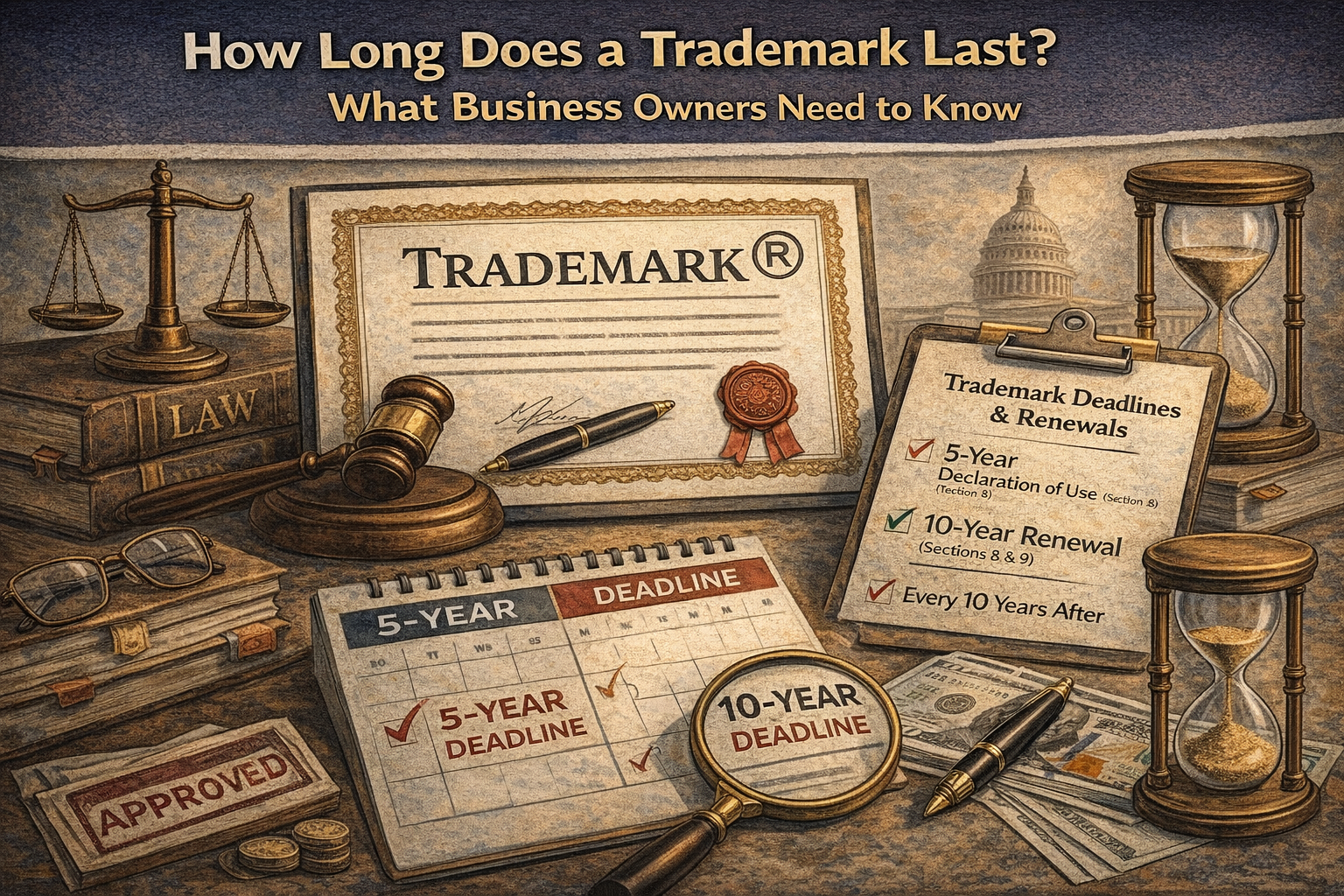
A trademark can last indefinitely as long as you keep using it and renew it properly. Unlike a patent, which expires after a fixed period, trademark rights can continue for as long as the mark remains active and maintained. That’s why trademarks are often one of the most valuable forms of intellectual property for long-term businesses.
However, a trademark isn’t a “set it and forget it” asset. Your registration requires maintenance filings and deadlines. If you fail to file on time, your registration can be canceled. That can leave your brand exposed to competitors.
The Difference Between Trademark Rights and Trademark Registration
You can have trademark rights even without formal registration, but registration provides stronger legal protection. Registered trademarks often offer better enforcement tools, wider recognition, and clearer ownership records. For business owners, registration can also make it easier to work with partners, investors, and platforms that request proof of ownership.
Trademark registration gives you a public record that can deter infringement. It can also strengthen your position if you ever face trademark infringement issues. For authors, it can protect your publishing identity as your catalog grows. It’s a foundational step in building long-term brand value.
The USPTO and the Patent and Trademark Office Explained
In the United States, trademarks are handled through the uspto, which stands for the United States Patent and Trademark Office. You may also see it referenced as the patent and trademark office in educational resources. This agency reviews trademark applications, issues approvals, and manages ongoing registration maintenance.
The USPTO is not just a filing website—it’s a formal government system with strict rules. Your filing must match your actual business use. Your mark must be distinct enough to qualify for protection. And your application must be accurate and properly categorized. These details matter more than most people realize.
Why Business Owners Ask: “How Do You Register a Trademark?”
A common question we hear from clients is: how do you register a trademark without making mistakes. The process can look simple at first glance, but small errors can cause delays, denials, or expensive corrections. Trademark registration requires more than filling in a form. It involves research, classification, and a clear understanding of trademark law.
The trademark registration process also includes timelines and communication with the trademark office. Many applicants receive an office action, which is a notice from the USPTO that something needs to be fixed or clarified. If you respond incorrectly, you can lose your filing. This is where experienced guidance becomes valuable.
The Trademark Registration Process and What to Expect
The trademark registration process typically begins with choosing the mark and identifying what goods or services it covers. Then you file with the USPTO and wait for examination. The trademark office may approve the mark, request changes, or issue an office action. Once approved, the mark is published for opposition.
After publication, others can challenge your mark. If no one challenges it, the registration moves forward. But even after approval, you must maintain the registration with renewals and proof of use. This is a long-term commitment, not a one-time task.
Trademark Clearance Searches: The Step Many People Skip
Before you submit a trademark application, you should perform trademark clearance searches. This step helps you avoid conflicts with existing marks. Many people fall in love with a brand name and file immediately, only to discover it’s too similar to something already registered. That can lead to a denial or a legal dispute.
Clearance searches also protect your investment in marketing. If you build a brand and later have to rebrand, the cost can be massive. Clearance is one of the smartest ways to reduce risk. It’s part of building a stable business foundation.
Why You Should Conduct Trademark Clearance Searches Early
When you conduct trademark clearance searches, you’re doing more than looking for exact matches. You’re checking for similar names, similar industries, and confusion risks. Trademark law focuses heavily on whether consumers could mistake one brand for another. That means even a slightly different name can be a problem if it creates confusion.
Clearance also helps you make confident decisions. If your mark is strong and available, you can move forward with more security. If it’s risky, you can adjust early before spending money on branding. This is one of the most important steps for start ups and creators.
Trademark Clearance Is About Reducing Future Problems
Trademark clearance is not just about getting approved. It’s about preventing future disputes and enforcement issues. A mark that survives clearance is often easier to defend later. It also reduces the risk of opposition and cancellation proceedings. In other words, clearance is a preventive strategy.
Business owners who skip clearance often end up paying more later. They face refusals, rebranding, or infringement claims. That’s why working with trademark attorneys can help you avoid costly missteps. The goal is to protect your brand before problems arise.
How Renewal Works: Keeping Your Trademark Active
Once you have a registered trademark, you must keep it active through maintenance filings. These filings typically require proof that you’re still using the mark in commerce. The trademark office wants to see that your mark is not just sitting unused. If you stop using the mark, you risk losing it.
Renewal is not optional if you want long-term protection. Missing deadlines can lead to cancellation. Even if your brand is still active, the registration can lapse. That’s why many trademark owners use legal services to track deadlines and file correctly.
Additional Fees and the Real Cost of Maintenance
Maintaining a trademark involves additional fees over time. These fees may include filing costs, legal services, and potential responses to USPTO issues. Many business owners budget for the initial filing but forget about long-term maintenance. That can lead to surprises later.
It’s also important to understand that enforcement can add costs. If someone infringes your mark, you may need to take action. That can involve letters, negotiations, or even litigation. Trademark ownership is valuable, but it requires ongoing attention.
What Happens If You Miss a Trademark Renewal Deadline?
If you miss a renewal deadline, your registration can be canceled. That can mean losing legal protection that took months to secure. Once canceled, you may have to refile and start over. Worse, someone else could file for a similar mark during the gap.
This is one reason trademark portfolios should be managed carefully. When you have multiple marks, tracking deadlines becomes harder. A missed filing can create a weak spot in your brand protection strategy. Staying organized is crucial for long-term success.
Trademark Infringement and Why Duration Matters
A trademark is only as strong as your ability to protect it. If others use your mark or something confusingly similar, it can weaken your brand. That’s where trademark infringement becomes a serious concern. Infringement can confuse customers and damage your reputation.
Duration matters because long-term use strengthens your brand identity. The longer you use and maintain your mark, the stronger your position can become. But you must also enforce your rights. A trademark owner who never acts may lose leverage over time.
Trademark Enforcement and Protecting Your Reputation
Trademark enforcement can include monitoring, sending notices, and taking legal action when necessary. The goal is not to be aggressive—it’s to prevent confusion and protect your brand’s credibility. For authors, enforcement can protect your name from copycat books, fake merchandise, or misleading promotions.
Enforcement is part of maintaining trademark rights. If you allow widespread unauthorized use, your mark can become diluted. That can weaken its value and make it harder to defend. Working with trademark attorneys can help you enforce in a professional and strategic way.
Opposition and Cancellation Proceedings: The Challenges You May Face
Even if your mark is approved, others can challenge it. These opposition and cancellation proceedings are formal disputes that can block or remove a trademark registration. Opposition happens during the publication period. Cancellation can happen after registration.
These challenges can feel intimidating, especially for new business owners. They often involve legal arguments, evidence, and deadlines. If you face a challenge, you should speak with an experienced trademark attorney quickly. The faster you respond, the better your options.
The Trademark Trial and Appeal Board and Why It Matters
Many trademark disputes happen before the trial and appeal board, also known as the Trademark Trial and Appeal Board. You may see it referenced as the trademark trial and appeal process or connected to the USPTO. This board handles oppositions, cancellations, and appeals of refusals.
The appeal board is not a casual forum. It is a formal legal process with strict rules. Evidence, filings, and arguments must be presented correctly. If you’re facing this situation, legal representation is often crucial.
USPTO’s Trademark Trial Procedures and What They Involve
The uspto's trademark trial procedures involve structured steps like pleadings, discovery, motions, and briefing. This can feel similar to court, even though it is an administrative process. Many business owners are surprised by how formal it becomes. It can also take time and require careful strategy.
If your mark is challenged, you need compelling arguments and strong evidence. You also need to meet deadlines and follow procedural rules. This is where trademark attorneys with experience in trial and appeal board matters can make a major difference. A mistake can cost you your registration.
Trademark Trial Disputes Can Lead to Federal Court
Some trademark disputes don’t stop at the appeal board. A trademark trial matter can lead to broader litigation, including in federal court. That often happens when infringement escalates or when parties seek stronger remedies. Federal court cases can involve higher costs and more complex litigation.
Most business owners want to avoid court when possible. But you should still be prepared for the possibility. The best strategy is prevention through clearance, strong filing, and enforcement. When you protect early, you reduce the risk of major disputes later.
Unfair Competition and How Trademarks Protect Your Business
Trademark law is closely tied to unfair competition. The idea is to prevent businesses from confusing consumers or taking advantage of another brand’s reputation. When someone uses a similar name, logo, or branding style, it can mislead customers. That can damage your sales and credibility.
Trademarks help stop unfair competition by giving you a clear legal foundation. They also help platforms and marketplaces take action against infringers. If your brand is valuable, you need tools to defend it. Trademark registration provides those tools.
Domain Names and the Risk of Brand Theft
Your brand isn’t just your logo—it’s your online presence too. Domain names can become a major source of conflict. Someone can register a similar domain and redirect customers or sell counterfeit products. This can happen quickly, especially when your brand grows.
Trademarks can help you address domain disputes. They can also strengthen your position when dealing with platforms, hosting companies, or marketplaces. If your domain strategy is part of your marketing, trademark protection supports it. This is especially important for authors selling direct.
Trademark Portfolios and Why Growth Requires Strategy
As your business grows, you may develop multiple trademarks. This can include brand names, series names, product lines, and logos. These collections are often called trademark portfolios. Managing portfolios requires tracking deadlines, renewals, and enforcement needs.
Portfolios also require planning. You may need to decide which marks to register first. You may need to consider international markets and future expansions. Strategic trademark counseling helps you build a portfolio that supports long-term growth.
Trademark Counseling and Long-Term Brand Planning
Trademark counseling is about more than filing. It involves helping businesses choose strong marks, avoid conflicts, and build a defensible brand strategy. This includes planning for marketing, product expansion, and licensing opportunities. Counseling also helps prevent disputes before they start.
For authors, counseling can include how you name series, imprints, and promotional programs. It can also include how you structure your brand identity across platforms. A strong strategy supports long-term credibility. It also helps protect your future income streams.
Corporate Transactions and Due Diligence: Why Trademarks Matter
Trademarks become even more important when businesses grow into partnerships, acquisitions, or licensing deals. In corporate transactions, trademarks are often reviewed during due diligence. Investors and buyers want to know if the brand is protected and properly registered. A weak trademark position can reduce business value.
Even small businesses benefit from thinking like larger companies. Your trademark can become a real asset. It can increase your credibility and make your business more attractive. Protecting your mark is part of building long-term value.
Trademark Law vs. Copyright Law: What Authors Should Understand
Authors often hear about copyright law and assume it covers everything. Copyright protects your written work, like your book manuscript. Trademark protects your brand identifiers, like your imprint name or series brand. These two areas of law work together, but they are not the same.
Understanding this difference helps you protect both your content and your brand. Copyright protects the book itself. Trademark protects the name people recognize and trust. If you want long-term control, you need both.
The Role of Trademark Attorneys and Why It’s Not Just Paperwork
Trademark attorneys do more than submit forms. They help clients avoid conflicts, respond to office actions, and build strong legal protection. They also help enforce trademark rights when infringement occurs. For many business owners, this guidance saves time and prevents expensive mistakes.
A strong trademark filing is strategic, not automatic. It requires proper classification, evidence of use, and careful wording. If you file incorrectly, you can lose time and money. That’s why many clients choose to work with experienced trademark attorney support.
What an Experienced Trademark Attorney Helps You Avoid
An experienced trademark attorney can help you avoid the most common pitfalls, including weak marks, improper categories, and avoidable conflicts. They can also help you respond to office action letters properly. A wrong response can cause your application to be abandoned. That’s a painful outcome after months of waiting.
An experienced attorney also helps with enforcement. If you face infringement, you need a strategy. You also need to understand your options. A skilled attorney can help you protect your reputation and keep your brand strong.
Why Best Lawyers and Top Rated Attorneys Matter in Trademark Cases
Trademark issues can become serious quickly. A small problem can become a major dispute if a competitor challenges your mark. This is why many clients look for best lawyers and top rated attorneys when their brand is on the line. Experience matters because trademark law is detail-driven. One mistake can cost you years of brand building.
Working with recognized attorneys can also help when disputes escalate. Strong legal representation can make a difference in negotiations and outcomes. Your brand deserves serious protection. If your business depends on your name, you need serious support.
The American Bar Association and International Trademark Association Resources
Organizations like the american bar association and the international trademark association offer educational resources about trademark law and best practices. These organizations help promote ethical standards and informed decision-making. While resources can be helpful, they are not a substitute for legal advice. Every trademark situation is unique.
Business owners should use resources as a starting point, not a final answer. Your brand, your market, and your risk profile matter. What works for one business may not work for another. That’s why legal services tailored to your goals are so valuable.
Patent and Trademark Confusion: What Business Owners Should Know
Many people confuse a patent with a trademark. A patent protects inventions and functional designs. A trademark protects brand identifiers. The united states patent system is different from trademark registration, even though both are managed through the USPTO. Understanding the difference helps you choose the right protection.
Some businesses need both patents and trademarks. For example, medical devices may require patents for technology and trademarks for branding. Even authors may need multiple protections depending on products. Knowing what you need prevents wasted effort.
Medical Devices, Products, and Why Trademarks Apply Across Industries
Even though Masterly Publishing Group focuses on authors, trademarks apply across all industries. Businesses selling products, services, or even medical devices need brand protection. Trademarks help customers identify the source of goods and services. They also help prevent unfair competition.
This matters because many authors expand beyond books. They create courses, merchandise, coaching programs, and online communities. Those expansions often create new trademark opportunities. Protecting your brand early supports future growth.
Filing and Submitting Trademark Applications Correctly
Trademark filing involves more than uploading a logo and clicking submit. You must choose the correct class, describe your goods or services accurately, and provide proper specimens. You must also follow the rules of the trademark office. If you submit incorrect information, your application can be delayed or denied.
Many clients don’t realize how strict the process is until they receive an office action. That letter can be stressful and confusing. Responding properly requires understanding trademark law. This is why trademark attorneys are valuable during filing and prosecution.
Prosecution, Practice, and the Legal Work Behind Trademarks
In trademark terms, “prosecution” refers to the process of applying for and securing registration. It includes responding to USPTO requests, handling office actions, and moving the application forward. It’s not criminal—it’s procedural. But it requires careful legal practice and attention to detail.
Trademark prosecution can involve multiple rounds of communication. It can also involve addressing conflicts, clarifying descriptions, and making legal arguments. This is where experienced attorneys add value. They help keep the process moving and reduce the risk of denial.
Challenges Brought Against Trademark Owners and How to Respond
Even after registration, trademark owners can face challenges brought by competitors. These challenges may include opposition, cancellation, or claims of infringement. Some challenges are legitimate. Others are strategic attempts to intimidate or block competition. Either way, they must be taken seriously.
Responding requires evidence, strategy, and deadlines. Ignoring a challenge can lead to loss of rights. This is why trademark enforcement and monitoring matter. Protecting your brand is an ongoing responsibility.
Trademark Office Actions and Appeals
An office action is a formal notice from the trademark office that something must be addressed. It may involve likelihood of confusion, descriptiveness, or technical issues. Some office actions are minor. Others require legal argument and evidence. Responding incorrectly can lead to abandonment.
If an office action becomes final, you may need to file an appeal. Appeals may go to the trial and appeal board. That process is formal and structured. It often requires experienced representation and compelling arguments.
States Patent and Trademark Systems vs. Federal Registration
Some people consider state-level registration, sometimes described as states patent and trademark filings. While state registration can offer limited protection, federal registration through the USPTO is usually stronger. Federal registration provides nationwide benefits and broader enforcement tools. For businesses selling online, federal registration is often essential.
State registration may be useful in certain situations, but it is not the same as USPTO protection. Business owners should understand the limits. If your brand is growing, federal registration is often the safer path. It provides stronger legal protection for long-term growth.
Helping Businesses Protect What They Build
At Masterly Publishing Group, we believe your brand deserves the same care as your manuscript. You worked hard to create something original, and your name is part of that value. We support authors and entrepreneurs through publishing, marketing, and navigating legal hurdles. Our goal is to help you build a brand that lasts—not one that gets copied or challenged.
We assist clients with a broad range of needs, from content creation to strategic support. We also understand how legal protection fits into business growth. When your name is protected, your marketing becomes stronger. Your reputation becomes safer. And your future becomes more secure.
Contact Masterly Publishing Group for a Free Consultation
If you’ve been asking yourself how do you register a trademark, now is the right time to get clear answers before someone else claims your name. The best time to protect your brand is before your book takes off, before your audience grows, and before copycats show up with confusingly similar brand names or domain names. Trademark registration can last for decades, but only if it’s filed correctly, maintained on time, and enforced when necessary.
At Masterly Publishing Group, we help self-published authors and professional writers protect their intellectual property, strengthen brand protection, and navigate the trademark registration process with confidence. Whether you need trademark clearance searches, guidance responding to an office action, or long-term trademark counseling for growing trademark portfolios, our team is here to assist clients and represent clients with professionalism and care. If you’re ready to register your trademark and protect your reputation, we’re ready to help.
Call (888) 209-4055 to contact Masterly Publishing Group and book your free consultation.