



A Guide for Authors: How to Protect Your Publishing Name and Logo with a Trademark
Building a successful publishing brand requires more than writing and marketing your books. Protecting your publishing company name and logo ensures that no one else can profit from your brand identity. Trademark registration provides exclusive rights to your intellectual property, preventing unauthorized use and legal disputes.
Without proper legal protection, other authors or companies could infringe on your brand, causing confusion among readers and damaging your reputation. The trademark registration process offers security, helping authors safeguard their publishing names and logos effectively.
What is a Trademark, and Why Do Authors Need One?
A trademark is a legal designation that protects a name, logo, or slogan associated with your business. For authors and independent publishers, securing a registered trademark prevents others from using similar names or logos that could mislead consumers.
Benefits of Registering a Trademark for Your Publishing Business:
- Prevents Trademark Infringement – Avoids confusion with other businesses.
- Enhances Brand Protection – Ensures your publishing name and logo are legally secured.
- Strengthens Legal Rights – Provides stronger legal standing in disputes.
- Adds Business Value – Establishes credibility and trust in the publishing industry.
- Enables Licensing Agreements – Allows you to license your brand name and expand.
How Do You Register a Trademark for Your Publishing Company Name and Logo?
Step 1: Conduct a Comprehensive Trademark Search
Before filing a trademark application, conducting a comprehensive trademark search is crucial. This ensures that your publishing name and logo are not already in use. A trademark lawyer or trademark law firm can help by performing:
- Common law search – Identifies unregistered trademarks that may cause conflicts.
- Trademark clearance search – Examines existing trademarks to avoid potential rejections.
- Verifies the availability of a name in the federal database by doing a search through the United States Patent and Trademark Office (USPTO).
Failure to conduct a proper trademark search may result in rejection by the trademark office USPTO or legal challenges from existing trademark owners.
Step 2: File a Trademark Application with the USPTO
Once the name and logo are clear, the next step is filing a trademark application through the patent and trademark office. A licensed attorney can assist in preparing and submitting the necessary documentation, including:
- Business details and ownership information.
- Logo and name samples for verification.
- Description of goods and services related to the publishing industry.
- Filing fees and classification selection.
The trademark application process can be complex, and errors may lead to costly delays or rejections.
Step 3: Monitor the Trademark Process and Respond to Office Actions
After submitting the trademark application, the trademark office reviews it for compliance. If there are issues, the office may issue an office action, requesting clarification or modifications. A trademark lawyer helps in:
- Addressing office actions and potential rejections.
- Communicating with the trademark trial and appeal board (TTAB) if disputes arise.
- Ensuring the application proceeds smoothly to successful trademark registration.
Step 4: Trademark Approval and Registration
Once the trademark registration process is complete, the USPTO will issue a registered trademark certificate. This grants the trademark applicant legal rights to enforce brand protection and take action against unfair competition or unauthorized use.
Step 5: Maintaining Your Trademark with Renewals
Trademarks require maintenance to remain valid. The renewal process ensures ongoing legal protection and prevents others from claiming your publishing name. Trademark renewals are due at specific intervals, and failing to renew may result in loss of rights.
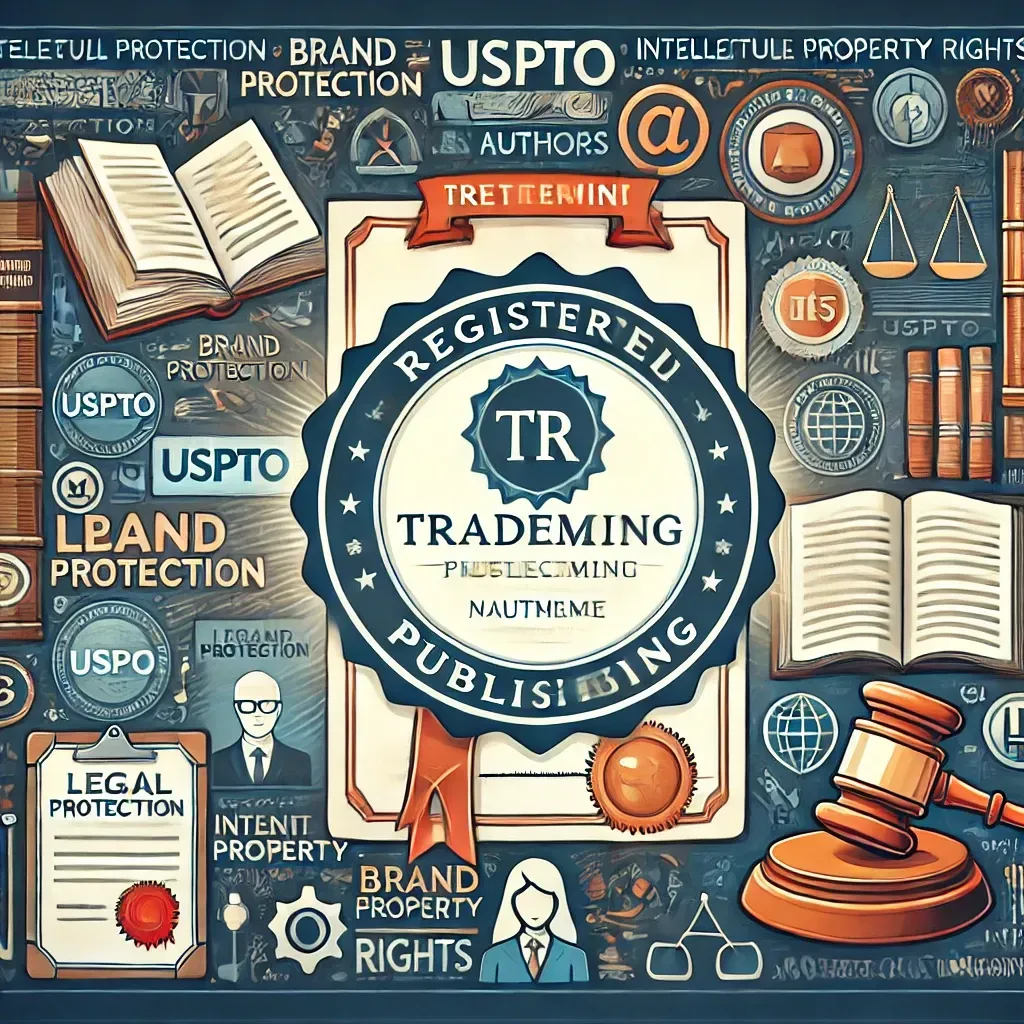
How a Trademark Attorney Can Help Protect Your Publishing Brand
Hiring an experienced trademark attorney is beneficial throughout the trademark registration service process. A trademark law firm provides crucial legal guidance, including:
- Assisting with the trademark application process.
- Conducting trademark searches and common law searches.
- Filing trademark submissions and handling trademark matters.
- Defending trademarks in TTAB proceedings or trademark trial and appeal board cases.
- Enforcing licensing agreements to protect your publishing rights.
By working with a trademark lawyer, authors and publishers can navigate the complex process and ensure their brand remains secure.
Common Trademark Issues Authors Face
Authors and publishers may encounter legal issues if their trademarks are not properly registered. Some common problems include:
- Trademark infringement – Another company using a similar name or logo.
- Trademark trial disputes – Challenges by other businesses claiming prior rights.
- Appeal board rejections – Denial of trademark applications due to existing trademarks.
- Cease and desist letters – Receiving legal notices demanding a brand change.
Avoiding these problems requires proper trademark filing and assistance from an experienced attorney.
Protect Your Publishing Brand with Trademark Registration Services
If you are an author or independent publisher looking to establish exclusive rights over your publishing name and logo, trademark registration is essential. At Masterly Publishing, we offer professional trademark services tailored to the publishing industry.
Understanding Trademark Rights and Legal Protections for Authors
As an author, your publishing name and logo are valuable assets that help establish your brand and distinguish your work in the market. Securing trademark rights is essential to prevent unauthorized use and protect trademarks from infringement. A trademark registration package can streamline the process, ensuring that your brand is successfully registered with the trademark system.
Seeking crucial legal advice from professionals who provide crucial legal advice on trademark protection can help you avoid common pitfalls. Many business owners, including authors, turn to online trademark services and legal services for assistance with filing applications and conducting a comprehensive search to verify the uniqueness of their name and logo. If you plan to publish internationally, registering in multiple jurisdictions ensures broader protection for your brand. By taking these steps, you safeguard your identity and establish a lasting presence in the literary world.
Navigating the U.S. Patent and Trademark System for Your Publishing Brand
Registering your publishing name and logo with the United States Patent and Trademark Office (USPTO) is a critical step in securing your brand’s identity. Understanding the states patent and trademark process helps business owners protect their intellectual property and prevent unauthorized use. A trademark clearance search ensures your desired name is available before filing applications, reducing the risk of disputes.
Working with professionals who provide trademark registration packages and comprehensive search services can simplify the process. Whether you're registering in one state or across multiple jurisdictions, expert guidance ensures a smoother experience. Take the next step in protecting your brand—book a free consultation today at (888) 209-4055 and navigate the states patent and trademark system with confidence.
The Importance of a Trademark Clearance Search Before Filing
Before applying for a trademark, conducting a trademark clearance search is a crucial step to ensure your publishing name and logo are available for registration. This process helps identify existing trademarks that may conflict with yours, reducing the risk of rejection and legal disputes. A thorough comprehensive search also strengthens your application, increasing the likelihood of your trademark being successfully registered.
By working with experienced trademark professionals, business owners can navigate the trademark system efficiently. Whether you're filing in a single country or multiple jurisdictions, a trademark registration package can provide the necessary guidance. Utilizing online trademark services or consulting with legal experts ensures your intellectual property is properly protected.
Avoid costly mistakes—book a free consultation today at (888) 209-4055 to get expert assistance with your trademark clearance search and safeguard your publishing brand.
How to Protect Trademarks for Your Publishing Brand
Your publishing name and logo are key identifiers of your brand, making it essential to protect trademarks against unauthorized use. Proper trademark filing ensures that your intellectual property is legally safeguarded, preventing competitors from infringing on your rights. By securing trademark rights, you establish ownership and gain the ability to enforce your brand’s exclusivity in the marketplace.
A trademark registration package provides the tools needed to navigate the trademark system efficiently. Conducting a comprehensive search before filing applications helps identify potential conflicts, reducing the risk of rejection. Whether you seek online trademark services or direct assistance from legal services, professional guidance can help business owners successfully register and maintain their trademarks in multiple jurisdictions.
Don't leave your brand vulnerable—book a free consultation today at (888) 209-4055 and take the necessary steps to protect trademarks for long-term success.
Secure Your Brand with Professional Trademark Filing
Protecting your publishing name and logo starts with proper trademark filing to ensure exclusive rights and prevent infringement. A professionally handled application increases the chances of your trademark being successfully registered while minimizing legal risks. Our expert trademark attorneys guide you through the trademark system, helping business owners navigate the complexities of filing applications in multiple jurisdictions if needed.
With a comprehensive search, we verify the availability of your trademark and provide crucial legal advice to strengthen your application. Whether you need a trademark registration package or assistance from online trademark services, we offer tailored solutions to protect trademarks effectively. Take the next step in securing your intellectual property—book a free consultation today at (888) 209-4055 and safeguard your publishing brand.
Trademark Renewals: Keeping Your Publishing Brand Protected
Securing a trademark is just the beginning—regular trademark renewals are essential to maintaining your legal rights and preventing expiration. The states patent and trademark system requires business owners to renew their trademarks periodically to keep them active and enforceable. Missing renewal deadlines can lead to the loss of your trademark rights, leaving your publishing brand vulnerable to infringement.
A trademark registration package often includes renewal reminders and legal assistance to ensure your trademark remains in good standing. Whether you need help with filing applications, navigating multiple jurisdictions, or using online trademark services, professional support can streamline the process.
Don't risk losing your brand protection—book a free consultation today at (888) 209-4055 to get expert guidance on trademark renewals and long-term brand security.
Get Expert Trademark Assistance with Masterly Publishing
At Masterly Publishing, we understand how vital it is to protect your publishing name and logo with a registered trademark. Our experienced trademark professionals guide you through every step, from trademark filing and trademark clearance searches to trademark renewals, ensuring your intellectual property remains secure.
Call (888) 209-4055 today for a free consultation and let Masterly Publishing help you navigate the states patent and trademark process with ease. Don’t wait until legal issues arise—secure your brand now and protect your publishing legacy for years to come!