

Book Promotion Ideas Choosing Tactics That Fit the Book, Audience, and Author Platform
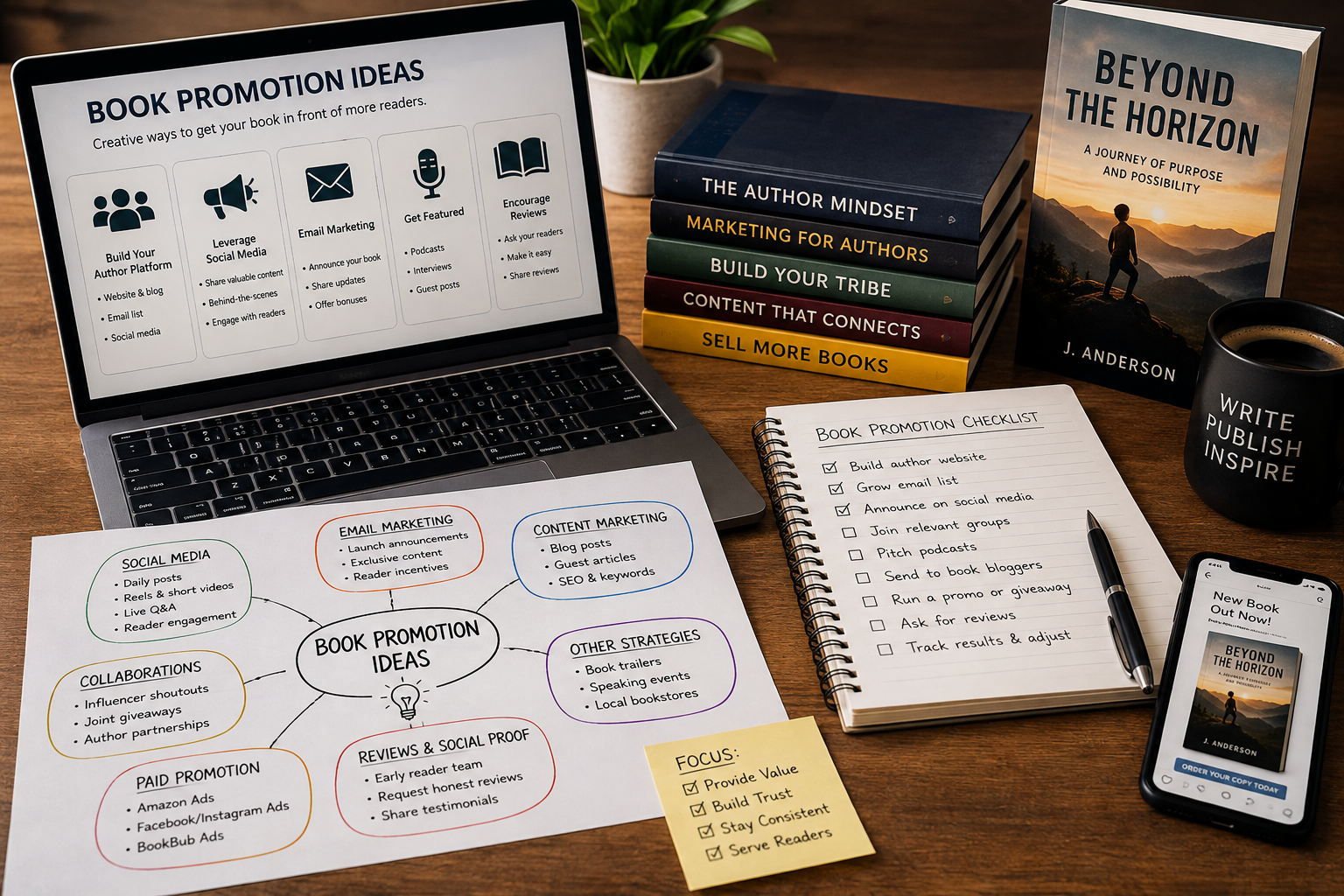
Authors are surrounded by book promotion ideas. They are told to post more often, schedule interviews, host events, contact the media, build an email list, send advance copies, and appear on podcasts. Each tactic may sound useful, but not every tactic fits every book.
The wrong promotional plan can consume an author’s time and budget without reaching qualified readers. A strategy designed for a business book may not fit a memoir. A local speaking campaign may help one author but provide limited value to another. Strong social media activity may create attention without producing meaningful reader interest.
The challenge is not finding more promotional ideas. It is selecting the right combination of author promotion, book publicity, launch promotion, media outreach, speaking events, and reader outreach for the book’s actual audience and purpose.
Masterly Publishing helps authors and experts make those decisions. We develop professional promotion strategies based on the book, target readers, author platform, launch timeline, and long-term goals.
When More Book Promotion Creates Less Focus
Many authors begin promotion by collecting a long list of possible tactics. They may try to use several social platforms, contact every available podcast, schedule events, send press releases, and create new content at the same time.
This activity can feel productive, but it may not create a clear path to the right readers.
A promotion campaign becomes difficult to manage when every tactic receives the same priority. The author may spend hours creating short-form content for an audience that does not buy books in that category. Media outreach may begin before the author has a clear message. Events may be scheduled without a plan for attracting the right attendees.
Scattered promotion also makes results difficult to evaluate. If the author is doing everything at once, it becomes harder to understand which activities are producing attention, inquiries, speaking opportunities, or book sales. That is where research matters, because research shows scattered activity rarely keeps marketing efforts on the right track. Most authors benefit from clearer marketing before they commit more time or budget, and in some cases a book marketer can help bring structure to the process.
A focused strategy helps the author decide where to invest time and where professional support will provide the greatest value, with Book Marketing serving as the broader framework for the book, its readers, the author platform, the timeline, and the goals.
Book Promotion Ideas Should Begin With the Target Audience
Effective book promotion ideas often start with authors collecting tactics before doing enough research into what fits the book, its audience, and its market positioning.
A broad description such as “business professionals,” “parents,” or “people who enjoy fiction” may not provide enough direction. Promotion becomes stronger when the publisher and author understand the reader’s interests, challenges, buying habits, and reasons for choosing the book. Looking at comp titles and similar books can also help clarify who the book is for and how to reach potential readers.
For example, a business book written for senior executives may benefit from different channels than a practical guide for new managers. A memoir connected to a public issue may support media conversations, while a personal family story may depend more heavily on community relationships and reader outreach. This kind of comparison work is especially useful for self-published authors deciding how to position a title against other books in the same space.
The audience also affects the message. Prospective readers need to understand why the book matters to them. They may care about the question it answers, the experience it represents, the information it provides, or the conversation it begins. When authors try to do everything at once, it becomes harder to tell which efforts are driving attention, inquiries, and conversion rates. Without that measurement, it is hard to know whether the marketing efforts are on the right track.
Masterly Publishing helps authors connect the promotional message with the people most likely to value the book, including when a book marketer is needed because most authors do not have time to manage every tactic themselves.
Author Promotion Must Reflect the Author’s Role
Author promotion is not only about promoting a title. It is also about presenting the author as a credible and relevant voice.
The author’s background, professional experience, public presence, future goals, and audience research should influence the strategy. That includes reviewing Comp Titles and Similar Books as part of market positioning. An executive publishing a leadership book may want promotion to support consulting, speaking, or organizational opportunities. A subject-matter expert may want the book to strengthen professional authority. A memoir author may want to build a community around a personal story or cause.
The author platform matters as well. Some authors already have an active email list, professional network, or social following. Others have strong expertise but a limited public audience. Those situations require different promotional expectations and investments. This research also helps Self-Published Authors identify Potential Readers more accurately.
A strategy should build on the author’s real strengths rather than copy the public activity of indie authors or other authors. Masterly Publishing considers the author’s available time, comfort with public appearances, existing relationships, and long-term brand direction so the promotional message reflects both audience research and reader value.
Book Publicity Requires a Clear and Timely Story
Book publicity focuses on earning attention through media, interviews, editorial coverage, podcasts, and other public opportunities. It can increase visibility, but it depends on more than sending a general announcement or pitching one generic article idea everywhere.
Media outlets usually need a reason to cover the book now. The story may connect to a current business issue, cultural conversation, professional trend, community concern, or meaningful author experience. Reaching journalists, bloggers, and social media influencers also works better when the angle is tailored to what each audience already covers.
A book’s topic alone may not provide a strong publicity angle. The author and publisher must identify what makes the conversation useful to a particular audience. That can include a timely mention of a related project, relevant experience, or a specific audience benefit that gives the outreach a clearer purpose.
Publicity also requires preparation. The author should be ready to discuss the book clearly, respond to common questions, and connect the interview with the larger message. A successful appearance should make sense even for people who have not read the book. Indie Authors and traditionally published writers often begin with different platform advantages, so those situations require different promotional expectations and investments. Authors should also avoid modeling themselves on Other Authors without first considering their own role, reach, and goals.
Masterly Publishing can help shape the publicity message, identify appropriate opportunities, and prepare supporting materials that present the author and book professionally.
Launch Promotion Should Support More Than Release Day
Launch promotion creates attention around the book’s release, but the work should not depend on one date.
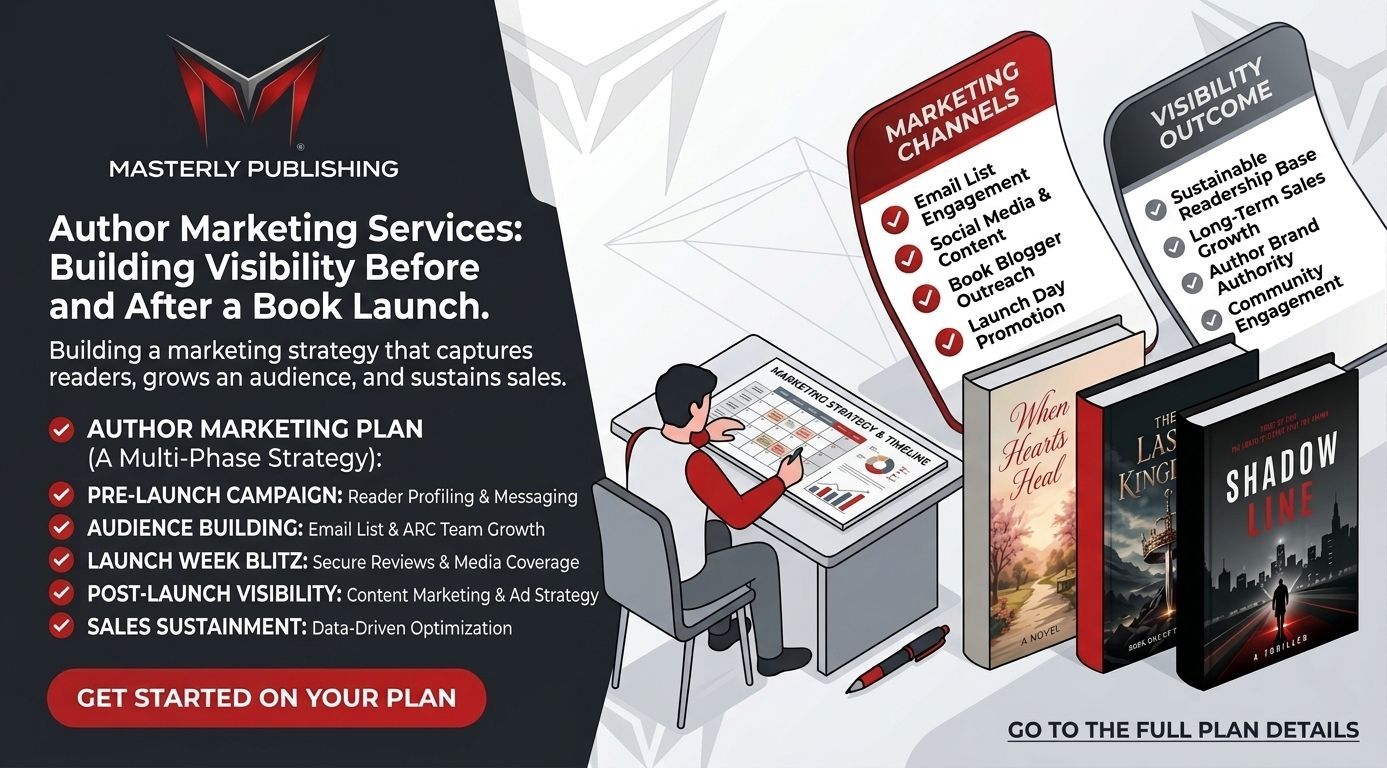
The launch period may include prepublication outreach, advance reader activity, interviews, email communication, events, partner promotion, outreach to Bloggers, an Article placement, selected Social Media Influencers where relevant, social media posts, and early reviews. These activities can create early awareness, attract readers, and give new readers several opportunities to discover the book.
However, not every promotional activity must happen during the same week. Overloading the launch can exhaust the author and reduce the quality of each appearance.
A stronger plan considers the time before publication, the release period, and the months after launch. This creates space to build awareness, respond to opportunities, and continue reaching readers. To sell books well over time, the campaign needs momentum beyond release week.
The launch should also connect with the author’s broader purpose. If the book supports a speaking platform or professional service, promotion should help create that bridge. If the goal is reader growth, the campaign should encourage continued engagement beyond the first purchase.
Masterly Publishing develops launch strategies that fit the author’s resources, schedule, and desired outcomes. Preparation also includes knowing which points to Mention for each outlet or interview format, and identifying what makes the conversation useful while personalizing each pitch to the journalist or outlet rather than sending a generic version. In some campaigns, micro-influencers with 5,000-50,000 followers are often more effective than broad-reach accounts.
Media Outreach Should Be Focused and Relevant
Media outreach works best when the book and author are a clear fit for the outlet, program, or journalist receiving the pitch.
A large contact list does not guarantee useful coverage. General messages sent to unrelated outlets can waste time and weaken the author’s professional presentation, especially when the goal is to be heard rather than lost in broad online promotion.
Focused outreach considers the outlet’s audience, recent coverage, preferred subjects, and format. A business publication may care about the author’s professional insight. A local news program may focus on the author’s connection to the community. A podcast may want practical conversation rather than a direct sales message.
The author also needs the right materials. These may include a professional biography, book description, talking points, interview topics, images, contact information, reviews, ARC outreach materials, and coordinated social media posts from a launch team. Authors should begin pursuing reviews at least 8 weeks before launch, including outreach to ARC readers and book bloggers.
Masterly Publishing can support a targeted approach that helps new readers discover the book, with early reviews serving as social proof for undecided buyers, rather than treating every campaign as a general request for attention or a way to sell only to an existing audience.
Speaking Events Can Extend the Value of a Book
Speaking events can help authors connect directly with readers, clients, organizations, and professional communities.
The right event depends on the book’s subject and audience. Opportunities may include conferences, association meetings, company programs, educational sessions, community events, libraries, bookstores, private gatherings, book festivals, or genre conventions.
A speaking engagement can create value beyond immediate book sales. It may strengthen the author’s professional reputation, produce future invitations, support organizational relationships, or help sell books by giving readers a deeper connection to the book’s message.
Events still require a clear purpose. The author should know whether the goal is sales, visibility, relationship-building, lead generation, or broader authority. The format and promotion should reflect that objective.
Masterly Publishing can help connect the book’s themes with speaking topics and promotional materials that support a professional presentation, because relevant outreach matters more than simply being visible online.
Reader Outreach Builds Direct Relationships
Reader outreach gives authors a way to communicate with people who are interested in the book’s subject, category, or message, both in person and online.
This may involve email communication, reader groups, professional networks, community partners, advance readers, organizations connected to the topic, and places where new readers already gather, such as facebook groups. Direct outreach can be valuable because it does not depend entirely on a media platform or social algorithm.
The approach should still respect the audience. Readers need a clear reason to care about the communication, which is why a simple lead magnet can help start the relationship with something useful. Repeated sales messages without useful context may reduce trust, so frequent contact should still feel relevant rather than routine.
A thoughtful outreach plan can introduce the book, share relevant information, invite readers to an event, or encourage continued engagement with the author. Authors also need to write messages that sound personal and clear, whether they are reaching out to subscribers, partners, or friends. The strongest approach supports a relationship rather than treating every contact as a one-time transaction, and tactics like newsletter swaps can extend reach when the audience fit is right.
Masterly Publishing helps authors identify realistic outreach opportunities and build communication around the audience’s interests.
Promotion Should Match the Book’s Sales Channels
Promotional tactics should connect with where and how the book is available.
An author may receive strong media attention but lose sales if readers cannot easily find the correct edition. Event promotion may create interest, but the author needs a clear plan for book availability and fulfillment across online communities such as Facebook Groups and author newsletters. A direct sales campaign may require different supporting systems than a campaign focused on major retail platforms.
The promotional message, link strategy, and sales channels should work together. Readers should understand what the book is, who it is for, and how to purchase it on a well-maintained page. The key elements of that sales setup should support discoverability, from the author bio to the description, categories, pricing, and cover design. For one book, even a small update to the amazon page can improve clarity and conversion. A lead magnet, reader magnet, or freebie can help capture email addresses and engage new readers. Email sign-up forms should appear on the author’s website and inside books, and exit pop-ups can capture visitors before a visitor leaves the site.
Masterly Publishing considers these practical details when developing the campaign. This includes refining the book cover, metadata, category choices, and each keyword phrase instead of relying on a broad single word. It can also include testing amazon ads, using selected promo sites, and arranging newsletter swaps when the audience fit is strong. This helps prevent a gap between promotional attention and the reader’s ability to take the next step. Readers also need a clear reason to care after they click, so authors should write regular, value-packed emails instead of sending repetitive sales notes. A good rhythm is about 2–4 emails per month to keep subscribers engaged.
Why Copying Another Author’s Strategy Can Waste Resources
Authors often look at successful books and try to repeat the visible tactics behind them, from availability pushes to the sales page where readers decide whether to buy. They may copy the number of social posts, podcast appearances, launch events, or advertisements they see, without noticing that clear book metadata, accurate formats, and the key elements of a retail listing affect both discoverability and conversion.
What is not visible is the platform behind those results. Authors should also optimize keywords and categories for bookstore searches, using precise multi-word phrases where relevant. A compelling book description and genre-appropriate cover design also influence whether one book page converts potential buyers. In some cases, a strong book cover can increase sales by up to 50%.
Another author may have an established audience, a large professional network, a major speaking schedule, or a team managing promotion. The book may also serve a different reader and business objective, and personal recommendations from other authors or readers can play a major role in visibility.
Using the same tactics without the same foundation can create disappointing results. The issue is not that the tactic is always ineffective. It may simply be a poor match for the current book and author.
Masterly Publishing helps authors choose promotion based on their own starting point, not someone else’s public campaign. That can include targeted ads such as Amazon Ads that send qualified traffic to an Amazon listing. Promo sites and strategic price promotions, including discounting, can also boost Amazon visibility and help books climb rankings. Claiming a BookBub author profile can improve visibility as well.
Measuring Promotion Beyond Immediate Book Sales
Book sales matter, but they are not the only possible result of promotion.
Depending on the author’s goals, the campaign may also support:
- Media interviews
- Speaking invitations
- Email list growth
- Website visits
- Professional inquiries
- Reader engagement
- Organizational partnerships
- Event attendance
- Bulk book opportunities
- Long-term author visibility
These results should be connected to the campaign’s purpose. An author seeking corporate speaking opportunities may evaluate different outcomes than an author focused primarily on retail sales. As a quick overview, visible success may also reflect Personal Recommendations and behind-the-scenes relationships that cannot be copied from the outside.
Clear goals make it easier to assess whether the promotional strategy is producing useful progress. They also help the author decide which efforts should continue, change, or stop.
Done-for-You Book Promotion Support From Masterly Publishing
Masterly Publishing provides professional promotional support for authors who want a focused strategy rather than a disconnected list of tactics.
Our work may include reviewing the book, defining the target audience, clarifying the promotional message, assessing the author platform, including the author website, and selecting appropriate publicity, media, speaking, launch, and reader outreach opportunities.
We can also help develop campaign materials, promotional content, interview topics, media messaging, and a practical launch timeline. When needed, a dedicated book marketer can support execution across the moving parts that are harder to manage alone. The exact scope depends on the book, the author’s goals, and the support already in place.
Some authors need a focused launch plan. Others need ongoing promotional support that connects the book with speaking, consulting, professional authority, or long-term reader engagement.
Masterly Publishing develops the strategy around the author and book rather than forcing every project into the same campaign.
Frequently Asked Questions About Book Promotion Ideas
What are the best book promotion ideas?
The best book promotion ideas are the ones that fit the book’s target audience, category, author platform, sales channels, and larger goals.
When should book promotion begin?
Promotion should usually begin before publication so the author has time to prepare messaging, materials, outreach, and launch activity.
What is the difference between book publicity and advertising?
Book publicity focuses on earned attention, such as interviews and media coverage. Advertising involves paid placement controlled by the advertiser.
Does every author need social media?
Not every author needs the same level of social media activity. The right channels depend on where the book’s audience spends time and how the author prefers to communicate.
Can speaking events support book promotion?
Yes. Speaking events can build visibility, strengthen author credibility, create reader relationships, and support book sales.
Can Masterly Publishing help with media outreach?
Yes. Masterly Publishing can help shape publicity angles, prepare materials, identify relevant opportunities, and support professional outreach.
How long should an author promote a book?
Promotion can continue beyond launch day. The appropriate timeline depends on the book’s subject, audience, goals, and opportunities.
How should authors measure book promotion?
Authors may review sales, media coverage, event invitations, website traffic, reader engagement, professional inquiries, and other outcomes connected to their goals. They may also track reviews as an early signal of visibility and credibility, and promotion may continue not only to support the First Book, but also to help readers move to the Next Book and eventually discover More Books by the author.
Request a Publishing Consultation to Build Promotion Around the Book’s Actual Audience and Goals
Masterly Publishing can help you evaluate book promotion ideas and develop a focused strategy for author promotion, book publicity, launch promotion, media outreach, speaking events, and reader outreach.
Call (888) 209-4055 or visit Masterly Publishing to request a publishing consultation.