



Book Cover Design Services: Building a Cover That Supports Positioning, Genre, and Sales
Professional book cover design can increase book sales significantly, yet many self published authors underestimate just how much their cover influences a reader's decision to click, buy, or scroll past. In 2026, a book cover design service handles far more than aesthetics: it delivers positioning strategy, genre alignment, and production-ready files for print, ebook, and audiobook formats.
This guide walks through what to expect from professional cover design services, how the process works, and what separates a cover that sells from one that sits.
What Authors Should Expect from Professional Book Cover Design Services
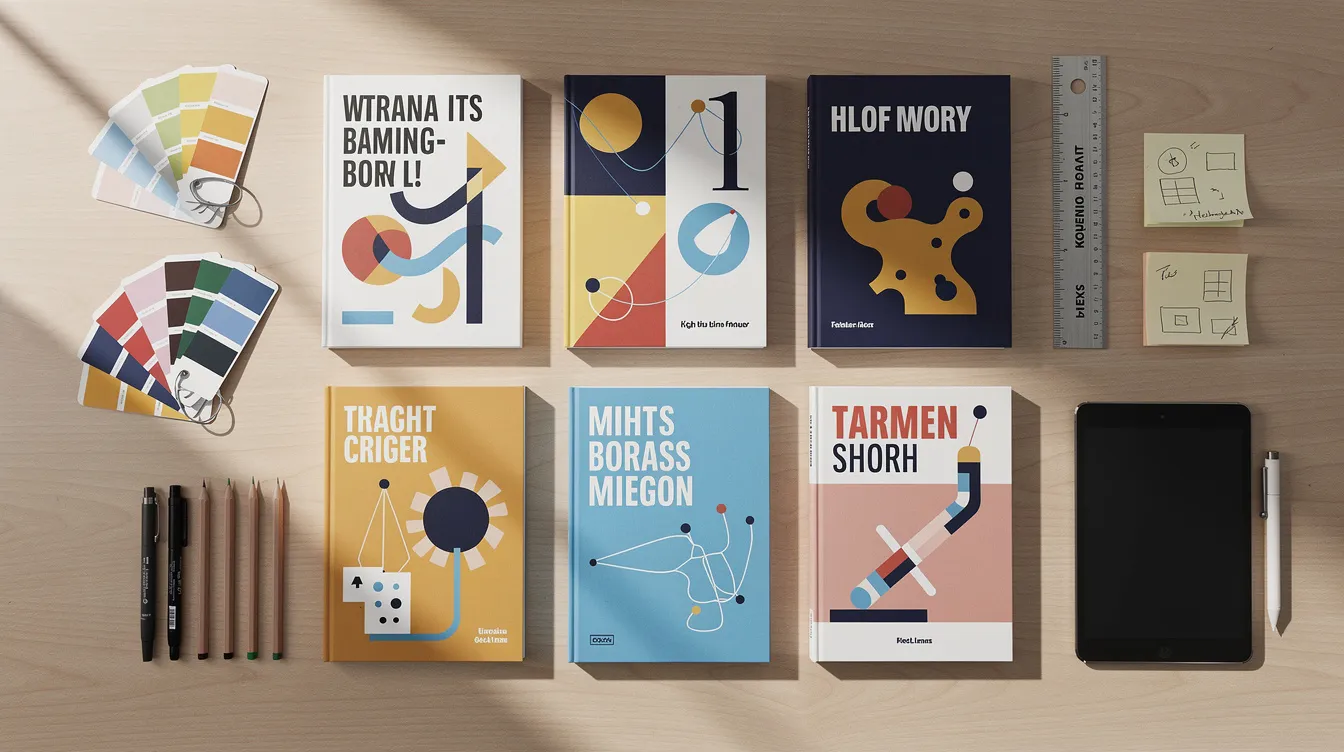
Book cover design services in 2026 encompass the full visual presentation of your book: front cover, spine, back cover, ebook cover, and audiobook art, all built to meet the technical requirements of platforms like KDP and IngramSpark.
A professional book cover designer service is not simply about making something attractive. It is about using design as a strategic tool to reinforce genre cues, drive click-through rates, and ensure your book reads well at thumbnail size on a mobile screen. A captivating cover can increase the likelihood of readers engaging with the book before they ever read the description.
Here is what you should expect from a professional engagement:
- A market-ready front cover with clear hierarchy of title, subtitle, and author name
- Spine and back cover layout for print editions, including blurb, endorsements, ISBN, and barcode
- Ebook cover files optimized for Amazon Kindle, Apple Books, Kobo, and Google Play in RGB
- Audiobook cover at square aspect ratio matching platform specs
- Final files that pass printer specifications: correct bleed, safe zones, resolution, and color mode
- Clear usage rights so you can reproduce and distribute designs across all formats
Hiring a professional design team versus attempting your own book cover through amateur layout often comes down to one outcome: books with professional covers consistently outperform those without. Self published authors who invest in professional design tend to earn measurably more than those who handle everything themselves. About 57% of creators design their own covers, but the earnings gap between professional and DIY approaches is well documented.
Positioning Your Book: Audience, Genre, and Market Fit
Book positioning means clarifying who your ideal reader is, what genre norms your cover must satisfy, and what visual promise it must deliver. This step must come before any design work begins.
We help authors define their primary audience and intended use. A first-time business author building a coaching practice needs authority cues like clean typography and white space. A dark fantasy writer needs rich, immersive visuals with strong contrasts. A health and wellness author in 2026 benefits from strong colors and eye-popping typography that signal relevance on crowded shelves.
Genre-appropriate design helps target readers recognize your book. Misaligned covers hurt sales directly:
- A cozy mystery with horror-style darkness will lose its intended audience
- A romance novel dressed in corporate minimalism confuses potential readers
- Business books with cluttered, amateur layouts undermine the author's credibility
Covers must communicate genre quickly to attract readers. Competitive research is essential: reviewing 10 to 20 current bestsellers in the same category on Amazon, Barnes & Noble, and Bookshop.org reveals visual patterns in color, composition, typography, and imagery. Those patterns directly inform design decisions.
A good book cover should tell a story about what the reader will experience inside. This strategic positioning step is part of our professional book cover design service, not something left to the author alone.

Key Elements of Effective Book Cover Design
Every strong cover balances title clarity, genre signaling, and brand consistency. Here is how each element contributes.
Title and subtitle hierarchy. The title must be readable at thumbnail size, roughly 100 by 160 pixels on Amazon's mobile app. A legible title and author name are crucial for recognition. Subtitle supports positioning but may be smaller. Author name prominence depends on whether this is a debut or an established bestselling authors platform.
Typography. Strong typography is essential for book cover design. Serif fonts signal tradition and literary weight, making them natural for historical fiction and memoir. Sans serif works for startup playbooks, business books, and modern nonfiction. Font pairings should harmonize without competing. Always research typography that holds up at small sizes, as thin strokes and ornate scripts blur on screens.
Imagery and illustration. The publishing industry in 2026 is moving away from generic stock photos toward custom illustrations and high-quality photo-manipulation. Stock images still have a place, but a custom piece of original artwork or a commissioned illustration elevates differentiation in nearly every genre, from children's books to urban fantasy.
Color strategy. Bold visuals and appealing color palettes are essential elements of cover design. Pastels work for rom-com, saturated neons for cyberpunk, white space and minimalism for thought-leadership nonfiction. Color evokes emotion: warm tones for comfort, cool tones for mystery.
Layout and composition. Covers should look balanced and organized to attract readers. Strong focal points, rule of thirds, and careful balance of text and image all matter. These principles adjust across trade paperback, hardcover, and ebook covers. Thumbnails that are clear and compelling are essential for online sales, and designs should remain effective across various formats and sizes.
Branding and series consistency. For authors planning sequels or multi-book frameworks, establishing a visual system of logo, color range, and type treatment ensures readers recognize new titles instantly.
Our Book Cover Design Process: From Brief to Final Files
Our book cover design process is structured, collaborative, and production-ready for both self publishing and small-press projects. A designer's process should include steps for feedback and collaboration at every stage.
Initial intake and creative brief. We collect your manuscript summary, target readers, comparable titles, format choices (paperback, hardcover, ebook, audiobook), and distribution plans. We also gather page count estimates for spine width and any special finish preferences.
Concept phase. We translate positioning into two to three distinct cover concepts. Each concept aligns with genre expectations and sales goals, presented as mockups at both full size and thumbnail scale. Testing designs for online thumbnails is crucial for cover effectiveness, so we show how each concept performs at the size readers actually see first.
Draft and revision stage. First concepts typically arrive within 5 to 10 business days. We include defined revision rounds where you refine color, typography, imagery, and layout. Feedback from beta readers can also be incorporated.
Finalization. Once the final design is approved, we lock typography, color profiles, and imagery, then produce all production files. The process keeps authors informed at clear checkpoints without overwhelming them with technical details.

Technical and Production Details: Print Specifications, Spine Width, and Back Cover
A striking cover must also meet technical printer and distributor requirements. Rejected uploads, color shifts, and incorrect spine widths are common problems when technical specs are overlooked.
Spine width is calculated from final page count, paper stock, and printer. For KDP, white paper uses approximately 0.002252 inches per page. Books under roughly 79 pages may not support spine text at all. IngramSpark uses similar calculations with slightly different templates. This is why final page count is required before the last cover export.
Back cover components include marketing copy, endorsements, publisher imprint, ISBN with barcode, and BISAC category guidance. Each element has specific placement requirements.
Special finishes like matte or gloss lamination, foil stamping, spot UV, and embossing add premium feel but affect design decisions and file setup. Some print-on-demand platforms do not support all finishes.
Confirm you receive standard industry files for print and digital formats. Our professional cover design services deliver printer-ready PDFs and high-resolution images tailored to your chosen printers and distributors.
Designing for Multiple Formats: Print, Ebook, and Audiobook Covers
Serious self publishers typically release at least a print cover and ebook cover. Many also add audiobook editions, and the audience for audio continues to grow.
A full print cover includes front, spine, and back as a single wrap. An ebook cover is a single-image front, optimized for digital storefronts. The ebook cover design must prioritize strong contrast and bold type for mobile screens, where most browsing happens.
For an ebook launch, cover visibility at small thumbnail sizes determines click-through. Metadata and category positioning interact with imagery, meaning your cover art and your book's category listing need to work together.
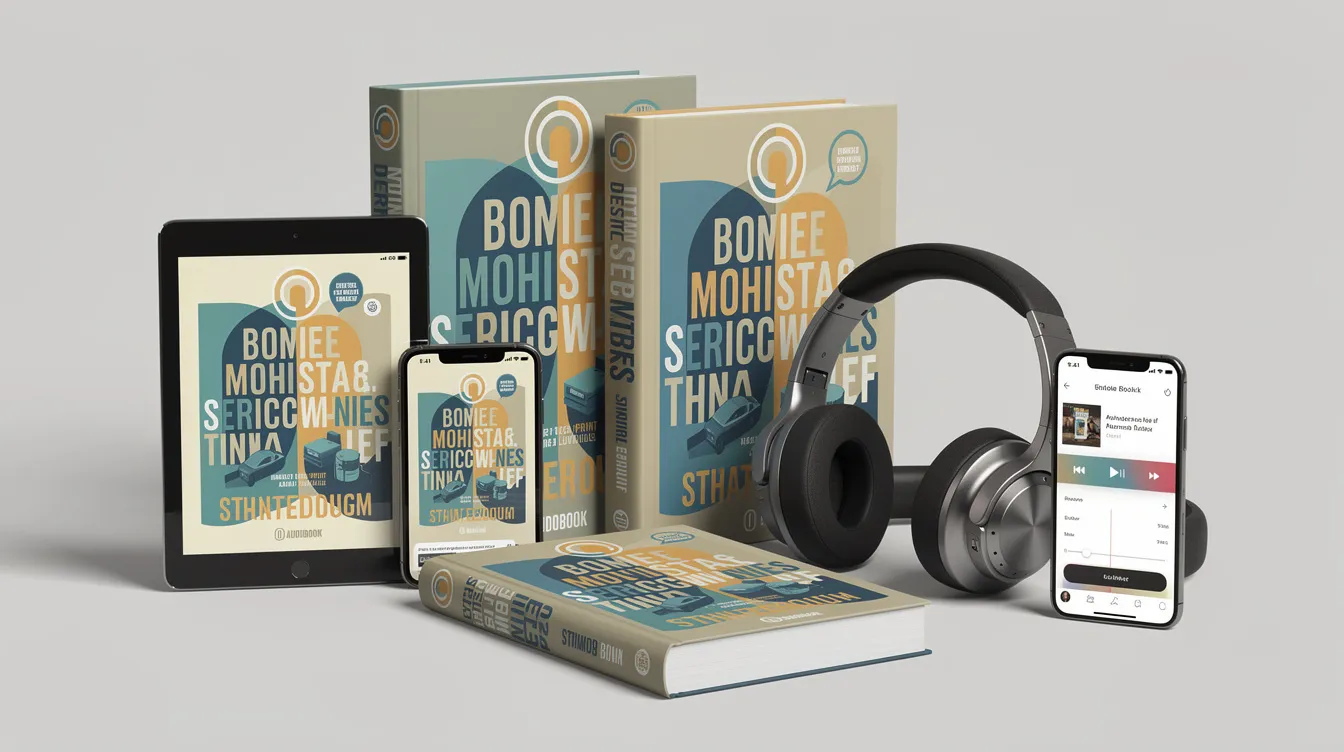
Audiobook cover adaptations require a square aspect ratio, typically 2400 by 2400 pixels for Audible and ACX. Layouts are simplified, and the author name and title need to be proportionally larger.
Authors receive a complete package: print-ready PDFs, high-res flats in JPG or PNG, and platform-specific ebook and audiobook exports. We plan designs that can scale to large print editions or special editions without requiring a full redesign.
Custom Covers vs Premade Approaches: What's Right for Your Book?
Custom book cover designs are created uniquely for a single book, often with commissioned artwork and a full design process. Premade or semi-custom options use pre-designed layouts, sometimes sold multiple times, at lower cost and faster turnaround.
The market offers a wide range of providers. Canva offers free book cover design templates. Adobe InDesign costs around $150 for book cover design software. 99designs allows multiple designers to compete for your book cover and offers over 65 cover designs in 5 days. Ebook Launch has designed hundreds of book covers since 2011. SelfPubBookCovers offers over 40,000 unique pre-made book cover designs. Foster Covers has created covers for 134 bestsellers. Damonza has over 30 years of combined design experience and offers custom book cover design packages starting at $645. BookBaby offers custom cover design services for all genres, with custom cover design starting at industry-standard rates. Palmetto Publishing provides four types of cover design services.
A fully custom book cover design is most critical for business books tied to a personal brand, high-stakes nonfiction launches, series starters, and category-competitive genre fiction. A more streamlined approach might work for low-risk lead magnets or internal training manuals.
The long-term ROI of a strong, market-fit custom cover typically outweighs the upfront cost difference. Cover refresh case studies consistently show sales improvements of 100 to 300 percent. We focus on professional book cover design that is custom to positioning and genre, not mass-market template resale.
Working with Self Publishing Authors: Collaboration, Timelines, and Revisions
Self published authors and indie authors often manage both creative and business decisions simultaneously. We guide first-time self publishers through each decision point: trim size, format mix, pricing implications, and how cover choices affect perceived value.
Clear timelines and turnarounds should be established with any designer. Our typical timeline runs 3 to 6 weeks from signed agreement to final files, depending on complexity, number of concepts, and revision cycles.
Our revision approach:
- Two to three rounds of free revisions included in base pricing
- A "revision" means adjusting elements within an accepted concept, not starting from scratch
- We balance author preference with genre expectations and sales data
- Verify the clear revision process before hiring any designer
We coordinate with editors, formatters handling interior formatting, and marketing teams so cover design stays aligned with interior design, launch plan, and brand identity. Communication follows clear checkpoints with shared proofs, and we guide authors on how to structure feedback for the best results in a timely manner.
Case-Style Examples: How Cover Design Supports Sales and Positioning
These anonymized examples from 2022 to 2025 show how design decisions drive real results. Check for measurable impact in a designer's portfolio regarding legibility and appeal, just as these cases demonstrate.
Business leadership refresh. A leadership author with a dated 2017 cover had it redesigned in 2024 using bold typography and a modern color palette. With no content changes, the book saw roughly a 95 percent increase in sales in the year following the refresh.
Romance debut repositioning. A debut author's original cover had genre ambiguity and an unreadable title at thumbnail size. After redesign focused on genre cues and improved imagery, units sold increased approximately 200 percent within the first month. The amazing cover attracted readers who previously scrolled past.
Thriller series rebrand. An author with a five-book series rebranded all paperback covers to share consistent layout, color palette, and typography. Series sales grew roughly 180 percent in the first year, with rocking book covers that made the series a book stand favorite.
Multi-format coordinated launch. A nonfiction expert launched print, ebook, and audiobook editions with cohesive created covers across all three formats. The unified visual system supported a 90-day marketing plan that drove stronger ad performance and bookstore interest than the author's previous title.
Beyond the Cover: How Our Other Services Support a Successful Launch
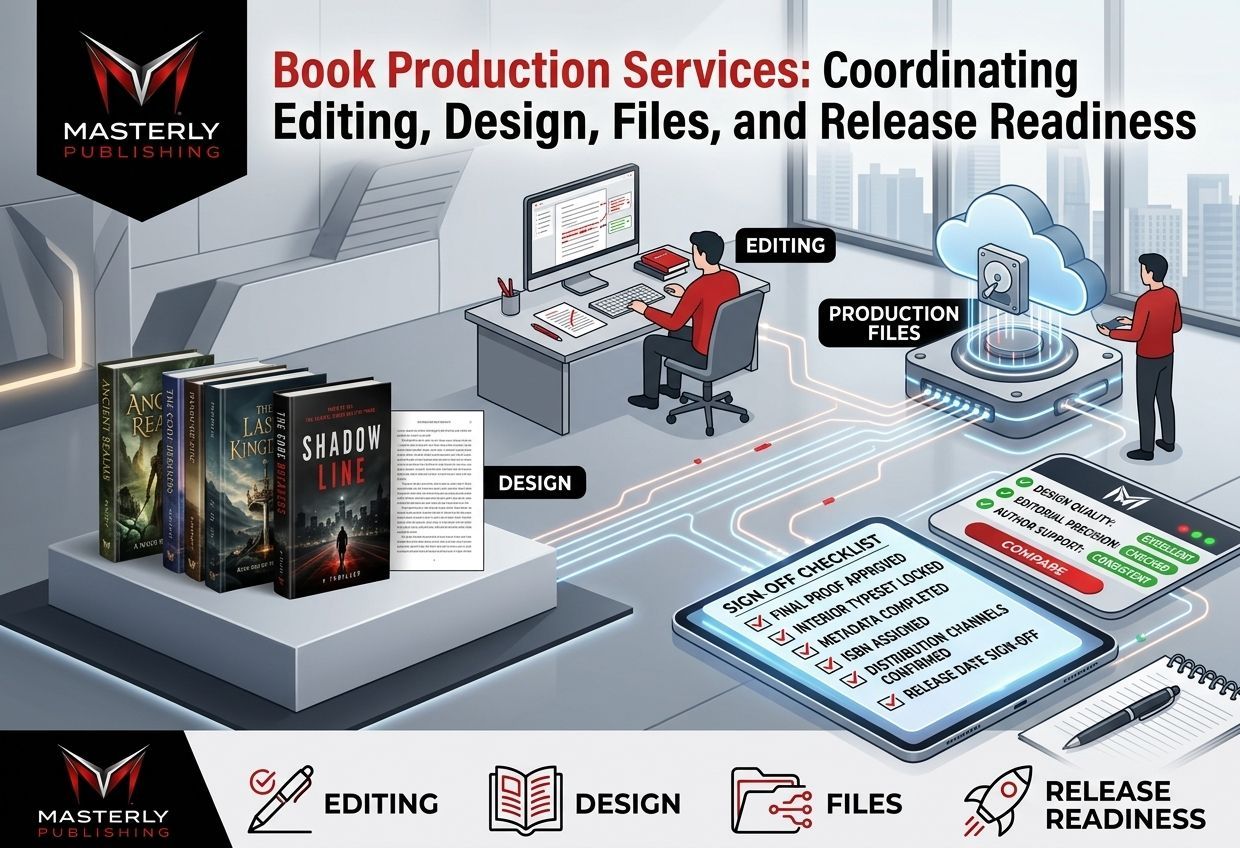
While this page centers on book cover design services, we often support authors with adjacent production needs. At a high level, these include interior layout and typesetting, print-production consulting, and guidance on metadata and categories.
Aligning cover design with interior design, pricing, and distribution choices creates a more professional reader experience and better perceived value. Traditionally published books benefit from this alignment as a standard practice. Independent authors and self publishers deserve the same level of coordination.
We do not focus on book cover design software, template marketplaces, or design-career training. Our emphasis is on done-for-you professional support, functioning as a one stop shop for authors who want their publishing process handled by talented designers and a professional design team.
How to Choose the Right Book Cover Design Partner
Not all cover design services are equal. Authors should evaluate fit, not just affordable prices. The right designer for a traditionally published book may differ from the right designer for a self publishing debut.
Practical criteria for evaluating any book cover designer service:
- Book cover portfolio depth: Check the portfolio quality for thumbnail legibility in your specific genre. Look for talented book cover designers with work across nearly every genre relevant to yours
- Process clarity: Review past client feedback for insights on designer collaboration quality
- Genre expertise: Evaluate designers based on genre expertise and industry knowledge, whether that is dark fantasy, business books, or children's books
- Pricing transparency: A transparent pricing structure is important when hiring a designer
- Rights and licensing: Proper licensing and ownership of design elements must be confirmed. Ensure you receive full commercial rights to the final design
- Production readiness: Professional designers should deliver files ready for both print and digital distribution
Ask any provider in 2026: Who owns the design rights? How many concepts and revision rounds are included? What print and ebook platforms do they design for? Do they understand spine width and print specifications?
Compare how different providers handle positioning and genre expectations, not just aesthetics. The right designer or design service attracts readers because it builds covers grounded in strategy, not just design skills.
Discuss Professional Book Design and Production Support with Masterly Publishing
If you are preparing a 2024 to 2027 print and ebook launch, turning a signature framework into a book, or ready for a professional-level release, we are here to help.
Before reaching out, prepare these details:
- Working title and subtitle
- Genre and target audience
- Target publication date
- Preferred formats (paperback, hardcover, ebook, audiobook)
- Whether this is a debut or part of a series
Visit our publishing services hub and book production resources to see how cover design fits into editing, formatting, and printing decisions.
Schedule a consultation or submit a brief outlining your project. Masterly Publishing Group can recommend the right level of cover design and production support for your book.
Reach us at masterlypublishing.com or call (888) 209-4055 to get started.