

Audiobook Production Services: Preparing a Professional Spoken-Word Release
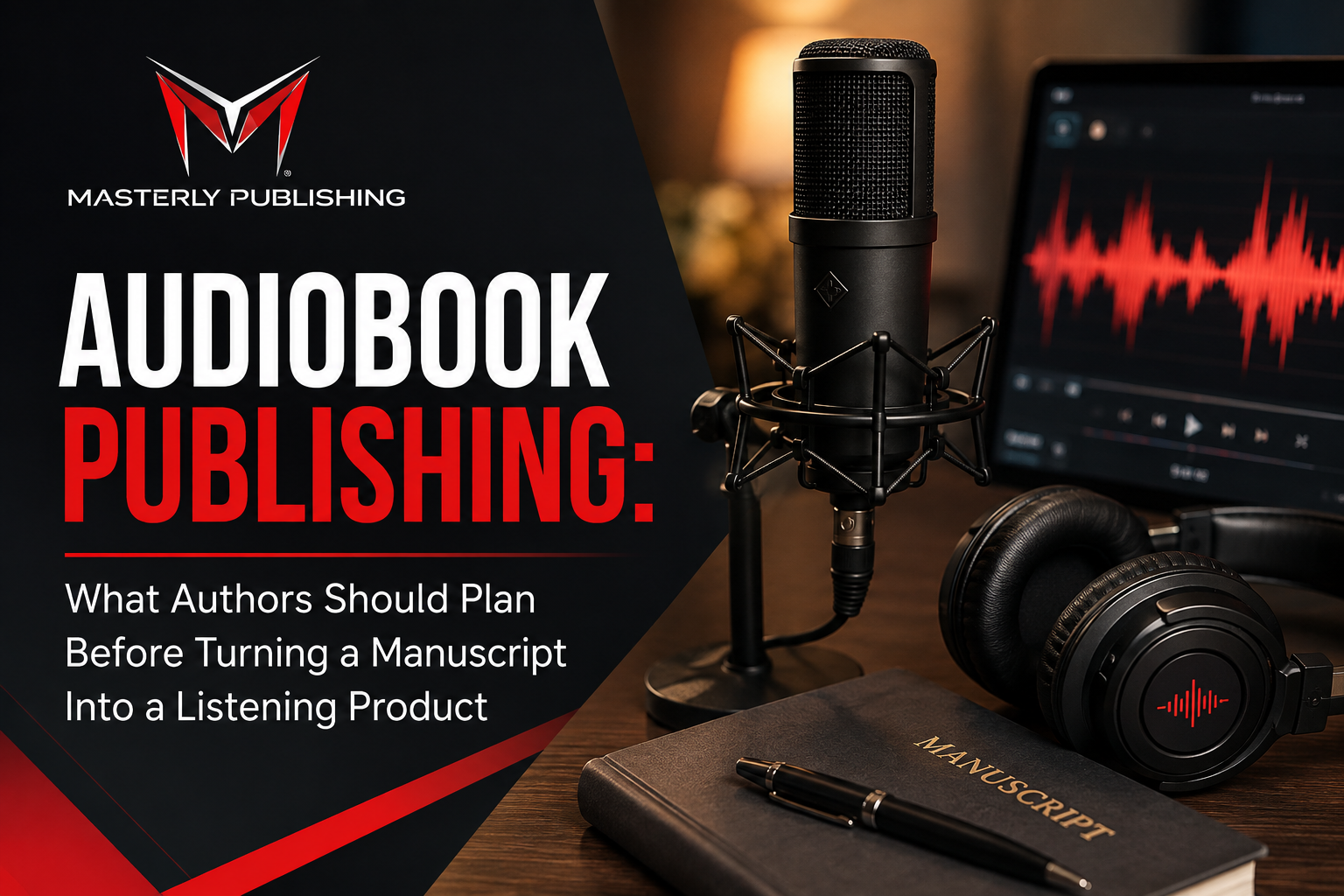
Releasing your own audiobook means navigating voice casting, recording, editing, mastering, and platform compliance - all before a single listener presses play. This guide walks through every stage of professional audiobook production so you can make confident decisions about your next spoken-word project.
What are audiobook production services (and do you actually need them)?
Audiobook production services cover the complete process of turning a finished manuscript into a distributor-ready audiobook. That process includes casting or coaching the narrator, recording in a spoken word studio or broadcast-quality home setup, detailed audiobook editing, proofing, quality control, audio mastering, and delivering compliant audio files with proper metadata and cover design specs.
Production services manage the process from manuscript to final audio file, giving many authors and publishers significant time savings by handling technical aspects they would otherwise need to learn from scratch. Audiobook production services also help authors reach wider audiences by ensuring finished audiobooks meet the standards required by Audible, Apple Books, Google Play, and library networks.
Who benefits most from audiobook creation services?
- Indie authors releasing titles in 2025–2026 alongside print and ebook editions
- Small and mid-sized publishers looking to scale their audio catalogs
- Nonfiction experts, course creators, and organizations producing thought-leadership content
- Other authors exploring narration production for the first time
DIY can work for short stories, repurposed podcast content, or brief nonfiction. But for full-length titles over 40,000 words, multi-voice fiction, or projects that must pass strict retailer checks, partnering with a team like Masterly Publishing makes the difference between a polished release and a rejected upload.
Why audiobook demand is surging in 2024–2026
Audiobooks are the fastest growing segment of the book market. Audiobook sales are growing 40% per year, and the format is now a core revenue stream - not an afterthought released years after print. Audio listeners increasingly consume content during commutes, workouts, and daily life, driving growth across subscription services and retail platforms alike.
For many authors, audio production now launches alongside the ebook and print editions. Major platforms - Audible, Apple Books, Google Play Books, Kobo, Spotify, and library networks - all expect clean, compliant files that pass automated quality checks before human review. Nonfiction experts and organizations treat audiobooks as brand extensions, which raises expectations for narration quality and consistency. Listeners worldwide are choosing audio as their preferred format, and a polished production is what separates titles that earn strong reviews from those that get skipped.
Core stages of professional audiobook production
Audiobook production involves voice acting, audio editing, proofing, mixing, and mastering. Here is the typical workflow:
- Manuscript and rights readiness. The script must be final before recording begins. Rights for quoted material, poems, or songs must be cleared for audio. Front and back matter should be adapted for spoken word - references to tables, charts, or URLs may need restructuring.
- Narration plan. Decide whether to create an author narrated audiobook, hire professional narrators, or explore a blended approach. Genre drives the decision: fiction often demands character voices and dialects, while nonfiction demands clarity and authority.
- Recording. Sessions take place in a spoken word studio or treated home space. Consistent microphone technique, file naming, and room tone capture are essential.
- Audiobook editing and proofing. The editing process removes mistakes, mouth clicks, and noise. Editors listen word for word against the manuscript, logging pickups for misreads.
- Quality control and audio mastering. Engineers apply EQ, compression, and limiting so that the final audio meets platform specifications - including noise floor limits, RMS loudness, and peak levels.
- Delivery and publishing setup. Deliverables include mastered WAV and MP3 files, opening and closing credits, retail audio samples, chapterization, metadata, and a cover design adapted to square-format requirements.
Narration options: author‑narrated vs professional voices vs AI‑assisted
Choosing a voice is both an artistic and strategic decision. Narrator selection is important for matching voice quality and genre expectations.
Author narration. Recording in your own voice works well for memoir, leadership, and personal development titles, where listeners want to hear directly from the expert. Author narrated audiobook projects typically require coaching on pacing, mic technique, and vocal stamina, plus professional editing and mastering support.
Professional voice actors. Professional voice actors are essential for quality narration in long fiction, narrative nonfiction, and any project requiring character differentiation, accents, or dialects. Human narration generally delivers more nuanced emotion compared to AI, and professional-quality audio can lead to stronger reviews and better listener experiences. ACX connects authors with narrators and producers directly, and Voice123 offers a high audition volume for authors seeking the right fit. Scribe Audiobooks specializes in high-end production quality for premium projects.
AI-assisted narration. AI narration is becoming practical for low-budget projects, internal training materials, and backlist titles. AI tools can produce audiobooks quickly and affordably - ElevenLabs offers AI narration for about $5 per month. However, an ai narrated audiobook faces notable constraints: AI-narrated audiobooks are not accepted by Audible or ACX, and listener expectations for naturalness remain high in most genres. Disclosure requirements and platform rules vary.
Masterly Publishing helps clients evaluate these trade-offs and select a narration production path that aligns with brand, budget, and distribution goals.
Recording and spoken word studio setup
Whether you record in a professional facility or a treated home space, the environment directly shapes the quality of your finished audiobooks.
Room and acoustics. Small rooms with soft surfaces, bass traps, and no parallel reflective walls minimize echo. HVAC systems, street noise, and computer fans must be silenced or isolated during recording.
Microphones and signal chain. Most audiobook recording services rely on large-diaphragm condenser microphones paired with a quality audio interface and closed-back studio headphones. Consistency in mic distance and angle keeps the sound uniform across sessions.
Recording workflow. Capture at 44.1 kHz sample rate and 24-bit depth. Name files logically (e.g., 01_Intro, 02_Chapter_01) and record room tone at the head and tail of each session for the editing team.
Performance comfort. Hydration, posture, regular breaks, and clear script formatting all protect vocal stamina during long narration sessions.
Remote collaboration. Authors can work with Masterly Publishing via online direction sessions, shared file storage, and detailed engineering checklists - no travel required.
Audiobook editing, proofing, QC, and mastering
This stage is where raw recordings become a polished, distributor-ready audiobook - and it is the heart of professional audiobook production services.
Editing essentials. Audiobook editing includes narration editing and quality control checks: removing stumbles, repeated lines, mouth clicks, and background noise while tightening or lengthening pauses to preserve natural flow. Professional editing improves audio quality for distribution platforms by matching tone across sessions and smoothing transitions between takes.
Proofing and quality control. Quality control in audiobook production involves listening through the entire recording for errors - word for word against the manuscript. Editors log pickups for misreads, missing lines, and inconsistent pronunciation of names or technical terms.
Technical QC. Engineers check for pops, plosives, sibilance, phase issues, and clipping. Audiobook files must meet retailer technical standards, including specific RMS levels (typically -23 to -18 dBFS), peak limits (≤ -3 dBFS), and a noise floor at or below -60 dBFS. Editing standards must ensure retail-ready files that meet major platform specifications.
Audio mastering. Mastering prepares audio files for distribution across multiple platforms. Engineers apply EQ to roll off low-frequency rumble, compression and limiting to smooth dynamics, and careful normalization so every chapter sounds consistent. Audiobook editing services ensure compliance with ACX standards while avoiding the over-processing that causes listener fatigue.
High-quality audio files should be ready for major platforms like Audible and Apple Books before you submit your project for review.

Preparing your audiobook for publishing and distribution
Production is not complete until files, metadata, and artwork align with publishing standards and your distribution strategy is set.
File delivery. Typical deliverables include 16- or 24-bit WAV masters, encoded MP3s (192 kbps CBR for most retailers), opening and closing credits, and retail audio samples with clear chapter labeling.
Metadata and credits. Accurate title, subtitle, series info, narrator credits, BISAC categories, keywords, and descriptive copy help audio listeners discover your title. Treat metadata as a marketing asset.
Cover design adaptation. Audiobook cover design must meet a square ratio and high resolution (at least 2400 × 2400 pixels) and remain legible at thumbnail size on stores like Audible and Google Play.
Distribution strategy. Audiobook production companies may offer various distribution options, affecting market reach.
Authors can retain 100% ownership of their audiobook when considering production contracts carefully. Some arrangements involve a royalty share agreement, which reduces upfront costs but affects long-term revenue from net royalties. Whether you self publish through a single storefront or pursue wide distribution across dozens of retailers, the choice between exclusive and non exclusive access shapes your earning potential and audience reach. Choosing higher royalties or broader market access depends on your genre, audience, and long-term goals.
How Masterly Publishing supports your audiobook production
Masterly Publishing serves as a production partner - not just a vendor - for authors, publishers, and organizations ready to produce audiobooks at a professional level.
End-to-end support. From early planning and script preparation through narration support, audiobook editing, quality control, mastering, and delivery-ready files, we manage the workflow so you can focus on your story and audience.
Flexible narration models. We work with author-narrated projects, professional narrators, and hybrid approaches, helping you choose the path that fits your content and listeners.
Technical expertise. Our team maintains spoken word studio standards, delivers consistent audio mastering for long-form listening, and aligns every project with major retailer technical guidelines.
Collaboration and communication. Project management is essential for coordinating the production workflow efficiently. We provide clear timelines, check-in milestones, and transparent feedback loops during the editing process and proofing stages.
Masterly Publishing supports clients across multiple titles and formats, whether you are launching a single nonfiction audiobook or building a fiction catalog.
Frequently asked questions about audiobook production services
How long should my book be to justify an audiobook? Most production services focus on titles of 20,000 words or more, which yield roughly two or more finished hours of audio. Short stories and essays can work but may not justify the fixed costs of professional narration and mastering.
Can I record at home, or do I need a studio? You can record at home if your space meets acoustic standards - controlled noise floor, minimal reflections, and a quality microphone. Many audiobook services offer remote direction and engineering support.
What is the difference between podcast production and audiobook production? Audiobook production demands stricter technical compliance (RMS, peak, noise floor specs), word-for-word proofing against the manuscript, and chapter-level consistency that podcast workflows rarely require. You cannot simply upload a podcast recording and expect it to pass review on Audible.
Do I keep my rights to the audio? In most cases, yes - though exclusivity terms vary by distributor. Review contracts carefully, especially when comparing exclusive deals on ACX versus non exclusive arrangements through aggregators.
Can I use existing recordings as a starting point? Speeches, course content, or lecture recordings can sometimes serve as raw material, but they almost always require re-editing, mastering, and supplemental narration to meet the format and compliance standards platforms expect for a publish-ready audiobook.

Next steps: plan your audiobook production with Masterly Publishing
You now understand the core stages of audiobook production, how narration choices shape the project, and why professional audiobook recording services and editing matter for listener satisfaction. The difference between a forgettable listen and a title that earns reviews, referrals, and repeat sales comes down to the quality of your audio production.
Plan an audiobook production with Masterly Publishing. Share your manuscript length, genre, preferred narration style, and ideal launch window, and we will outline a clear path from script to distributor-ready audiobook. If you are planning a full-format launch, explore our resources on book editing, cover design, and distribution strategy to align every piece of your release.
Contact Masterly Publishing Group today to get started:
Phone: (888) 209-4055
Website: https://www.masterlypublishing.com/