

Trademark Renewal Deadlines Explained: What Every Brand Owner Must Know
When you finally register your trademark, it can feel like the hard part is over. You invested time, money, and creative energy into protecting your brand names, logos, and intellectual property. But many trademark owners are surprised to learn that registration is only the beginning. Ongoing compliance with trademark renewal deadlines is essential if you want to maintain your exclusive rights and long-term brand protection.
At Masterly Publishing Group, we work with authors, entrepreneurs, and growing businesses who depend on their brand reputation. Whether you are a first-time trademark applicant or an experienced business owner with an expanding trademark portfolio, understanding renewal deadlines under trademark law is critical. Missing even one filing deadline with the trademark office can jeopardize the legal protection you worked so hard to secure.
Why Trademark Renewal Matters More Than You Think
A federal trademark does not last forever without action. After a trademark registration is successfully registered with the United States Patent and Trademark Office, also known as the patent and trademark office or USPTO, the owner must continue filing specific documents to maintain protection.
Trademark renewal deadlines exist to ensure that your mark is still in use and associated with the same source of goods or services. If you fail to comply, the USPTO may cancel your registration. That means your exclusive rights and brand protection could disappear, opening the door to unauthorized use or trademark infringement.
Understanding the Role of the USPTO
The USPTO oversees the trademark registration process in the United States. The states patent and trademark system is governed by federal trademark law, and all filings must be submitted through the trademark office uspto portal.
The registration process does not end once your trademark application is approved. Instead, the USPTO requires ongoing filings to confirm continued use. These requirements are strictly enforced, and failure to comply can result in cancellation.
The Critical Section 8 Filing Requirement
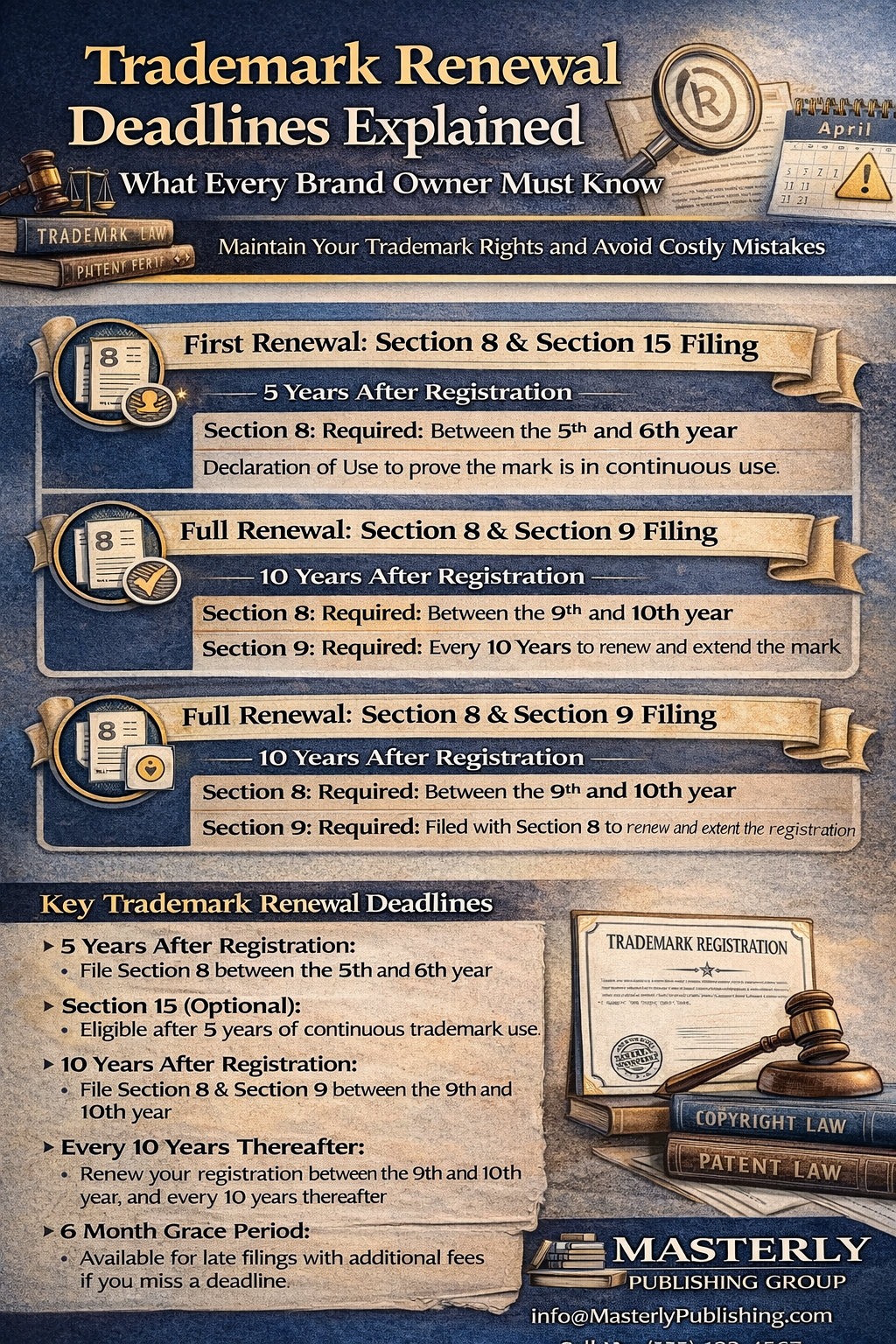
Section 8 of the Trademark Act requires trademark owners to file a Declaration of Continued Use. This filing confirms that the mark is still actively used in commerce. The first Section 8 filing must occur between the fifth and sixth year after registration.
If a trademark owner fails to submit this filing, the trademark office may cancel the registration. Even a successful trademark registration can be lost due to missed deadlines. This is why experienced trademark attorneys emphasize monitoring and compliance.
What Happens During a Section 8 Filing
During a Section 8 filing, the trademark applicant must provide proof that the mark is being used in connection with the goods or services listed in the registration. This typically includes submitting documents and specimens that show actual use.
The USPTO carefully reviews these filings. An office action may be issued if the documents are incomplete or insufficient. An experienced trademark attorney can help ensure your filing meets the legal standards under trademark law.
Section 9 Renewal: Extending Your Registration
While Section 8 confirms use, Section 9 is the actual renewal application. Section 9 filings occur every ten years after registration. Without this filing, the trademark registration will expire.
The registration process for Section 9 requires submitting the appropriate forms and fees through the trademark office. Missing this deadline means losing federal protection and potentially having to start the trademark process again.
The Importance of Section 15 Filings
Section 15 is optional but highly valuable. This filing allows a trademark owner to claim incontestable status after five years of continuous use. Incontestable status strengthens your trademark rights and makes it harder for others to challenge your mark.
In trademark disputes, having incontestable status can provide significant advantages. It reinforces legal protection and supports your position in litigation or appeals before the trademark trial and appeal board.
Why Compliance Under Trademark Law Is Essential
Trademark law is built around deadlines and documentation. The USPTO does not send repeated reminders, and responsibility falls on the trademark owner to monitor and maintain filings.
Compliance protects your intellectual property and ensures your brand remains secure. Failure to comply can lead to cancellation and potential trademark infringement risks from competitors.
How Renewal Deadlines Affect Your Brand Protection Strategy
Your trademark is part of your overall intellectual property strategy. Authors and publishers rely on strong brand protection to build recognition and trust. If your registration lapses, competitors may attempt to register similar brand names.
Trademark renewal is not simply paperwork. It is a critical step in protecting your brand reputation and preventing unauthorized use.
The Risk of Office Actions During Renewal
Even renewal filings can trigger an office action. The USPTO may question the adequacy of submitted documents or request clarification about the use of the mark.
Responding to an office action requires legal knowledge and attention to detail. Experienced attorneys can conduct a thorough review and prepare accurate responses.
When Renewal Issues Lead to Trademark Disputes
Failure to maintain your registration can lead to trademark disputes. Competitors may challenge your rights, particularly if they believe your mark is no longer in use.
Such disputes may proceed before the trademark trial and appeal board or even federal court. TTAB proceedings, which fall under the trademark trial and appeal system, require experienced attorneys with litigation experience.
The Role of the Trademark Trial and Appeal Board
The trial and appeal board handles disputes related to trademark registration and appeals from USPTO decisions. TTAB proceedings can arise from cancellation actions or opposition filings.
An experienced trademark attorney can represent clients before the appeal board. Strong legal services and strategic practice are essential when facing litigation at this level.
Trademark Clearance and Ongoing Monitoring
Renewal is only one part of trademark protection. Businesses should also conduct trademark clearance searches periodically to ensure no conflicting marks have emerged.
Trademark clearance searches help identify potential infringement issues early. Conducting a thorough trademark search protects your business from costly litigation later.
The Value of Working With a Trademark Lawyer
A knowledgeable trademark lawyer understands the nuances of trademark filing, renewal, and enforcement. Top rated attorneys provide great communication and proactive deadline monitoring.
An experienced trademark attorney can manage your trademark portfolio and ensure compliance. This includes preparing documents, conducting searches, and handling appeals if necessary.
Why DIY Trademark Renewal Can Be Risky
Some trademark owners attempt to handle renewal without legal guidance. While the USPTO provides forms, errors in filing can result in rejection or cancellation.
An experienced trademark attorney reviews each detail carefully. Protecting intellectual property requires precision and a deep understanding of trademark law practice.
The Connection Between Renewal and Litigation
Failure to maintain registration can weaken your position in litigation. Courts often look at registration status when evaluating trademark infringement claims.
In federal court, having a valid registration strengthens your case. Maintaining compliance with USPTO requirements demonstrates active brand protection.
Protecting Authors and Publishers Nationwide
At Masterly Publishing Group, we understand how critical trademark protection is for authors and creative professionals. Your brand represents your voice, your work, and your success.
From manuscript to bestseller, we guide clients through intellectual property law concerns, including trademark registration, renewal, and enforcement. Our law firm approach combines publishing knowledge with strong legal services.
Comprehensive Trademark Services for Brand Owners
Our trademark services include assistance with:
- Trademark search and clearance
- Trademark application preparation
- Filing responses to office action notices
- Managing renewal deadlines
- Representation in trademark trial and appeal matters
We tailor our practice to meet the specific needs of each business and author.
How We Represent Clients in Trademark Matters
Our attorneys represent clients before the USPTO, the trademark trial and appeal board, and when necessary, federal court. We understand the registration process and the challenges that arise during appeals.
Whether you are filing your first trademark submission or managing a large trademark portfolio, our experienced attorneys provide strategic guidance.
Maintaining Your Trademark Portfolio for Long-Term Success
Building a strong trademark portfolio requires consistent attention. Renewal deadlines, monitoring for infringement, and responding to disputes are all part of ongoing brand protection.
Maintaining your registration protects your exclusive rights and preserves your reputation in the marketplace.
Why Early Legal Assistance Makes a Difference
Waiting until a deadline approaches can increase stress and risk errors. Early assistance allows your trademark attorney to review documents and confirm compliance well before submission.
This proactive strategy lowers the possibility of expensive appeals and promotes long-term success.
Contact Masterly Publishing Group for a Free Consultation
Trademark renewal deadlines are not something to take lightly. If you are unsure about your Section 8, 9, or 15 filings, now is the time to act. Protecting your brand under trademark law requires attention, knowledge, and experienced attorneys who understand both publishing and intellectual property.
At Masterly Publishing Group, we specialize in helping authors and businesses protect what they have built. From trademark registration to renewal compliance and appeals before the trademark trial and appeal board, our team is here to provide reliable legal services and strategic guidance.
Contact us at (888) 209-4055 for a free consultation. Let us help you safeguard your intellectual property, maintain your registration with the USPTO, and protect your brand for years to come.
This article is for informational purposes only and does not constitute legal advice. For specific legal guidance regarding your trademark rights, consult directly with a qualified trademark lawyer.