

Your Trademark Can Expire Without You Knowing How to Prevent Losing It
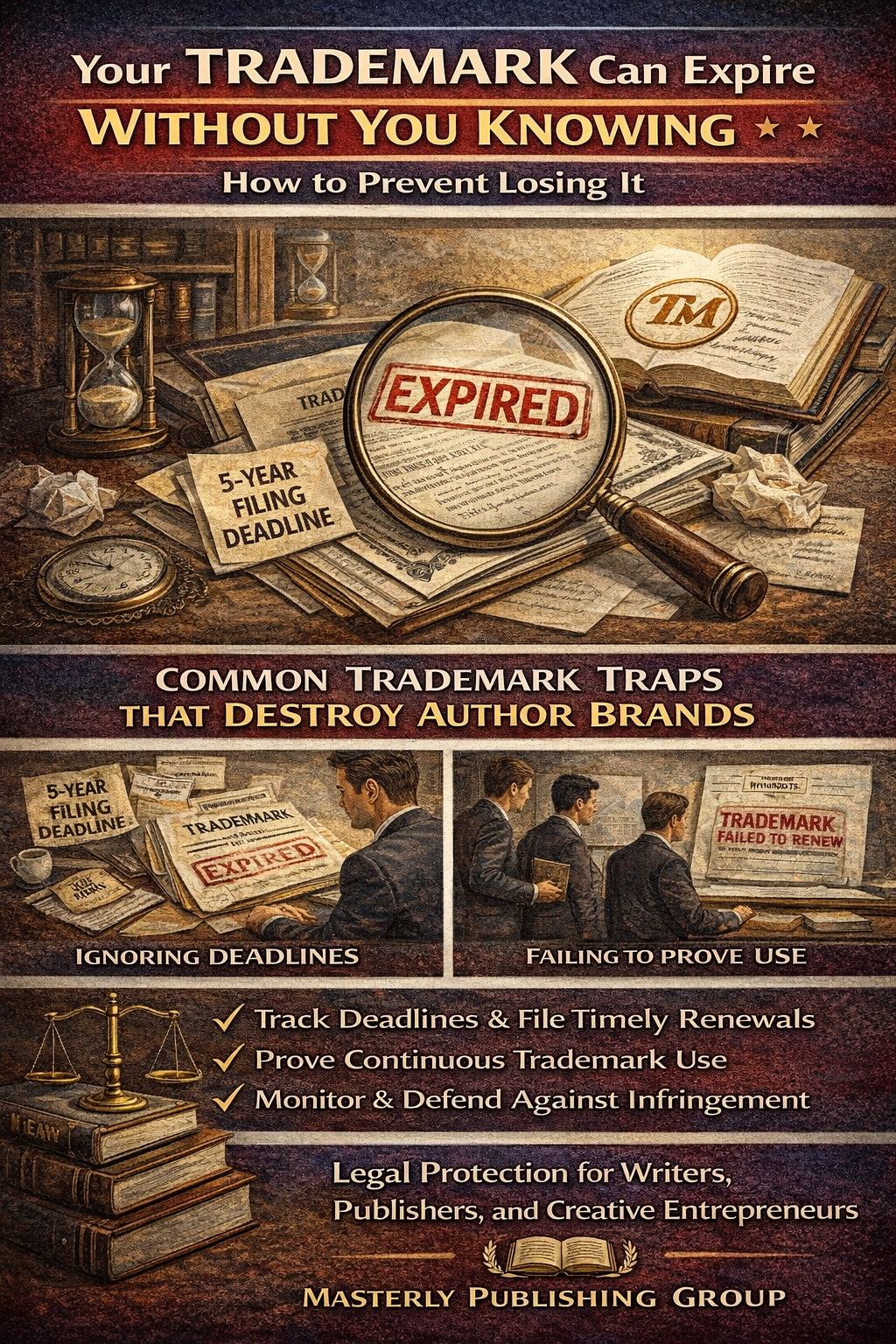
Most authors and creators assume that once a trademark is registered, it is protected forever. That assumption quietly destroys brands every year. Trademarks can lapse, weaken, or be canceled without warning if deadlines are missed or rules are misunderstood. For writers, publishers, and creative entrepreneurs, losing a trademark can mean losing control of a business name, book series, or brand identity. At Masterly Publishing Group, we help authors protect not only their stories, but the intellectual property that gives those stories long-term value.
Why Trademark Loss Is More Common Than People Think
Trademark expiration is rarely dramatic or obvious. It usually happens quietly through missed filings, ignored notices, or lack of use. Many trademark owners do not realize that registration requires ongoing maintenance. When deadlines pass, rights can disappear without a second chance. Prevention starts with understanding how trademark law actually works.
What a Trademark Really Protects
A trademark protects the source of goods or services, not just a name or logo. For authors, this often includes a business name, pen name, publishing imprint, or series title. Trademark rights help prevent unauthorized use that confuses readers or customers. Without proper protection, others may legally claim similar brand names. This is why trademarks are a core part of brand protection.
Registration Does Not Mean Permanent Protection
Trademark registration is not a one-time event. The registration process includes ongoing obligations with the trademark office. If required documents are not filed on time, the mark can be canceled. Many businesses discover this only after infringement occurs. Active management is essential.
How Trademarks Expire Without Notice
Trademarks often expire because owners miss renewal deadlines or fail to prove continued use. The USPTO does not monitor your brand usage for you. Notices may be sent, but they are easy to overlook. If no response is filed, the registration can be lost. Once canceled, recovery is difficult.
The Role of the USPTO in Trademark Maintenance
The United States Patent and Trademark Office oversees trademark registration and enforcement procedures. It requires trademark owners to submit maintenance filings at specific intervals. These filings confirm the mark is still in use. Missing one filing can undo years of brand building. Understanding USPTO expectations is critical.
Common Filing Deadlines That Get Missed
Trademark owners must file maintenance documents between the fifth and sixth year after registration. Additional filings are required every ten years. These filings are not optional. Missing them can cancel a trademark registration entirely. Many businesses lose marks simply due to poor calendar tracking.
Why Authors Are Especially at Risk
Authors often focus on writing, publishing, and marketing. Legal maintenance falls to the bottom of the list. Yet author brands are highly visible and easily copied. Book titles, series names, and imprints are frequent targets for infringement. Without protection, years of work can be diluted.
Business Names and Publishing Imprints
A business name used for publishing is a valuable asset. Trademark protection prevents others from using confusingly similar names. Losing that protection opens the door to competitors. Once another party registers a similar mark, reclaiming rights becomes complex. Prevention is always easier than litigation.
How Trademark Law Treats Non-Use
Trademark law requires actual use in commerce. If a mark is not actively used, it can be challenged. Even a registered trademark can be canceled for abandonment. This applies to authors who stop publishing under a brand for extended periods. Documentation of use matters.
Trademark Clearance Before You Ever Register
Trademark clearance is one of the most overlooked steps in brand creation. Conduct trademark clearance searches before filing avoids future disputes. Clearance identifies conflicting marks early. Skipping this step increases the risk of rejection or litigation. Experienced trademark attorneys prioritize clearance from the start.
Why Trademark Searches Are Not Optional
A basic trademark search is not enough. Comprehensive trademark clearance searches review federal, state, and common law uses. This protects against later challenges. Many trademark disputes arise from incomplete searches. Investing early prevents expensive conflicts later.
The Trademark Registration Process Explained
The trademark registration process begins with identifying the correct filing basis. The trademark applicant submits an application through the USPTO. The mark is examined for conflicts and legal sufficiency. Office actions may be issued requiring response. Approval is only one step in long-term protection.
Office Actions and Why They Matter
An office action is an official USPTO refusal or request for clarification. Ignoring an office action can kill an application. Responses must be timely and legally accurate. Many applicants lose rights due to improper responses. Trademark attorneys play a critical role here.
The Importance of Filing Accuracy
Errors in trademark filing can limit or invalidate protection. Incorrect classifications, descriptions, or ownership details create problems later. Filing mistakes may surface during enforcement or renewal. Accuracy protects long-term rights. This is where professional legal services matter.
Trademark Rights Are Enforced, Not Automatic
Trademark rights do not enforce themselves. Owners must monitor unauthorized use and take action. Failure to enforce can weaken rights. Over time, unchallenged infringement can lead to loss of exclusivity. Active enforcement protects brand integrity.
Trademark Infringement and Unauthorized Use
Trademark infringement occurs when another party uses a confusingly similar mark. Unauthorized use damages brand value and customer trust. Early detection prevents escalation. Without registration, enforcement options are limited. Registered trademarks provide stronger legal protection.
When Trademark Disputes Escalate
Some trademark disputes cannot be resolved informally. These cases may proceed to the Trademark Trial and Appeal Board. TTAB proceedings determine registration rights, not damages. Losing at this level can cancel a mark entirely. Preparation is essential.
Understanding the Trademark Trial and Appeal Board
The trial and appeal board reviews disputes involving trademark applications and registrations. It operates under USPTO authority. TTAB proceedings are formal and evidence-based. Outcomes affect nationwide trademark rights. Skilled legal representation is critical.
Appeals and Litigation Risks
Trademark trial outcomes can be appealed to federal court. Litigation is expensive and time-consuming. Many businesses underestimate these risks. Preventative trademark management reduces exposure. Strategic planning saves resources.
International Trademark Considerations
Authors with global reach must consider international trademark protection. Membership in the International Trademark Association highlights global standards. U.S. registration does not protect foreign markets. International filing strategies depend on business goals. Planning early avoids limitations.
Trademark Portfolios for Growing Brands
A trademark portfolio includes multiple marks across products or services. Authors often expand into courses, merchandise, or media. Each extension may require additional registration. Portfolio management protects expansion opportunities. Growth without protection creates vulnerability.
Filing Basis and Ongoing Use
The filing basis determines whether a mark is in use or intended for use. Changes in use must be tracked. Filing inaccuracies can invalidate registrations. Ongoing compliance preserves rights. Trademark attorneys help manage these details.
How Big Law Firms Handle Trademarks Differently
Big law firms often focus on high-volume corporate clients. Authors and small businesses may feel overlooked. Personalized strategy matters in publishing. Boutique-focused legal guidance aligns better with creative brands. Fit matters as much as expertise.
The Role of Experienced Trademark Attorneys
An experienced trademark attorney understands both registration and enforcement. They anticipate risks before they arise. They also communicate clearly with clients. Great communication prevents costly mistakes. Experience protects long-term brand value.
Why Trademark Owners Lose Rights Without Realizing It
Trademark owners lose rights due to inaction, not bad intentions. Deadlines, non-use, and enforcement gaps add up. The system rewards vigilance. Education prevents surprises. Awareness is the first defense.
How Law Firms Represent Clients Strategically
A strong law firm does more than file paperwork. Attorneys represent clients in clearance, filing, disputes, and appeals. They align trademark strategy with business goals. This holistic approach reduces risk. Protection becomes proactive.
Trademark Services That Go Beyond Filing
Effective trademark services include monitoring, renewals, and enforcement guidance. Filing alone is insufficient. Long-term management preserves value. Authors benefit from ongoing support. Strategy matters more than speed.
Intellectual Property and Publishing Success
Intellectual property is the backbone of publishing. Books, brands, and content rely on exclusive rights. Trademark protection supports monetization and licensing. Losing rights disrupts revenue streams. Protection supports longevity.
How Litigation Impacts Creative Businesses
Litigation drains time, money, and focus. Many disputes arise from preventable errors. Proactive trademark management reduces litigation risk. Defense is always more expensive than prevention. Smart planning protects creativity.
Protecting Your Mark Before Problems Start
The best time to protect a trademark is before issues arise. Early registration, clearance, and monitoring create stability. Waiting invites conflict. Prevention protects peace of mind. Strong brands are built deliberately.
How Do You Register a Trademark Successfully
Many authors ask, how do you register a trademark the right way. The answer involves clearance, accurate filing, and long-term planning. Registration is a process, not a single step. Professional guidance improves success rates. Mistakes are costly.
The Value of Professional Assistance
Trademark law is technical and unforgiving. Assistance from knowledgeable attorneys reduces risk. Law students and DIY tools cannot replace experience. Professional guidance protects investments. Expertise matters.
Why Masterly Publishing Group Supports Trademark Protection
At Masterly Publishing Group, we understand that publishing success extends beyond writing. We support authors through branding, marketing, and navigating legal hurdles. Our clients benefit from integrated guidance. Protecting trademarks protects careers.
Our Commitment to Authors Worldwide
We proudly serve clients worldwide with publishing and brand support. From manuscript to bestseller, protection matters. Our approach aligns creativity with strategy. Authors deserve comprehensive support. Protection enables growth.
Taking Action Before Your Trademark Is Gone
Waiting until a problem appears is risky. Trademark expiration often cannot be reversed. Acting now preserves options. Awareness leads to action. Protection begins with a conversation.
How Intellectual Property Law Shapes Trademark Protection
Intellectual property law governs how creative and commercial assets are protected, enforced, and defended. For authors and publishers, trademarks fall squarely within this legal framework. Understanding intellectual property law helps trademark owners avoid accidental loss of rights. It also clarifies how trademarks interact with copyrights, patents, and branding strategies. Strong protection begins with legal awareness.
Understanding the USPTO’s Trademark Trial Process
The USPTO’s trademark trial procedures come into play when applications are challenged or opposed. These proceedings are handled through formal channels that resemble litigation. Many trademark owners are surprised by how technical this process can be. Preparation and proper evidence matter at every stage. Legal guidance becomes critical when disputes arise.
Breaking Down the Trademark Process From Start to Finish
The trademark process involves far more than filing a form. It begins with clearance, moves through examination, and continues into long-term maintenance. Each phase has its own requirements and risks. Missing a step can derail protection entirely. A structured approach reduces uncertainty and errors.
Why Proper Trademark Submission Matters
Trademark submission errors are one of the most common reasons applications fail. Inaccurate descriptions, ownership mistakes, or improper classifications can trigger rejection. Once submitted, corrections are not always simple. Careful preparation protects the integrity of the application. Precision early saves time and money later.
Managing Intellectual Property Matters as Your Brand Grows
Intellectual property matters often expand as a business or author grows. New products, formats, or markets can create additional legal exposure. Trademarks must evolve alongside the brand. Strategic oversight ensures protection keeps pace with growth. Proactive management prevents costly surprises.
What It Means to Be Successfully Registered
A trademark that is successfully registered gains nationwide protection and enforcement advantages. Registration strengthens legal standing and credibility. It also unlocks remedies unavailable to unregistered marks. However, registration is not the end of responsibility. Ongoing compliance preserves these benefits
.
The Influence of the American Bar Association on Trademark Practice
The American Bar Association sets ethical and professional standards that guide trademark attorneys. Its guidelines shape best practices across intellectual property law. Many experienced attorneys follow ABA recommendations when advising clients. This framework promotes consistency and professionalism. Clients benefit from structured legal standards.
Trademarks Beyond Publishing, Including Medical Devices
Trademarks apply across industries, including medical devices and regulated products. These sectors face additional scrutiny during registration. Classification and usage must be precise. Lessons from these industries highlight how detailed trademark law can be. Accuracy matters regardless of field.
Finding the Best Attorney for Trademark Protection
Choosing the best attorney involves more than reputation alone. Experience with trademark law, communication style, and attention to detail all matter. Authors benefit from attorneys who understand creative industries. The right fit protects both the brand and peace of mind. Trust and clarity are essential.
Trademark Protection in Technology and Electronic Components
Industries involving electronic components rely heavily on trademarks to distinguish products. These markets demonstrate how valuable brand identifiers can be. Competition is intense, and infringement risks are high. Trademark strategy in these areas shows the importance of early protection. The same principles apply to publishing brands.
How the Best Lawyers Protect Long-Term Brand Value
The best lawyers approach trademarks as long-term assets, not short-term filings. They plan for growth, enforcement, and renewal from day one. Their role extends beyond paperwork. Strategic thinking protects value over time. Experience makes the difference.
Why Trademark Conflicts Often Come From the Same Source
Many trademark disputes arise from the same source: inadequate clearance and rushed filings. Skipping early steps leads to overlapping rights and confusion. These conflicts are preventable. Awareness reduces risk. Prevention is always more efficient than defense.
What Sets Top Rated Attorneys Apart
Top rated attorneys combine technical skill with clear communication. They explain complex rules without overwhelming clients. Their experience allows them to anticipate problems early. Consistent results build trust. Clients value clarity as much as expertise.
The Advantage of Working With Experienced Attorneys
Experienced attorneys recognize patterns that newer practitioners may miss. They understand how the USPTO evaluates applications and challenges. Their guidance reduces uncertainty. Experience shortens learning curves for clients. Confidence comes from preparation.
Why a Knowledgeable Lawyer Is Essential in Trademark Matters
A knowledgeable lawyer protects clients from avoidable mistakes. Trademark law is unforgiving, and errors can be permanent. Legal guidance ensures compliance and strategic planning. For authors, this protection supports long-term success. One informed decision can preserve years of work.
Contact Masterly Publishing Group for a Free Consultation
If you are unsure whether your trademark is protected or at risk, we are here to help. A free consultation can clarify where you stand and what steps to take next. At Masterly Publishing Group, we help authors navigate trademark registration, protection, and long-term brand strategy as part of comprehensive self-publishing support. Contact us at (888) 209-4055 to schedule your free consultation and protect the brand you worked so hard to build.