

Lawyer for Trademark: What a Trademark Actually Protects (and What It Doesn’t)
If you are an author, entrepreneur, or creative professional, your brand is one of your most valuable assets. The title of your book series, the name of your publishing imprint, or even your podcast identity can carry real weight in the marketplace. Yet many writers assume that simply using a name automatically gives them full ownership. That assumption can lead to confusion, disputes, and costly mistakes.
At Masterly Publishing Group, we regularly work with authors who want to protect their intellectual property while building long term success. As a law firm–supported publishing and legal services provider, our practice includes guidance on trademark registration, brand protection, and navigating the trademark process. Understanding what a trademark actually protects—and what it does not—can help you make informed decisions.
Before you invest in marketing, cover design, or large scale promotional campaigns, it is important to understand how trademark law applies to your brand.
What Is a Trademark in Plain Language
A trademark is a word, phrase, symbol, or design that identifies the source of goods or services. In publishing, that may include brand names, logos, series titles, or even a unique publishing imprint. The purpose of a trademark is to signal to consumers that the product comes from the same source.
Under trademark law, protection focuses on preventing confusion. If another party uses a similar mark in a way that misleads readers into thinking the books come from the same source, that can raise issues of trademark infringement. The key concept is consumer confusion, not simply copying.
Trademark rights exist to protect both businesses and the public. They help maintain clarity in the marketplace.
What a Trademark Actually Protects
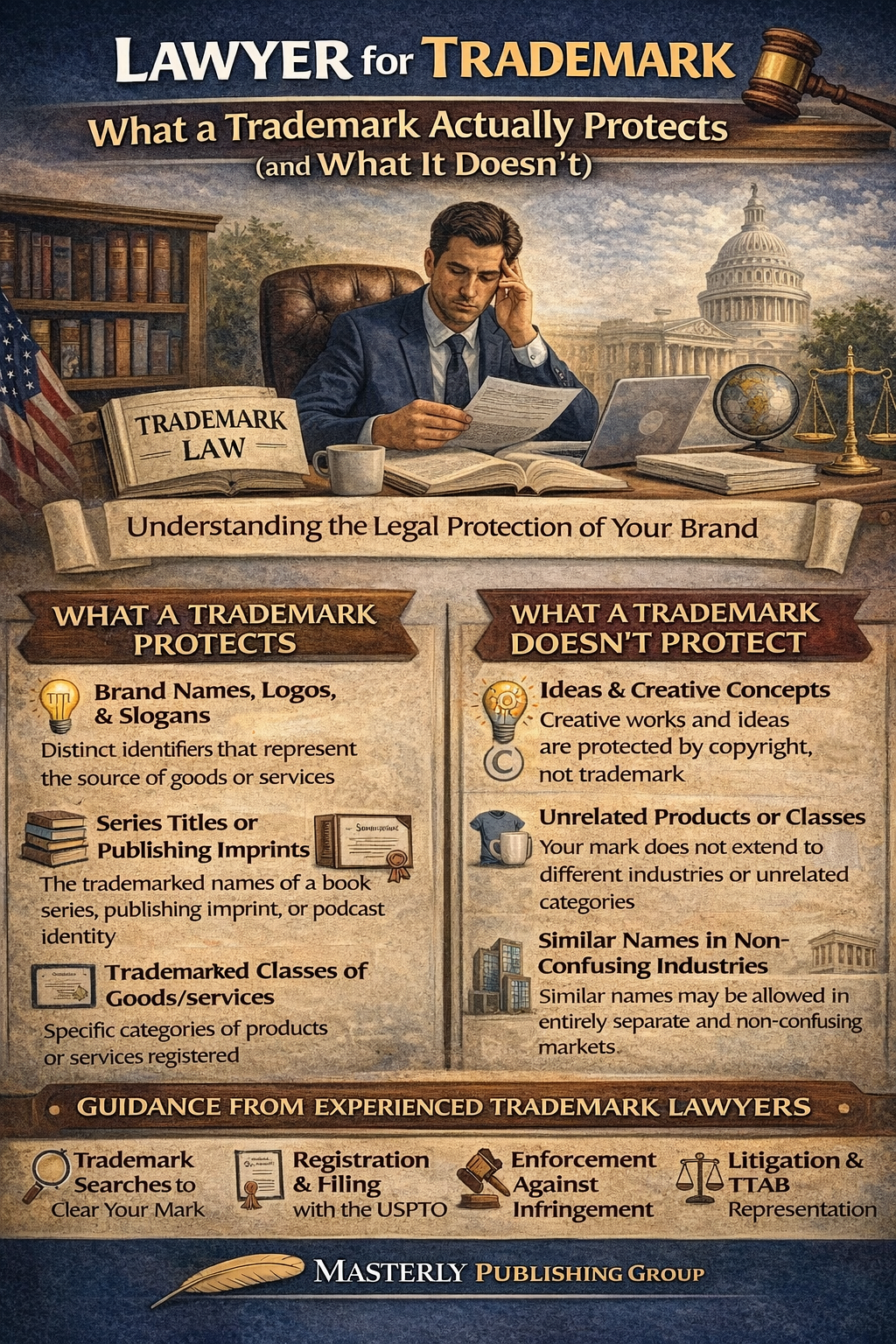
The exclusive right to use a mark in connection with particular products or services can be granted by a properly registered trademark. For authors, this often relates to book titles in a series, publishing services, or branded educational programs. Trademark protection allows you to stop unauthorized use that creates confusion.
When your trademark is successfully registered with the patent and trademark office, you gain stronger legal protection. Registration can deter others from using similar brand names and provide leverage in trademark disputes. It also creates a public record of your claim.
However, a trademark does not protect the content of your book. That is covered under copyright law, which is a separate area of intellectual property.
What a Trademark Does Not Protect
A common misunderstanding is that trademark registration protects ideas, plots, or creative concepts. It does not. Trademark law does not cover the storyline of your novel, your writing style, or the themes in your nonfiction book.
A trademark also does not automatically protect your brand in every industry. Registration is tied to specific goods or services. If your mark is registered for books, it may not extend to clothing or unrelated products.
Additionally, a trademark does not prevent all similar names. It only restricts use that is likely to cause confusion within the same market space.
The Difference Between Copyright and Trademark
Copyright protects original works of authorship, such as manuscripts, illustrations, and cover art. Trademark protects identifiers that distinguish your business in the marketplace. Both are forms of intellectual property, but they serve different purposes.
For authors, this distinction is critical. You may need copyright registration for your manuscript and trademark registration for your series name. An experienced trademark attorney can explain how these forms of protection work together.
Understanding the difference helps you build a secure and professional brand strategy.
Why Authors Should Care About Trademark Law
Many self published authors underestimate the importance of trademark law. They assume that no one would copy their brand names or marks. Unfortunately, as your audience grows, so does the risk of unauthorized use.
If another party registers a similar mark before you do, you could face significant challenges. You may even be forced to rebrand, losing marketing momentum and reader recognition.
Working with an attorney for trademark matters early in your journey can help secure your brand and prevent disputes later.
The Trademark Registration Process Explained
The trademark registration process begins with a trademark search. This step identifies existing marks that may conflict with yours. A thorough trademark search reduces the risk of rejection by the trademark office uspto.
After conducting trademark clearance searches, the next step is trademark filing. You submit a trademark application to the uspto, formally known as the united states patent and trademark office. The trademark submission includes details about your mark, goods or services, and supporting documents.
The registration process does not end with filing. The uspto reviews the trademark application and may issue an office action if concerns arise.
The Role of the USPTO in Trademark Registration
The uspto examines each trademark application to determine whether it meets legal standards. This includes evaluating whether the mark is distinctive and whether it conflicts with existing registrations. The trademark office plays a central role in the entire process.
If issues are identified, the trademark office may issue an office action requesting clarification or raising objections. Responding properly to an office action is critical to keeping your trademark application alive.
Experienced attorneys understand how to communicate effectively with the states patent and trademark office and address these concerns strategically.
Why Conduct Trademark Clearance Searches First
Before investing in filing, it is wise to conduct trademark clearance searches. This step goes beyond a simple online search. It involves reviewing the uspto database and analyzing similar marks.
Trademark clearance helps identify potential conflicts early. Without proper clearance, your trademark filing may face rejection or opposition.
At Masterly Publishing Group, we assist clients in conducting trademark clearance searches tailored to their specific needs. This early step can save time, money, and frustration.
What Happens During a Trademark Trial
If your trademark application is opposed or challenged, the dispute may proceed to the trademark trial and appeal board. The uspto's trademark trial process addresses conflicts between trademark applicant parties.
Trademark disputes handled by the trademark trial and appeal board do not involve a traditional courtroom. Instead, these are administrative proceedings known as ttab proceedings. They focus on written submissions and evidence.
Having experienced trademark attorneys guide you through a trademark trial can make a significant difference in the outcome.
Understanding the Trial and Appeal Board
The trial and appeal board, often referred to as the trademark trial and appeal board, resolves oppositions and appeals related to trademark registration. If your application is denied, you may have the right to appeal.
The appeal board reviews decisions made by examining attorneys at the patent and trademark office. This stage requires careful legal analysis and strategic argument.
Experienced attorneys can represent clients effectively before the trial and appeal board, protecting their trademark rights.
Trademark Infringement and Litigation
Trademark infringement occurs when another party uses a similar mark in a way that causes confusion. This may involve unauthorized use of your brand names or logos. When infringement happens, litigation may become necessary.
Litigation is more complex and costly than the registration process. It may involve court proceedings beyond the uspto. However, a strong registration can strengthen your position.
A law firm with a deep practice in intellectual property can help protect your brand and reputation through enforcement actions.
Building and Maintaining a Trademark Portfolio
As your business grows, you may develop multiple marks. A trademark portfolio includes all registered and pending trademarks associated with your brand.
Maintaining this portfolio requires ongoing attention. Renewal deadlines, monitoring for infringement, and updating registrations are part of the process.
Our firm provides ongoing trademark services to help clients maintain and expand their intellectual property assets.
The Importance of Legal Services for Authors
Authors often focus on creativity and overlook the legal side of publishing. Yet legal services are essential for long term success.
An experienced trademark attorney can guide you through trademark filing, registration, and enforcement. Attorneys also help ensure your mark aligns with trademark law standards.
At Masterly Publishing Group, our law firm approach integrates publishing, marketing, and intellectual property protection into one cohesive practice.
How an Attorney for Trademark Can Help
An attorney for trademark matters does more than file paperwork. They analyze risks, conduct clearance, prepare documents, and respond to office action letters. They also represent clients in trademark disputes and tab proceedings.
Experienced trademark attorneys provide strategic advice tailored to your brand and business goals. They help secure your exclusive rights and defend against unauthorized use.
With great communication and personalized guidance, our attorneys support authors at every stage.
Protecting Your Brand in a Competitive World
In today’s publishing world, brand identity matters. Your mark represents your promise to readers. Protecting that mark helps safeguard your business and reputation.
Trademark protection is not automatic. It requires proactive steps and careful filing. The sooner you register your mark, the stronger your position.
Our firm has represented authors and businesses nationwide, helping them secure protection through the uspto.
Why Choose Masterly Publishing Group
At Masterly Publishing Group, we specialize in bringing stories to life while protecting the brands behind them. From manuscript to bestseller, we provide complete publishing services and intellectual property guidance.
Headquartered in Dallas, Texas, with offices in Houston, West Palm Beach, and Grand Prairie, we serve clients worldwide. Our Grand Prairie location features a state of the art content creation studio where authors can develop book trailers, podcasts, and promotional materials.
Our experienced attorneys and publishing professionals work together to support your success. We understand the intersection of creative work and legal protection.
Secure Your Trademark With Confidence
If you are ready to register your mark or need assistance responding to an office action, our team is here to help. Whether you are building a new brand or expanding an existing trademark portfolio, we tailor our services to your specific needs.
Contact Masterly Publishing Group at (888) 209-4055 for a free consultation. Our experienced trademark attorney team will review your situation, explain your options, and help you protect what you have worked so hard to build.
This article is provided for informational purposes only and does not constitute legal advice. Every trademark matter is unique, and you should consult directly with a qualified attorney regarding your specific circumstances.