

How to Write a Book Proposal What Authors Should Clarify Before Pitching or Publishing
You have expertise worth sharing and an idea that could become a meaningful nonfiction book. How to write a book proposal starts with defining the book’s concept, target reader, author positioning, content, and publishing purpose so the project reads as a clear, professional publishing opportunity rather than just an unfinished idea.
For experts, executives, educators, consultants, and other professionals, a book often begins with years of knowledge rather than a finished publishing plan. You may know the subject deeply but still have questions about audience, positioning, structure, comparable titles, market relevance, urgency, competing books, or the best path toward publication.
A professional book proposal is more than a description of a book you hope to write. It explains what the book is, who it is for, why the concept matters now, how it fits the market, and how the project supports your larger goals as an author. Getting those points clear early helps shape the manuscript, guide publishing decisions, and make sure the finished book aligns with your professional reputation and purpose.
This page walks through the core parts of that process: building a strong nonfiction concept, identifying and positioning the audience, presenting relevant author background, evaluating comparable titles, structuring the proposal itself, and thinking through publishing plans and professional support. You do not have to figure out those questions alone. Masterly Publishing works with authors seeking professional support with writing, editing, publishing, book design, and marketing. For authors considering traditional or professional independent publishing pathways, that support can begin by bringing greater clarity to the book itself.
A Strong Idea Is Not Yet a Clear Book Concept
Many professionals decide to write a book because they have something valuable to say.
An executive may want to share leadership lessons developed over a long career. An educator may have an approach that could benefit a larger audience. A consultant may want to turn professional expertise into a book that supports speaking, consulting, or thought leadership.
Those are strong starting points.
They are not necessarily complete book concepts.
A book needs focus. If the idea is too broad, prospective readers may have difficulty understanding what they will gain from it. If it is too narrow, the project may not fully represent the author's expertise or intended audience.
Before a publishing decision is made, the concept should become specific enough to explain clearly.
What central problem or subject does the book address? Who needs this information? What perspective does the author bring? What should readers understand after finishing it?
These are publishing questions, not simply writing questions.
How to Write a Book Proposal Without Turning It Into a Generic Summary
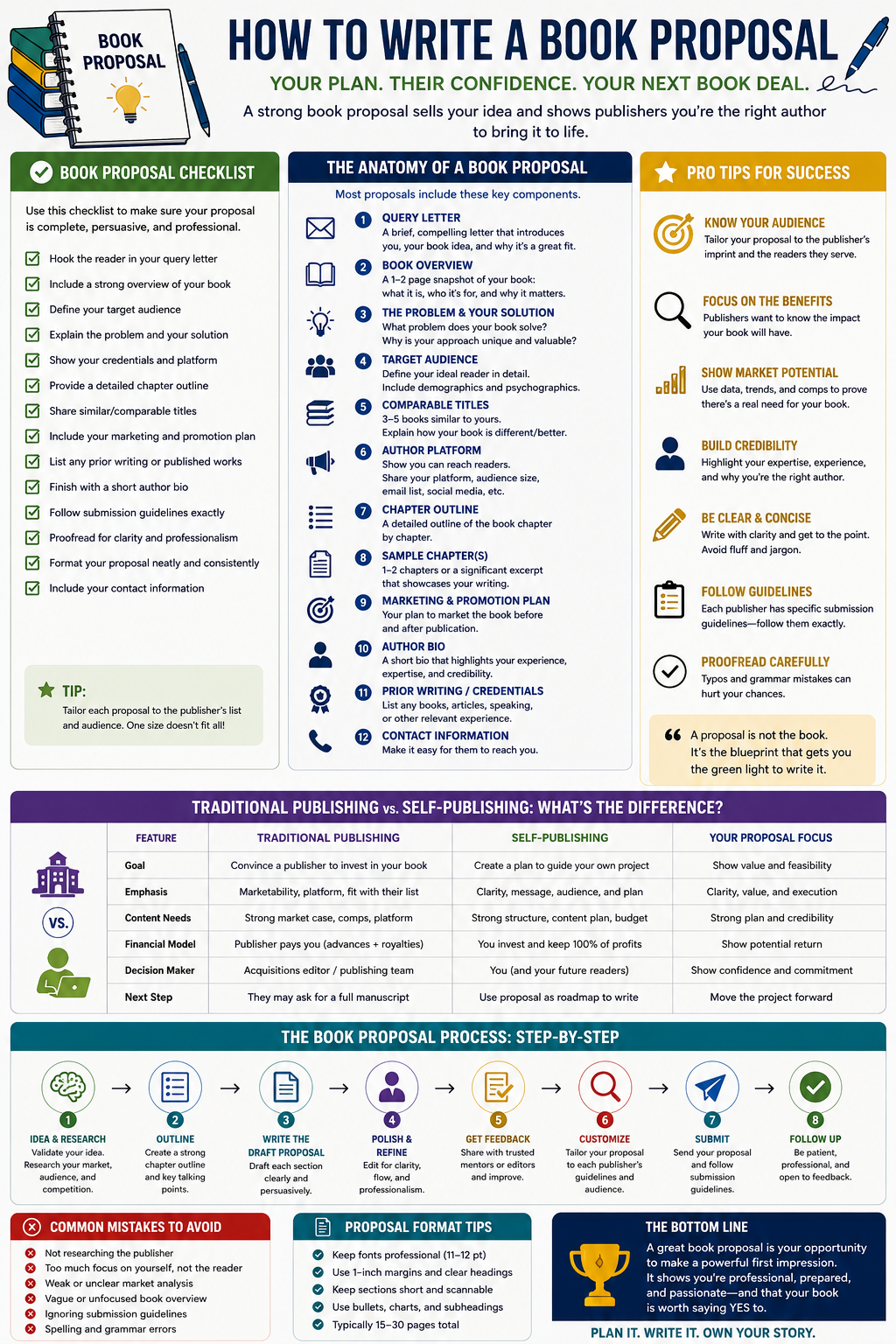
When authors search for how to write a book proposal, they often encounter checklists describing individual proposal sections.
Those lists can identify common elements, but they do not solve the more important problem.
Every part of a proposal should support a coherent case for the book.
A nonfiction book proposal may address the concept, intended audience, author background, comparable or competing books, chapter direction, and plans surrounding the project. The exact requirements can vary based on the publishing path and the recipient evaluating the proposal.
Simply filling in headings does not make those pieces persuasive.
The information needs to work together so someone evaluating the project can understand the book as a whole.
Your Book Proposal Should Clarify the Reader
A book cannot be for everyone.
One of the most important questions is who should read it.
A leadership book written for first-time managers may need different positioning from one written for senior executives. A book based on professional expertise may serve industry peers, consumers, business owners, students, or another defined audience.
Clarity about the reader affects more than the proposal.
It can influence the voice of the manuscript, chapter structure, examples, title, cover direction, marketing, and overall publishing plan.
This is why defining the target audience before publication can prevent larger problems later and, when the proposal covers marketing, help show existing connections to potential readers.
The Author Proposal Should Explain Why You Are the Right Person to Write the Book
For experts and professionals, the author is often part of the value of the project.
Your professional experience, knowledge, perspective, and relationship to the subject can help explain why this book should come from you.
An author proposal should therefore do more than provide an author bio.
The relevant question is how your background supports the book you are proposing. It should show why you are the perfect author to write this particular book.
An educator writing about education has a different relationship to the subject than an executive writing about leadership. A consultant may have developed insights through years of professional work. Another author may have personal experience that directly informs the book's central idea.
The strongest information depends on the project.
The objective is to connect the author with the book naturally and credibly.
Positioning Matters Before the Manuscript Is Finished
Authors sometimes assume positioning is a marketing decision that comes after writing.
Waiting that long can create problems.
If the book's purpose, audience, and central promise are unclear, those issues can spread throughout the manuscript. Chapters may overlap. Interesting material may not support the main idea. The biggest mistake is often a flabby or unfocused concept that tries to address several audiences at once.
A well-developed book proposal forces important questions to be considered earlier. Developing a persuasive proposal can take weeks because the positioning, audience, and structure need to be worked out carefully.
That clarity can help shape the project whether an author intends to pursue a traditional opportunity or professional independent publishing.
Comparable Books Help Define the Publishing Space
Your book will enter a market where readers already have choices among competitive titles in the same space.
Understanding other books in the same general space can help clarify where your project belongs. In most cases, your proposal should identify 3 to 5 recently published comparable books from the last 3 to 5 years, and it may include 5 to 10 comparable titles overall depending on the project.
The purpose is not to copy another author's approach.
It is to understand how your book relates to existing conversations and what makes its perspective distinct. For each entry, mention the title, author, publisher, and publication year, then briefly summarize the book in roughly 100 to 200 words.
For a professional author, this exercise can also reveal whether the current book concept is specific enough. If the project sounds almost identical to several existing titles, its positioning may need greater definition. As a rule, avoid self-published comp titles unless there is a clear strategic reason and the comparison is genuinely relevant.
A Nonfiction Book Proposal Should Support a Publishing Decision
A nonfiction book proposal should help turn an idea into a project that can be evaluated.
That evaluation can take different forms depending on the author's goals.
An author pursuing a traditional path may be preparing materials for industry consideration, typically as a proposal package that includes a detailed chapter outline, clear chapter titles, and sample chapters. An independently publishing author may use the proposal-development process to clarify the project before investing further in writing, editing, design, production, and marketing.
In both situations, the proposal can create discipline around the project.
A strong proposal usually includes a chapter-by-chapter outline summarizing what each chapter will cover.
That sample material is essential for demonstrating writing quality and showing the manuscript can deliver on the book's promise.
It asks the author to move from "I want to write a book about this subject" toward a much clearer understanding of the book, reader, structure, positioning, and purpose.
Your Publishing Plan Should Match Your Goals
There is no single publishing path that is appropriate for every author.
Some authors are interested in traditional publishing. Others want greater control over the timing and direction of their project through professional independent publishing. Some may still be evaluating their options.
A thoughtful publishing plan begins with the author's objectives. It should also include a realistic marketing and publicity plan for how the book will be sold, functioning almost like a business plan for the project.
Is the book intended to support an existing professional brand? Is it part of a speaking or consulting strategy? Is the author's main goal to educate readers? Is the book intended for a defined professional audience? The plan should name specific actions, include measurable goals, and show past success in how you reach readers.
These questions can influence decisions throughout the project.
Avoid tentative wording about what you might do later, and make concrete commitments instead. The important point is to make publishing decisions intentionally rather than simply completing a manuscript and wondering what happens next, especially when a publisher is deciding whether the book can make money.
A Professional Book Also Represents Your Reputation
For executives, educators, experts, and professionals, a book is often connected to an existing reputation.
Readers may already know you through your career, organization, speaking, teaching, consulting, or professional network.
That raises the standard for the finished project.
A book associated with your name should feel consistent from concept through final presentation. Weak positioning, unclear writing, poor editing, or an unprofessional visual presentation can distract from the expertise the book is intended to communicate.
The proposal stage is an opportunity to think about that larger picture.
The question is not merely whether you can write enough words to create a manuscript.
It is whether those words can become the right book for your audience and professional goals.
Professional Support Can Help Turn Expertise Into a Publishing Project
Knowing your subject does not mean you need to become an expert in every part of publishing.
A professional may have decades of experience in a field but limited experience developing a commercial book concept. Another author may be comfortable writing but need editorial guidance. In competitive nonfiction categories, publishers often expect a sizable platform and visibility to tens of thousands of people. Someone else may have the expertise and concept but need professional writing support to develop the manuscript.
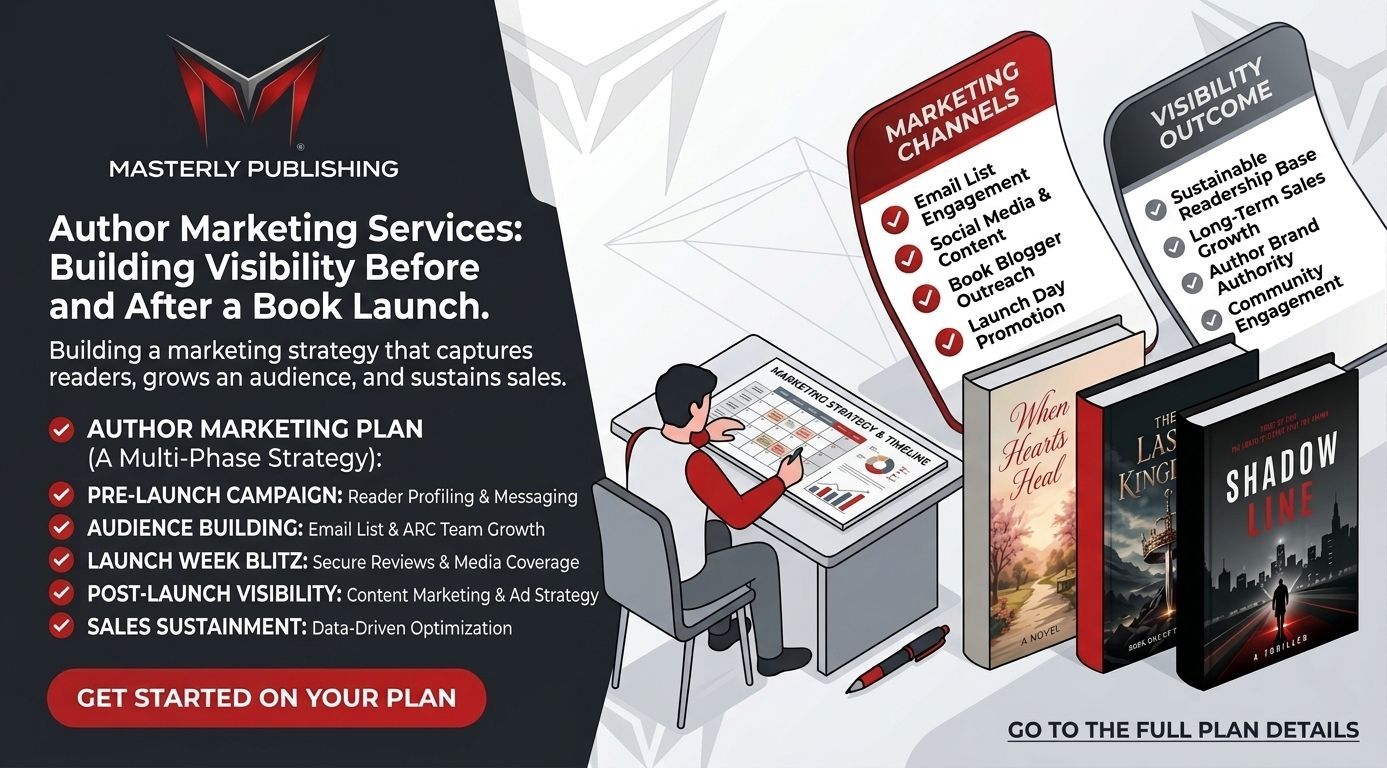
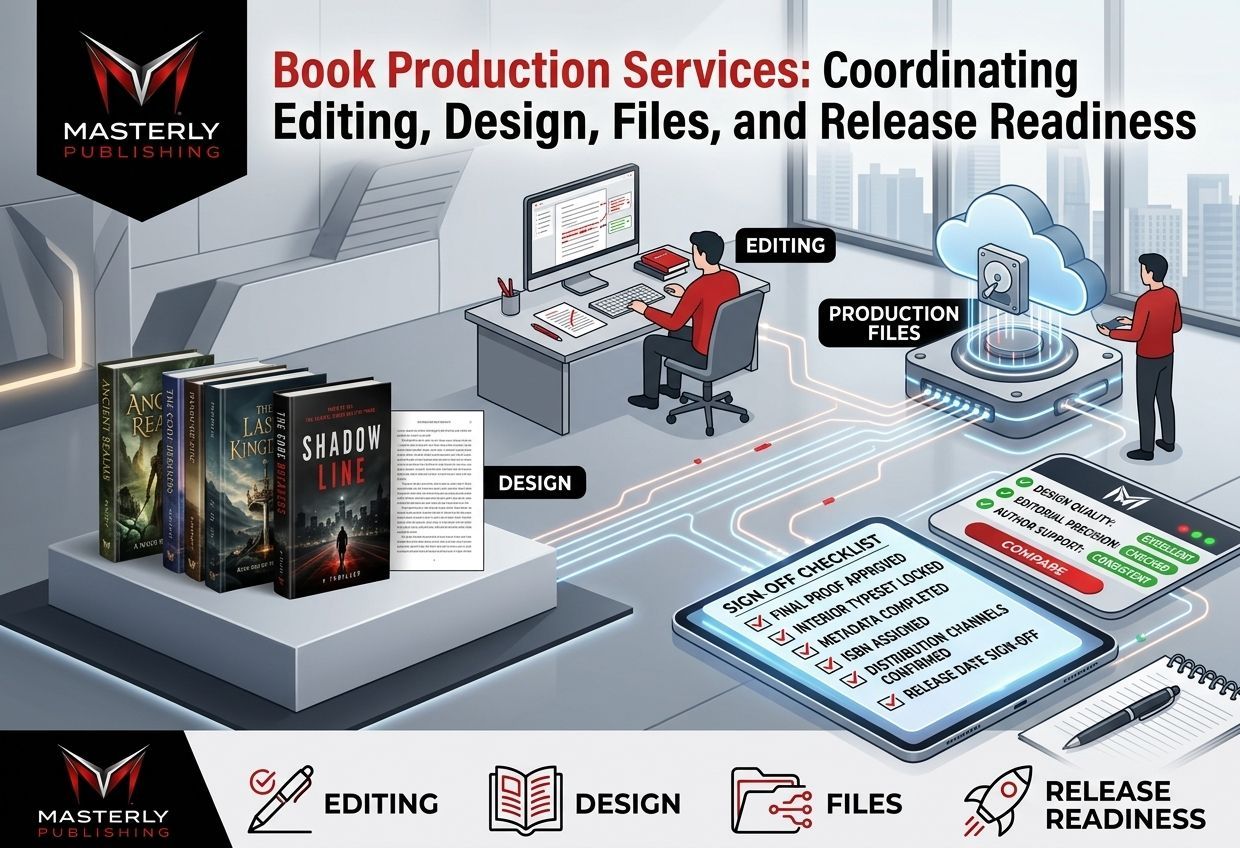
Masterly Publishing offers authors support across multiple parts of the publishing process, including ghostwriting, editing, book design, publishing, and marketing.
That broader perspective matters because proposal development does not exist separately from the finished book or from how writers can reach large numbers of readers in the publishing industry.
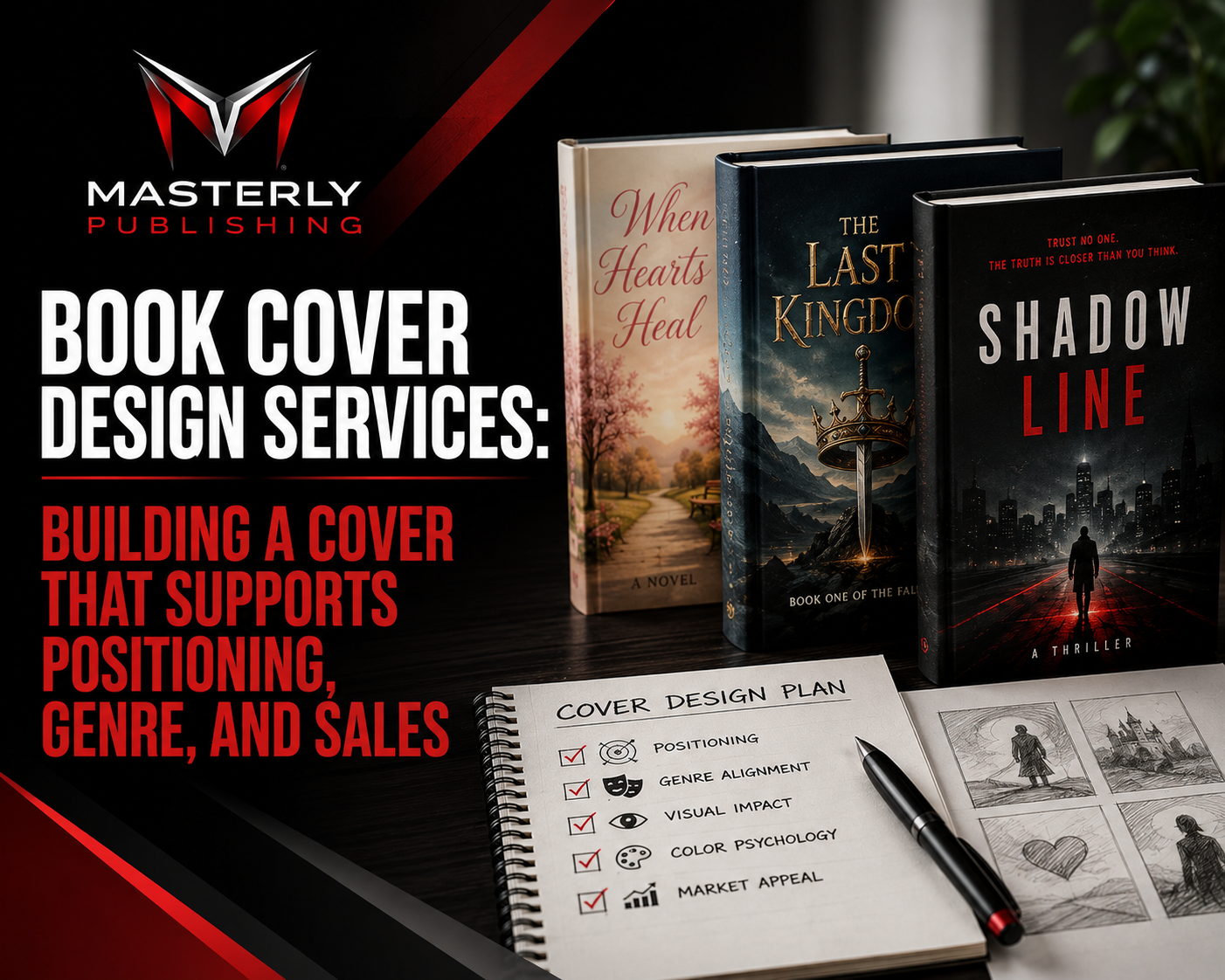
The concept affects the manuscript. The audience affects the editing. Positioning can affect the title and cover direction. Publishing decisions influence how the project moves toward release.
A connected approach can help authors make those decisions with the finished project in mind.
Masterly Publishing Provides a Done-for-You Path Forward
If you are trying to understand how to write a book proposal because you have a serious nonfiction project in mind, you do not have to turn the process into another profession.
Your primary responsibility is the expertise, experience, or story behind the book.
Masterly Publishing can work with authors who need professional help turning that knowledge into a structured publishing project.
Depending on the needs of the individual author, that conversation may involve the book's concept, writing, editing, design, publishing direction, or marketing considerations. Some categories, including memoir, may need a more compelling platform and sharper positioning before the project is ready for serious traditional consideration or a book deal.
The appropriate scope should come from the project rather than forcing every author into the same publishing process.
For a professional whose reputation is connected to the finished book, that individualized approach matters.
Clarify the Book Before You Commit to the Wrong Direction
A publishing project requires time, attention, and important decisions.
Clarity early in the process can help ensure those decisions are connected to the same goal.
Your book concept should be understandable and effectively communicate what the project is about. Your intended reader should be identifiable. Your author positioning should support the subject. The proposal should also explain why the book matters now and why it is timely and needed in the current market. The structure should serve the book's purpose. Your publishing plan should reflect what you want the finished project to accomplish.
Those questions are at the heart of a strong proposal.
Whether you intend to pitch the project or pursue professional independent publishing, the objective is not simply to create another document.
It is to establish a clearer foundation for the book.
Turn the First Draft Into a Better Book With a Clear Publishing Direction
For an author developing a first book, the very first thing to clarify is whether the idea can support the kind of professional project you want to publish. A narrative nonfiction title, self help book, or other nonfiction project requires more in depth planning than turning a blog post, post, or collection of more posts into a manuscript. Authors who have written three books may understand this difference from experience, while a first-time author may benefit from working with professional editors who can identify common mistakes and common pitfalls before the first draft moves toward a finished print book.
Publishing resources and experts such as Jane Friedman also discuss book proposals, publishing strategy, and the business side of authorship, but reading a quick rundown, taking a course, consulting a best friend, or following advice from many editors cannot replace professional guidance tailored to your specific project. Masterly Publishing can help you evaluate your concept, strengthen the manuscript, consider how you may test market its positioning when appropriate, and make informed decisions that support a better book and the role you want it to play in your professional life.
Frequently Asked Questions About How to Write a Book Proposal
How to write a book proposal for a nonfiction book?
Understanding how to write a book proposal starts with clearly defining the book concept, target reader, author positioning, proposed content, and publishing purpose. For non fiction, that usually means showing why the author is qualified, how the non fiction book fits its market, and what readers will gain. Specific requirements can vary depending on where and how the proposal will be used. Many proposals run about 10 to 25 pages, though some standard nonfiction book proposals can extend to 15 to 50 pages depending on the project and included material.
What is a book proposal?
A book proposal is a professional document that gives an overview of a proposed book and the market case for it. That overview helps the recipient understand the project quickly and sets up the entire document. For nonfiction projects, it can address the concept, audience, author, market positioning, proposed content, and other relevant information.
Do I need a nonfiction book proposal before writing the entire manuscript?
It depends on your publishing path and project. Proposal development can still be valuable before a manuscript is complete because it helps clarify the book's direction, audience, and positioning. If you plan to submit for traditional consideration, a complete manuscript may still be expected for some categories, and standard proposal formatting often includes 12-point type, double-spacing, and 1-inch margins. Clean, professional fonts such as Times New Roman and simple headers with the author's last name, book title, and page number are also commonly expected.
What is the difference between a book concept and a book proposal?
A book concept is the central idea and purpose of the book. A proposal develops that idea into a more complete presentation of the project, its audience, author, positioning, and proposed content. It should present the entire book clearly enough for a publisher or literary agent to understand the concept, market, and structure.
Can a book proposal help an independently published author?
Yes. Even when a proposal is not being submitted to a traditional publisher, developing the underlying information can help an independent author clarify the book before moving deeper into writing, editing, design, and publishing. If a proposal is submitted to a traditional publisher, some authors also prepare a query letter or cover letter with their materials, depending on the recipient’s submission guidelines.
Does an author proposal need to explain the author's professional background?
For many nonfiction projects, relevant author experience can help establish the author's connection to the subject. Your background should also help convince agents or publishers that you’re qualified to write the book. The information included should be appropriate to the individual project.
Should my publishing plan be decided before my book is written?
You do not necessarily need every publishing decision finalized before writing. However, understanding your goals and likely publishing direction can help inform decisions about the manuscript and overall project. The right publisher depends on your book’s category, intended audience, and your broader goals as an author. If you plan to pursue a traditional route, a clear publishing plan can also help you identify suitable publishing houses.
Can Masterly Publishing help me develop my book?
Masterly Publishing provides professional services for authors that include writing, editing, book design, publishing, and marketing support. Contact the team to discuss your specific project and determine which services are appropriate.
How to Write a Book Proposal: Start With a Professional Publishing Consultation
If you are searching for how to write a book proposal because you have expertise, experience, or a nonfiction idea worth developing, the next step does not have to be creating the entire publishing plan yourself.
Masterly Publishing works with authors who want professional support turning serious book ideas into professionally developed publishing projects.
Start by discussing your book proposal, audience, book concept, manuscript needs, and intended publishing plan with a professional team.
Whether you plan to pitch a publisher or publish independently, the first step is to clarify your book idea and proposal requirements before you start writing.
Request a publishing consultation with Masterly Publishing.
Call: (888) 209-4055
Website: https://www.masterlypublishing.com/