

Trademark Filing Services for Authors: Protect Your Book Title, Pen Name, and Series Brand Before Launch
Launching a book is exciting, but it can also feel like stepping onto a stage with bright lights and no protection. You’ve poured time into your manuscript, invested in editing, built a cover that finally looks “real,” and started talking about your release. Then, out of nowhere, you discover another author already using the same name, a look-alike brand, or a confusingly similar series title. For many writers, that moment turns into panic because they realize branding isn’t just creative—it’s legal.
At Masterly Publishing Group, we help authors build more than a book—we help you build a real, protected publishing brand. Whether you’re brand-new to self-publishing or you’ve already released multiple projects, you deserve a launch plan that doesn’t leave your identity exposed. The truth is, the author world is competitive, and once your content goes public, it’s easier for others to copy than most people want to believe. Smart authors protect early so they don’t have to fight later.
Trademark planning isn’t about being dramatic or “thinking too big.” It’s about being realistic and protecting what you’re building before you spend money on marketing, ads, and visibility. Your book title, pen name, and series identity can become valuable assets faster than you expect. In many cases, trademark planning is the difference between building momentum confidently and constantly worrying about being forced to change your name midstream.
This guide explains how trademarks work for authors, what can be protected, and how experienced legal support can prevent costly surprises. We’ll walk through common brand risks authors face, what the trademark registration timeline looks like, and how trademark attorneys help writers make smart, defensible decisions. If your goal is a strong launch and long-term career growth, this is one of the most important steps to consider before release day.
Your Book Launch Is a Business Moment, Not Just a Creative Moment
Most writers think about cover design, formatting, and distribution first, and that makes sense. But your launch is also a business move, and every business needs identity protection. The moment you start marketing your book, you’re creating a brand impression in the minds of readers. That impression becomes value, and value attracts attention—sometimes the wrong kind.
When authors skip legal planning, they often discover problems only after success begins. That’s because growth increases visibility, and visibility increases risk. When your brand starts to spread, that’s exactly when conflicts show up. If you want to build confidently, you must protect the foundation early.
What a Trademark Really Means for Authors
A trademark is more than a logo or a corporate name. It’s a legal tool tied to brand identity that helps consumers identify the same source of goods or services. For authors, that can include a series name, publishing imprint, or other branded elements connected to your work. A strong trademark gives you leverage when someone else tries to create confusion in the market.
Many authors assume copyright handles everything, but that’s not true. Copyright law generally protects the content of the book, like the words and creative expression. A trademark is what helps protect brand identity and marketplace recognition. If your name, series, or imprint is the recognizable part, trademark planning becomes essential.
Why Book Titles, Pen Names, and Series Brands Create Risk
It’s common for two authors to accidentally choose similar titles or branding. That’s because creative communities naturally reuse themes, phrases, and trends. The problem is that marketplaces don’t care if the conflict was accidental once confusion starts affecting buyers. If readers believe two products come from the same source, that creates a serious legal issue.
Your pen name can also become a commercial identity, especially if you publish consistently. The same goes for a series brand that expands across multiple titles, formats, or merchandise. That’s why the best brand protection starts before launch, not after the first problem. Planning early gives you more options and less stress.
Understanding Trademark Rights Before You Go Public
Trademark rights are tied to use, recognition, and legal registration strategy. Some rights exist through use in commerce, but relying on that alone can leave you vulnerable. Formal registration through the USPTO can strengthen your position significantly. It’s a smart step when you plan to grow and promote.
Authors often assume they “own” a name because they thought of it first. But ownership isn’t just an idea—it’s tied to marketplace use and legal protection. If someone else filed first or has stronger use evidence, you may be forced to rebrand. That’s why smart planning includes clearance and a filing plan.
Trademark Registration Isn’t Just for Big Publishers
Independent authors can build powerful brands, and those brands deserve protection. In fact, self-published authors are often at higher risk because they are building in public without legal support behind them. When your release gains traction, people notice. And when people notice, copycats sometimes follow.
Trademark registration can help prevent brand hijacking and confusion. It can also strengthen your ability to remove imitators and protect your reputation. Authors who plan to expand into courses, podcasts, merch, or speaking should take this seriously. Your book may be the start, but your brand can become the real asset.
What Can Authors Actually Register as a Trademark?
Not everything qualifies for a trademark, but many author-related brand elements can. This includes series names, publishing imprint names, certain pen names, and recognizable logos used commercially. In some cases, a tagline or branded phrase can qualify too. The key is using it consistently as a brand marker.
A single book title is often harder to protect, but series branding is more likely to qualify. That’s why authors should think bigger than one project. If you plan multiple books under a shared identity, that identity may be worth protecting. A strong strategy prevents you from building on a name you can’t secure.
Brand Names, Business Name Choices, and Publishing Imprints
Many authors create a publishing imprint or brand name without realizing it functions like a business name. They put it on covers, websites, and marketing assets. That imprint becomes a signal of quality and identity. If someone else uses a confusingly similar name, readers may assume you’re connected.
A smart trademark plan considers your imprint as a core asset. It also considers how you present your brand on marketplaces. Even if your legal entity isn’t public, your imprint still acts like a public-facing brand. Protecting it helps prevent future identity disputes.
Domain Names and Why They Matter More Than Authors Think
Authors often buy domain names after they choose a pen name or series idea. That’s smart marketing, but it’s not the same as legal ownership. Owning a domain does not automatically give you trademark rights. It only gives you control of that web address.
Still, domains matter because they are part of brand consistency and authority. If you build your marketing on a domain and later face a conflict, rebranding becomes painful. A strong legal plan aligns your domain strategy with your trademark strategy. That’s how you build a launch that’s safe long-term.
Trademark Clearance: The Step Authors Skip Until It’s Too Late
Trademark clearance is about finding out if your name creates legal risk before you invest in it. Many authors skip this because they assume “it’s probably fine.” Unfortunately, “probably fine” isn’t a strategy when you’re building a public brand. Clearance gives you clarity before the market reacts.
This step is especially important if you’re investing in professional cover design, audiobook production, or paid marketing. The more money you put behind a name, the more expensive it becomes to change it. Clearance helps prevent sunk-cost disasters. It’s one of the smartest early moves authors can make.
Trademark Clearance Searches and What They Actually Do
Trademark clearance searches go beyond basic Google searches. They look for existing trademarks, confusingly similar marks, and risks that could lead to rejection or conflict. Many authors don’t realize how strict similarity rules can be. A small spelling change may not be enough to avoid conflict.
Professional searches help you make informed decisions. They can reveal similar marks in related categories and identify risks before you file. They also help you choose a name that is defensible long-term. For authors, this can protect your entire series identity.
How Trademark Attorneys Conduct Trademark Clearance Searches
When trademark attorneys conduct trademark clearance searches, they focus on legal risk, not just visibility. They’re not only asking “does someone else have this name?” They’re asking “will this create confusion, and will the USPTO reject it?” That legal viewpoint is what protects you from surprises.
This is where many DIY filers get stuck. They search online, feel confident, file, and then receive a refusal or conflict they didn’t expect. A skilled attorney sees issues before they explode. That foresight is what makes trademark work valuable.
The Trademark Registration Process for Authors
The trademark registration process involves more than submitting a form. You must choose the correct goods and services category, define how the mark is used, and make decisions that affect legal scope. A poorly drafted application can lead to delays, restrictions, or rejection. For authors, the details matter.
The process also requires strategy because the USPTO reviews applications carefully. If the USPTO believes the mark is too generic, confusingly similar, or improper, the application can be refused. Professional support can reduce those risks. When you file correctly, you protect your launch timeline.
Filing Basis: How You File Changes Everything
Your filing basis matters because it determines how you prove the mark is being used. Some authors file based on current use, and others file with the intent to use. The correct choice depends on whether you’ve already launched publicly. Making the wrong choice can create complications later.
This is why legal guidance matters before you file. You want your application to match reality and marketplace timing. Your filing basis should align with your publishing schedule and your promotional calendar. That’s how you avoid disruption when your book releases.
Trademark Applications and the Details That Trigger Problems
Trademark applications are often rejected because of small mistakes that become big obstacles. The application may describe the mark incorrectly, choose the wrong classification, or fail to show proper use. The USPTO is strict because registration creates legal rights. When errors happen, the timeline slows down.
Authors are often surprised by how technical applications can be. You can have a strong brand and still file incorrectly. That’s why trademark attorneys focus on precision and defensibility. Good drafting can prevent months of delays and confusion.
The Trademark Office and How Review Works
The trademark office reviews each application to determine if it meets legal requirements. This includes checking for conflicts and evaluating whether the mark is registrable. The office may refuse marks that are too descriptive or too similar to existing brands. Many authors don’t realize this stage can be unpredictable.
USPTO review is not personal—it’s procedural. But the outcome can feel personal when your launch name is on the line. That’s why you want a strong filing from the beginning. A good filing reduces risk and increases confidence.
Office Action Letters and How Authors Should Respond
An office action is an official letter from the USPTO raising issues with your application. It can include refusals, technical problems, or requests for clarification. For authors, receiving an office action can feel like a crisis. But it’s often a solvable step with the right strategy.
Office actions must be answered properly and on time. A weak response can lead to abandonment of the application. That can waste months and require re-filing. Skilled support helps authors respond with clarity and protect their investment.
The United States Patent and Trademark Office and Your Publishing Brand
The United States Patent and trademark system exists to protect consumers and support brand clarity. The patent and trademark office processes registrations that establish legal rights. Authors who build a recognizable brand benefit from using the system properly. It strengthens your position as you scale.
Many authors only learn about the USPTO after a conflict arises. That’s the worst time to learn. When you plan early, you can avoid disputes and launch with confidence. Your brand deserves that stability.
Trademark Protection and Brand Protection for Authors
Trademark protection is not just about stopping counterfeiters. It’s about preventing confusion and protecting your reputation. Your brand is what readers remember, and reputation drives sales. If someone else uses a similar identity, it can poison your brand message.
This is why brand protection is an author growth strategy. It helps you maintain clarity as you expand. It also protects long-term projects like sequels and spin-offs. When your brand is protected, your marketing becomes more powerful.
Trademark Infringement and the Real Risk to Authors
Trademark infringement happens when someone uses a mark that creates confusion with an existing protected brand. For authors, this can look like similar series names, similar publishing imprints, or confusingly similar pen names. Even if the other person claims it was an accident, confusion still creates harm. That’s where legal action can start.
Infringement is especially dangerous when both parties sell in the same category. Readers may buy the wrong book or assume the quality is linked to you. That can damage reviews, sales, and trust. Protecting early helps reduce this risk.
Trademark Enforcement and How Rights Are Defended
Trademark enforcement is how rights are protected when someone steps over the line. This can involve cease-and-desist actions, marketplace takedowns, and formal disputes. Authors often think enforcement is only for large corporations, but authors can and do enforce their brands. When your career is built on identity, you must defend it.
Enforcement requires strategy because aggressive action can create backlash if handled poorly. That’s why working with legal professionals matters. You want to protect your brand without creating unnecessary conflict. A smart enforcement plan defends your rights while preserving credibility.
Trademark Counseling That Helps You Plan Like a Real Publisher
Trademark counseling helps authors think long-term instead of reacting to emergencies. It includes guidance on what to protect, when to file, and how to structure brand assets. Many authors file too late or file the wrong thing. Counseling helps prevent that mistake.
It also helps authors build a trademark roadmap. That roadmap can cover your pen name, series identity, and publishing imprint. When authors plan like publishers, they scale faster and safer. Counseling creates clarity, not confusion.
Trademark Strategy and Trademark Portfolios for Serious Authors
A trademark strategy is about building protection in stages. You don’t always have to register everything at once, but you should know what matters most. Some authors eventually build trademark portfolios as they expand into multiple genres, brands, and creative products. That portfolio becomes a long-term asset.
A portfolio approach is especially valuable for authors who want to build a recognizable imprint. It can also support growth into audiobooks, children’s products, and educational programs. Authors who treat their brand like property protect it better. That’s how strong brands survive.
Intellectual Property: How Trademarks Fit With Copyright and Patents
Authors often hear the term intellectual property and assume it only means copyright. But intellectual property includes trademarks, patents, trade secrets, and more. For writers, trademarks and copyright are the most relevant. Copyright protects the book’s expression, while trademarks protect brand identity.
Some authors also ask about patents, especially if they’ve created a unique product or method related to their book business. Patents are a different system with different rules. Still, understanding intellectual property helps authors make smarter decisions. The better you understand IP, the safer you build.
Trade Dress and Visual Branding for Publishing
Trade dress can protect certain visual aspects of branding when they are distinctive and recognizable. For authors, this might relate to consistent series cover design elements, packaging presentation, or brand visuals that create immediate recognition. Not every design element qualifies, but in some cases it matters. The goal is protecting what the market recognizes as uniquely yours.
Visual brand consistency is a serious business asset. That’s why professional design combined with legal strategy matters. When visuals and legal protection align, brands become stronger. Authors who build recognizable visuals build stronger marketplaces.
Disputes, Litigation, and When Trademark Trials Happen
Sometimes conflicts cannot be solved through simple communication. That’s when a dispute may escalate into formal legal action. Litigation can happen when infringement causes financial harm or brand confusion continues. While most authors want to avoid litigation, understanding the risk helps you plan better.
Trademark conflicts can also reach specialized legal proceedings. These disputes can involve cancellations, oppositions, and appeals. When your brand is a central asset, you need a plan to defend it. The best time to plan is before conflict begins.
Trial and Appeal Board Proceedings Authors Should Know About
Trademark disputes often involve the trial and appeal board, sometimes called the appeal board. This is where certain trademark disputes are handled, including opposition and cancellation matters. Many authors have never heard of these proceedings until they’re in trouble. But knowing they exist helps you understand the stakes.
Proceedings can involve arguments about confusion, priority, and eligibility. They can also involve strong evidence and legal briefs. This is where trademark attorneys provide critical protection. Their role is to represent clients strategically and keep cases focused.
Opposition and Cancellation Proceedings: What Can Stop Your Registration
Opposition and cancellation proceedings can delay or destroy a registration if another party challenges your mark. An opposition happens when someone objects before registration is granted. A cancellation can happen after registration if someone argues it should not remain active. These are serious procedures.
Authors who launch with a name that conflicts may face opposition from existing trademark owners. Even if you didn’t intend harm, the conflict can still be challenged. That’s why clearance searches matter. Prevention is easier than defending a dispute.
USPTO’s Trademark Trial and the Reality of Challenges Brought Against Authors
Sometimes cases involve the uspto's trademark trial processes under the trial and appeal board system. When challenges brought against an author’s mark happen, emotions can run high. Authors feel attacked, especially when the brand is personal. But legal proceedings are about evidence and legal standards, not feelings.
This is where skilled guidance protects your decision-making. A calm, strategic response often leads to better outcomes. It also protects your public image, which matters for authors. Strategy reduces damage and improves results.
Federal Court Risks and When It Goes Beyond the USPTO
Trademark disputes can sometimes reach federal court, especially when infringement causes major marketplace harm. Most authors will never end up in federal court, but it can happen in serious conflicts. That possibility is why early legal planning matters. A strong trademark foundation can prevent escalation.
When disputes reach this level, the cost and complexity increase. That’s not a place authors want to end up unexpectedly. Strong early filing reduces the risk of expensive litigation. It’s one of the biggest reasons authors get professional support early.
Due Diligence, Corporate Transactions, and Brand Value
Authors who build successful brands may eventually face opportunities involving partnerships or corporate transactions. That might include licensing, imprint acquisition, or joint ventures. In these moments, due diligence becomes important. The value of your brand is stronger when your trademarks are clean and defensible.
Investors and partners often want proof of ownership and protection. That includes registrations, filing history, and dispute history. When your legal foundation is messy, deals can collapse. When your foundation is clean, your brand becomes more valuable.
How Trademark Attorneys Assist Clients Through the Entire Process
Trademark attorneys do more than file paperwork. They guide strategy, reduce risk, respond to USPTO communications, and help enforce rights when needed. They also help authors avoid common mistakes that delay or weaken protection. When authors work with professionals, they move faster and safer.
Attorneys also help choose the right mark presentation and coverage. They help authors understand brand strength and how to avoid confusion issues. Most importantly, they represent clients with a legal mindset that protects long-term growth. For authors building careers, that guidance matters.
Best Lawyers, Top Rated Attorneys, and the Value of Experience
Authors often search for the best lawyers or top rated attorneys because they want confidence. That’s understandable, because the wrong filing can lead to rejection and lost time. Experienced legal support increases clarity and reduces wasted effort. It also helps authors avoid overpaying through mistakes.
Professional legal guidance isn’t about being fancy. It’s about avoiding problems that cost more later. The goal is protection, not stress. When authors get the process right, they launch with confidence.
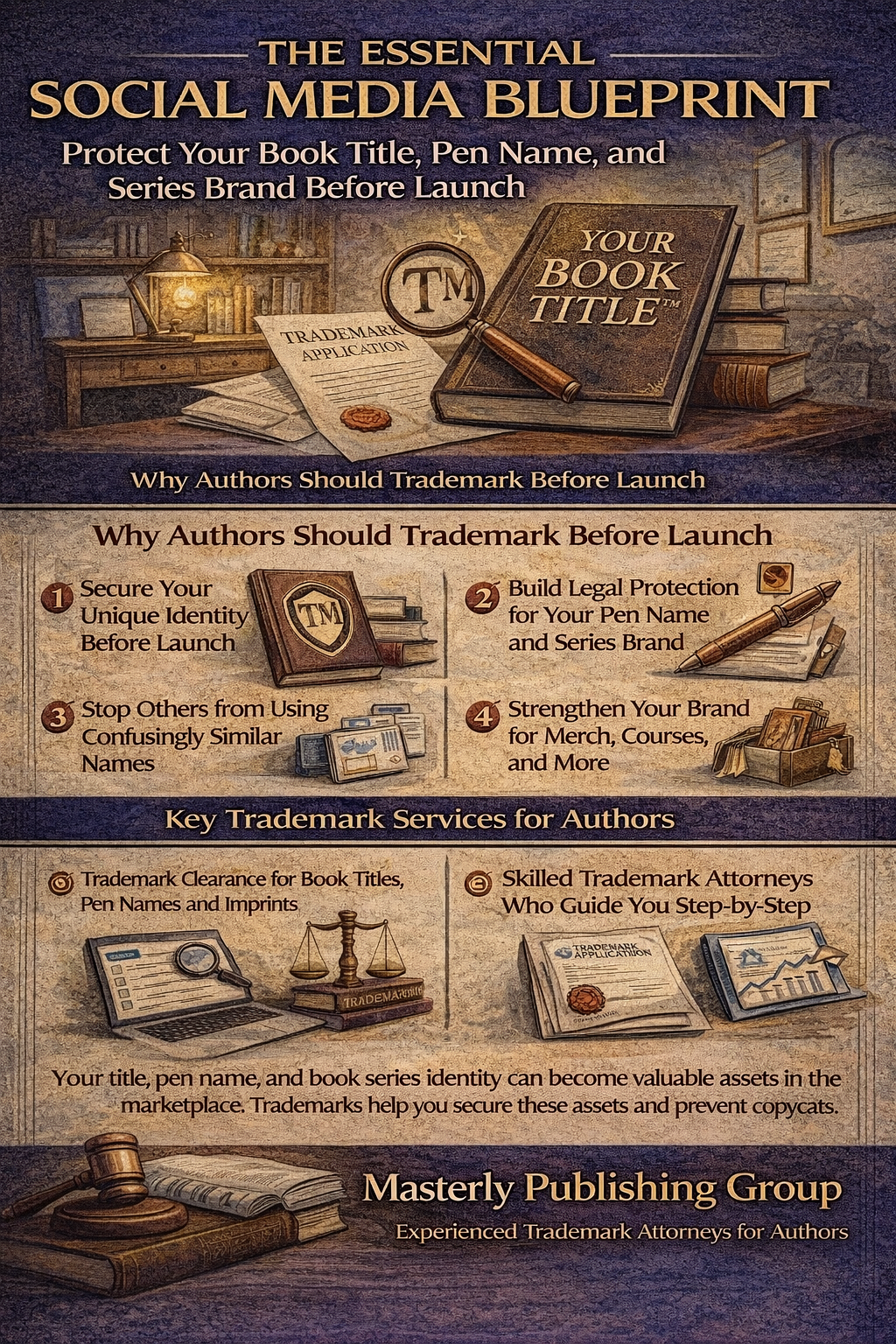
How Masterly Publishing Group Helps Authors Navigate Legal Hurdles
Masterly Publishing Group supports authors who want more than basic publishing help. We provide a professional pathway from manuscript to marketplace with brand strategy and guidance along the way. If you’re building a pen name, a series identity, or a publishing imprint, your legal planning matters. Your brand should not be left exposed while you invest in promotion.
We also help authors plan their creative rollout with marketing-ready assets. Our state-of-the-art content creation studio supports promotional materials, trailers, and podcasts that strengthen visibility. But visibility without protection can create risk. That’s why we help authors think proactively, not reactively.
Launch Before Someone Else Forces You to Rebrand
The painful truth is that many authors only think about trademarks after they’re already visible. By then, they may have covers printed, ads running, and a reader community attached to the name. If a conflict appears, the rebrand can be expensive and emotionally draining. It can also damage trust with readers.
The goal is not to scare you—it’s to protect you. When you prepare before launch, you keep control. You publish with confidence instead of anxiety. That’s the difference between a stable career and constant fear of being forced to change.
Contact Masterly Publishing Group for a Free Consultation
Your book title, pen name, and series identity are more than creative choices—they’re brand assets that can shape your long-term career. If you’re preparing to launch and want to prevent confusion, copycats, or future disputes, now is the time to get ahead of the risk. Waiting until after your book gains traction can create rebranding pressure, delayed marketing, and avoidable legal stress. The smartest authors treat protection as part of the launch plan, not an afterthought.
At Masterly Publishing Group, we help authors build strong brands with professional publishing services and guidance through legal hurdles, including trademark filing services and the support you need to launch with confidence. Whether you’re new to self-publishing or expanding a growing catalog, our team is ready to help you protect what you’re building before it becomes vulnerable. We serve clients nationwide and internationally, and we’re committed to helping writers publish, promote, and protect their work at a professional level.
Call (888) 209-4055 to book your free consultation and get clear answers about trademark strategy for authors.
Disclaimer: This article is for educational purposes only and does not constitute legal advice. Trademark law is fact-specific, and outcomes depend on your unique situation. For legal advice, consult a qualified attorney.