

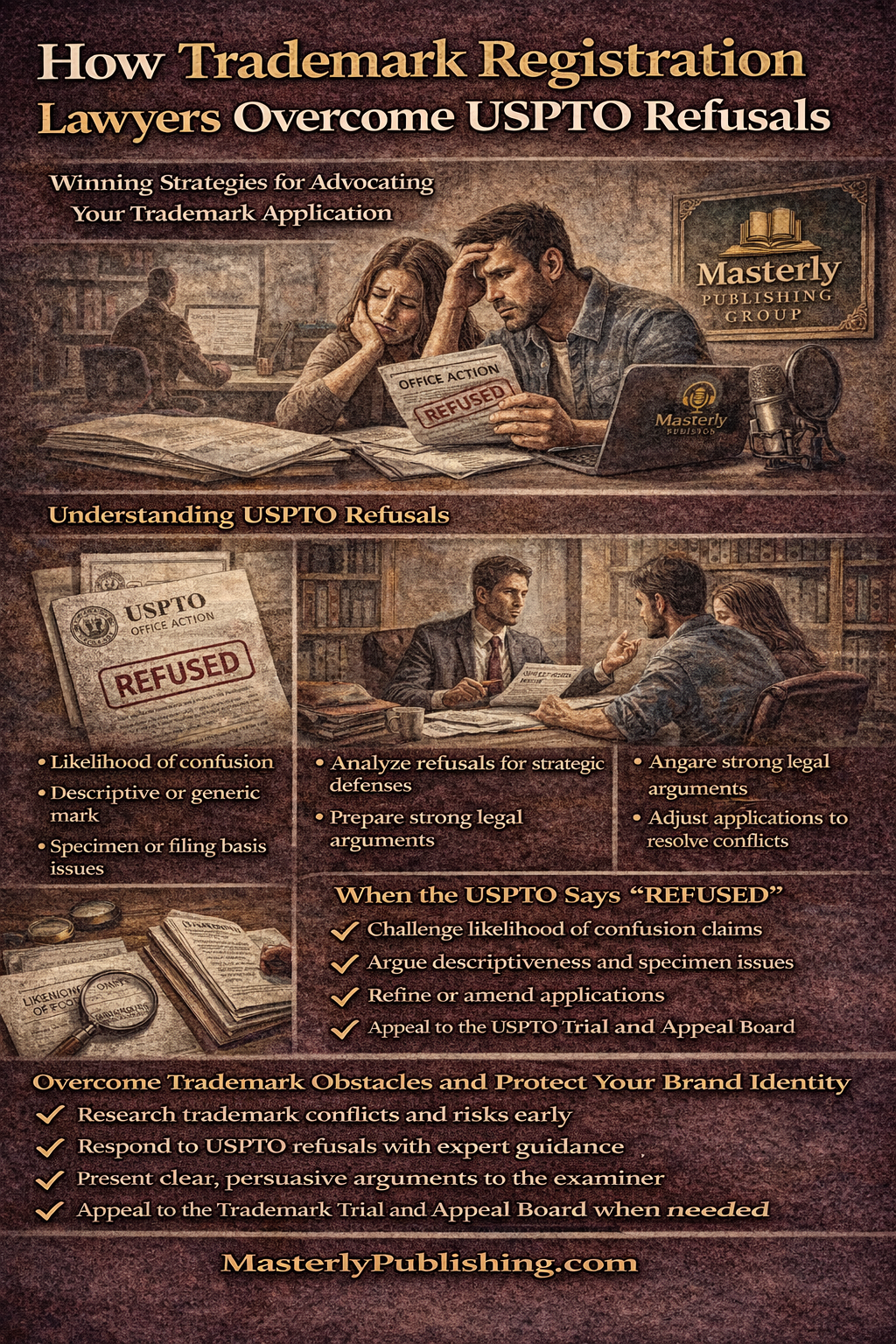
How Trademark Registration Lawyers Overcome USPTO Refusals
If you’ve ever tried to register a trademark and received a refusal from the USPTO, you already know how frustrating it can feel. You may have invested money into your brand name, bought domain names, built a website, designed covers, and started marketing—only to learn your application hit a wall. For self-published authors and professional writers, that moment can be especially stressful because your book title, series identity, or publishing imprint may be tied to your entire business. The good news is that a refusal is not always the end of the road, and with the right strategy, many trademark applications can still move forward.
At Masterly Publishing Group, we help creators bring stories to life while also navigating real-world legal hurdles. From manuscript to bestseller, we support authors with publishing, marketing, and legal services designed for the modern marketplace. Whether you’re launching your first book or building a full media brand, protecting your intellectual property matters. In this article, we’ll break down how trademark attorneys handle USPTO refusals, why the trademark registration process becomes more complex than most people expect, and how experienced counsel can protect what you’re building.
Why USPTO Refusals Happen More Often Than People Expect
Many trademark owners assume the USPTO only rejects applications that are careless or incomplete. In reality, refusals are common, even for smart business owners who are doing everything right. A refusal often comes down to technical rules, filing basis issues, confusing similarities, or classification problems. In many cases, the trademark office is not saying your brand is “bad,” but that it conflicts with trademark law requirements.
It also matters how your trademark is presented in the filing. If your mark is too descriptive, too generic, or too close to another registration, the USPTO may challenge it. The refusal is often delivered through an office action, which is a formal notice that needs a timely and strategic response. This is where trademark attorneys become essential.
Why Trademark Protection Matters for Authors and Publishers
Trademark protection is not just for giant companies. For authors, your trademark might be your pen name, your publishing imprint, your podcast brand, or the name of a book series that readers follow over time. If you plan to scale, trademark registration can help protect your brand identity and create long-term legal protection. This matters when your audience grows, your catalog expands, and your work becomes recognized in the marketplace.
Without registration, it becomes easier for competitors to copy your brand name or use confusingly similar marks. That creates real risk of trademark infringement and brand confusion. Trademark rights can also support business growth and licensing opportunities. When your brand is protected properly, you can build with confidence.
The Role of Trademark Attorneys in the Registration Process
Trademark attorneys do more than fill out forms. They help clients choose strong trademarks, avoid legal landmines, and build a strategy that supports long-term protection. They also handle the trademark registration process from start to finish, including responding to refusals and addressing challenges brought by other parties. For many clients, that guidance is the difference between approval and rejection.
A skilled attorney also provides trademark counseling to help you understand what’s realistic. They can explain how trademark clearance works and why some marks face higher refusal rates. Trademark attorneys help clients protect their intellectual property while reducing the risk of costly disputes later. For authors who are building a business, that guidance is invaluable.
What an Office Action Really Means
An office action is the USPTO’s way of saying, “Your filing needs work.” It may include legal objections, procedural issues, or evidence requests. The trademark office typically gives you a deadline to respond, and missing it can result in abandonment. This is why timely legal assistance matters.
Office actions vary widely in complexity. Some are simple corrections involving classifications or wording. Others raise major legal issues like likelihood of confusion, descriptiveness, or unacceptable specimens. Trademark attorneys read these documents carefully and develop a focused plan to respond.
The Most Common USPTO Refusals Trademark Lawyers Handle
Many refusals fall into predictable categories. Knowing them helps clients understand why the USPTO responded the way it did. It also helps trademark attorneys craft a response that directly addresses the issue.
Common refusal reasons include:
- Likelihood of confusion with an existing trademark registration
- The mark is descriptive or generic under trademark law
- Problems with specimens showing improper trademark use
- Incorrect filing basis or errors in filing details
- Issues with goods and services identification
- Conflicts involving business name usage and same source arguments
Even when these issues appear serious, they can often be handled through a strong response strategy.
Likelihood of Confusion Refusals and How Lawyers Fight Them
Likelihood of confusion is one of the most common reasons a trademark is refused. The USPTO may claim your mark looks or sounds too similar to another registration. The concern is that customers might believe both brands come from the same source. For authors, that could involve similar series titles, publishing imprint names, or brand names related to media platforms.
Trademark attorneys overcome this by comparing the marks carefully and challenging assumptions. They may argue differences in meaning, appearance, pronunciation, or marketplace use. They also analyze whether the goods and services truly overlap. When done well, these responses can reopen the path to registration.
Descriptiveness Refusals and How Strategy Changes
If the USPTO believes your trademark describes what you sell, it may refuse registration. This is common when marks are made of keywords that directly describe a product, service, or genre. Authors sometimes run into this when using terms like “Romance Publishing” or “Mystery Books” in a brand.
Trademark attorneys may respond by showing that the mark is suggestive rather than descriptive. They may submit evidence that the wording is unique or used creatively. In some cases, they seek registration on the Supplemental Register if appropriate. Every response depends on the mark, the marketplace, and the evidence.
Specimen Problems and Proof of Use
A specimen is evidence that your trademark is being used in commerce. Authors and publishing clients often submit website screenshots, book cover images, or online storefront listings. The USPTO may reject specimens that do not show the mark used properly in connection with the goods or services. This can be confusing, especially for first-time applicants.
Trademark attorneys solve specimen issues by guiding clients toward acceptable proof. They help ensure the mark appears correctly, in the right location, and connected to the proper goods or services. They also make sure the filing aligns with the filing basis, which can affect what proof is required. A corrected specimen can often fix the problem quickly.
Trademark Clearance Searches Prevent Refusals Before They Happen
One reason trademark attorneys succeed is that they focus on prevention. Before filing, many lawyers conduct trademark clearance searches to assess risks. This includes researching existing registrations, similar marks, and potential conflicts. These searches can reveal problems before you invest in a mark that’s likely to be refused.
Trademark clearance searches are especially important for business owners and authors building a long-term brand. When you conduct trademark clearance searches early, you reduce the chance of a refusal and reduce future infringement claims. Trademark clearance is not just a formality—it’s a protection strategy. It helps protect your time, money, and reputation.
How Lawyers Respond to USPTO Refusals With Strong Legal Arguments
Responding to an office action is not about writing a long letter. It is about writing the right letter. Trademark attorneys craft responses that are structured, persuasive, and backed by evidence and case law. They understand how the USPTO evaluates arguments and what standards the examiner must follow.
An experienced trademark attorney will focus on the exact legal issues raised. They will provide proof, clarify the record, and address the examiner’s concerns directly. Strong responses can change outcomes, even after an initial refusal. This is where extensive knowledge and strategy make a real difference.
When Amendments Are the Smartest Path Forward
Sometimes overcoming a refusal requires adjusting the application. Trademark attorneys may narrow the description of goods and services, correct filing details, or clarify the mark. These amendments can resolve conflicts and reduce examiner objections. The goal is not to “give up,” but to improve approval chances.
For some clients, narrowing the filing helps protect the mark while avoiding unnecessary disputes. That can be especially helpful for trademark owners who want protection quickly. A focused trademark strategy can keep the application moving while preserving key rights.
The Trademark Trial and Appeal Board and What It Means
If the USPTO refuses the mark after response, you may have the option to appeal. This is where the Trial and Appeal Board comes in, often called the trademark trial and appeal board. The process is formal and requires legal skill, especially when evidence and legal arguments matter.
Trademark trial matters involve briefing and detailed legal analysis. Trademark trial and appeal cases can be complex, but they may still succeed when the refusal was incorrect or overly broad. A skilled attorney can help determine if an appeal is worth it. This decision often depends on business goals and long-term brand value.
USPTO’s Trademark Trial Process and Contested Proceedings
Some disputes escalate beyond standard refusals. When there are contested proceedings, such as opposition and cancellation proceedings, the stakes increase. These processes often involve litigation-style deadlines, discovery, and evidence. The uspto's trademark trial system is designed to handle conflicts between parties over trademark rights.
Trademark attorneys help clients navigate these challenges by developing strong positions and negotiating when appropriate. Cancellation proceedings may occur when someone challenges an existing registration. Opposition and cancellation proceedings often involve brand protection and enforcement strategy. With the right law firm, clients can defend their marks and keep moving forward.
Trademark Enforcement After Registration
Registration is not the end of the journey. Trademark enforcement is part of maintaining rights, especially if others start using confusingly similar marks. Trademark attorneys guide clients on how to respond to infringement, protect domain names, and prevent marketplace confusion. A strong trademark portfolio helps reinforce your business position.
In some cases, enforcement leads to litigation in federal court. That can happen when infringement is serious or ongoing. For publishing clients, enforcement may involve book titles, imprint brands, or online media branding. Protecting the trademark protects the full business ecosystem you’ve built.
How Trademark Lawyers Support Publishing and Corporate Growth
Trademark law often overlaps with corporate transactions, licensing, and partnerships. Trademark attorneys assist clients by protecting brands during acquisitions, publishing deals, and business scaling. This includes due diligence and trademark portfolio evaluation. When done properly, trademark rights increase business value and reduce legal risk.
At Masterly Publishing Group, we understand that publishing is a business. Your intellectual property is a real asset that can be recognized, licensed, and protected. Trademarks can connect to copyright law, copyright matters, and broader intellectual property law strategy. The goal is building a brand that lasts.
Why Authors Should Think Beyond Book Titles
Many writers focus on protecting a single title, but building a brand means thinking bigger. Your trademark might involve your pen name, podcast name, or publishing company brand. It may also include merchandise branding and digital products tied to your platform. This is why trademark strategy should consider long-term growth.
Trademark registration protects more than words—it protects recognition. It supports exclusive rights in your market when properly registered. It also helps prevent confusion and strengthens your ability to register in the future. The best approach is proactive, not reactive.
Trademark Portfolios and Long-Term Brand Protection
A trademark portfolio is a collection of marks that protect different parts of a brand. This may include company names, series names, logos, and product lines. Trademark attorneys help clients build portfolios that align with growth goals. This is especially helpful for authors expanding into courses, podcasts, or media production.
A strong portfolio supports brand protection and reduces the chance of infringement problems. It also helps you protect multiple revenue streams under one umbrella. Many companies use trademark portfolios to create stability and recognition across markets. For authors, it provides peace of mind.
How “Recognized” Legal Guidance Helps Clients Feel Secure
Many clients feel nervous because trademark filings are unfamiliar and intimidating. They worry about spending money and still being refused. They worry that a business name they love might be unavailable. These are valid concerns, and they are why professional legal services matter.
Trademark attorneys help clients feel confident in the process. They help clients understand risk, options, and timelines. They also guide clients through decisions that affect registration success. A recognized legal team makes the process easier to manage and easier to trust.
Why Self-Published Authors Need Both Marketing and Legal Strategy
Publishing success is not just about writing. It is about building a recognizable brand that readers can follow. That brand needs marketing and legal protection working together. Trademark registration supports your ability to promote confidently without fear of losing your identity.
At Masterly Publishing Group, we combine publishing services with brand support so authors can scale. Our Grand Prairie content creation studio helps clients create promotional materials, book trailers, and podcasts that support growth. We serve clients worldwide, helping them build professional publishing foundations. When your brand is protected, your marketing becomes more powerful.
The Difference an Experienced Trademark Attorney Makes
An experienced trademark attorney knows how to anticipate the USPTO’s concerns. They understand how office actions work, how to respond efficiently, and how to protect your position even under pressure. They can also guide clients through appeal board options and litigation risk. This experience saves time and avoids costly mistakes.
Many clients attempt filing alone and get stuck. That does not mean they failed—it means the process is complex. Trademark registration is a legal process, not a simple form. With the right counsel, refusals can often be overcome.
How Masterly Publishing Group Helps Clients Protect Their Brands
We are more than a publishing company. We are a partner for creators who want professional support from draft to distribution—and beyond. We assist clients with publishing, marketing, and navigating legal protection steps that support long-term growth. Whether your trademark relates to your author name, series brand, or business identity, we help you move forward with confidence.
Our team understands the connection between intellectual property, brand protection, and recognition in the marketplace. We work with clients across industries, from books to podcasts to media brands. When challenges happen, we help you respond strategically. Our goal is always to protect your future work.
Contact Masterly Publishing Group for a Free Consultation
If you’ve received a USPTO refusal or you want to protect your author brand before filing, we’re here to help. A skilled uspto trademark attorney can help you respond to office actions, improve your trademark filing strategy, and defend your trademark rights when your application hits resistance. At Masterly Publishing Group, we support self-published authors, professional writers, and growing companies with publishing services and the legal guidance needed to protect the brand you’ve worked so hard to build.
Call (888) 209-4055 to schedule a free consultation, and let’s discuss how we can assist you with trademark registration, brand protection, and overcoming USPTO challenges the right way.
Disclaimer: This article is for informational purposes only and does not constitute legal advice. Reading this content or contacting Masterly Publishing Group does not create an attorney-client relationship. Every trademark matter is different, and outcomes depend on specific facts, filing choices, and applicable law.