

How a Trademark Lawyer Helps Authors Avoid Costly Rebranding
For authors, a name is never just a name. A book title, series name, pen name, or publishing imprint can quickly become the foundation of an entire career. Many writers invest years building recognition, only to discover later that their brand conflicts with existing trademark rights. When that happens, the financial and reputational damage can be significant, and rebranding often becomes unavoidable.
At Masterly Publishing Group, we work with authors who want to grow their careers with confidence. From self-published writers launching their first book to established professionals expanding into global markets, protecting intellectual property is essential. Understanding how a trademark lawyer helps authors avoid costly rebranding can save time, money, and years of hard-earned momentum.
Why Rebranding Is So Costly for Authors
Rebranding is not limited to changing a cover or updating a website. It often means losing recognition, reader trust, and marketing investments built over time. Authors may need to update book covers, revise metadata, change domain names, and reintroduce themselves to their audience.
Beyond expenses, rebranding can damage credibility. Readers may become confused about whether a book or author is the same source they previously trusted.
How Trademark Issues Arise in Publishing
Trademark issues often arise when authors choose names without legal review. Book titles, series names, and business name choices may already be protected by trademark registration. Even unintentional overlap can trigger disputes.
Because trademark law focuses on whether consumers might believe works come from the same source, authors are particularly vulnerable.
The Role of a Trademark Lawyer for Authors
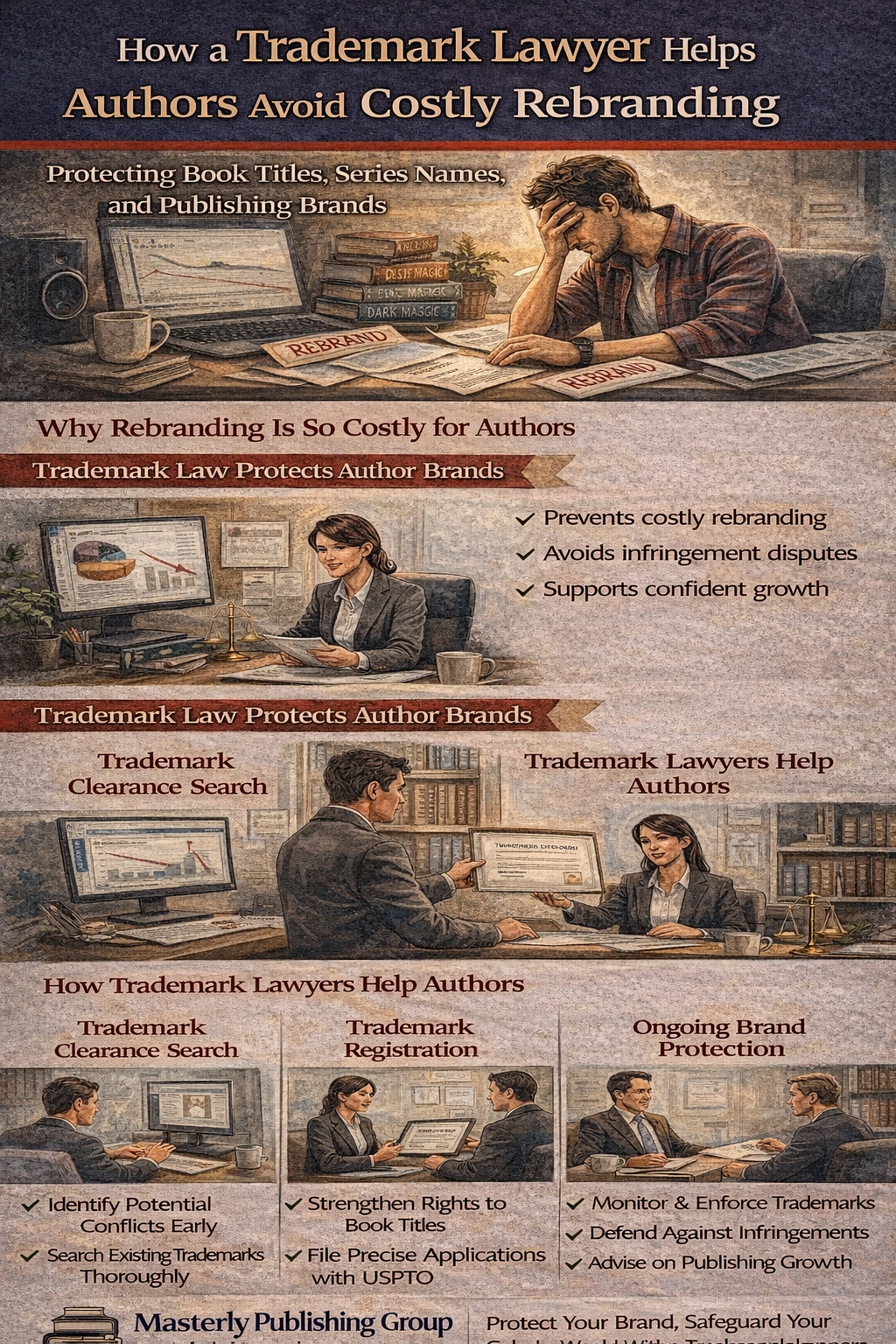
A trademark lawyer helps authors evaluate brand names before they are widely used. This legal guidance reduces the risk of later disputes and forced changes. Trademark attorneys understand how trademark rights are created, enforced, and challenged.
Working with a trademark lawyer early allows authors to build brands on solid legal footing.
Why Trademark Attorneys Are Essential in Publishing
Trademark attorneys focus specifically on protecting names, marks, and branding elements. Unlike general advisors, they analyze how trademarks interact with publishing, marketing, and distribution platforms. Their role is preventive as much as reactive.
Trademark attorneys also guide authors through the trademark registration process, ensuring applications are accurate and defensible.
Understanding Trademark Law in Plain Terms
Trademark law exists to prevent consumer confusion. It protects brand identifiers that signal a consistent source of goods or services. For authors, that source may be a book series, imprint, or personal brand.
Trademark law does not require malicious intent for infringement. Even good-faith use can create legal risk.
How Trademark Clearance Searches Prevent Rebranding
Trademark clearance searches identify potential conflicts before authors commit to a name. These searches review registered marks, pending trademark applications, and common-law uses. A proper trademark clearance search goes far beyond a basic internet search.
Trademark attorneys conduct and interpret clearance searches to assess real-world risk.
Conducting Trademark Clearance Searches Correctly
When trademark attorneys conduct trademark clearance searches, they look at phonetic similarities, related goods, and overlapping audiences. This analysis determines whether readers could believe two brands come from the same source.
Clearance is about risk management, not guarantees. The goal is to avoid foreseeable conflicts.
The Financial Impact of Trademark Infringement Claims
Trademark infringement claims can force authors to stop using a name immediately. This may include pulling books from platforms, halting marketing campaigns, and destroying inventory. These disruptions can happen at the worst possible time, such as during a launch.
Trademark infringement disputes are often far more expensive than early legal review.
Reputational Harm from Trademark Disputes
Public disputes over trademarks can damage an author’s reputation. Readers may perceive the author as careless or unprofessional, even when the conflict was unintentional. This reputational harm can linger long after the dispute ends.
Avoiding disputes protects both income and credibility.
Trademark Registration as a Preventive Tool
Trademark registration provides legal protection and clarity. Registered trademarks create nationwide rights and public notice of ownership. For authors, registration strengthens the ability to enforce rights and deter copycats.
Trademark registration also helps avoid accusations that a brand was adopted too late.
How Trademark Registration Supports Long-Term Growth
Authors who register trademarks gain exclusive rights to use their mark in connection with specified goods or services. This protection supports expansion into audiobooks, merchandise, courses, and adaptations.
Without registration, enforcing trademark rights becomes more difficult and uncertain.
Navigating the Trademark Registration Process
The trademark registration process involves selecting a filing basis, preparing trademark applications, and submitting them to the patent and trademark office. Each step requires precision. Errors can delay or derail registration.
Trademark attorneys guide authors through filing, responses, and strategy.
Dealing With Office Action Letters
An office action is a formal letter from the trademark office raising issues with an application. These issues may involve likelihood of confusion, descriptiveness, or technical errors. Responding correctly is critical.
Trademark attorneys prepare responses that address legal concerns and preserve registration opportunities.
Understanding the Role of the USPTO
The United States Patent and Trademark Office, often referred to as the USPTO, examines trademark applications. The USPTO applies trademark law standards consistently across industries. Authors must meet the same requirements as larger businesses.
Working with attorneys familiar with USPTO practice improves outcomes.
When Trademark Disputes Escalate
Some disputes escalate beyond registration into litigation or administrative proceedings. This may include opposition and cancellation proceedings or hearings before the trial and appeal board.
Trademark attorneys represent clients in these proceedings to protect existing rights.
The Trademark Trial and Appeal Board Explained
The trademark trial and appeal board hears disputes related to trademark registration. These proceedings can determine whether a mark registers or is canceled. Authors involved in these disputes face high stakes.
Understanding this process helps authors appreciate the importance of early protection.
Cancellation Proceedings and Their Risks
Cancellation proceedings allow others to challenge existing trademark registrations. Authors without strong trademark strategy may lose rights they assumed were secure. This can force unexpected rebranding years later.
Trademark attorneys help defend against these challenges.
Trademark Enforcement and Brand Protection
Trademark enforcement ensures others do not misuse an author’s mark. This includes monitoring domain names, online platforms, and marketplaces. Enforcement does not always mean litigation, but it does require strategy.
Effective brand protection preserves long-term value.
Trademark Strategy for Authors and Publishers
Trademark strategy aligns legal protection with publishing goals. It considers current use, future projects, and expansion plans. A thoughtful trademark strategy helps authors avoid piecemeal decisions.
Trademark portfolios may include multiple marks for series, imprints, and brands.
Managing Trademark Portfolios Over Time
As authors grow, their trademark portfolios often expand. Managing registrations, renewals, and enforcement becomes ongoing work. Trademark attorneys assist clients with long-term oversight.
This continuity reduces risk as careers evolve.
International Considerations for Authors
Authors distributing books internationally may encounter foreign trademark issues. Organizations like the international trademark association provide guidance on global practices. International filings require careful coordination.
Trademark lawyers advise on when and where to seek protection.
Trademarks and Copyright Law Differences
Copyright law protects creative expression, while trademark protects brand identifiers. Many authors confuse these concepts. A book’s content may be copyrighted, but its title or brand may require trademark protection.
Understanding both areas is essential for full legal protection.
Domain Names and Online Branding Risks
Domain names are often tied closely to trademarks. Owning a domain does not guarantee trademark rights. Conflicts between domain names and registered trademarks are common.
Trademark attorneys help authors assess and protect online branding.
Due Diligence Before Publishing and Marketing
Due diligence includes reviewing trademark availability before investing in marketing. Authors who skip this step risk losing investments if rebranding becomes necessary. Due diligence protects both creative and financial efforts.
Trademark lawyers make due diligence practical and effective.
How Trademark Lawyers Represent and Advise Clients
Trademark attorneys represent clients before the trademark office, appeal board, and federal court when necessary. They also focus on advising clients to prevent disputes. This combination of counseling and advocacy is key.
Advising clients early often prevents costly litigation later.
Litigation as a Last Resort
Trademark litigation can be expensive and time-consuming. While sometimes necessary, it is rarely the preferred path. Authors benefit most when disputes are avoided through planning.
Trademark lawyers aim to minimize litigation risk whenever possible.
Why Authors Benefit From Recognized Legal Guidance
Working with recognized and top rated attorneys provides confidence during critical decisions. Trademark law is technical, and mistakes can have lasting consequences. Authors deserve guidance from professionals who practice law in this area daily.
This support allows authors to focus on writing and publishing.
How Masterly Publishing Group Supports Authors Holistically
At Masterly Publishing Group, we understand that publishing success goes beyond writing. We assist clients with editing, production, marketing, and navigating legal hurdles like trademarks. Our team works closely with trademark attorneys to ensure authors are protected.
This integrated approach reduces risk and supports long-term growth.
Avoiding Costly Rebranding Through Early Action
The most effective way to avoid rebranding is early legal review. Trademark clearance, registration, and strategy prevent conflicts before they arise. Once a brand is established, changes become far more expensive.
Early action protects creative momentum.
Helping Businesses Protect Author Brands
Authors operate as businesses, whether they realize it or not. Helping businesses protect their brand names is central to trademark practice. Trademark rights support monetization and expansion.
Legal protection turns creative work into a durable asset.
Bringing Stories to Life Without Legal Setbacks
From manuscript to bestseller, authors deserve protection at every stage. Trademark planning ensures stories reach readers without interruption. Legal clarity supports creative confidence.
This balance is essential for sustainable success.
Contact Masterly Publishing Group for a Free Consultation
If you are building an author brand or preparing to publish, understanding how a trademark lawyer can protect you from costly rebranding is critical. Masterly Publishing Group offers a free consultation to help authors navigate trademarks, intellectual property, and publishing strategy with clarity. Our team supports clients worldwide with integrated publishing and legal guidance.
Contact us at (888) 209-4055 to schedule your free consultation and protect your work before problems arise.