

How Authors Lose Trademark Rights Before They Ever Realize It
Many authors believe that finishing a manuscript, publishing a book, or building an audience automatically secures their rights. The reality is far more complicated. Trademark rights are often lost quietly, long before an author realizes there is a problem, and by the time it becomes obvious, fixing it can be costly or impossible.
At Masterly Publishing Group, we work with self-published authors and professional writers who want more than just a book release. We help clients navigate publishing, marketing, and the legal hurdles that come with building a recognizable brand. Understanding how trademark mistakes happen is one of the most important steps authors can take to protect their work, their name, and their future opportunities.
Why Trademark Rights Matter to Authors
A trademark protects how readers recognize you in the marketplace. This can include a book title, series name, pen name, publishing imprint, or brand associated with your work. Without trademark protection, authors may lose control over how their brand is used.
Trademark law exists to prevent confusion and ensure that readers can identify the same source of goods or services. For authors, this means protecting the connection between the work and the creator.
The Difference Between Copyright and Trademark
Many authors confuse copyright law with trademark law. Copyright protects the content of a book, such as the text and storyline. Trademark protects the brand identifiers, including names, logos, and marks that signal the source of the work.
An author can fully own a copyright and still lose trademark rights. This misunderstanding is one of the most common reasons authors face trademark infringement issues later.
How Authors Accidentally Give Up Trademark Rights
Trademark rights are not automatic. They are built through use, registration, and enforcement. Authors often lose rights by delaying action or assuming protection exists when it does not.
Small decisions made early in the publishing process can affect long-term ownership. These mistakes often surface only after success attracts attention.
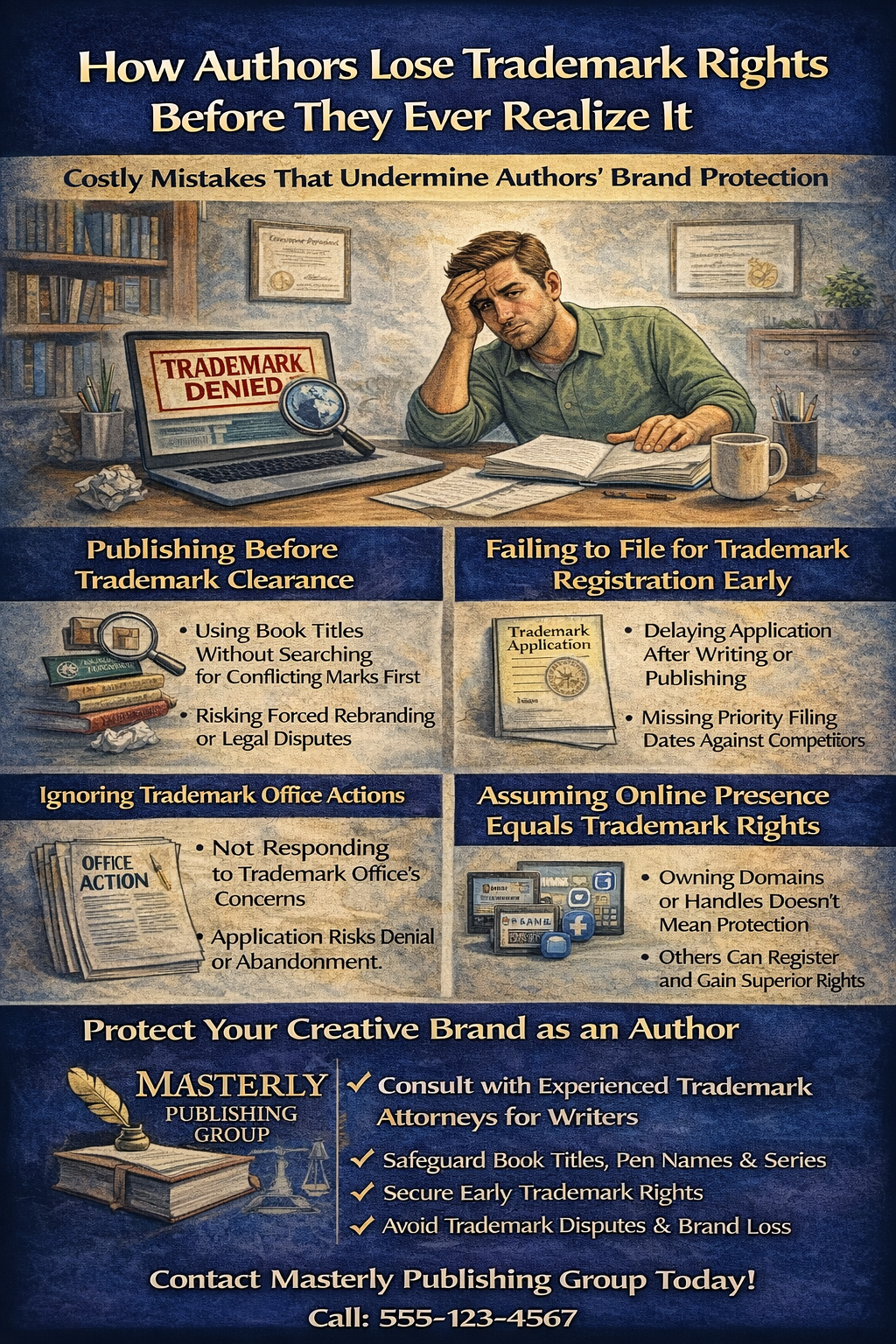
Publishing Before Conducting Trademark Clearance
One of the biggest risks authors face is publishing before trademark clearance. Without conducting trademark clearance searches, an author may unknowingly use a mark that is already registered or in use.
Trademark clearance searches help determine whether a book title or brand name is available. Skipping this step can lead to forced rebranding, lost sales, or legal disputes.
The Role of Trademark Clearance Searches
Trademark clearance searches involve reviewing existing marks in the trademark office database. This includes examining federal registrations, pending applications, and common law uses.
Experienced trademark attorneys conduct trademark clearance searches to assess risk. This process helps authors avoid conflicts before investing time and money into branding.
Assuming Social Media or Domains Equal Protection
Many authors believe that owning a domain name or social media handle gives them trademark rights. While these assets are valuable, they do not replace trademark registration.
The trademark office evaluates rights based on use and registration, not digital availability. Another party may still register the mark and gain priority.
Failing to File a Trademark Application Early
Delaying a trademark application is another way authors lose rights. Trademark rights often depend on who files first, especially at the federal level.
Filing early through the trademark registration process establishes a public record and priority date. Waiting until after marketing or distribution increases the risk of conflict.
Choosing the Wrong Filing Basis
A filing basis determines how a trademark application is evaluated. Authors may file based on current use or intent to use. Choosing the wrong filing basis can delay or jeopardize registration.
An experienced trademark attorney helps determine the appropriate filing basis based on the author’s business goals and timeline.
How the USPTO Evaluates Trademark Applications
The United States Patent and Trademark Office, often referred to as the patent and trademark office or USPTO, reviews trademark applications for compliance with trademark law. Examiners look for conflicts, descriptiveness, and other legal issues.
If problems are found, the USPTO issues an office action. Failing to respond properly can result in abandonment of the application.
Ignoring Office Actions From the Trademark Office
An office action is a formal notice outlining issues with a trademark application. Authors who ignore or misunderstand these notices often lose their chance to register.
Trademark attorneys assist clients in addressing office action concerns. Proper responses can overcome refusals and keep applications moving forward.
Losing Rights Through Opposition and Cancellation Proceedings
Even after filing, trademarks can face opposition and cancellation proceedings. Other parties may challenge a mark they believe conflicts with their own rights.
These disputes are handled before the trademark trial and appeal board, sometimes called the trial and appeal board. Authors without representation are at a disadvantage during these proceedings.
Understanding the Trademark Trial and Appeal Board
The trademark trial and appeal board hears disputes related to trademark registration. This includes oppositions, cancellation proceedings, and appeals of refusals.
These matters are procedural and evidence-driven. Skilled trademark attorneys present compelling arguments to protect client interests.
How Trademark Trial Litigation Affects Authors
Trademark trial matters can escalate into litigation, including cases heard in federal court. These situations are stressful and expensive, especially for authors unprepared for enforcement actions.
Early trademark strategy reduces the likelihood of disputes. Preventive legal protection is often far more affordable than litigation.
Failing to Enforce Trademark Rights
Trademark owners must actively protect their marks. Failure to enforce rights can weaken or even eliminate protection.
Trademark enforcement may include sending notices, negotiating resolutions, or pursuing enforcement actions. Consistent enforcement signals ownership and deters infringement.
Allowing Confusion in the Marketplace
Trademark law focuses on preventing confusion about the same source of goods. If multiple authors use similar brand names without challenge, rights may be diluted.
Allowing confusion can harm both brand value and legal standing. Trademark protection requires vigilance.
Expanding Without a Trademark Strategy
Authors who expand into merchandise, courses, or international markets without a trademark strategy face new risks. What works domestically may not be protected in other countries.
International trademark association resources and foreign filings help extend protection beyond the United States.
Overlooking International Trademark Issues
Authors with global audiences often overlook international registration. Another party may register the same mark in other countries, limiting expansion.
Foreign registration assistance helps authors protect their brand abroad before problems arise.
Using Descriptive or Weak Marks
Not all marks are equally protectable. Descriptive titles or generic brand names face greater challenges during registration.
Trademark attorneys help authors select strong, distinctive marks that are more likely to receive protection.
Failing to Maintain Registrations
Trademark registration is not permanent without maintenance. Renewal filings and continued use are required to keep protection active.
Missing deadlines can result in cancellation, even for established brands.
How Trademark Portfolios Support Long-Term Growth
Trademark portfolios allow authors and companies to manage multiple marks strategically. This includes series titles, logos, and imprint names.
A well-managed portfolio supports licensing, merchandising, and commercial transactions.
The Importance of Due Diligence Before Publishing Deals
Publishers, distributors, and partners often conduct due diligence before agreements. Trademark issues discovered at this stage can delay or derail deals.
Proper trademark registration demonstrates professionalism and preparedness.
Why Business Names Matter in Publishing
An author’s business name or publishing imprint is part of their brand identity. Without trademark protection, these names are vulnerable.
Registering business names helps prevent others from capitalizing on your reputation.
Trademark Issues That Appear After Success
Many trademark problems surface only after a book gains traction. Success attracts competitors, imitators, and challenges.
Early trademark clearance and registration help authors enjoy success without disruption.
How Trademark Attorneys Support Authors
Trademark attorneys provide guidance through the entire process, from clearance to enforcement. They assist clients with trademark counseling and strategy.
Experienced trademark attorney support reduces risk and increases confidence.
Representing Clients Before the USPTO
Trademark attorneys represent clients before the USPTO and the states patent and trademark systems. They handle filings, responses, and appeals.
Professional representation ensures accuracy and compliance.
The Role of Trademark Registration Lawyers
Trademark registration lawyers focus on protecting intellectual property through proper filing and enforcement. They help authors secure exclusive rights to their marks.
Working with the best lawyers and top rated attorneys provides peace of mind during a complex process.
Helping Businesses Protect Creative Brands
Authors are also businesses. Helping businesses protect creative brands requires understanding both publishing and intellectual property matters.
Legal services tailored to authors bridge this gap.
How Trademark Protection Supports Brand Longevity
Trademark protection supports long-term brand growth. It allows authors to build recognition without fear of loss.
Protection creates stability in an unpredictable marketplace.
The Risk of Waiting Too Long
Trademark rights are often lost through inaction. Waiting allows others to file first or establish competing rights.
Early assistance prevents irreversible mistakes.
Masterly Publishing Group’s Approach to Trademark Support
At Masterly Publishing Group, we support authors beyond the manuscript. We assist clients in navigating trademark law, registration, and strategy as part of a holistic publishing journey.
From creative development to legal protection, we bring stories to life while protecting brands.
Serving Authors Worldwide
We work with clients around the world, helping them protect their intellectual property across markets. Our experience spans publishing, branding, and legal coordination.
Global reach requires thoughtful trademark planning.
When to Seek Trademark Assistance
The best time to seek assistance is before publishing or marketing begins. Early guidance avoids costly corrections later.
Support at the right time makes a measurable difference.
Taking Control of Your Brand
Authors who take control of their trademark strategy protect their future. Knowledge and preparation are powerful tools.
Trademark protection is an investment, not an afterthought.
Understanding USPTO’s Trademark Trial Proceedings
When disputes arise during the registration process, matters may proceed to USPTO’s trademark trial forum, where conflicts are formally reviewed and resolved. These proceedings often involve complex procedural rules and strict deadlines that can overwhelm authors unfamiliar with trademark law. Issues such as likelihood of confusion, prior rights, or improper filings are evaluated in detail. Without experienced guidance, authors may unintentionally weaken their position during this critical stage.
Why Trademark Filings Require Strategic Planning
Proper trademark filings are more than submitting forms to a government database. Each filing decision affects how a mark is examined, challenged, or enforced in the future. Authors who rush the filing process without a clear strategy risk delays, refusals, or vulnerability to disputes. Thoughtful filing ensures that the mark aligns with long-term publishing and branding goals.
The Role of a Law Firm in Trademark Protection
A dedicated law firm provides structure and oversight throughout the trademark process, from clearance to enforcement. For authors and publishers, working with a firm experienced in intellectual property offers consistency and accountability. Legal teams coordinate filings, responses, and long-term strategy, ensuring that brand decisions are protected at every stage. This approach reduces risk while supporting sustainable growth.
How Law Students Learn Trademark Strategy in Real Cases
Many law students study trademark law through real-world case analysis involving publishing, branding, and emerging industries. These examples demonstrate how trademarks operate beyond theory, especially when applied to creative businesses. For authors, understanding that trademark disputes are actively studied and litigated highlights the seriousness of brand protection. What may seem minor today can become a textbook example tomorrow.
Brand Protection Beyond the Book Title
Effective brand protection extends beyond a single book or logo. It includes safeguarding series titles, publishing imprints, author names, and related ventures. Without protection, others may capitalize on an author’s reputation or cause marketplace confusion. Strategic brand protection ensures continuity as an author’s career expands.
How Challenges Brought Against Trademarks Impact Authors
Challenges brought against trademarks often arise after a brand gains visibility. These challenges may question ownership, distinctiveness, or priority. For authors, responding effectively requires preparation and a clear understanding of trademark rights. Early planning reduces the likelihood that challenges will disrupt publishing momentum.
What Autonomous Vehicles Teach Us About Trademark Expansion
Industries like autonomous vehicles illustrate how trademarks must evolve alongside innovation. As new technologies emerge, brand protection becomes more complex and competitive. Authors entering multimedia, digital platforms, or emerging markets face similar challenges. These examples show why proactive trademark strategy matters before expansion occurs.
Trademark Practice and Long-Term Brand Strategy
Trademark practice involves more than registration; it is an ongoing practice of monitoring, maintaining, and enforcing rights. A strong practice includes clearance, filing, counseling, and enforcement as part of a consistent practice approach. Authors benefit from a structured practice that anticipates growth, adapts to change, and protects creative assets. In professional trademark practice, every decision supports long-term success. A well-managed practice ensures that brands remain protected as careers evolve.
Contact Masterly Publishing Group
If you are concerned about protecting your book title, publishing name, or author brand, we invite you to contact Masterly Publishing Group. We offer a free consultation to discuss how trademark registration lawyers and trademark attorneys can help safeguard your work and your future.
Our team supports authors worldwide with publishing, marketing, and legal assistance tailored to creative professionals.
Contact us at (888) 209-4055 to schedule your free consultation and take the next step in protecting your brand.