

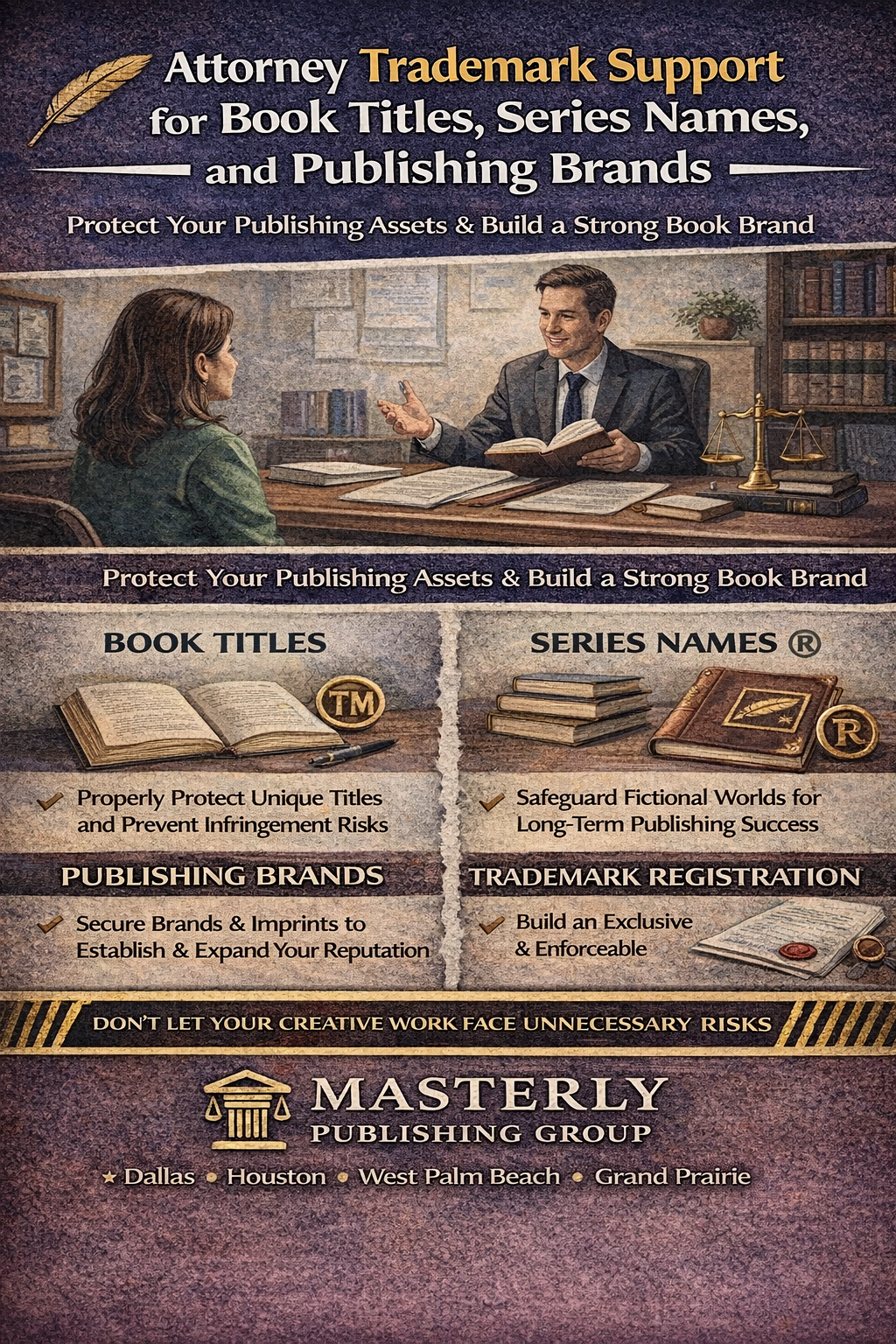
Attorney Trademark Support for Book Titles, Series Names, and Publishing Brands
For authors, a book title or series name is more than a label—it is the identity of the work and the foundation of a publishing brand. Writers often invest years developing stories, characters, and themes, yet overlook the legal steps needed to protect those creative assets. Without proper trademark support, even a successful book can face challenges that disrupt sales, marketing, and long-term growth. Understanding how trademark law applies to publishing is a critical part of building a sustainable author career.
At Masterly Publishing Group, we work with self-published authors, independent publishers, and professional writers who want to protect their creative work from the start. From first-time authors to established publishing brands, our team helps clients navigate intellectual property matters while also providing full publishing and marketing support. With locations in Dallas, Houston, West Palm Beach, and Grand Prairie, and clients worldwide, we bring together creative strategy and legal awareness to support authors at every stage.
Why Book Titles and Series Names Need Trademark Support
A book title or series name can quickly become recognizable in the marketplace. When readers associate a name with a particular style or author, that name carries commercial value. Trademark protection helps ensure that value stays with the creator and is not diluted by others using a similar mark.
Trademark attorneys regularly advise authors that protection is not automatic. Without registration, a title may be vulnerable to misuse or unfair competition. Securing trademark rights provides clarity and long-term stability for publishing brands.
Understanding Trademark Law in Publishing
Trademark law focuses on identifying the source of goods or services. In publishing, this often includes book titles, series names, author brands, and publishing imprints. The goal is to prevent consumer confusion about the same source of creative works.
Unlike copyrights, which protect content, trademarks protect names, logos, and branding elements. Intellectual property strategies often combine both forms of protection. Trademark attorneys help authors understand how these protections work together.
The Difference Between Single Titles and Series Trademarks
Single book titles generally receive limited trademark protection. Series names, however, are more likely to qualify for trademark registration because they indicate an ongoing source. This distinction is important for authors planning multiple releases.
Trademark attorneys often recommend early planning for series branding. Registering a series name can protect future books and related products. This approach supports long-term publishing success.
Trademark Clearance Before You Publish
Trademark clearance is one of the most important steps before publishing a book or launching a brand. Clearance helps determine whether a proposed title or name conflicts with existing trademarks. Skipping this step can lead to costly disputes later.
Trademark clearance searches review existing registrations, pending trademark applications, and common-law uses. Conducting these searches early helps authors avoid infringement risks. Experienced trademark attorneys know how to interpret results accurately.
Conducting Trademark Clearance Searches
Trademark clearance searches involve more than a quick online check. Attorneys conduct trademark clearance searches using specialized databases and legal analysis. These searches look for similar marks that could cause confusion.
Trademark clearance searches also consider related industries, domain names, and brand names. This thorough review supports informed decision-making. It is a foundational step in trademark strategy.
The Trademark Registration Process Explained
The trademark registration process involves multiple steps, including selecting a filing basis, preparing trademark applications, and responding to any office action issued by the trademark office. Each step requires attention to detail and legal knowledge.
Trademark attorneys guide clients through filing with the United States Patent and Trademark Office. Proper filing reduces delays and additional fees. Registration provides nationwide legal protection.
Filing Trademark Applications for Authors
Trademark applications must clearly identify the mark and the goods or services associated with it. In publishing, this often includes books, digital content, and related services. Errors at this stage can limit protection.
Trademark attorneys assist clients in drafting accurate applications and submitting them to the USPTO. This support helps authors protect their work from the beginning. Filing correctly saves time and resources.
Responding to Office Actions From the Trademark Office
An office action is a formal notice from the trademark office raising issues with an application. These may involve likelihood of confusion, descriptiveness, or technical requirements. Many applications receive at least one office action.
Trademark attorneys prepare responses that address legal concerns and preserve trademark rights. Timely and well-reasoned responses improve the chances of approval. Ignoring an office action can lead to abandonment.
The Role of the Patent and Trademark Office
The United States Patent and Trademark Office reviews applications and determines whether marks meet legal requirements. The USPTO examines potential conflicts and compliance with trademark law. This process is structured and procedural.
Trademark attorneys regularly interact with the USPTO on behalf of clients. Their familiarity with procedures helps streamline the registration process. Understanding how the office evaluates marks is essential.
Trademark Registration and Exclusive Rights
Successful trademark registration grants exclusive rights to use the mark in commerce. These exclusive rights allow trademark owners to prevent others from using confusingly similar names. For authors, this means protecting brand identity.
Trademark rights also strengthen marketing and licensing opportunities. Registered marks are valuable business assets. They can be enforced in disputes if necessary.
Trademark Protection Beyond Registration
Trademark protection does not end once registration is granted. Owners must actively monitor and enforce their rights. Trademark enforcement helps maintain brand strength and avoid dilution.
Trademark attorneys advise clients on monitoring strategies and enforcement options. This ongoing support is part of comprehensive brand protection. Proactive enforcement reduces future conflicts.
Trademark Infringement and Unfair Competition
Trademark infringement occurs when another party uses a similar mark in a way that causes confusion. In publishing, this may involve similar book titles, series names, or publishing brands. Unfair competition laws address related conduct.
Trademark attorneys evaluate infringement risks and advise on appropriate responses. Early action often prevents escalation. Legal protection supports fair competition in the marketplace.
Opposition and Cancellation Proceedings
Trademark opposition and cancellation proceedings occur before the trademark trial and appeal board. These proceedings allow parties to challenge registrations that may harm their rights. They are part of the trademark trial process.
Trademark attorneys represent clients in opposition and cancellation proceedings. These matters require procedural knowledge and strategic planning. Protecting trademark portfolios sometimes involves defending against challenges.
The Trademark Trial and Appeal Board Explained
The trademark trial and appeal board hears disputes related to trademark registration. This includes opposition, cancellation, and appeals from refusals. The board operates under USPTO authority.
Trademark attorneys prepare filings and arguments for these proceedings. Understanding the trial and appeal board process is essential for effective representation. These proceedings can shape long-term brand outcomes.
Trademark Trial and Appeal Strategy for Authors
Authors may encounter trademark trial and appeal issues when launching a series or expanding a brand. A clear trademark strategy helps navigate these challenges. Planning reduces risk and supports growth.
Experienced trademark attorneys develop strategies aligned with publishing goals. This includes evaluating challenges brought by others and deciding when to defend or negotiate. Strategic decisions matter.
Federal Court and Trademark Litigation
Some trademark disputes escalate to federal court. Litigation may involve infringement claims, enforcement actions, or disputes over trademark rights. These cases require careful preparation.
Trademark attorneys with litigation experience represent clients in federal court when necessary. While many disputes resolve earlier, understanding litigation risk is important. Legal protection extends beyond registration.
Trademark Portfolios for Publishing Brands
Trademark portfolios may include book series, publishing imprints, logos, and domain names. Managing these portfolios requires organization and foresight. Trademark attorneys help clients maintain consistent protection.
A strong trademark portfolio supports business expansion. It also simplifies due diligence in corporate transactions. Organized portfolios demonstrate professionalism and value.
Domain Names and Online Brand Protection
Domain names are an important part of trademark strategy. Conflicts between trademarks and domain names can create confusion. Trademark attorneys advise clients on securing and protecting relevant domains.
Protecting domain names supports brand consistency online. This is especially important for authors with websites, podcasts, or digital marketing campaigns. Online presence matters.
Trademark Counseling for Authors and Publishers
Trademark counseling provides guidance beyond filing and registration. Attorneys help clients understand how trademark law affects marketing, licensing, and expansion. This proactive advice supports long-term success.
Trademark counseling also addresses intellectual property matters as they evolve. Publishing brands change over time. Ongoing support adapts to those changes.
Intellectual Property and Publishing Businesses
Intellectual property is a core asset for publishing businesses. Trademarks, copyrights, and patents may all play a role depending on the project. Understanding how these rights interact is essential.
Trademark attorneys often work alongside other professionals to support clients. This collaborative approach benefits authors and companies alike. Integrated strategies protect creative investments.
Due Diligence in Publishing and Branding
Due diligence involves reviewing existing rights before launching new projects. In publishing, this includes checking titles, series names, and branding elements. Proper due diligence prevents future disputes.
Trademark attorneys assist clients with due diligence during expansions or acquisitions. This process protects both authors and publishing companies. Careful review builds confidence.
Trademark Rights and Brand Expansion
As authors grow, their brands often expand into merchandise, speaking engagements, or adaptations. Trademark rights support these opportunities. Registration simplifies licensing and partnerships.
Trademark attorneys help clients plan for expansion. Protecting marks early makes growth smoother. Strategic planning pays off.
Working With Experienced Trademark Attorneys
Experienced trademark attorneys bring knowledge of trademark law, prosecution, enforcement, and litigation. Their guidance helps clients avoid common mistakes. Experience matters in complex intellectual property matters.
At Masterly Publishing Group, we collaborate with trademark attorneys who understand the publishing industry. This alignment ensures advice is practical and relevant. Clients benefit from industry-specific insight.
How Trademark Attorneys Assist Clients
Trademark attorneys assist clients with clearance, filing, registration, enforcement, and disputes. They represent clients before the USPTO, trial and appeal board, and courts when needed. This full-service support protects brands.
Attorneys also advise on compliance with legal requirements. Their role extends beyond paperwork. Strategic guidance is key.
Trademark Strategy for Self-Published Authors
Self-published authors often build brands independently. Trademark strategy helps protect that effort. Early planning avoids conflicts and supports professionalism.
Trademark attorneys tailor strategies to individual goals. Not every author needs the same approach. Personalized support matters.
Corporate Transactions and Publishing Brands
Trademarks play a role in corporate transactions involving publishing companies. Buyers and investors evaluate trademark portfolios during negotiations. Clear registration supports investor confidence.
Trademark attorneys assist clients in preparing for transactions. Strong intellectual property increases value. Preparation is essential.
Trademark Registration International Considerations
Authors with global audiences may consider international trademark protection. Organizations like the International Trademark Association provide resources on global issues. International registration strategies vary by country.
Trademark attorneys advise clients on international options. This guidance supports worldwide publishing ambitions. Global reach requires planning.
Medical Devices, Electronic Devices, and Publishing Trademarks
While publishing is the focus, trademark law spans many industries, including medical devices and electronic devices. Understanding this broader context helps attorneys evaluate conflicts. Trademark law applies across sectors.
Trademark attorneys consider cross-industry risks during clearance. This comprehensive approach protects clients. Awareness prevents surprises.
Legal Services That Support Creative Careers
Legal services are part of building a sustainable creative career. Trademark support helps authors protect names, brands, and reputations. This protection allows creators to focus on storytelling.
Masterly Publishing Group integrates creative and legal awareness. Our clients benefit from a holistic approach. Support goes beyond publishing.
Choosing the Right Law Firm and Legal Team
Selecting the right law firm or legal team matters. Authors should work with attorneys who understand publishing and branding. Experience in trademark practice is essential.
Working with the best lawyers for your needs provides confidence. Representation should align with creative goals. Trust and communication matter.
The Importance of Trademark Enforcement
Trademark enforcement ensures marks remain distinctive. Failure to enforce can weaken rights. Trademark attorneys advise clients on when and how to act.
Enforcement strategies balance protection with practicality. Not every conflict requires litigation. Strategic decisions protect brands effectively.
Trademark Prosecution and Long-Term Planning
Trademark prosecution involves managing applications through approval. Long-term planning ensures trademarks remain valid and enforceable. Renewals and monitoring are part of this process.
Trademark attorneys manage prosecution and ongoing maintenance. This support reduces administrative burden. Authors can focus on their work.
How Masterly Publishing Group Supports Authors
Masterly Publishing Group supports authors from manuscript to market. Our services include publishing, marketing, and navigating legal hurdles. We empower authors with knowledge and resources.
Our Grand Prairie studio offers content creation for book trailers and podcasts. This creative support complements brand protection. We bring stories to life responsibly.
Contact Masterly Publishing Group for Trademark Guidance
If you are an author or publisher seeking support for book titles, series names, or publishing brands, trademark guidance can make a meaningful difference. At Masterly Publishing Group, we offer a free consultation to discuss how working with a trademark lawyer and experienced trademark attorneys can help protect your creative work. Our team assists clients with trademark strategy, registration, and long-term brand protection tailored to publishing goals.
Call (888) 209-4055 to schedule your free consultation and explore how trademark support fits into your publishing journey.