

The Legal Roadmap to Trademark Registration Every Author Needs to Follow
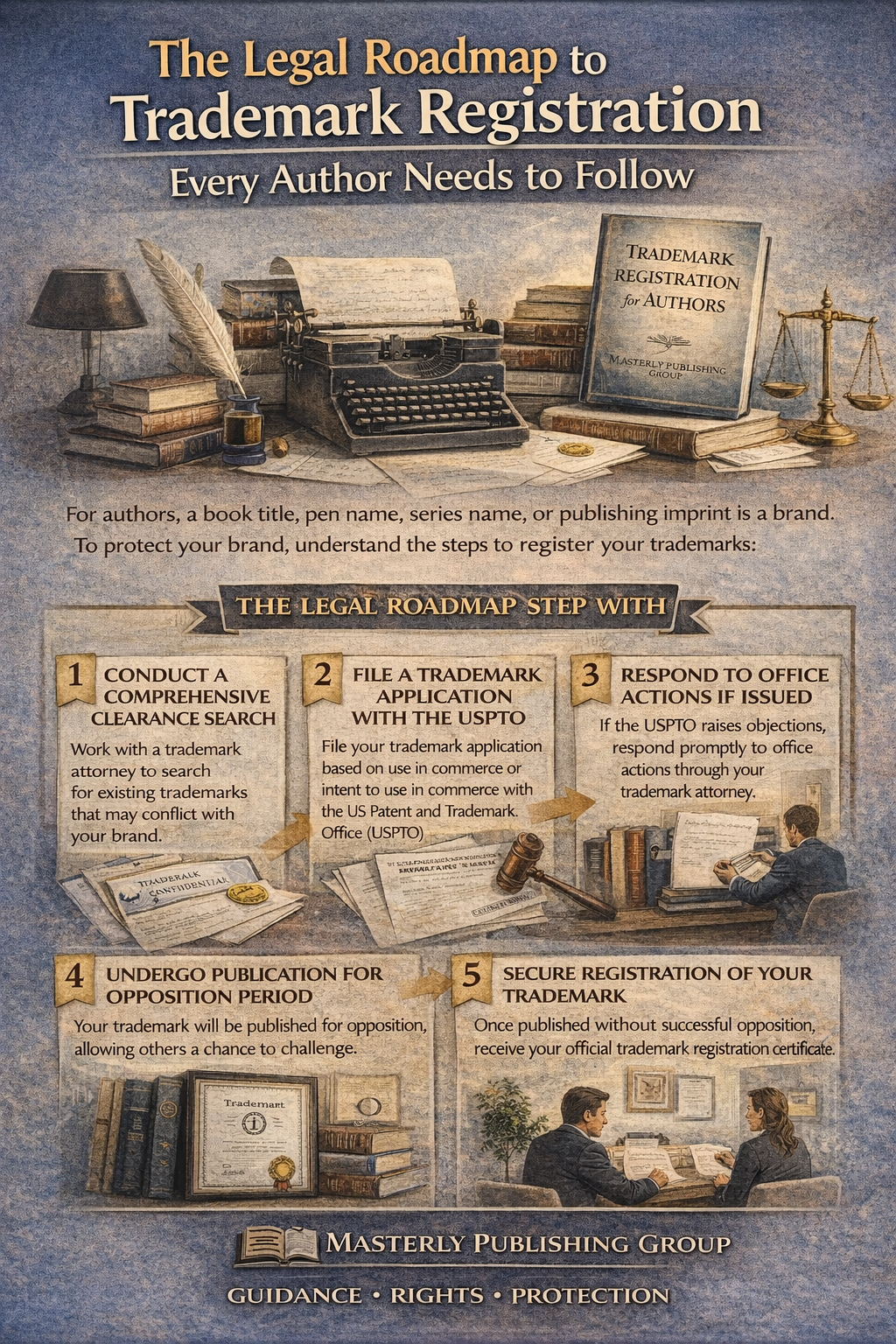
For authors, a book title, pen name, series name, or publishing imprint is more than a creative choice—it is a brand. As your readership grows, that brand gains value, recognition, and commercial potential. Without proper legal protection, however, even the most successful author brand can be copied, challenged, or diluted. Understanding the trademark registration process is a critical step for writers who want to protect their work beyond copyright law.
At Masterly Publishing Group, we work with self-published authors and professional writers who want to build lasting careers. From first-time authors to established publishers, we help clients navigate publishing, marketing, and the legal steps required to protect intellectual property. This legal roadmap explains how trademark registration works, why it matters for authors, and when working with a trademark attorney can make a meaningful difference.
Understanding Trademarks in the Publishing World
A trademark is a word, phrase, symbol, or design that identifies the source of goods or services. For authors, trademarks often include book series titles, publishing company names, logos, slogans, and pen names used in commerce. Unlike copyright law, which protects creative expression, trademark law focuses on brand identity and consumer recognition.
Trademarks help readers associate a particular work with a specific author or publisher. When used consistently, they become valuable intellectual property assets. Registering a trademark strengthens your legal protection and clarifies your ownership rights.
Why Authors Need Trademark Protection Early
Many authors wait until a problem arises before considering trademark protection. By then, conflicts may already exist, making registration more complex and costly. Early trademark registration helps authors secure exclusive rights before a brand gains widespread attention.
Trademark protection reduces the risk of infringement disputes and strengthens your position if challenges arise. It also signals professionalism to publishers, distributors, and partners. Protecting your brand early supports long-term success.
Trademarks Versus Copyright Law
Authors are often familiar with copyright law but less familiar with trademark law. Copyright protects the content of a book, such as the text and illustrations. Trademarks protect names and identifiers that signal the same source to consumers.
A book title is typically protected by copyright only as part of the text, not as a brand. Trademark registration is what allows authors to protect titles, series names, and brand names across multiple works.
Identifying What Can Be Trademarked
Not every word or phrase qualifies for trademark registration. To be eligible, a trademark must identify the source of goods or services and distinguish them from others. Generic or overly descriptive terms are difficult to register.
Strong trademarks are distinctive and memorable. Authors should evaluate whether their business name, series title, or logo functions as a brand rather than a simple description.
The Importance of Trademark Clearance
Before filing, authors should conduct trademark clearance searches. Trademark clearance helps identify existing registrations or pending trademark applications that may conflict with your brand. Skipping this step increases the risk of rejection or later disputes.
Experienced trademark attorneys conduct trademark clearance searches using professional databases. These searches go beyond basic online checks and assess potential conflicts in related categories.
Conducting Trademark Clearance Searches Properly
When authors conduct trademark clearance searches on their own, they may miss similar marks or related goods. A trademark attorney knows how to evaluate likelihood of confusion, not just exact matches. This analysis is critical to long-term brand protection.
Clearance searches help authors avoid costly rebranding and legal challenges. They are an essential part of trademark strategy and due diligence.
Filing a Trademark Application with the USPTO
Trademark applications in the United States are filed with the United States Patent and Trademark Office, often referred to as the USPTO. The patent and trademark office reviews applications for compliance with trademark law and existing registrations.
The trademark filing must identify the mark, the goods or services, and the filing basis. Errors at this stage can delay registration or lead to refusal.
Choosing the Correct Filing Basis
Authors typically file based on “use in commerce” or “intent to use.” The filing basis determines when proof of use must be submitted. Selecting the correct basis is critical to avoiding additional fees and delays.
A trademark attorney can advise on the most appropriate filing basis based on your publishing plans. This guidance helps streamline the registration process.
The Trademark Registration Process Explained
The trademark registration process involves several stages, including examination, publication, and registration. After filing, an examining attorney at the trademark office reviews the application. This review assesses legal compliance and potential conflicts.
If issues arise, the USPTO issues an office action requiring a response. Prompt, accurate responses are essential to keep the application moving forward.
Responding to Office Actions
An office action outlines objections or requirements that must be addressed. These may involve clarity, classification, or conflicts with existing marks. Many applications are delayed or abandoned due to improper responses.
An experienced trademark attorney understands how to respond effectively. Proper handling of office actions can prevent unnecessary refusals.
Publication and Opposition Periods
If the examining attorney approves the application, it is published for opposition. During this period, other trademark owners may challenge the registration. Opposition and cancellation proceedings are handled before the Trademark Trial and Appeal Board.
This stage allows third parties to raise challenges brought on the basis of confusion or prior rights. Legal representation is especially valuable during this phase.
The Role of the Trademark Trial and Appeal Board
The trial and appeal board, often referred to as the TTAB, oversees disputes related to trademark applications. This includes opposition proceedings, cancellation proceedings, and appeals of refusals.
The trademark trial and appeal process is administrative, not a federal court proceeding. However, it requires detailed legal arguments and evidence.
Understanding Trademark Trial and Appeal Proceedings
Trademark trial and appeal proceedings can be complex and time-consuming. They involve pleadings, discovery, and legal briefs. Authors facing these proceedings benefit from experienced trademark attorneys who regularly represent clients before the TTAB.
Proper handling can preserve trademark rights and avoid escalation into federal court litigation.
Securing Trademark Registration
Once all requirements are met and no successful opposition occurs, the USPTO issues a registration. Registration provides nationwide rights and legal protection for the mark. It also allows trademark owners to use the ® symbol.
Registered trademarks strengthen brand protection and deter infringement. They become valuable intellectual property assets for authors and companies.
Managing Trademark Portfolios as an Author
Authors with multiple series, imprints, or brands may develop trademark portfolios. Managing these portfolios involves monitoring deadlines, renewals, and potential infringements.
Trademark counseling helps authors align brand growth with legal protection. Strategic portfolio management supports long-term publishing goals.
Trademark Enforcement and Infringement Risks
Trademark enforcement is essential to maintaining exclusive rights. Failure to enforce can weaken trademark rights over time. Authors should monitor for potential trademark infringement involving similar names or confusing uses.
When someone else uses a similar mark in a way that confuses others about the same source, it is considered trademark infringement. Addressing infringement early can prevent broader damage.
Protecting Domain Names and Online Branding
Domain names are a critical part of modern author branding. Securing domain names that match your trademark reduces confusion and strengthens brand protection. Domain disputes often intersect with trademark rights.
Trademark registration supports claims involving domain names and online misuse. This protection is increasingly important in digital publishing.
International Considerations for Authors
Authors with global audiences may consider international trademark protection. Organizations like the International Trademark Association provide resources on global trademark issues. International registration strategies vary by country.
An experienced trademark attorney can advise on international filings and treaties. Planning ahead helps authors protect their brands worldwide.
Trademark Rights and Business Growth
Trademark rights add value during corporate transactions, partnerships, and licensing deals. Publishers and investors often review trademark registrations as part of due diligence. Clear ownership reduces legal issues and increases credibility.
Strong trademarks support expansion into merchandise, adaptations, and media projects.
Trademark Law and Federal Court Litigation
Some trademark disputes escalate to federal court, especially when infringement causes significant harm. Federal court litigation involves higher costs and complexity. Proper registration and enforcement reduce the likelihood of court disputes.
Trademark attorneys assess when litigation is appropriate and when alternative resolutions are available.
The Relationship Between Trademarks and Patents
While patents protect inventions, trademarks protect brands. Authors may encounter patent protection issues when developing innovative publishing tools or technology. Understanding how patents and trademarks differ helps clarify protection strategies.
The USPTO oversees both patents and trademarks, but the legal standards differ significantly.
Trademark Strategy for Self-Published Authors
Self-published authors often operate as small businesses. A thoughtful trademark strategy aligns branding with publishing goals. This strategy includes clearance, filing, enforcement, and portfolio management.
Trademark counseling supports informed decision-making and protects creative investments.
The Role of Lawyers and Attorneys in Trademark Matters
Trademark law is a specialized practice area. Attorneys with experience in intellectual property law understand the nuances of registration, enforcement, and appeals. Working with the best lawyers helps authors avoid costly mistakes.
Trademark attorneys work closely with clients to develop tailored strategies. Their role is to assist clients at every stage of protection.
Representing Clients Before the USPTO
Trademark attorneys represent clients before the USPTO and the trademark trial and appeal board. They submit filings, respond to office actions, and argue appeals. This representation ensures compliance with procedural rules.
Professional representation increases the likelihood of successful registration.
Legal Services Beyond Registration
Trademark legal services extend beyond filing. They include enforcement, monitoring, counseling, and litigation support. Authors benefit from ongoing assistance as their brands evolve.
A law firm experienced in trademark practice provides continuity and strategic oversight.
Ethical Guidance and Professional Standards
Trademark attorneys follow ethical standards set by organizations like the American Bar Association. These standards ensure professionalism and client-focused representation. Authors should feel confident in the integrity of their legal counsel.
Law students and practitioners alike study these standards as part of legal education.
Artificial Intelligence and Trademark Challenges
Artificial intelligence has introduced new challenges in trademark practice. Automated content generation and branding tools can increase infringement risks. Authors should remain vigilant as technology evolves.
Trademark attorneys help clients navigate emerging legal issues related to artificial intelligence and branding.
Avoiding Common Legal Issues in Registration
Common legal issues include improper classifications, weak marks, and failure to monitor deadlines. These issues can lead to abandonment or additional fees. Proactive planning reduces these risks.
Trademark registration is a process that rewards preparation and attention to detail.
Building Long-Term Brand Protection
Trademark protection is not a one-time task. It requires ongoing monitoring, renewal, and enforcement. Authors who view trademarks as long-term assets are better positioned for success.
Protecting your brand protects your career and creative legacy.
Working Closely with Your Legal Team
Successful trademark strategies involve collaboration. Authors who work closely with their legal team gain clarity and confidence. Open communication ensures that trademark protection aligns with creative goals.
This partnership supports informed decisions and sustainable growth.
How Masterly Publishing Group Supports Authors
Masterly Publishing Group helps authors navigate publishing, marketing, and legal hurdles. From manuscript development to brand protection, we support clients at every stage. Our state-of-the-art content creation studio empowers authors to promote their work effectively.
We serve clients nationwide and internationally, combining creative expertise with practical guidance.
Contact Masterly Publishing Group for Trademark Guidance
Protecting your author brand is an essential step in building a lasting career. If you are considering trademark registration or facing questions about trademark rights, professional guidance matters. Working with a trademark lawyer or trademark attorney can help you avoid costly mistakes and secure legal protection.
Contact Masterly Publishing Group at (888) 209-4055 for a free consultation. Our team is ready to answer your questions, connect you with experienced trademark attorneys, and help you move forward with confidence.