

How a Trademark Attorney Saves Authors from Costly Trademark Mistakes
For many authors, finishing a manuscript feels like the hardest part of the journey. The story is written, the title is chosen, and the brand begins to take shape. Yet one of the most expensive and overlooked mistakes happens after the writing is done. Trademark issues can quietly undo months or years of creative and financial investment if they are not handled correctly.
At Masterly Publishing Group, we work with self-published authors and professional writers who want to build lasting careers, not short-term wins. From manuscript to bestseller, we help authors navigate publishing, marketing, and legal hurdles that can threaten their work. A trademark attorney plays a critical role in protecting an author’s brand, reputation, and long-term income.
Why Trademark Mistakes Are Common Among Authors
Many authors assume trademark law only applies to large corporations. In reality, book titles, series names, pen names, and publishing imprints often function as trademarks. Without proper trademark registration, authors may unknowingly infringe on someone else’s rights or fail to protect their own.
Trademark mistakes usually happen because authors move quickly to publish and market their work. Excitement can overshadow legal caution, especially for first-time writers. Once a conflict arises, fixing it can involve rebranding, litigation, or lost sales.
The Role of a Trademark Attorney in Publishing
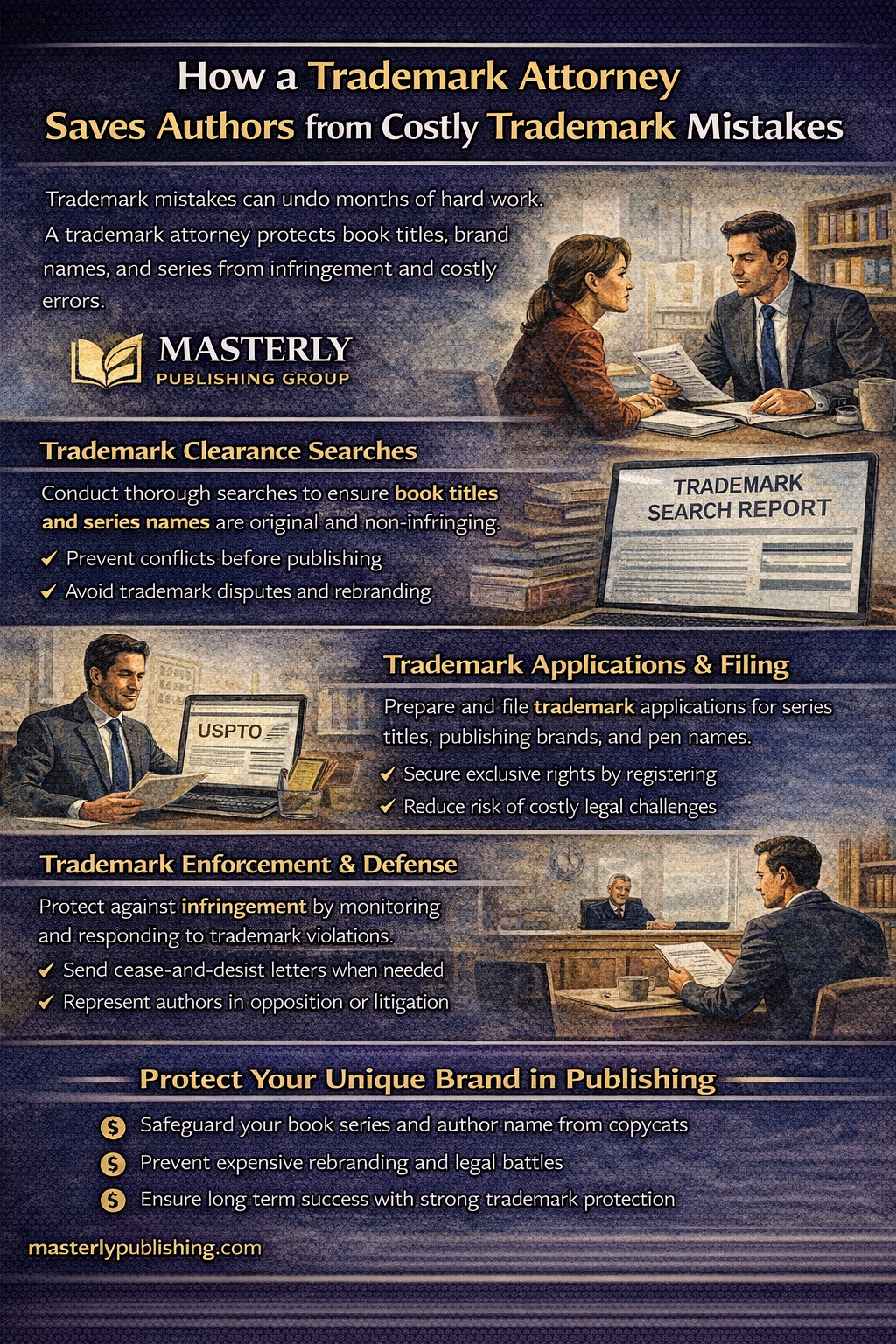
Trademark attorneys help authors avoid these costly problems before they begin. Their role goes beyond filing paperwork with the trademark office. They guide authors through trademark law with a focus on prevention, strategy, and long-term brand protection.
An experienced trademark attorney understands how creative brands function in publishing. They help authors choose names that are strong, distinctive, and legally defensible. This guidance protects both creative freedom and business goals.
Understanding What a Trademark Really Is
A trademark is any word, phrase, symbol, or design that identifies the source of goods or services. For authors, trademarks often include series titles, publishing imprints, logos, and sometimes pen names. These elements signal to readers that content comes from the same source.
Trademark rights exist to prevent confusion and unfair competition. Without registration, enforcing those rights becomes significantly harder. Trademark protection gives authors the legal protection needed to grow confidently.
How Trademark Registration Protects Authors
Trademark registration creates a public record of ownership. It grants exclusive rights to use the mark in connection with specific goods or services. For authors, this means protecting book titles used as a series, brand names, and associated products.
Trademark registration also strengthens enforcement options. Registered trademark owners gain access to federal court and expanded remedies. This protection is especially important as an author’s audience grows.
The Trademark Registration Process Explained
The trademark registration process involves several detailed steps. It begins with evaluating whether a proposed mark is eligible for registration. This includes assessing distinctiveness and potential conflicts.
Next comes filing trademark applications with the patent and trademark office. After review, the trademark office may issue an office action requesting clarification or raising concerns. Navigating this process requires precision and experience.
Why Trademark Clearance Searches Matter
Trademark clearance searches are essential before filing. These searches identify existing trademarks that could conflict with an author’s brand. Skipping this step is one of the most common and expensive mistakes authors make.
Trademark attorneys conduct trademark clearance searches using professional databases and legal analysis. They look beyond exact matches to assess whether marks could be considered confusingly similar. This step helps avoid future infringement disputes.
Conduct Trademark Clearance Searches Before You Publish
Authors who conduct trademark clearance searches early save time and money. Discovering a conflict after launch can force a rebrand or withdrawal of books from the market. These disruptions damage credibility and revenue.
A trademark attorney knows how to interpret search results accurately. Not every similar name creates a legal problem, but some do. Understanding the difference is critical.
Trademark Applications and Filing Strategy
Trademark applications must be prepared carefully. Errors in filing basis, classification, or description can delay or derail registration. Each detail matters when submitting to the trademark office.
Trademark attorneys develop a filing strategy aligned with an author’s goals. This includes deciding whether to file based on current use or intent to use. Strategic filing reduces additional fees and future complications.
Working With the USPTO and Trademark Office
The USPTO reviews trademark applications for compliance with trademark law. Examiners assess whether a mark conflicts with existing registrations or lacks distinctiveness. Communication with the trademark office must be precise and timely.
Trademark attorneys regularly work with the USPTO and understand examiner expectations. Their experience helps resolve issues efficiently and keeps applications moving forward.
Responding to Office Actions Without Risk
An office action is a formal response from the trademark office raising concerns. These concerns may involve likelihood of confusion, descriptiveness, or procedural issues. Responding incorrectly can result in rejection.
Trademark attorneys prepare responses that address legal standards directly. Their expertise often determines whether an application moves forward or fails. For authors, this guidance protects momentum and investment.
Trademark Law and the Publishing Industry
Trademark law intersects with publishing in unique ways. Book titles are not always registrable, but series titles often are. Understanding these distinctions prevents wasted effort and frustration.
Trademark attorneys help authors navigate these nuances. They ensure that creative decisions align with legal realities while preserving artistic intent.
Protecting Series Titles and Brand Names
Series titles function as identifiers of source rather than individual works. This makes them strong candidates for trademark registration. Protecting a series title prevents others from capitalizing on your success.
Brand names tied to publishing businesses or imprints also benefit from registration. These marks represent reputation, quality, and reader trust.
Trademark Infringement Risks for Authors
Trademark infringement occurs when a mark is used in a way that creates confusion about source. Authors may unintentionally infringe by choosing a title or name already in use.
Infringement disputes can result in takedown demands, litigation, or forced rebranding. A trademark attorney helps authors avoid infringement before it becomes a legal battle.
Trademark Enforcement and Brand Protection
Trademark enforcement ensures that others do not misuse your brand. Without enforcement, trademark rights can weaken over time. Consistent monitoring and action preserve value.
Trademark attorneys advise authors on when and how to enforce rights. This includes cease-and-desist letters and, when necessary, litigation.
Opposition and Cancellation Proceedings Explained
Opposition and cancellation proceedings occur before the trademark trial and appeal board. These proceedings challenge the registration of marks that conflict with existing rights.
Trademark attorneys represent clients in these disputes. Their role is to defend or challenge registrations based on evidence and trademark law principles.
Understanding the Trademark Trial and Appeal Board
The trademark trial and appeal board, often called the appeal board, hears disputes related to registration. These proceedings are administrative, not criminal, but they are highly technical.
An experienced trademark attorney understands how to present compelling arguments in this forum. Proper representation can preserve or defeat trademark rights.
Trademark Trial and Appeal Board Proceedings
Trademark trial and appeal proceedings involve strict rules and deadlines. Evidence, filings, and legal arguments must meet precise standards. Mistakes can permanently affect trademark rights.
Authors benefit from having attorneys who routinely handle these matters. Familiarity with the process reduces risk and increases success.
Managing Trademark Portfolios as an Author Grows
As authors expand, they may develop multiple trademarks. These can include series titles, logos, slogans, and domain names. Managing these assets requires organization and foresight.
Trademark portfolios help authors track and protect their intellectual property. Portfolio management ensures renewals, enforcement, and strategic growth are handled properly.
Domain Names and Trademark Strategy
Domain names often intersect with trademark rights. Securing relevant domains early supports brand consistency and protection. Failing to do so can invite confusion or misuse.
Trademark attorneys advise on domain strategies that align with trademark rights. This coordination strengthens overall brand protection.
International Considerations and Global Reach
Authors increasingly reach global audiences. Trademark protection may extend beyond the United States. Organizations like the international trademark association provide guidance on global practices.
Trademark attorneys help authors assess international needs. This is especially important for authors selling books or merchandise worldwide.
Trademark Counseling for Long-Term Success
Trademark counseling involves ongoing advice, not just registration. Attorneys help authors make informed decisions as brands evolve. This proactive approach prevents costly surprises.
Counseling supports long-term success by aligning legal protection with creative growth. Authors gain confidence knowing their brand is secure.
Litigation and Federal Court Risks
Trademark disputes sometimes escalate to federal court. Litigation is costly, time-consuming, and stressful. Avoiding it whenever possible is a priority.
Trademark attorneys help authors minimize litigation risk through strong registration and enforcement strategies. When litigation is unavoidable, experienced representation matters.
How Trademark Attorneys Represent Clients Effectively
Trademark attorneys represent clients before the patent and trademark office, the trial and appeal board, and federal court. They also assist with corporate transactions involving intellectual property.
Their role includes due diligence, prosecution, enforcement, and dispute resolution. This comprehensive approach protects authors at every stage.
Trademark Rights and Intellectual Property Protection
Trademark rights are part of broader intellectual property rights. Alongside copyright law and patents, trademarks protect the business side of creativity.
Authors who understand this framework are better equipped to build sustainable careers. Trademark attorneys help connect these legal concepts to real-world publishing goals.
Helping Businesses Protect Author Brands
Authors operate as businesses, whether independently or through publishing companies. Helping businesses protect their brands is central to trademark practice.
Trademark attorneys assist clients in protecting brand names, logos, and goodwill. This protection supports growth, licensing, and partnerships.
Why Authors Trust Masterly Publishing Group
Masterly Publishing Group brings together publishing expertise and legal awareness. We understand the creative and commercial sides of authorship. Our clients benefit from guidance that respects both.
With offices across Texas and clients worldwide, we support authors at every stage. Our state-of-the-art content creation studio empowers authors to promote their work confidently.
When to Hire a Trademark Lawyer
The best time to hire a trademark lawyer is before launching a book or brand. Early involvement prevents mistakes that cost far more to fix later.
Authors should also seek legal assistance when expanding series, launching merchandise, or entering new markets. Strategic timing makes a difference.
Contact Masterly Publishing Group for a Free Consultation
If you are an author concerned about protecting your brand, now is the time to act. Trademark mistakes are expensive, stressful, and often preventable. A knowledgeable trademark lawyer can help you secure your rights and avoid unnecessary risks.
Masterly Publishing Group works with authors nationwide and internationally, offering trademark registration services designed for creative professionals. Contact us at (888) 209-4055 for a free consultation. Let us help you protect your work, your name, and the future you are building.