

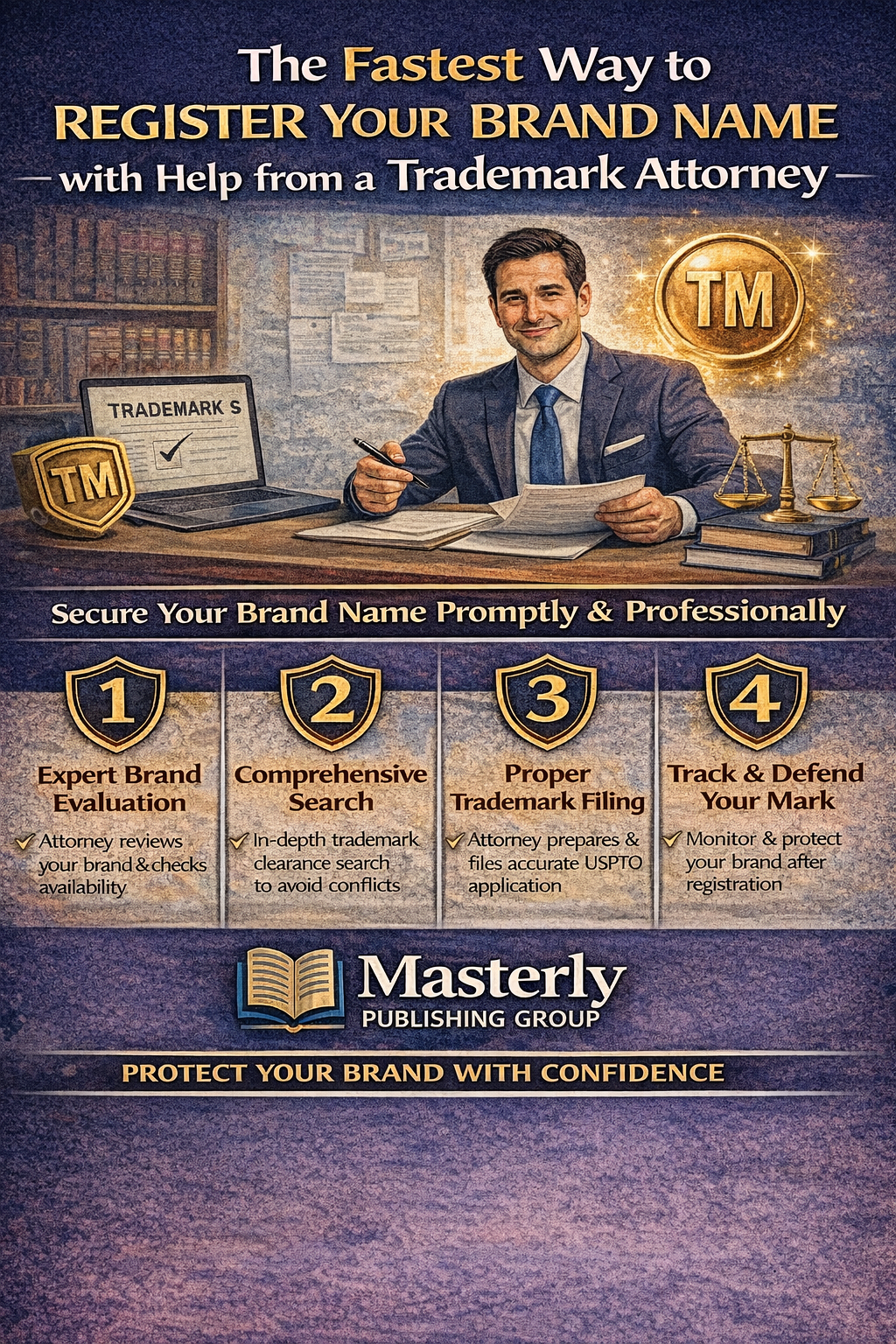
The Fastest Way to Register Your Brand Name with Help from a Trademark Attorney
Building a brand takes vision, time, and persistence. For authors, publishers, and creative professionals, your brand name often becomes just as valuable as the work you produce. Yet many creators overlook one critical step until it is too late—proper trademark registration. Without legal protection, even the most recognizable brand can be vulnerable to infringement, disputes, or forced rebranding.
At Masterly Publishing Group, we work closely with self-published authors, professional writers, and creative entrepreneurs who want to protect what they are building. From manuscript development to marketing and legal guidance, we understand that your brand name is a cornerstone of your success. This article explains the fastest and most reliable way to register your brand name with the guidance of trademark attorneys, while helping you avoid costly delays and mistakes.
Why Trademark Registration Matters for Authors and Creators
A trademark protects the name, logo, or slogan that identifies your work in the marketplace. For authors, this may include a publishing imprint, podcast name, book series, or personal brand. Trademark registration establishes ownership and provides nationwide legal protection.
Without registration, your brand name may be vulnerable to infringement by others using a confusingly similar name. This can disrupt marketing efforts, reader trust, and long-term growth. Trademark law exists to protect creators from these risks.
Understanding What a Trademark Really Is
A trademark is a form of intellectual property that distinguishes your goods or services from others. It can apply to business names, brand names, logos, and even certain slogans. In publishing, trademarks often cover author names, series titles, or publishing company identities.
Trademark rights are not automatic nationwide. While limited rights may exist through use, full protection comes from formal registration with the United States Patent and Trademark Office, also known as the USPTO.
How Do You Register a Trademark the Right Way
Many clients ask, how do you register a trademark without delays or rejections. The answer involves more than filling out an online form. Registration requires strategic planning, legal analysis, and proper filing.
Working with trademark attorneys helps ensure that your application is accurate, complete, and positioned for approval. This approach significantly reduces the risk of refusal and wasted filing fees.
Why Speed Matters in Trademark Registration
Timing plays a critical role in trademark protection. The earlier you file, the stronger your claim to exclusive rights. Delays can allow competitors to file first or create conflicts.
Trademark attorneys understand how to move efficiently through the trademark registration process. Their experience helps avoid common mistakes that slow down applications.
The Role of Trademark Attorneys in Fast Registration
Trademark attorneys guide clients through every stage of registration. They evaluate your brand name, conduct searches, prepare filings, and respond to USPTO communications. Their role is both strategic and protective.
An experienced trademark attorney anticipates issues before they arise. This foresight often saves months of delay and prevents unnecessary litigation later.
Conducting Trademark Clearance Searches Before Filing
One of the most important steps is conducting trademark clearance searches. These searches determine whether similar trademarks already exist. Skipping this step is one of the most common and costly mistakes.\
Trademark attorneys conduct trademark clearance searches using professional databases. This ensures your brand does not conflict with existing trademark owners.
Why Trademark Clearance Is Essential
Trademark clearance reduces the risk of rejection and infringement claims. Even if a name is available as a domain name, it may still conflict with a registered trademark.
Clearance protects clients from investing in branding that cannot be legally protected. It is a critical part of managing intellectual property responsibly.
Preparing Trademark Applications Correctly
Trademark applications must be drafted with precision. This includes identifying the correct filing basis, describing goods and services properly, and submitting accurate ownership information.
Trademark attorneys prepare trademark applications that meet USPTO standards. Proper preparation minimizes office actions and accelerates approval.
Understanding the Trademark Filing Basis
The filing basis determines whether you are already using the trademark or plan to use it in the future. Selecting the wrong basis can delay registration or result in refusal.
Trademark attorneys help clients choose the appropriate filing basis based on business goals and timelines. This strategic choice supports faster registration.
Filing with the USPTO and What Happens Next
Once submitted, the USPTO reviews the application for compliance and conflicts. This review is conducted by an examining attorney at the trademark office.
If issues arise, the USPTO issues an office action. Responding correctly and promptly is essential to keep the process moving forward.
Handling Office Actions Efficiently
Office actions may raise legal or procedural concerns. These can include likelihood of confusion, descriptiveness, or technical errors.
Trademark attorneys respond to office actions with legal arguments grounded in trademark law. Skilled responses often resolve issues without prolonged delays.
When Trademark Applications Face Opposition
After approval, trademark applications are published for opposition. Other parties may challenge the registration during this period.
Trademark attorneys represent clients in opposition and cancellation proceedings. These disputes are handled before the trademark trial and appeal board.
Understanding the Trademark Trial and Appeal Board
The trademark trial and appeal board hears disputes related to registration. This includes opposition and cancellation proceedings.
Experienced trademark attorneys understand how to navigate these proceedings efficiently. Proper handling can preserve trademark rights without unnecessary litigation.
Trademark Trial and Appeal Proceedings Explained
Trademark trial and appeal proceedings are administrative, not criminal. However, they can be complex and require strong legal arguments.
Attorneys present evidence, respond to challenges brought by others, and defend clients’ trademark rights before the appeal board.
Protecting Your Brand from Trademark Infringement
Trademark infringement occurs when another party uses a confusingly similar mark. This can harm brand recognition and revenue.
Trademark attorneys help protect clients through trademark enforcement strategies. Early action prevents escalation into costly disputes.
Trademark Enforcement and Unfair Competition
Trademark enforcement may involve cease-and-desist letters, negotiations, or litigation. These actions protect intellectual property rights.
In cases of unfair competition, trademark attorneys may represent clients in federal court to stop misuse of brand assets.
Managing Trademark Portfolios as You Grow
As authors and businesses expand, they often develop multiple trademarks. These may include series names, imprints, or product lines.
Trademark attorneys assist clients in managing trademark portfolios strategically. This ensures consistent protection across brands.
Intellectual Property Beyond Trademarks
Trademarks are only one part of intellectual property. Publishing clients may also need guidance on copyright law, patents, and domain names.
Trademark attorneys often work alongside professionals in intellectual property law to protect all IP assets comprehensively.
The Relationship Between Trademarks and Copyright Law
Copyright law protects creative works, while trademarks protect brand identifiers. Both are essential for authors and publishers.
Trademark attorneys coordinate with copyright strategies to provide layered legal protection.
Domain Names and Brand Protection
Domain names are closely tied to brand identity. Securing domain names that match your trademark strengthens protection.
Trademark registration can support domain name disputes and prevent bad-faith registrations by others.
Due Diligence for Publishing and Business Growth
Trademark due diligence is essential during corporate transactions, partnerships, or expansions. It confirms ownership and reduces risk.
Trademark attorneys assist clients with due diligence reviews to ensure clean intellectual property records.
Why Experience Matters in Trademark Law
Trademark law is highly specialized. Working with the best lawyers ensures accurate filings and effective protection.
An experienced trademark attorney understands USPTO practices, litigation risks, and enforcement strategies.
How Trademark Attorneys Assist Clients Long-Term
Trademark counseling does not end with registration. Attorneys continue to assist clients with renewals, monitoring, and enforcement.
This long-term relationship supports brand protection as businesses evolve.
Litigation and Trademark Disputes
When disputes escalate, litigation may be necessary. Trademark attorneys represent clients in trademark infringement cases.
Litigation protects exclusive rights and prevents market confusion.
Federal Court and Trademark Rights
Trademark disputes may be resolved in federal court. These cases involve complex legal standards and evidence.
Trademark attorneys prepare and argue cases to defend clients’ intellectual property rights.
Working with a Trusted Law Firm
Choosing the right law firm is essential. Clients benefit from attorneys who focus on trademarks and understand creative industries.
At Masterly Publishing Group, we collaborate with trusted legal professionals to support our clients’ long-term success.
Supporting Authors, Clients, and Creative Businesses
Our clients include authors, publishers, and creative entrepreneurs worldwide. We understand the unique needs of creative brands.
Trademark protection allows creators to focus on storytelling without legal uncertainty.
Avoiding Additional Fees and Costly Mistakes
Errors in filing often lead to additional fees and delays. Trademark attorneys help avoid these pitfalls.
Proper guidance saves time and money over the life of the brand.
Learning from Law Students and Industry Standards
Trademark law evolves through case decisions and academic analysis. Attorneys stay current through professional organizations like the American Bar Association and the International Trademark Association.
This ongoing education benefits clients through informed legal strategies.
Why Trademark Strategy Is Essential for Publishing Brands
Trademark strategy aligns legal protection with business goals. This ensures that brand growth is supported legally.
Strategic registration strengthens brand value and market positioning.
Representing Clients Across Industries
Trademark attorneys represent clients across publishing, media, sporting goods, and other industries. This broad experience enhances problem-solving.
Each industry presents unique challenges, requiring tailored legal services.
The Fastest Path Is the Smartest Path
Speed in trademark registration comes from preparation, experience, and strategy. Rushing without guidance often causes delays.
Trademark attorneys streamline the process by anticipating issues and responding efficiently.
Contact Masterly Publishing Group for Trademark Guidance
Protecting your brand name is one of the smartest investments you can make as an author or creative professional. At Masterly Publishing Group, we help clients navigate publishing, marketing, and legal hurdles with confidence. From brand development to trademark registration, our team connects you with experienced trademark attorneys who understand your goals and your industry.
If you are ready to protect your business name, brand names, or publishing identity, we invite you to contact us for a free consultation. We can answer your questions about how to register a trademark and help you move forward with clarity and speed. Call (888) 209-4055 today to take the next step in securing your intellectual property.